Washer repair in Farmington, NM
A washer stuck full of water, refusing to spin or leaking across the laundry room floor stops the whole household. We fix drain pumps, lid locks, shift actuators, inlet valves and drive parts on top-load and standard washers.
- Answered 24/7
- Gas, electric and propane
- Farmington and the Four Corners
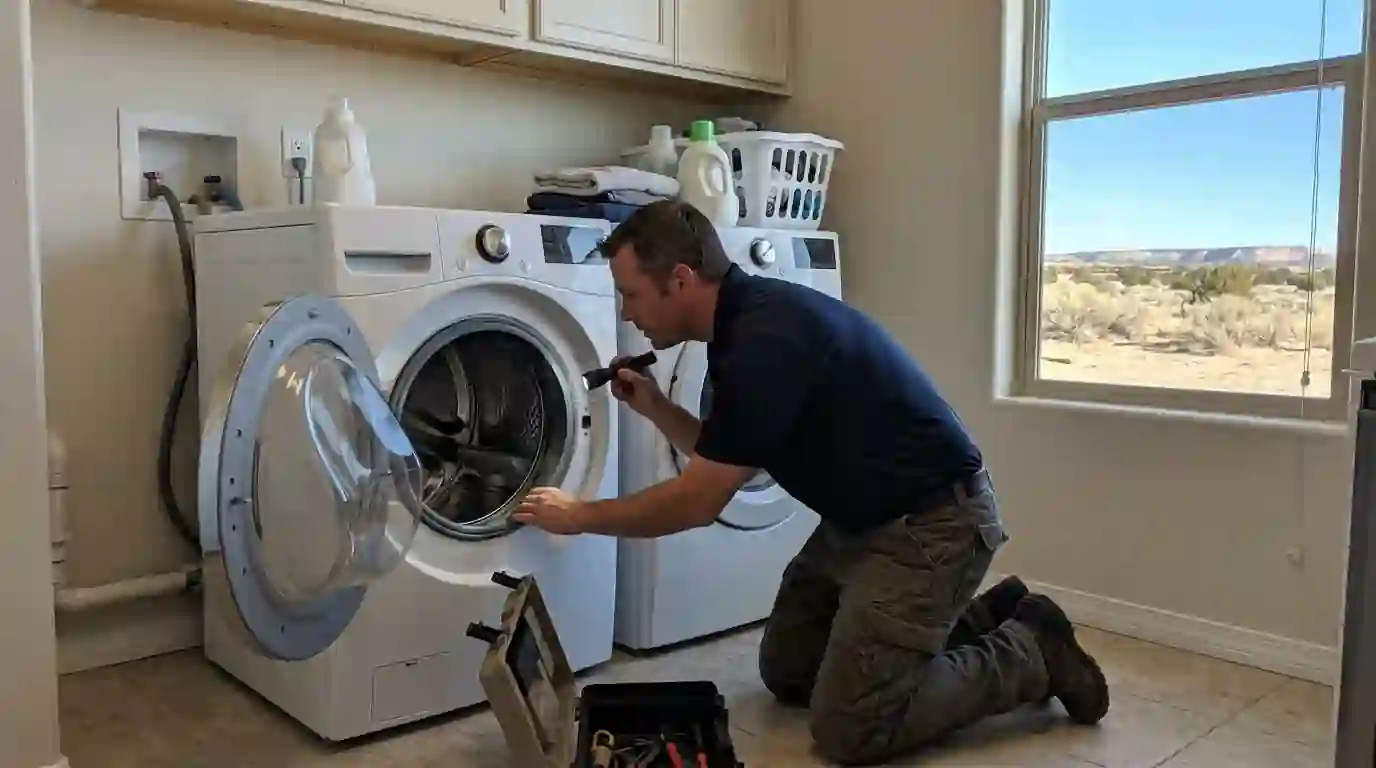
Laundry room calls
- Tub full of water that won't drain
- Lid lock blinking and nothing happens
- Water spreading across the floor
Quick answer
Top-load washers here usually fail at the drain pump, the lid lock or lid switch, the shift actuator, the inlet valve or the drive coupler and belt. Sediment from well water clogs inlet screens and pumps fast. Typical Farmington-area repairs run about $127-$396 depending on the part. Many are done on the first visit, and if water is spreading across the floor, the phone gets answered 24/7.
Brands we repair: Whirlpool, GE, Samsung, LG, Maytag, Frigidaire, KitchenAid, Bosch, Kenmore, Electrolux, Amana, Speed Queen, Sub-Zero, Hotpoint
Why a washer stops draining, spinning or filling
A washing machine has to do four things well: fill, agitate, drain and spin. The inlet valve fills the tub through hot and cold solenoids, a pressure switch or sensor tells the control when the level is right, the motor and transmission move the agitator or impeller, and the drain pump empties the tub before the spin. A lid lock or lid switch has to confirm the lid is closed before the drum spins. When any one of those parts fails, the cycle stalls at that step.
The step where it quits points us to the cause. A washer that sits full of water after the wash points to the drain pump, a clogged pump inlet or a kinked drain hose. One that drains but won't spin often has a failed lid lock, a worn drive belt, a broken motor coupler or, on many newer top-loaders, a shift actuator that can't switch between agitate and spin. No fill at all usually means a clogged inlet screen or a failed valve.
We see a lot of high-efficiency top-load washers without a center agitator. Those use a lid lock that stays latched for most of the cycle and a shift actuator that clicks the transmission between modes. When either one fails, the washer flashes a code and stops. We read the code, run the service diagnostic built into most machines, and test the part before replacing anything.
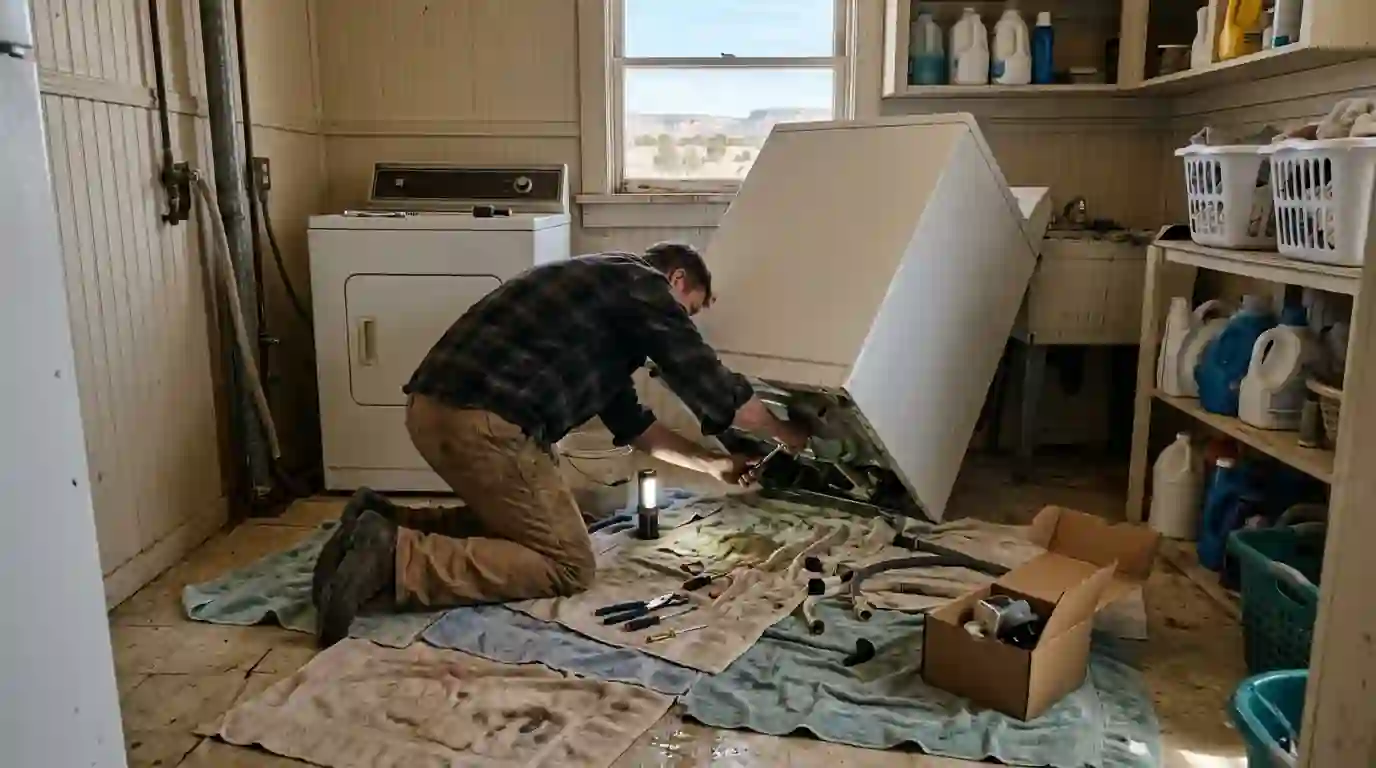
Washer symptoms worth a service call
Stop running loads if you notice any of these, since another cycle can turn a small repair into a bigger one.
Water left in the tub
A tub that won't drain usually means a sock or coin jammed in the drain pump, a clogged pump filter on some models, or a failed pump motor. A kinked drain hose behind the washer can do it too.
Drains but won't spin
Clothes come out soaking wet. The likely suspects are the lid lock, the lid switch, a worn drive belt, a broken motor coupler or a shift actuator stuck in the agitate position.
Lid lock light flashing
If the lid lock light blinks and the washer won't start or spin, the lock motor or its switch isn't confirming. A cracked lid strike or a lid hinge out of line can also cause it.
Leaking onto the floor
Leaks come from inlet hoses, the drain hose connection, a pump seal, a tub seal or simple oversudsing. Where the water shows up under the machine helps us narrow it down quickly.
Slow fill or no fill
If the washer takes forever to fill or only fills with hot or cold, the inlet valve screens are likely clogged with sediment, or one side of the valve has failed.
Loud banging during spin
Violent shaking or banging points to worn suspension rods, a broken tub damper, an unbalanced load or a washer that isn't level. Left alone, it can damage the tub bearing and the cabinet.
Well water sediment and hard water in San Juan County washers
Plenty of homes outside Farmington run on private wells, from Kirtland and Waterflow to Flora Vista and La Plata. Well water carries fine sand, silt and minerals that city water doesn't. The first place it lands in a washer is the pair of small mesh screens inside the inlet valve, where the hoses connect. Once those screens pack with grit, the washer fills slowly, times out, or throws a fill error. We pull the hoses, clear or replace the screens, and check the valve solenoids.
Sediment that gets past the screens settles in the bottom of the tub and finds its way to the drain pump. Sand wears the pump impeller and seal, and mineral scale from hard water coats the pressure tube and sensor that tell the control how much water is in the tub. A washer that overfills or underfills on a well often needs that tube and sensor checked, not a new control board.
If you're on a well, a whole-house sediment filter before the laundry line does a lot to protect the washer, along with the water heater and dishwasher. Inlet hoses with built-in screens add a second layer. Changing the sediment filter cartridge on schedule matters, since a clogged filter drops pressure to the whole house and the washer starts timing out on fill again.
How a washer repair visit goes
- First call
Where the cycle stops
Tell us whether it won't fill, drain, agitate or spin, and give us any flashing code. Look for the model sticker beneath the lid or along the rear of the cabinet.
- At your home
Drain and protect
We bail or drain standing water, pull the washer out from the wall and lay towels so we can reach the hoses, pump and back panel.
- Minute 20
Run the diagnostic
We run the built-in test mode, check the lid lock, pump, valve and shifter, and tell you the cause and the cost before any parts go in.
- Same visit
Replace and clear
We install the part, clear sediment from the inlet screens and pump while the machine is open, and check the hoses for bulges or cracks.
- Before we go
Full test cycle
With water in, we let it fill, agitate, drain and spin through a short program, then look underneath for leaks before the washer goes back in place.
Washer repairs we handle in your laundry room
These are the top-load and standard washer parts we replace most around Farmington.
Drain pump
We clear jammed coins, socks and hair ties from the pump, test the motor, and replace it when it hums without moving water or has a leaking seal from sand wear.
Lid lock and lid switch
A failed lid lock or switch stops the spin or the whole cycle. We test the lock motor and switch, check the lid strike and hinge, and replace the assembly when it won't confirm.
Shift actuator
On many high-efficiency top-loaders, the shift actuator moves the transmission between agitate and spin. When it fails, the washer won't spin or agitate and usually flashes a code. We replace it and run the diagnostic.
Water inlet valve and screens
We clear sediment from the inlet screens and replace the valve when a solenoid fails. We also check the hot and cold supply valves and hoses at the wall.
Drive belt, motor coupler and clutch
Worn belts, broken couplers and slipping clutches stop the agitator or spin. These parts wear on a schedule, and replacing them often restores a washer that just runs weakly.
Suspension rods and tub dampers
Worn suspension rods and dampers let the tub bang against the cabinet. We replace the set together, level the machine and run an unbalanced spin test to confirm it settles.
What washer repairs usually cost around Farmington
These are typical local ranges for common washer repairs, part and labor included. Brand and model decide where yours lands.
| Lid switch or lid lock | $132-$237 |
|---|---|
| Inlet valve or screen cleaning | $127-$223 |
| Drain pump replacement | $163-$281 |
| Shift actuator or motor coupler | $148-$264 |
| Suspension rods, dampers or drive belt | $174-$396 |
These are typical numbers, not a quote. Machines on heavy sediment, transmission or tub bearing work and parts on back order push the cost up, while a cleared pump jam sits at the low end.
Ways to keep your washer running strong
- Check pockets for coins, screws and hair ties before every load. They are the most common reason a drain pump jams.
- On a private well, clean the inlet hose screens every few months, or install a sediment filter before the laundry line.
- Replace rubber inlet hoses every five years or so with braided stainless hoses, and check them for bulges when you move the washer.
- Don't overload the tub. Packing it full strains the drive belt, coupler and suspension and leaves clothes less clean.
- Use a high-efficiency detergent in the right amount. Too much soap leaves residue, causes oversudsing and can lead to leaks.
Fix the washer or shop for a new one?
Most washer repairs make sense when the machine is under ten years old. Pumps, lid locks, shift actuators, valves and suspension parts are all reasonably priced, and the repair usually costs well under the price of a new washer plus delivery. Older direct-drive top-loaders are also simple and long-lived, so they're often worth fixing too.
Replacement wins when the tub bearing or transmission fails on an older machine, the outer tub is cracked, or the cabinet is rusted through from years of leaks. We'll give you the real numbers, including what a comparable new washer and its hookup would cost, so you can decide with the facts in front of you.
Related repairs people book with washer repair
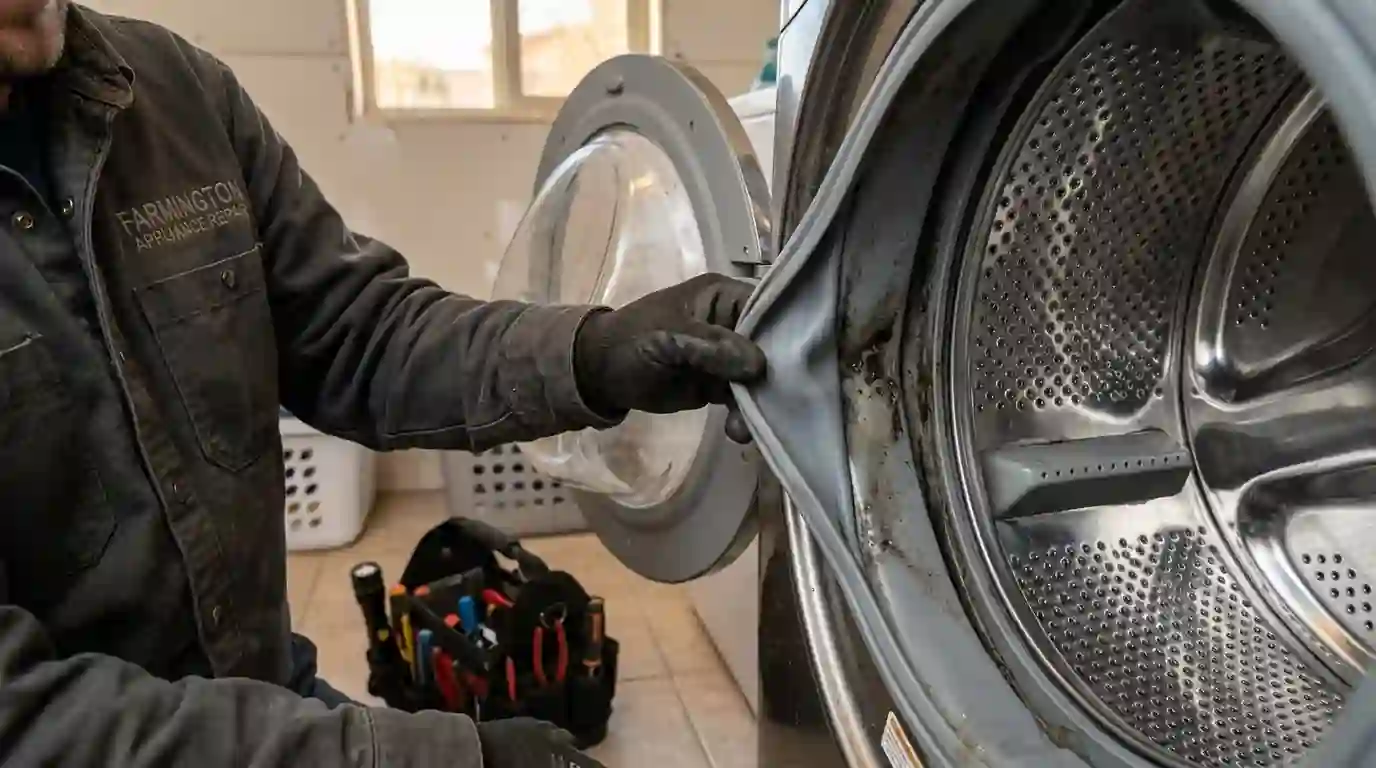
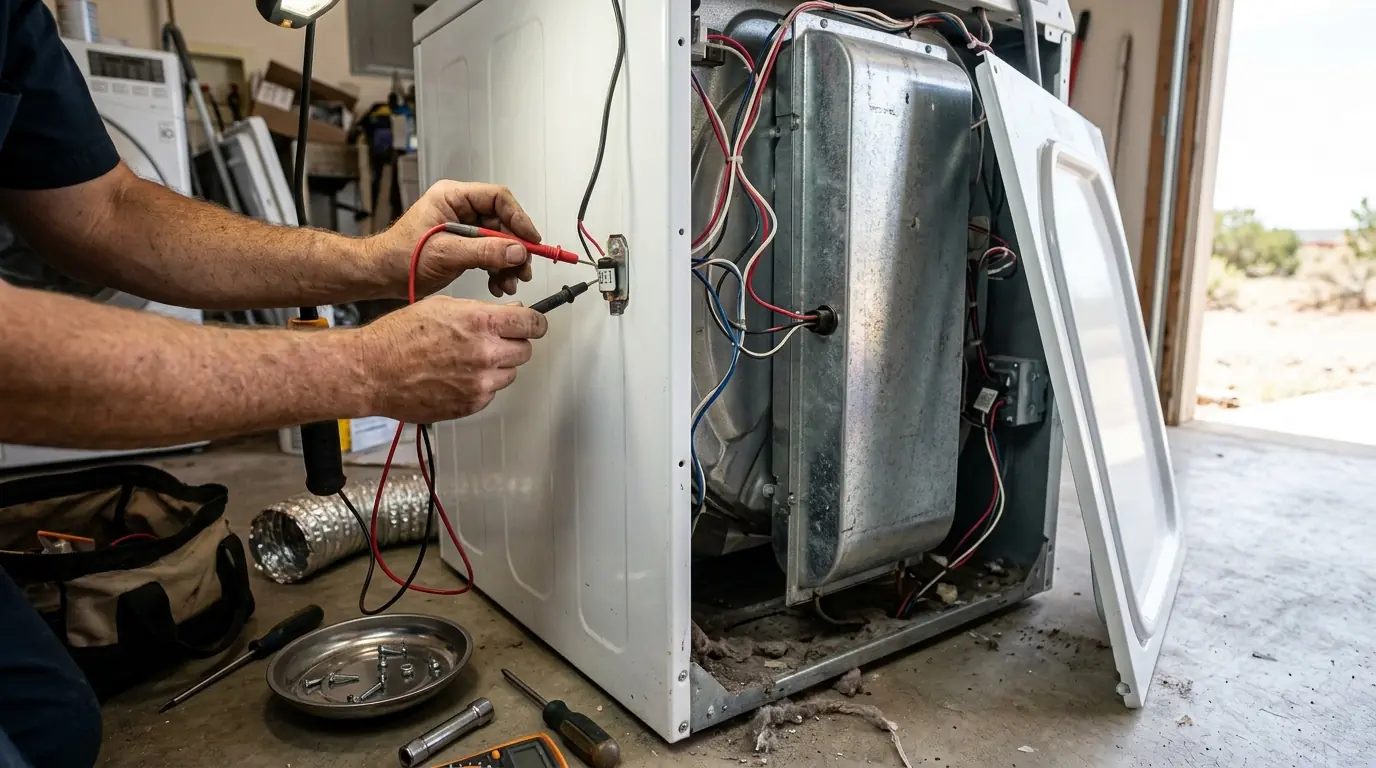
Where we handle washer repair
Farmington neighborhoods first, then the rest of San Juan County and southwest Colorado. Pick your area for local notes, or see all 41 locations.
Washer Repair questions from Farmington homeowners
Why won't my washer drain the water out?
A washer that won't drain usually has a jammed drain pump, a clogged pump filter or a kinked drain hose behind the machine. Coins, socks and hair ties are common culprits. If clearing those doesn't help, the drain pump motor may have failed and needs replacing.
Why does my top-load washer drain but not spin?
A top-load washer that drains but won't spin usually has a failed lid lock or lid switch, a worn drive belt, a broken motor coupler, or a shift actuator stuck in agitate mode. An overloaded or unbalanced tub can also stop the spin. We test each part to find the real cause.
Can well water damage my washing machine?
Yes. Well water often carries sand and silt that clog the washer inlet valve screens and wear the drain pump. Hard minerals also coat the pressure sensor tube. A sediment filter on the supply line and periodic screen cleaning protect the washer and other water-using appliances.
What does a flashing lid lock light mean on a washer?
A flashing lid lock light on a washer usually means the lock couldn't confirm the lid is latched. The cause can be the lid lock assembly, a bent or cracked strike, a misaligned hinge or a wiring fault. Try closing the lid firmly and restarting. If it keeps flashing, the lock likely needs testing.
Is a leaking washing machine an emergency?
A leaking washing machine can soak a floor and the room below quickly. Turn off the hot and cold water valves behind the washer and unplug it. Then phone us whatever the hour; the line is staffed 24/7 and we'll put you on the earliest open slot.
Why does my washer bang so loudly during the spin cycle?
Loud banging during the washer spin cycle usually comes from an unbalanced load, worn suspension rods, a failed tub damper or a machine that isn't level. Redistribute the load first. If it keeps banging, the suspension needs attention before it damages the tub bearing.
Need washer repair today?
Call any hour. A real person picks up, takes the model number and sets the visit.