Dryer vent cleaning in Farmington, NM
If towels need a second cycle and the laundry room feels like a sauna, the vent is probably packed. We brush out the full duct run, clear the cap on the wall or roof, and measure airflow before and after.
- Answered 24/7
- Gas, electric and propane
- Farmington and the Four Corners
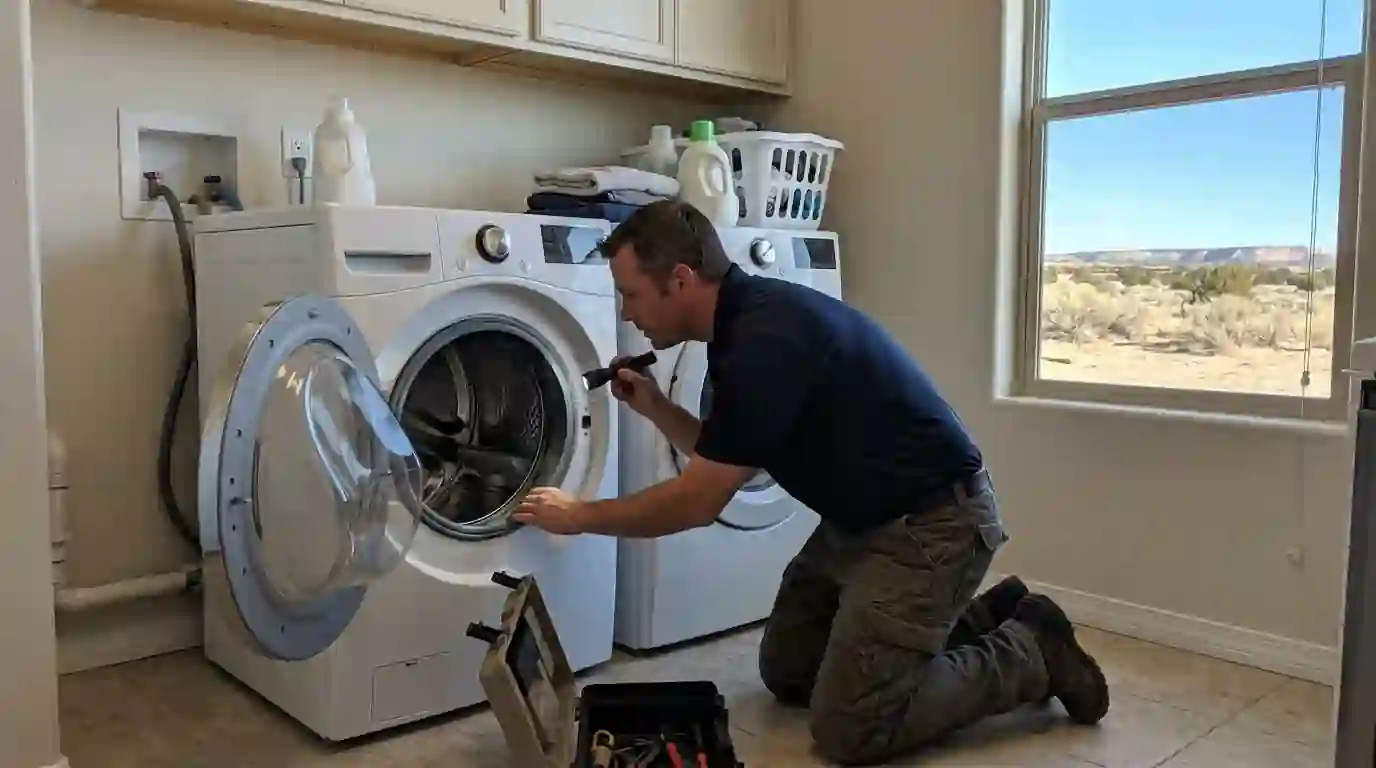
Signs your vent is packed
- Loads take two cycles to dry
- Outside flap barely moves
- Dryer top hot to the touch
Quick answer
A dryer vent cleaning clears packed lint, wind-blown sand and debris such as bird nests from the duct and the outside cap. Around Farmington, a typical cleaning runs about $118-$227, and long or roof-mounted runs cost more. Most visits take about an hour. Someone answers our line 24/7, and a cleaning can usually be set for the same week.
Brands we repair: Whirlpool, GE, Samsung, LG, Maytag, Frigidaire, KitchenAid, Bosch, Kenmore, Electrolux, Amana, Speed Queen, Sub-Zero, Hotpoint
What a real vent cleaning covers, from the dryer to the cap
A dryer pushes hot, wet air loaded with lint out through the vent on every load. The lint screen catches most of it, but a share slips past and settles on the duct walls, especially at elbows and low spots. Over months, that layer narrows the duct until the dryer can barely exhale. Heat backs up into the drum, cycles get longer, and safety parts like the thermal fuse and high-limit thermostat start working much harder than they were designed to.
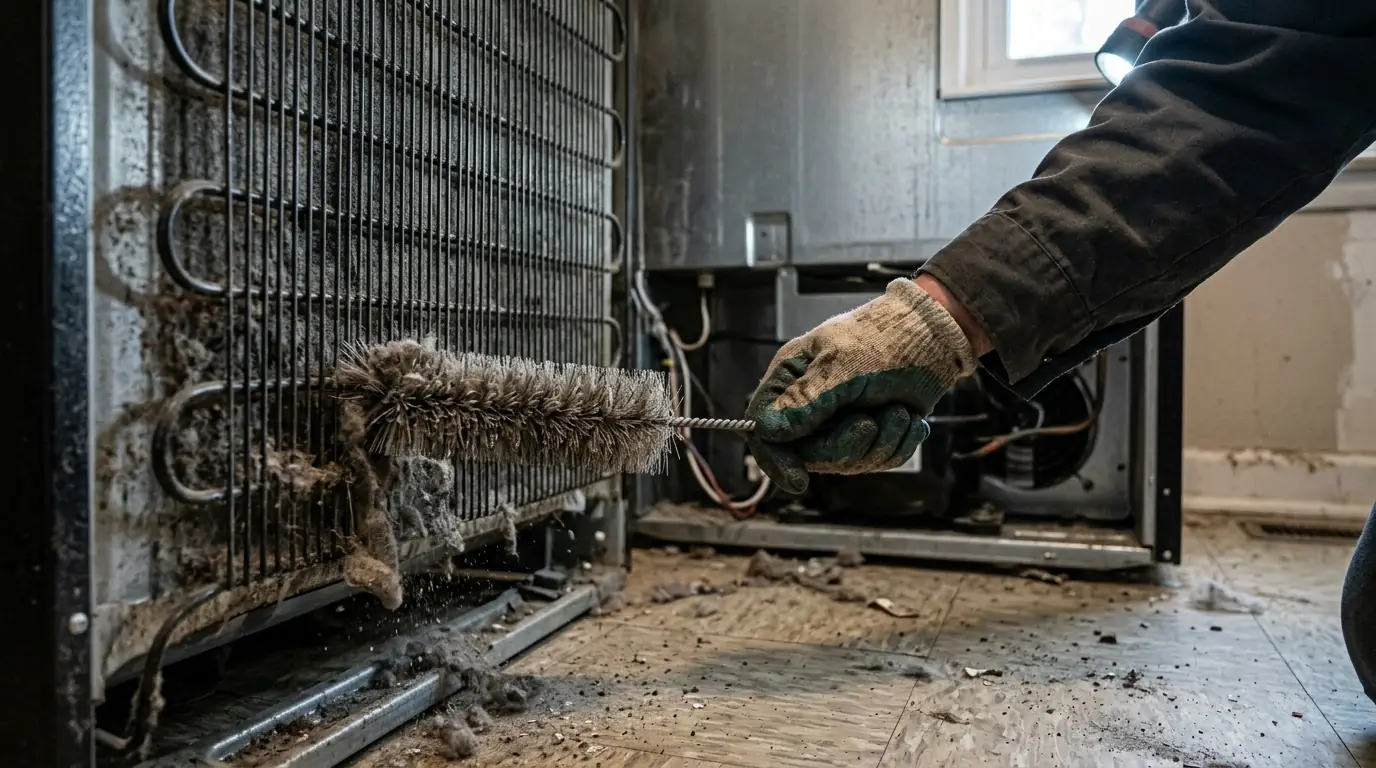
Our vent cleaning starts at the dryer. We pull it out, disconnect the transition duct and check the exhaust outlet on the back of the cabinet, where lint builds up first. Then we run a rotary brush through the full length of the duct, from inside the house to the termination, while a strong vacuum collects what comes loose. We clean or replace the transition duct, then open the outside cap and clear the flap, screen and hood.
When we're done, we reconnect everything, run the dryer on high and measure airflow and exhaust temperature at the cap. If we find a crushed section, a disconnected joint in an attic or crawlspace, or a duct far longer than the manufacturer allows, we show you what we saw. A clean vent that still can't move enough air needs rerouting, not just brushing.
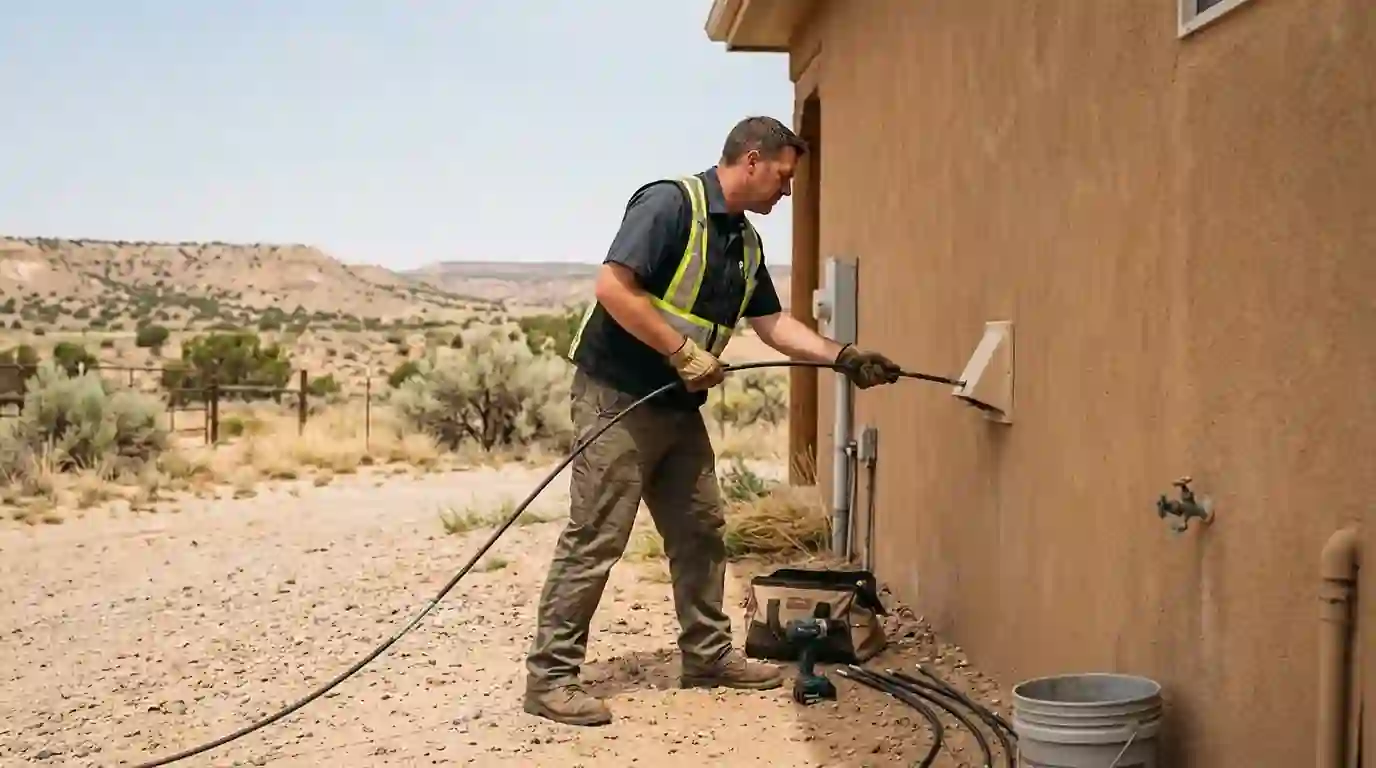
Keeping lint and sand out of the vent between cleanings
- Look at the outside cap every few weeks during windy months. Pull out any lint or grit you can reach while the dryer is off.
- Never put a fine mesh screen over a dryer vent cap. It catches lint, clogs within weeks and can trap hot exhaust in the duct.
- If drying times have crept up, don't start a load right before heading out or turning in for the night. That is when a hot vent is most dangerous.
- Dry heavy blankets and rugs in smaller batches. Overloaded drums shed more lint and push it farther down the duct.
- If a vent runs longer than the dryer manual allows, consider moving the dryer or rerouting the duct rather than cleaning more often.
Wind, sand and long runs: why Four Corners vents clog fast
Windy, dusty spring days are a fact of life around Farmington, and fine sand finds its way into every opening on a house. A dryer vent cap that faces the prevailing wind can take in grit every gust, and that grit mixes with damp lint inside the duct to form a heavy paste that brushing alone sometimes struggles to break up. Vents on the windward side of homes on the open mesas, from Crouch Mesa to the Glade area, tend to clog fastest.
Many 1950s to 1970s ranch homes in Farmington were built with the laundry room in the middle of the house, so the vent runs a long way through an attic or crawlspace before it reaches the outside. Some newer houses on the north and east sides of town put the laundry upstairs or in an interior room with a roof vent. Long runs and roof terminations both collect lint and need cleaning more often than a short straight shot through a wall.
Manufactured homes, common across San Juan County, sometimes vent under the floor or through a skirt that crushes easily or comes loose. In winter, condensation in an uninsulated duct can freeze near the cap, which narrows the opening on top of the lint. On cold January nights, a vent that was only partly clogged in fall can close almost completely. We check the skirt, the belly connection and the cap for all of these while we clean.
Clues that the vent needs cleaning now
A clogged vent rarely stops the dryer outright, so watch for these slower warning signs.
Drying takes longer every month
A load that once dried in 45 minutes now takes 70 or more. The heating side may be fine, but wet air can't leave the drum fast enough to dry clothes.
Hot cabinet and laundry room
The dryer top feels hot, the room feels steamy and the clothes come out scorching. That heat is exhaust that should be outdoors and is backing up instead.
Burning or musty smell
A scorched smell means lint is getting close to the heat source. A musty smell can mean condensation is pooling inside a long or sagging duct.
Thermal fuse keeps blowing
A dryer that needs a new thermal fuse every few months almost always has an airflow problem. Replacing the fuse without cleaning the vent only sets up the next failure.
Lint around the outside cap
Lint piled at the wall hood or on the roof, or a flap stuck half open with debris, shows the vent is already restricted at its last few feet.
Birds or chirping at the vent
Sparrows and starlings like warm vent hoods, especially caps with missing screens. A nest can shut off a vent almost completely within a single spring.
How a dryer vent cleaning visit goes
- When you call
Describe the vent route
Tell us where the vent exits, through a wall, the roof or under the floor, and roughly how far the laundry room sits from that outside wall.
- First ten minutes
Measure airflow
We run the dryer and check airflow and temperature at the cap, so you can compare the numbers before and after the cleaning.
- Next 30 minutes
Brush and vacuum the run
We disconnect the dryer, brush the full run with a rotary tool while vacuuming, and clear the cap, flap and the dryer's own exhaust outlet.
- Same visit
Fix what we find
Crushed transition ducts, broken caps and loose joints get replaced or reconnected, then we push the dryer back without kinking the new duct.
- Before we leave
Retest and report
We run a heated cycle, measure airflow again, and tell you how quickly your vent is likely to clog based on its length and exposure.
Dryer vent cleaning prices around Farmington
These typical local ranges cover the cleaning and any small parts listed. They are not a quote for your home.
| Wall vent cleaning, short run | $118-$227 |
|---|---|
| Long run through attic or crawlspace | $163-$284 |
| Roof termination cleaning | $189-$317 |
| Transition duct replacement | $46-$93 |
| Exterior vent cap replacement | $84-$167 |
Run length, number of elbows, roof pitch and how packed the duct is move the price. A dryer repair on the same visit is quoted separately once we know the part.
Vent problems we fix during the cleaning
Cleaning often turns up a second problem, and these are the ones we can usually correct on the same visit.
Crushed transition duct
Thin foil or vinyl accordion duct behind the dryer flattens when the machine is pushed back. We replace it with semi-rigid metal duct and leave enough slack to slide the dryer in safely.
Jammed or broken vent cap
Louvers caked with grit, a cracked plastic hood or a flap that won't close get replaced with a cap that opens easily and seals against wind and dust.
Bird and rodent nests
We pull nesting material from the cap and duct, clean the hood, and fit a cap style that discourages nesting without putting a fine screen in the lint path.
Disconnected attic or crawl duct
A joint that pulled apart in the attic or under the house dumps lint and moisture into the structure. We reconnect it with foil tape and support sagging sections.
Roof vent clearing
On roof terminations, we clean from both ends when it is safe to reach the roof, clear the hood and confirm the flap swings freely when the dryer runs.
Dryer exhaust and blower housing
Lint packs inside the dryer cabinet too. On many models, we open the back or front panel and clear the blower wheel and housing so airflow improves end to end.
How often a Farmington home should book a vent cleaning
For a short wall vent and a household of two or three, once a year is usually enough. Late spring, after the windiest weeks, is a sensible time. Homes with long attic or crawlspace runs, roof vents, several children, pets that shed or a dirt driveway that sends dust toward the house often need cleaning every six to nine months.
If your dryer is older and the vent was neglected for years, a cleaning may reveal parts that have already been damaged by heat. We check the thermal fuse, high-limit and heat source during the visit, and tell you plainly if the dryer still needs work after the vent is clear.
Related repairs people book with dryer vent cleaning
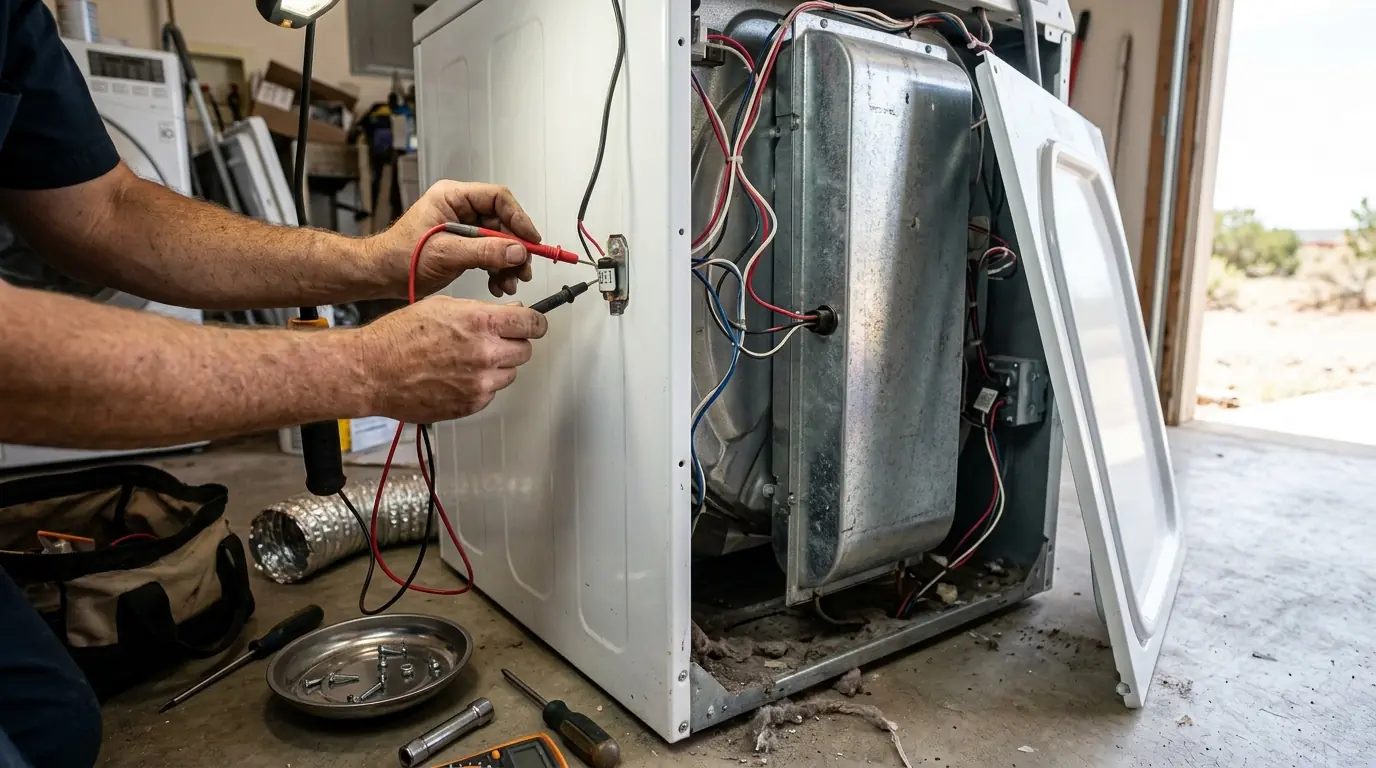
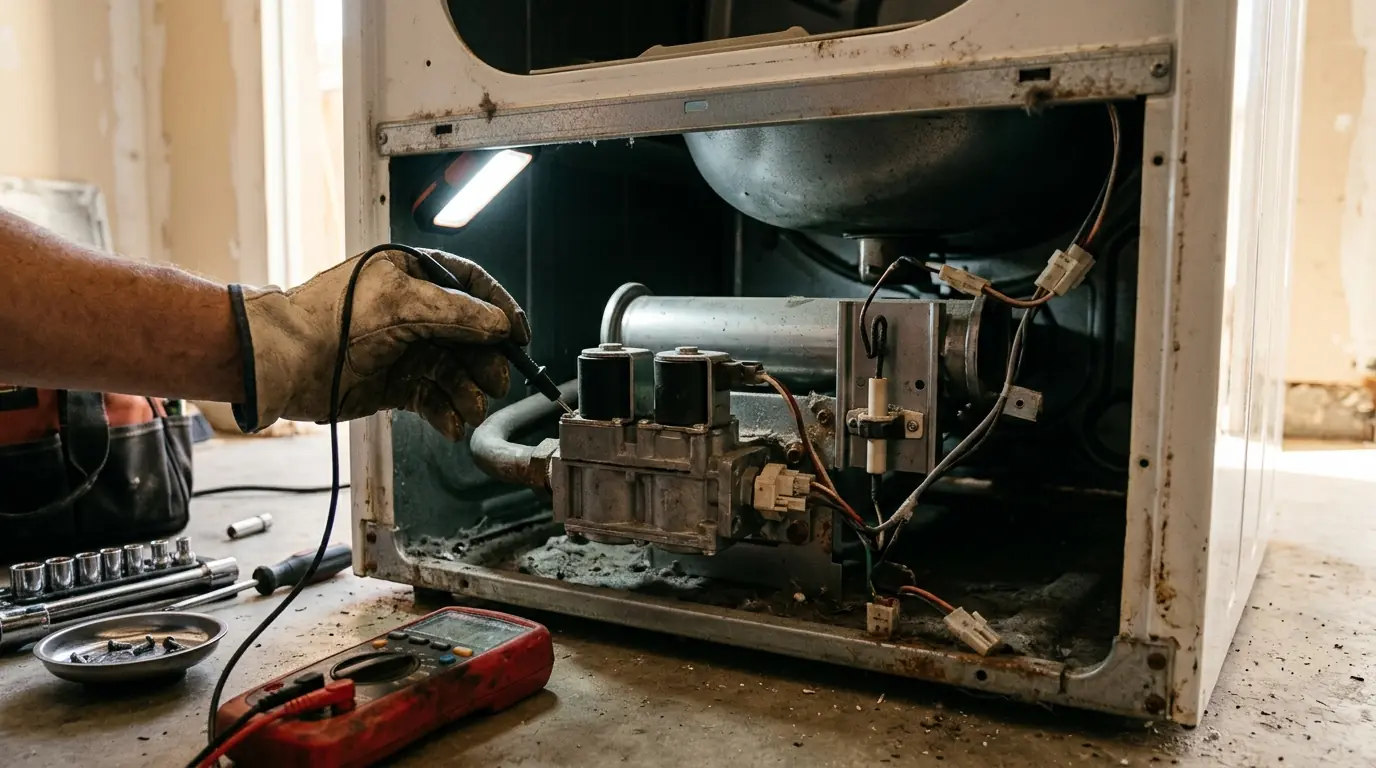
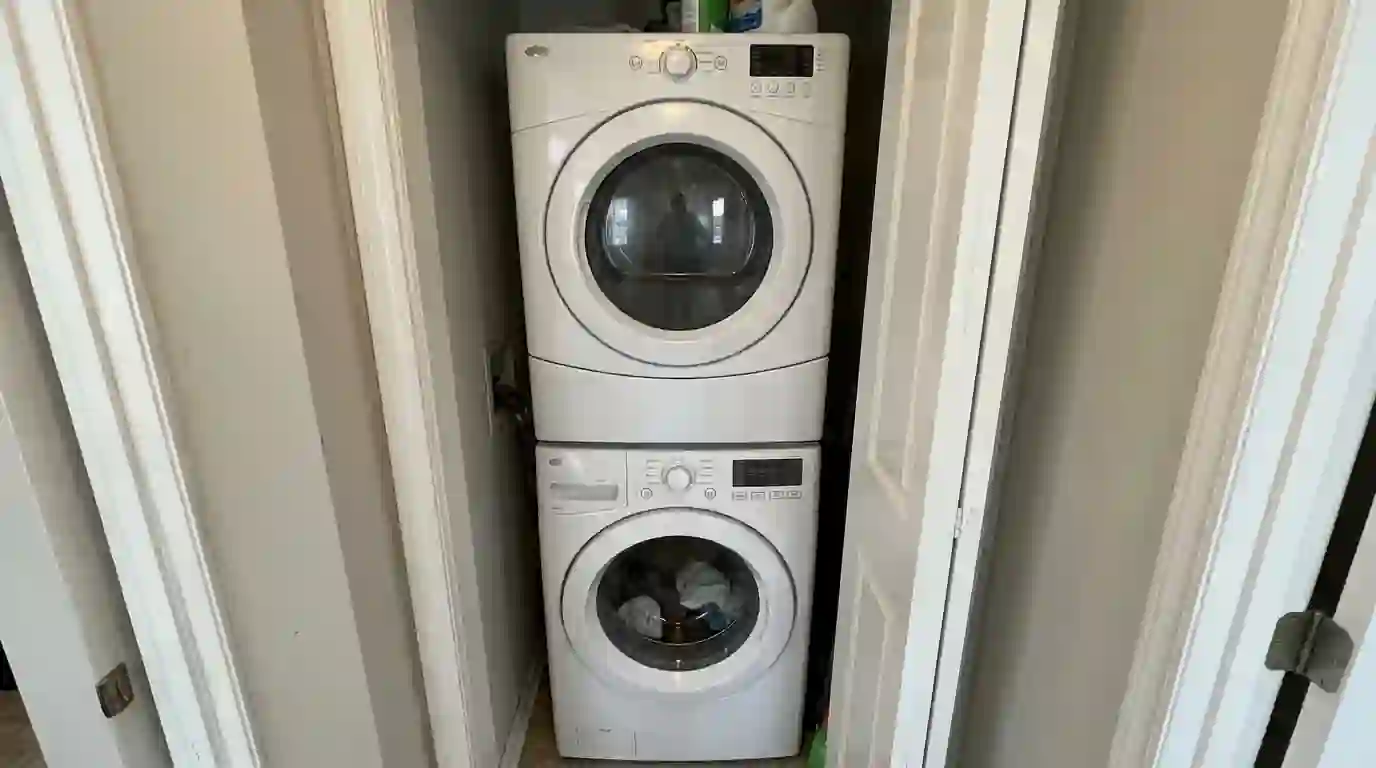
Where we handle dryer vent cleaning
Farmington neighborhoods first, then the rest of San Juan County and southwest Colorado. Pick your area for local notes, or see all 41 locations.
Dryer Vent Cleaning questions from Farmington homeowners
How long does a dryer vent cleaning take?
A short wall vent usually takes about an hour from start to finish, including airflow checks before and after. Long runs through an attic or crawlspace, roof terminations and vents packed solid with sand and lint can take closer to two hours. Repairs to ducts or caps add a little time on the same visit.
Can a clogged dryer vent cause a fire?
Yes. Lint is highly flammable, and a restricted vent makes the dryer run hotter while lint builds up around the heat source and inside the duct. Safety devices like thermal fuses help, but they are a backstop, not a fix. Long drying times, a hot cabinet or a burning smell are signs to stop using the dryer and have the vent cleaned.
Do you clean dryer vents that exit through the roof?
Yes. We clean roof vents from inside with a rotary brush and, when the roof is safe to walk, from the top as well. Roof caps collect lint quickly and can be blocked by birds or ice. Mention a steep pitch or a tile roof on the phone, and we'll plan ladders and access to suit.
Should I replace the foil duct behind my dryer during a vent cleaning?
If it is thin foil or white vinyl accordion duct, yes. Both crush easily, trap lint in their ridges and do not hold up well to heat. Semi-rigid or rigid metal duct is the better choice. We can replace the transition duct during the cleaning and leave enough length to pull the dryer out later.
Does a gas dryer vent need cleaning more often than an electric dryer vent?
Not always more often, but a clean vent matters even more on a gas dryer. Besides lint and moisture, a gas dryer sends combustion gases out through the vent. A blocked duct can push those gases back into the laundry room and makes the burner run hotter, wearing out the igniter and valve coils.
Why does my dryer vent cap fill with sand?
Windy days around the Four Corners blow fine sand against the house, and a vent flap that doesn't close fully lets it in. The sand mixes with damp lint and hardens. A cap with a well-weighted flap or gravity damper, facing away from the prevailing wind where possible, holds up better.
Need dryer vent cleaning today?
Call any hour. A real person picks up, takes the model number and sets the visit.