Dishwasher installation in Farmington, NM
A dishwasher that leaks, drains slowly or wobbles in the opening was usually installed in a hurry. We pull the old unit, make the water, drain and power hookups, anchor it square and run a full test cycle.
- Answered 24/7
- Gas, electric and propane
- Farmington and the Four Corners
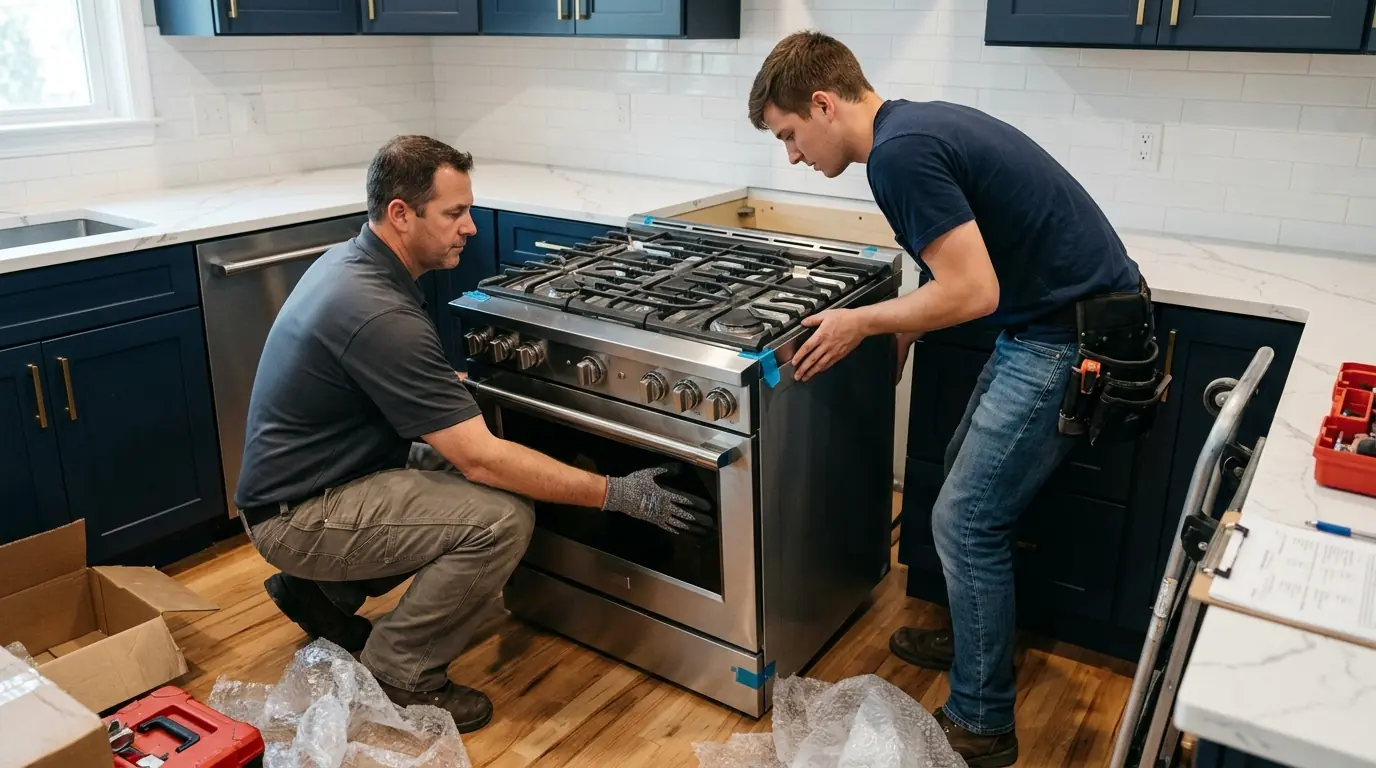
What owners ask about
- Old dishwasher leaking, time to replace it
- New unit drains poorly after install
- Door hits the countertop or cabinet
Quick answer
A standard dishwasher swap means a new supply line, a drain hose with a proper high loop, the electrical connection, anchoring brackets and a leak-checked test cycle. Typical install labor around Farmington runs about $172-$341 for a replacement in the same opening, and most installs finish in one visit. Call any hour, since our phones are staffed 24/7, and a same-day slot is possible when one opens up.
Brands we repair: Whirlpool, GE, Samsung, LG, Maytag, Frigidaire, KitchenAid, Bosch, Kenmore, Electrolux, Amana, Speed Queen, Sub-Zero, Hotpoint
Getting the water, drain and power right under your counter
Dishwashers look like the easy kitchen install, and that is why so many get done wrong. Three hookups sit in a cramped space behind the kick plate: a hot water supply, a drain hose and an electrical connection. Each one has a specific way it needs to be done, and a shortcut on any of them shows up later as a leak, a smell or a tripped breaker. Our tech takes the time to do all three correctly.
On a replacement, we shut off the water at the valve under the sink and kill the breaker first. Then we disconnect the old supply, drain and wiring, release the mounting brackets and slide the old dishwasher out onto a protected floor. Before the new one goes in, we look at the subfloor under the old unit. Soft, dark or swollen flooring tells you there was a slow leak you never saw.
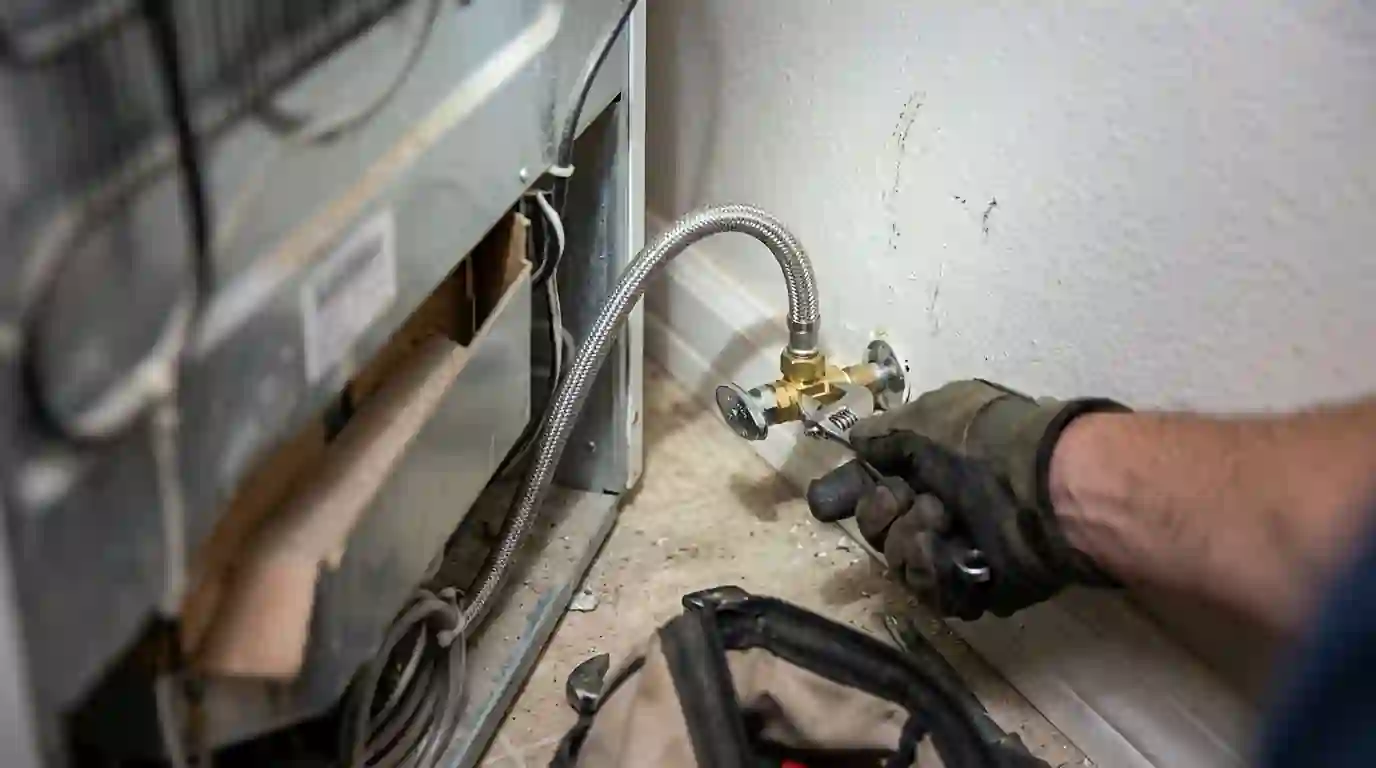
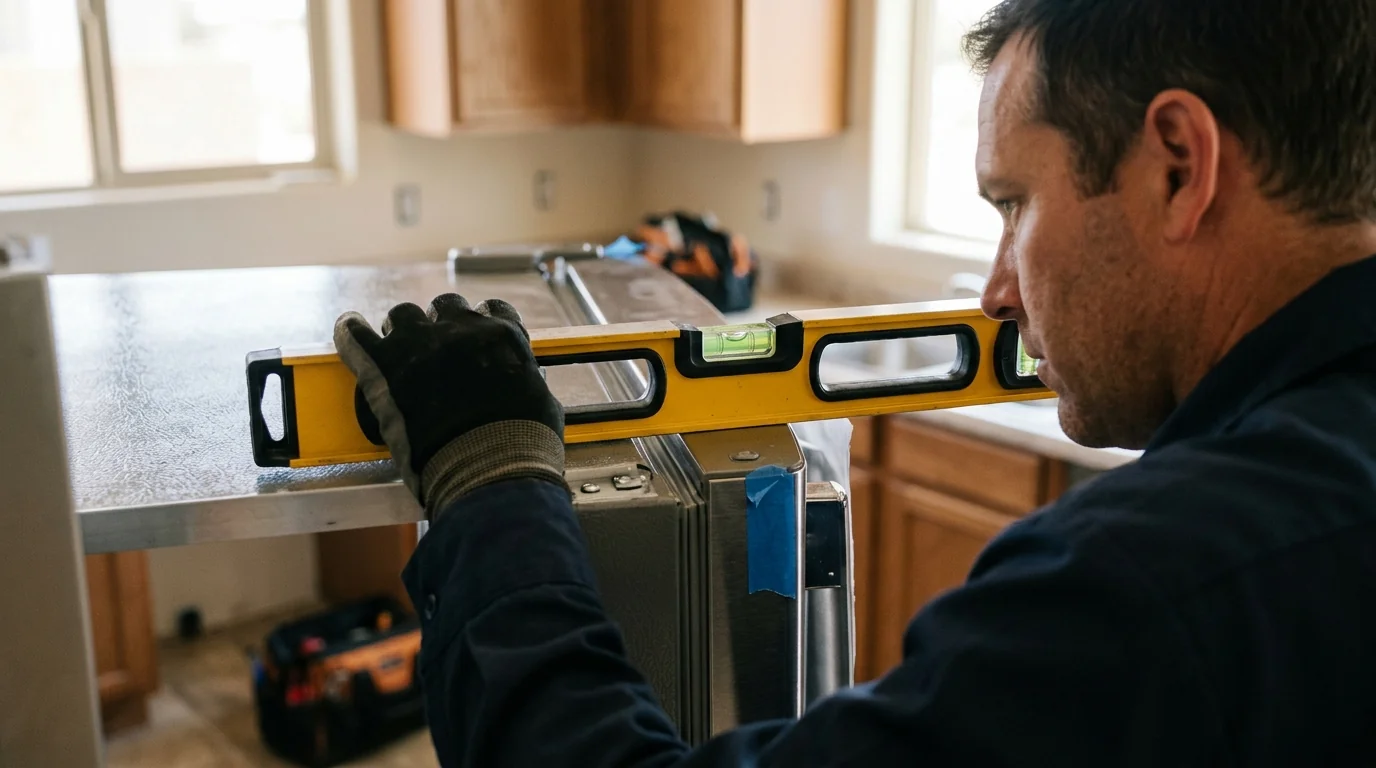
With the opening clear, we check the shut-off valve, the drain connection at the disposal or sink tailpiece, and the outlet or junction box. Then we fit the new elbow, supply line and cord or whip, set the dishwasher, level it and anchor it to the countertop or cabinet sides. A full cycle with the kick plate off lets us watch every fitting while the machine fills, heats and drains.
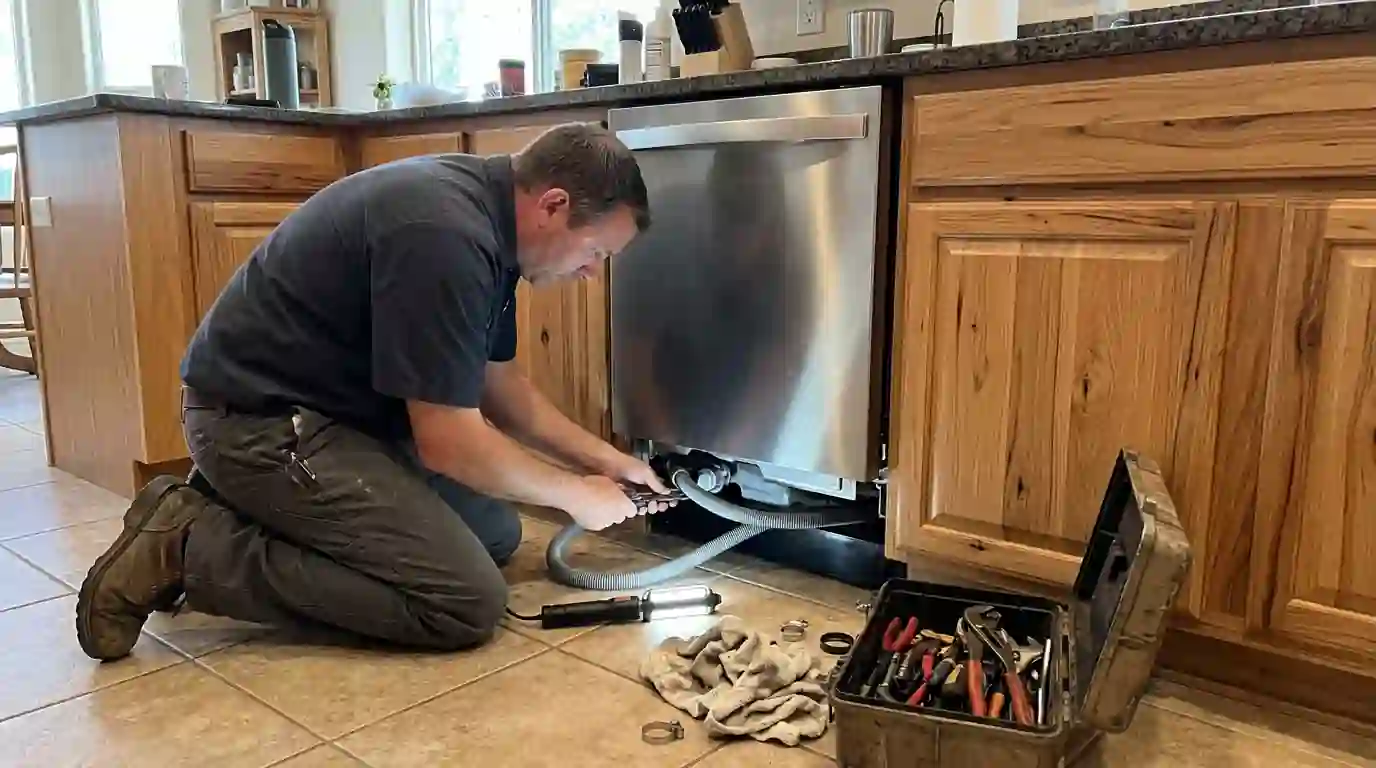
Everything a proper dishwasher install covers
Here is the work behind a dishwasher install that lasts, piece by piece.
Removal of the old unit
Water and power off, old supply, drain and wiring disconnected, brackets released and the old dishwasher slid out and set aside without tearing up the flooring.
New supply line and elbow
A new 90-degree elbow with thread sealant on the inlet valve and a new braided stainless supply line to the hot shut-off valve, tightened and checked under pressure.
Drain hose and high loop
The drain hose is fastened high under the counter, or run through an air gap where the sink has one, then clamped to the disposal inlet or sink tailpiece.
Hardwire or cord connection
We make the hardwired connection in the junction box with the right wire nuts and strain relief, or fit a cord kit where the outlet setup calls for one.
Leveling and anchoring
The feet are adjusted so the door clears the countertop, then brackets screw into the countertop underside, or into the cabinet sides when you have stone counters.
Test cycle with leak check
We run a full cycle with the kick plate off, watching the elbow, drain clamp and floor. Then the kick plate goes back on and we show you the controls.
Signs your dishwasher install needs a second look
Whether it went in last week or years ago, these clues point back to the installation.
Dirty water backs into the tub
No high loop on the drain hose lets sink and disposal water siphon back into the dishwasher. You find a gray puddle in the bottom between cycles, and the smell follows.
Unit tips forward with racks out
Anchoring brackets were never screwed to the countertop or cabinet sides. The dishwasher rocks, the door hits the cabinet, and over time the water line fitting loosens.
Drip at the front left corner
Most supply connections sit at the front behind the kick plate. A cross-threaded elbow, missing thread sealant or a reused old supply line weeps slowly onto the floor.
Disposal knockout never removed
New disposals ship with a plug inside the dishwasher inlet. If nobody knocked it out, the dishwasher cannot drain at all and water sits in the tub after every cycle.
Breaker trips when it heats
A loose wire nut in the junction box, a cord kit used on a hardwired circuit, or a circuit shared with the disposal can trip or overheat under the heating element's load.
Door won't open fully or close
The unit is set too high, too far forward or out of level side to side, so the door binds against the countertop edge or the cabinet beside it.
What dishwasher installation costs in the Farmington area
Below is what dishwasher install labor usually runs for homes around town. Parts are added only when your kitchen needs them.
| Replacement in the same opening | $172-$341 |
|---|---|
| First-time install in a prepared opening | $214-$389 |
| Supply line, elbow and fittings | $34-$87 |
| Hardwire whip or cord kit added | $28-$64 |
| Shut-off valve replacement under sink | $68-$143 |
Stone countertops, a missing outlet or junction box, an opening that runs tight, or subfloor damage under the old unit all change the total. Think of the bands as a starting point; a firm price for your kitchen comes once we see it.
Hard water and older kitchens shape a Farmington dishwasher install
Hard, mineral-heavy water is the norm here, and well water across the county is often worse. Minerals build up inside the inlet valve, the supply line and the spray arms, and an old supply line that has been in place for years is often stiff with scale at the fitting. We never reuse an old line on a new dishwasher. A fresh braided stainless line and a clean inlet screen keep the new valve from starting life half clogged.
Kitchens in the 1950s to 1970s ranch homes around town were often built without a dishwasher at all, or with one squeezed into a narrow opening. That means old shut-off valves, short drain tailpieces, and sometimes a plug-in cord where a hardwired whip is expected, or the reverse. We check that the opening is a standard width and height, that the floor is reasonably level, and that the water and drain can reach without kinks.
Homes on private wells sometimes have a water softener or whole-house filter. If yours does, we set the dishwasher's water hardness or rinse aid setting to match, which keeps spots and film down without overdosing detergent. If there's no softener, a correctly set rinse aid dispenser is the cheapest defense against cloudy glasses and white film on the racks.
How we swap out a dishwasher in one visit
- On the phone
Model and opening
Read us the new model number and tell us whether an old dishwasher is coming out and whether you have a disposal or an air gap at the sink.
- Arrival
Shut-offs and protection
We lay down floor protection, close the hot water valve under the sink, switch off the breaker and confirm with a tester that the power is dead.
- Removal
Old unit out
Brackets come loose, the old dishwasher slides out, and we inspect the floor, the valve and the drain connection before anything new goes in.
- Install
Hook up and anchor
New elbow and supply line, drain hose with a high loop, electrical connection, then the unit is leveled and anchored square in the opening.
- Final check
Full test cycle
A complete cycle with the kick plate off shows any drip at once. We clean up, reattach the kick plate and run through the controls with you.
Repair the old dishwasher or install a new one?
If your current dishwasher has a leaking tub, a rusted-through door liner or a failed control board on an older model, replacement usually wins. Pumps, inlet valves, door latches and heating elements are worth repairing on a newer machine with a solid tub. We tell you which category yours falls into before you buy.
If you go new, measure the opening and compare the hookup locations on the new unit's install sheet with what is under your counter. Most standard 24-inch dishwashers fit a standard opening, but tall tubs and third racks can change the door clearance at the countertop.
Dishwasher install tips from under the sink
- Before the new unit arrives, try turning your hot water valve under the sink. If it is frozen or drips, ask us to replace it during the install.
- Check whether your old dishwasher is hardwired or plugged into an outlet under the sink, since that decides which connection parts the new one needs.
- If you recently put in a new garbage disposal yourself, remember its dishwasher inlet plug. We knock it out, but DIY disposal swaps often miss it.
- Clear the sink cabinet before install day. We need room to reach the valve, the drain and the outlet without moving stored cleaners around.
- Run the hot water at the kitchen tap before starting a cycle so the dishwasher fills with hot water instead of the cold sitting in the line.
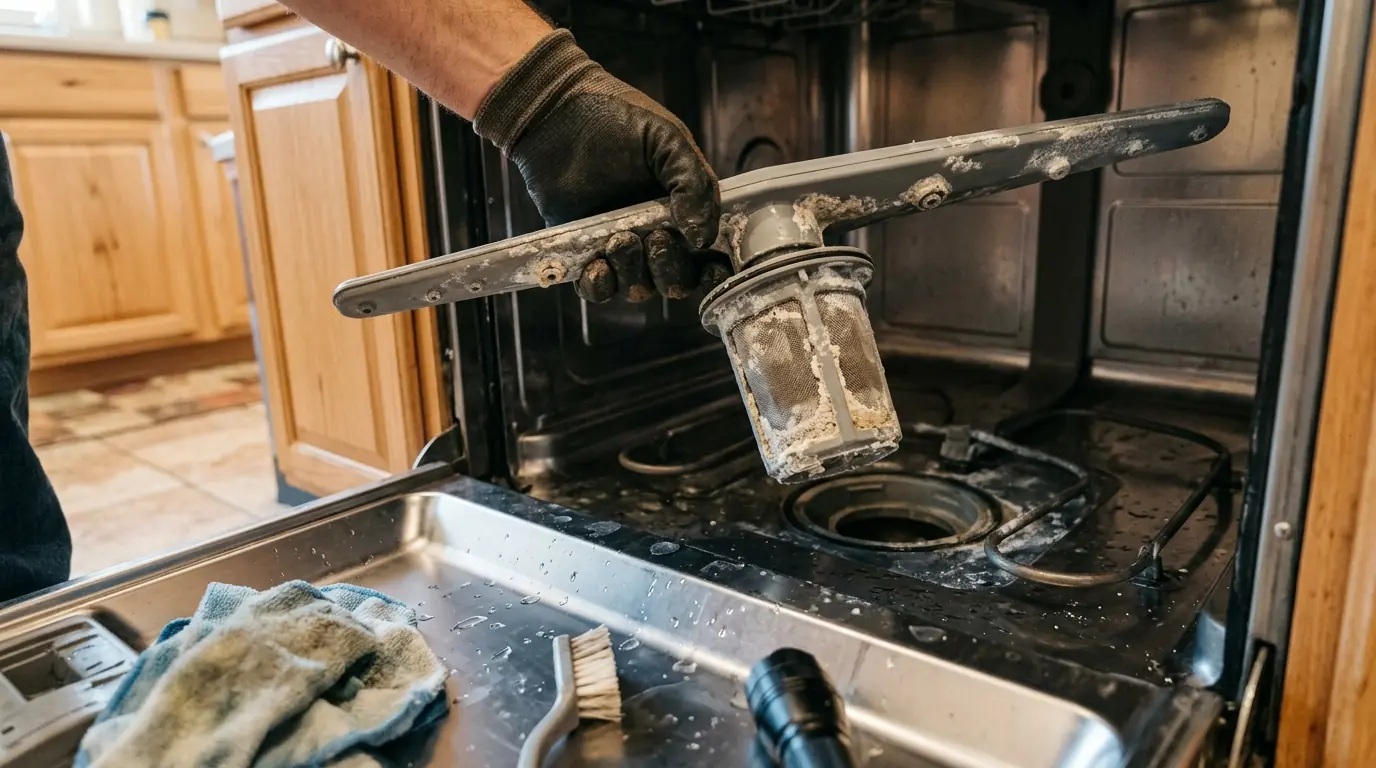
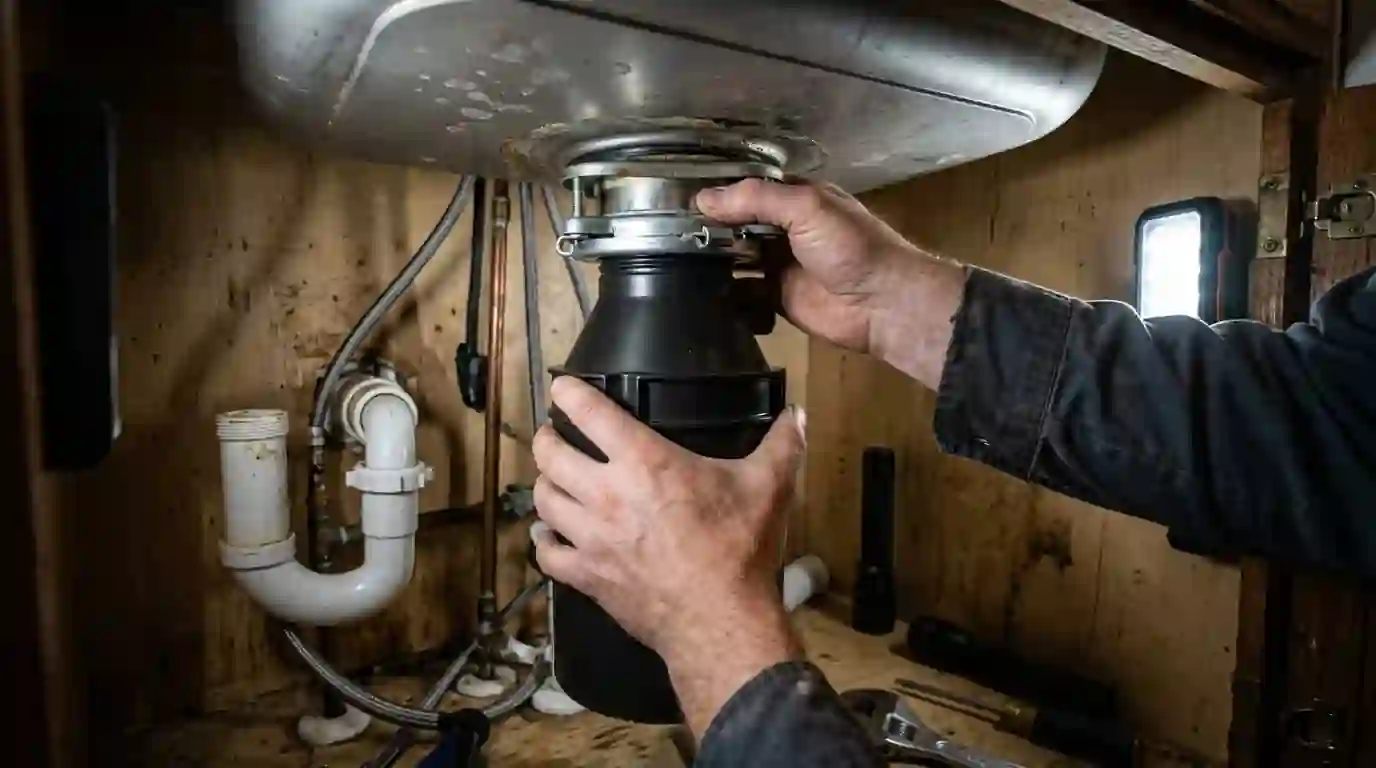
Related repairs people book with dishwasher installation
Where we handle dishwasher installation
Farmington neighborhoods first, then the rest of San Juan County and southwest Colorado. Pick your area for local notes, or see all 41 locations.
Dishwasher Installation questions from Farmington homeowners
Can you install a dishwasher where there wasn't one before?
If the cabinet opening, a hot water line, a drain point and power are already in place, yes. If the kitchen needs cabinet work or a new circuit first, that has to be done before we set the dishwasher, and we tell you exactly what is missing.
Why does a dishwasher drain hose need a high loop?
The loop keeps the hose higher than the sink drain connection, so dirty sink and disposal water cannot flow back into the dishwasher tub. Without it, you get standing water, odors and food bits in a clean load.
Do I need an air gap for my new dishwasher?
Some sinks already have an air gap, the small cap beside the faucet. If yours does, we route the drain hose through it. If not, a high loop secured under the counter handles the same backflow job in most kitchens.
How do you anchor a dishwasher under a granite countertop?
Screws can't go into stone, so we use the side-mount brackets most dishwashers include and fasten them to the cabinets on either side. If the cabinets are not close enough, we use a bracket kit made for stone counters.
Should I reuse my old dishwasher supply line?
No. An old line has been under pressure for years, and in our hard water the fitting is often scaled or corroded. A new braided stainless line costs little and removes the most common source of slow leaks after a swap.
Will a new dishwasher fit in my old dishwasher opening?
Most standard dishwashers are 24 inches wide and fit a standard opening, but height varies with the leveling legs and floor. If new flooring was laid around the old unit, the opening may be shorter. We measure before the old one comes out.
Need dishwasher installation today?
Call any hour. A real person picks up, takes the model number and sets the visit.