Ice machine repair in Farmington, NM
An ice machine that stops harvesting leaves a bar or store buying bagged ice by the case. We repair commercial cube and nugget machines, clear the hard water scale behind most failures, and answer the phone any hour.
- Answered 24/7
- Gas, electric and propane
- Farmington and the Four Corners
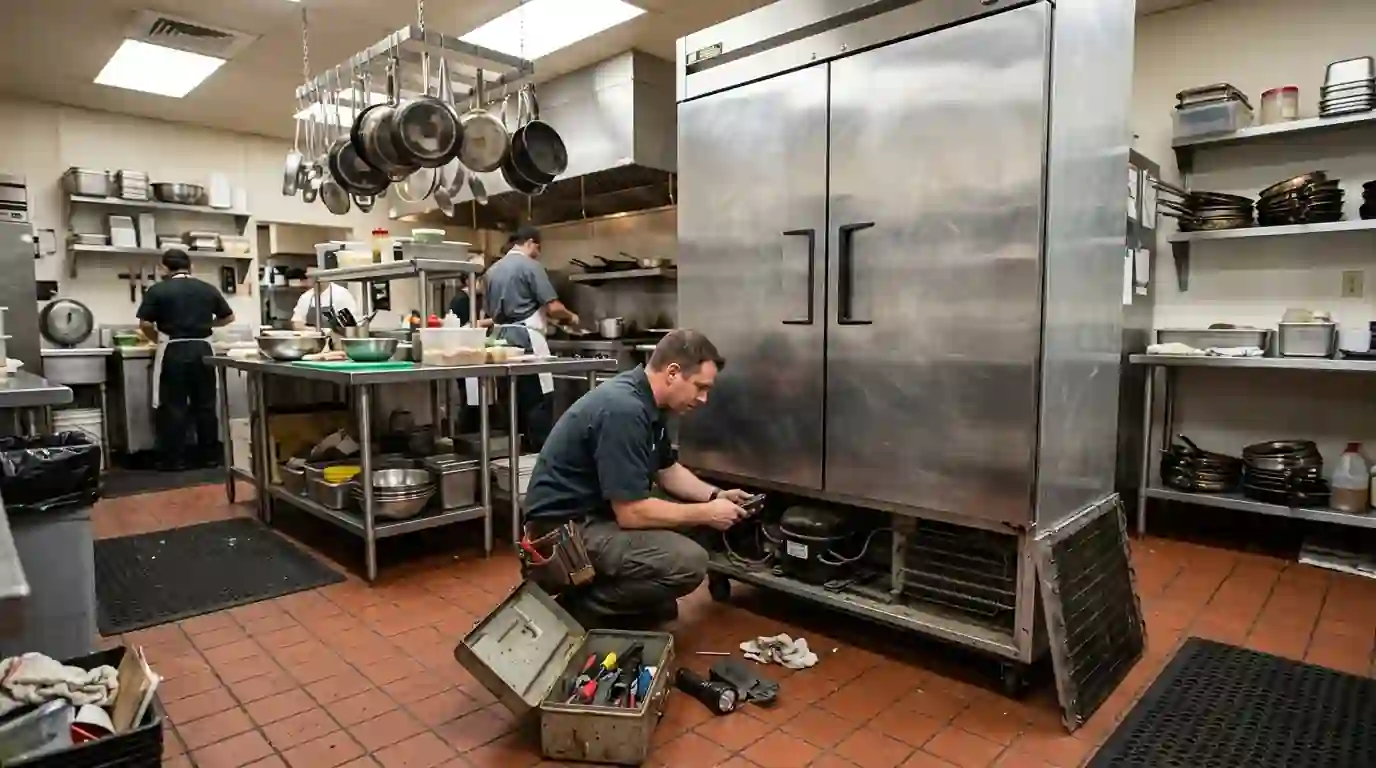
Ice machine trouble we fix
- Ice sheet frozen solid on the evaporator
- Cubes thin, cloudy or hollow
- Bin full of water instead of ice
Quick answer
Most commercial ice machine failures in this area start with hard water scale on the evaporator plate, water pump, distribution tube or inlet valve. Harvest problems often trace to a hot gas valve, a harvest assist motor or a bin control. Typical ice machine repairs here run about $187-$613 based on which part failed. We take calls 24/7, and a down machine at a busy bar counts as urgent.
Brands we repair: Whirlpool, GE, Samsung, LG, Maytag, Frigidaire, KitchenAid, Bosch, Kenmore, Electrolux, Amana, Speed Queen, Sub-Zero, Hotpoint
Getting a bar or store back to a full ice bin
An ice machine looks simple from the front: water goes in, cubes fall into the bin. Behind the panel, it runs a timed freeze and harvest cycle that depends on clean water flow, an accurate thickness sensor, a hot gas valve that opens on cue, and a bin control that knows when to stop. When any one of those steps misbehaves, production drops or stops, and a busy weekend can drain the bin before anyone notices.
We repair self-contained and modular cube machines, under-counter units, nugget and flake machines, and the bins and dispensers they sit on. Our customers include bars, restaurants, convenience stores, motels with ice machines in the hallways, and work camps that go through ice fast in the summer. Phones are answered day and night, and when a machine is down and you're losing sales, a tech can head out after hours.
When you call, a photo of the data plate and the controller display gives us most of what we need. Many machines show an error code or a blinking light pattern that points straight at the problem: long freeze time, long harvest, water fault, bin switch open. With that information, our tech can bring the right water valve, pump, sensor or control part instead of guessing.
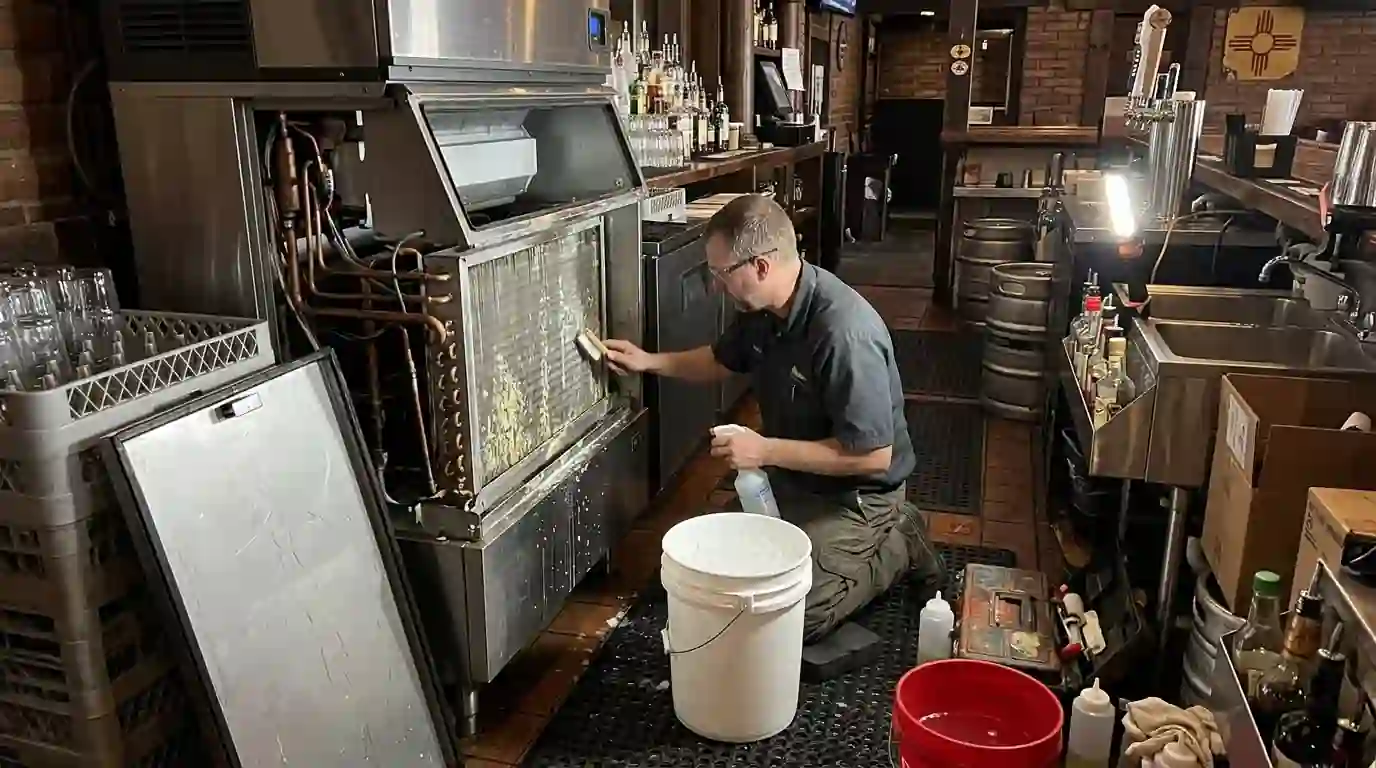
What it means when your ice machine misbehaves
These symptoms each point to a different part of the freeze and harvest cycle.
Low or no ice production
The machine runs but the bin fills slowly. Scale on the evaporator, a dirty condenser, a weak water pump or a clogged water filter is usually behind it. Check the air filter on air-cooled units too.
Ice won't drop during harvest
A full sheet stays stuck to the evaporator plate. A failed hot gas valve, a harvest assist motor that doesn't push, or scale bonding the ice to the plate are the usual causes.
Thin, cloudy or hollow cubes
Poor water distribution from a scaled distribution tube or weak pump makes uneven cubes. A thickness probe out of adjustment, or one coated in scale, can also cut cubes short.
Solid block of ice on the plate
When the machine misses harvest, ice keeps building into a solid mass. A bad thickness sensor, a stuck harvest switch or a controller fault can freeze it up completely.
Water in the bin, not ice
A bin full of water points to a clogged bin drain or a water inlet valve that won't shut off. It can also mean the machine is melting ice it can't keep up with.
Machine stops when bin isn't full
The bin control, whether a thermostat, curtain switch or sensor, is telling the machine the bin is full. A stuck curtain or failed bin switch shuts production down early.
How hard water and desert heat affect ice machines in the Four Corners
Hard water is the number one enemy of ice machines around Farmington. City water carries a heavy mineral load, and private wells in the county are often worse. Every freeze cycle leaves a thin film of scale on the evaporator plate, the water trough, the distribution tube and the float or sensor. Over a few months, that scale slows freezing, causes cubes to stick during harvest, and clogs the water pump. A proper water filter and scheduled descaling are essential here, not optional.
Summer heat is the other half of the problem. With July highs around 90, air-cooled ice machines in hot kitchens, back rooms and storage areas struggle to reject heat, especially when spring dust has coated the condenser. Production drops right when demand peaks. Moving a machine out of a hot corner, keeping its condenser clean, and giving it room to breathe often recovers a good share of lost output.
Dusty, windy springs add their own wear. Sand drawn in by the condenser fan coats the coil and settles in the bin area of machines near doors or loading docks. Monsoon lightning and short power blips in July and August can damage control boards and leave a machine stuck mid-cycle after the power returns, so a surge protector on the machine's circuit makes sense.
What happens on an ice machine service call
- When you call
Share the error code
Read us any code or light pattern on the controller, and send a photo of the data plate. That tells us the model, the refrigerant and the parts likely involved.
- Before arrival
Stop the bin from melting
If the machine is leaking or freezing up, switch it off at its own switch, scoop usable ice into a cooler, and leave the panel in place until our tech arrives.
- First look
Watch a cycle
Our tech runs the machine through freeze and harvest, checks water flow over the plate, and reads freeze and harvest times against what the manufacturer expects.
- Same visit
Clean, repair, adjust
We descale if scale is the problem, replace the failed valve, pump, probe or switch, and adjust the thickness probe so cubes come out the right size.
- Before leaving
Confirm a good harvest
We wait for a full harvest, check cube quality, confirm the bin control stops the machine, and recommend a cleaning schedule based on your water.
Ice machine components we test and replace
These are the parts our techs work on most often on commercial ice machines.
Evaporator descaling and sanitizing
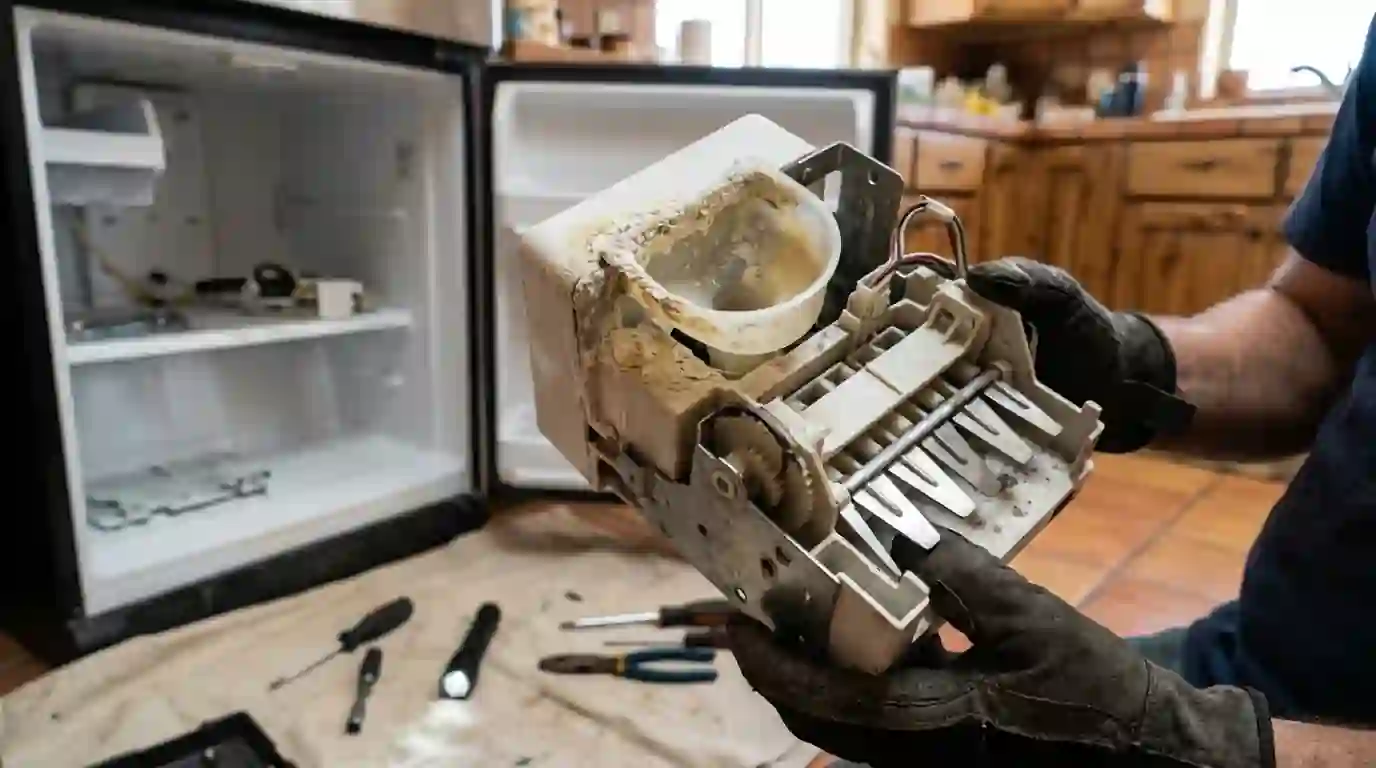
We run the manufacturer's clean cycle with the right scale remover, then sanitize the food zone, including the trough, distribution tube, curtain and bin. Heavy scale may need the evaporator cleaned by hand.
Water inlet valves and pumps
A scaled inlet valve fills too slowly or won't close. A water pump with a worn impeller can't wet the plate evenly. We replace either and clean the strainer screen at the inlet.
Hot gas valves and harvest assist motors
We test the hot gas solenoid coil and valve, and the harvest assist motor or probe on machines that use one. A failure here leaves ice stuck to the plate after the freeze cycle.
Thickness probes and bin controls
We clean and adjust the ice thickness probe so cubes come out at the right size, and test the bin control or curtain switch so the machine stops and restarts at the right times.
Condenser cleaning and fan motors
On air-cooled units, we clean the condenser coil and air filter and check the fan motor. A clean condenser lowers head pressure and helps the machine keep up in summer heat.
Water filters and drain lines
We replace the water filter cartridges, check that the filter head isn't leaking, and clear bin and machine drain lines so melt water and purge water leave the cabinet freely.
Typical ice machine repair prices in the Farmington area
Common ice machine jobs tend to land in these bands once parts and labor are added up. Use them as a guide, not a quote.
| Descaling and sanitizing cleaning | $187-$344 |
|---|---|
| Water inlet valve or water pump | $229-$436 |
| Hot gas valve or harvest assist motor | $317-$613 |
| Thickness probe or bin control | $198-$387 |
| Water filter cartridge replacement | $118-$267 |
The machine's size, its make, how heavy the scale is and whether a part has to be ordered all change the price. Compressor and refrigerant repairs cost more and we price those separately after diagnosis.
Habits that keep an ice machine producing
- Change the water filter on the schedule printed on the cartridge, or sooner if you're on well water. A plugged filter starves the machine and slows production.
- Run the manufacturer's descaling and sanitizing cycle every few months. With hard local water, many machines need it more often than the manual suggests.
- Keep the area around an air-cooled machine clear, and clean its air filter and condenser regularly, especially after dusty spring winds.
- Use a clean scoop and store it outside the bin. Hands, glasses and scoops left in the ice bring in contamination that clogs drains and grows slime.
- Watch for changes in cube size and shape. Thin or uneven cubes are an early warning of scale or water flow problems, long before production stops.
Repairing an ice machine compared with replacing it
Most ice machine problems are scale, water parts and controls, which are reasonable repairs on a machine with a healthy refrigeration system. A thorough cleaning alone often restores a big share of lost production. If the evaporator plate is badly pitted, the compressor has failed on an older unit, or the machine has outgrown your demand, replacement starts to make more sense.
If you do replace it, sizing matters. A machine that runs nonstop to keep up wears out faster, and one in a hot back room needs extra capacity in July. We can help you think through output, cooling type and water filtration for the space.
Related repairs people book with ice machine repair
Where we handle ice machine repair
Farmington neighborhoods first, then the rest of San Juan County and southwest Colorado. Pick your area for local notes, or see all 41 locations.
Ice Machine Repair questions from Farmington homeowners
Why is my commercial ice machine not making ice?
Common causes are heavy scale on the evaporator, a clogged water filter or inlet valve, a dirty condenser, a failed water pump, or a bin control stuck in the full position. Check the water supply and the filter first, then give us a call with any error code on the display.
How often should an ice machine be descaled in Farmington?
Our hard water means scale builds fast. Many machines here need descaling and sanitizing every three to four months, and some on well water need it more often. A good water filter changed on schedule lengthens the time between cleanings.
Why is ice stuck to my ice machine evaporator plate?
If the ice won't release during harvest, the hot gas valve may have failed, the harvest assist motor or probe may not be working, or scale may be bonding the ice to the plate. A full sheet that never drops can freeze into a solid block, so turn the machine off and call us.
Why are the cubes from my ice machine small or cloudy?
Small or hollow cubes usually come from poor water flow over the evaporator: a scaled distribution tube, a weak water pump or a low water supply. A thickness probe out of adjustment also causes small cubes. Cloudy ice often means high mineral content and a filter overdue for a change.
Do you offer 24/7 ice machine repair for bars?
We answer the phone at any hour, and a bar or restaurant with no ice on a busy night is a situation where we'll send a tech after hours. Read us the error code and the model number from the data plate so the right parts come along.
Can you repair ice machines at convenience stores and motels?
Yes. We work on ice machines and dispensers at convenience stores, motels, work camps and restaurants across our service area in San Juan County and nearby Colorado. Hallway ice machines at motels often need scale and drain attention most.
Need ice machine repair today?
Call any hour. A real person picks up, takes the model number and sets the visit.