Microwave repair in Farmington, NM
A microwave that hums but won't heat, sparks inside, or ignores the touchpad is telling you a part has quit. We test the door switches, diode, capacitor and magnetron safely and fix over-the-range, built-in and countertop units on site.
- Answered 24/7
- Gas, electric and propane
- Farmington and the Four Corners
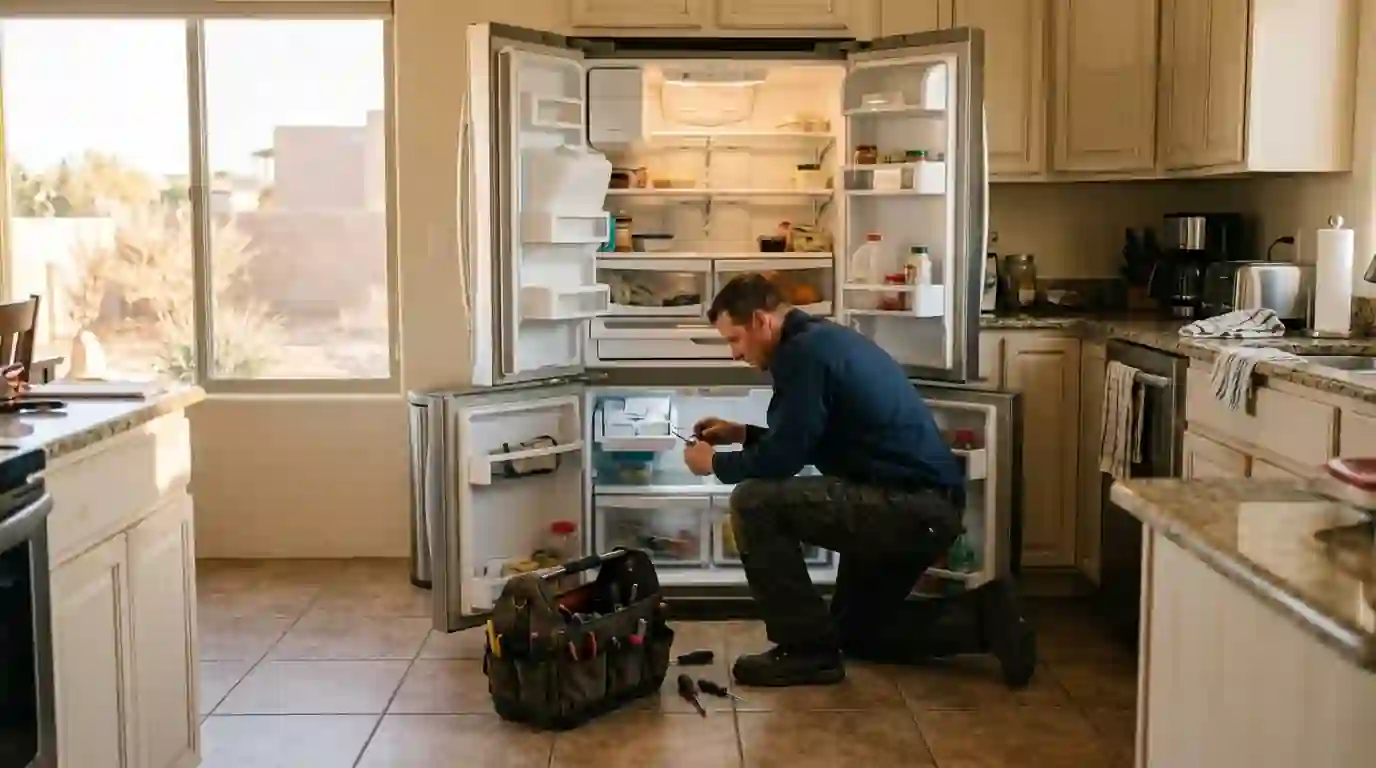
Microwave calls we hear most
- Runs and hums but food stays cold
- Blue sparks or popping inside the cavity
- Touchpad dead after a monsoon storm
Quick answer
When a microwave runs but won't heat, the usual culprit is a failed high-voltage diode, capacitor or magnetron. A completely dead unit often has a blown fuse behind a bad door switch. Typical repairs around Farmington run about $97-$336 depending on the part and model. Most over-the-range and built-in units are fixed in one visit, and you can reach a person on our line 24/7.
Brands we repair: Whirlpool, GE, Samsung, LG, Maytag, Frigidaire, KitchenAid, Bosch, Kenmore, Electrolux, Amana, Speed Queen, Sub-Zero, Hotpoint
What usually goes wrong when a microwave stops heating
Most microwave trouble lands in a short list of parts. The door has two or three interlock switches that must close in the right order, and when one sticks the oven stays dark or blows its main fuse the moment you shut the door. Behind the control panel sits a high-voltage circuit: a transformer, a capacitor, a diode and the magnetron that makes the heat. When any of those fail, the light, fan and turntable may still run while your coffee stays cold.
That high-voltage side is the reason we ask homeowners to leave the outer cover alone. A microwave capacitor can hold a dangerous charge long after the plug is pulled, and the transformer puts out a couple thousand volts while it runs. Our tech unplugs the oven, discharges the capacitor with an insulated tool, and only then starts testing. We check the diode and capacitor on a meter, read the magnetron filament for continuity and look for shorts to the case.
Over-the-range models add a second job, since they also vent the cooktop below. That means a vent fan, a grease filter, a charcoal filter on recirculating setups and cooktop lights, all mounted above a hot, greasy burner. Built-in and drawer units add trim kits and tight cabinet cutouts. We work on all three styles, plus countertop models worth saving, and we tell you plainly when a cheap countertop oven costs less to replace than to repair.
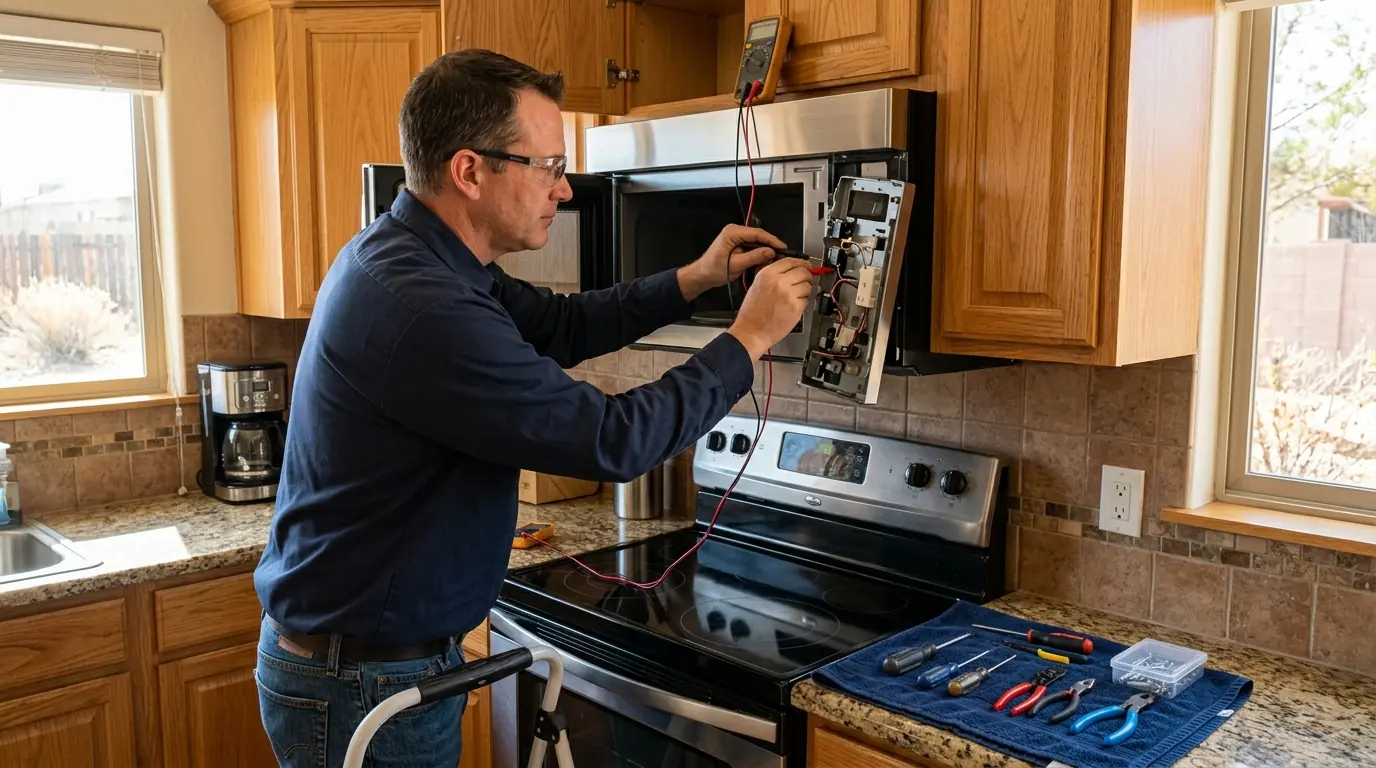
Microwave parts we test and replace on site
Around Farmington, the same handful of microwave parts fail again and again.
Door interlock switches
We test the primary, secondary and monitor switches together, since one failed switch can blow the fuse again. Replacing the full set along with the main fuse is often the cleanest fix on a kitchen oven used every day.
High-voltage diode
A shorted diode ranks near the top of the list when a microwave hums without heating. It is an inexpensive part, but we discharge the capacitor and test the diode with the right meter before anything gets replaced.
High-voltage capacitor
A capacitor that has shorted or drifted off its rating kills heating and can trip the fuse. We check it on a capacitance meter, fit one with a matching rating and confirm the internal bleed resistor works.
Magnetron
The magnetron makes the microwave energy. When its filament opens or the antenna cap burns, heating stops. On a newer over-the-range or built-in unit, a magnetron replacement often still beats buying and hanging a new oven.
Touchpad and control board
We read the keypad ribbon and the board outputs to separate a worn membrane from a failed relay or a storm-damaged board, then order the exact part by model number so it fits on the first try.
Turntable motor, coupler and vent fan
Small motors wear out from heat and grease. We replace the turntable motor and coupler, the exhaust fan motor on over-the-range units, and the cooktop light sockets that bake above the burners.
Warning signs a microwave is about to quit
Stop using the oven if you notice any of these, since several point straight at the high-voltage side.
Runs but leaves food cold
The fan, light and turntable work, yet a cup of water barely warms in two minutes. That pattern usually means a failed diode, capacitor or magnetron, and finding which one takes a meter, not a guess.
Sparks, arcing or a burning smell
Small blue flashes often come from a scorched waveguide cover or chipped cavity paint. A sharp electrical smell or a loud buzz points deeper. Unplug the oven and leave it unplugged until someone checks it.
Completely dead after closing the door
If the display goes blank right as the door latches, a door switch has likely failed and taken the main fuse with it. Swapping only the fuse usually just blows another one on the next try.
Touchpad ignores some buttons
A membrane keypad wears out in the spots you press most, like Start and Add 30 Seconds. Ghost beeps, or pads that need a hard press, point to the touchpad or its ribbon connector.
Turntable stops or grinds
The glass tray rides on a roller ring and a coupler that sits on a small motor. A cracked coupler, spilled sugar in the roller track or a worn motor stops the spin and leaves cold spots in food.
Vent fan roars or will not start
On over-the-range units the exhaust fan pulls steam and grease up from the cooktop. A grinding fan, one stuck on high, or one that never starts usually comes down to the motor or a relay on the board.
What microwave repairs typically cost in Farmington
These ranges reflect common microwave repairs in this area, part and labor together. Your model and the price of its part decide where you land.
| Door switch set and main fuse | $118-$196 |
|---|---|
| Turntable motor or coupler | $97-$173 |
| High-voltage diode or capacitor | $137-$238 |
| Magnetron replacement | $187-$336 |
| Touchpad or control board | $163-$312 |
These are typical figures, not a quote. Built-in and drawer models, trim kits and boards that must be ordered push the number up, while a switch set on a countertop oven sits near the low end.
How monsoon storms and older Farmington kitchens affect microwaves
July and August bring monsoon storms with lightning, short outages and quick power blips across San Juan County. Microwaves are among the first appliances to show the damage, because their electronic control boards and touch panels share a cabinet with the high-voltage parts. After a storm we often find a board with a scorched relay, a display that powers up with scrambled digits, or a unit that resets itself halfway through a cycle. A plug-in surge protector, or a whole-house unit at the panel, is a cheap way to protect the next board.
Many Farmington ranch homes from the 1950s through the 1970s were built long before anyone planned for a microwave over the range. Kitchens were remodeled later with an over-the-range unit hung on a wall plate and plugged into an older circuit, sometimes shared with the refrigerator or a toaster. When that circuit sags or trips, the microwave gets the blame. We check the outlet voltage while we test the oven, so you know whether the trouble is inside the cabinet or at the outlet behind it.
What happens from your call to a hot plate again
- First call
What the oven is doing
Explain how the microwave behaves, and read us the model number from the label inside the door frame. That lets us bring the likely switches, diode or fuse on the first trip.
- At the door
Safe shutdown
Our tech unplugs the microwave or shuts off its breaker, removes the cabinet or grille, and discharges the high-voltage capacitor before any meter touches the circuit.
- Minute 20
Test, not guess
We check the door switches, fuse, diode, capacitor, transformer and magnetron in order, then tell you which part failed and what the repair costs before work starts.
- Same visit
Repair and load test
With the part on hand, we install it, close up the cover and heat a measured cup of water to confirm the oven is producing real heat again.
- Afterward
Door seal and cleanup
We look over the door seal area for arcing marks, wipe down the work area, and explain any signs to watch for on an older unit.
Is a broken microwave worth fixing or replacing?
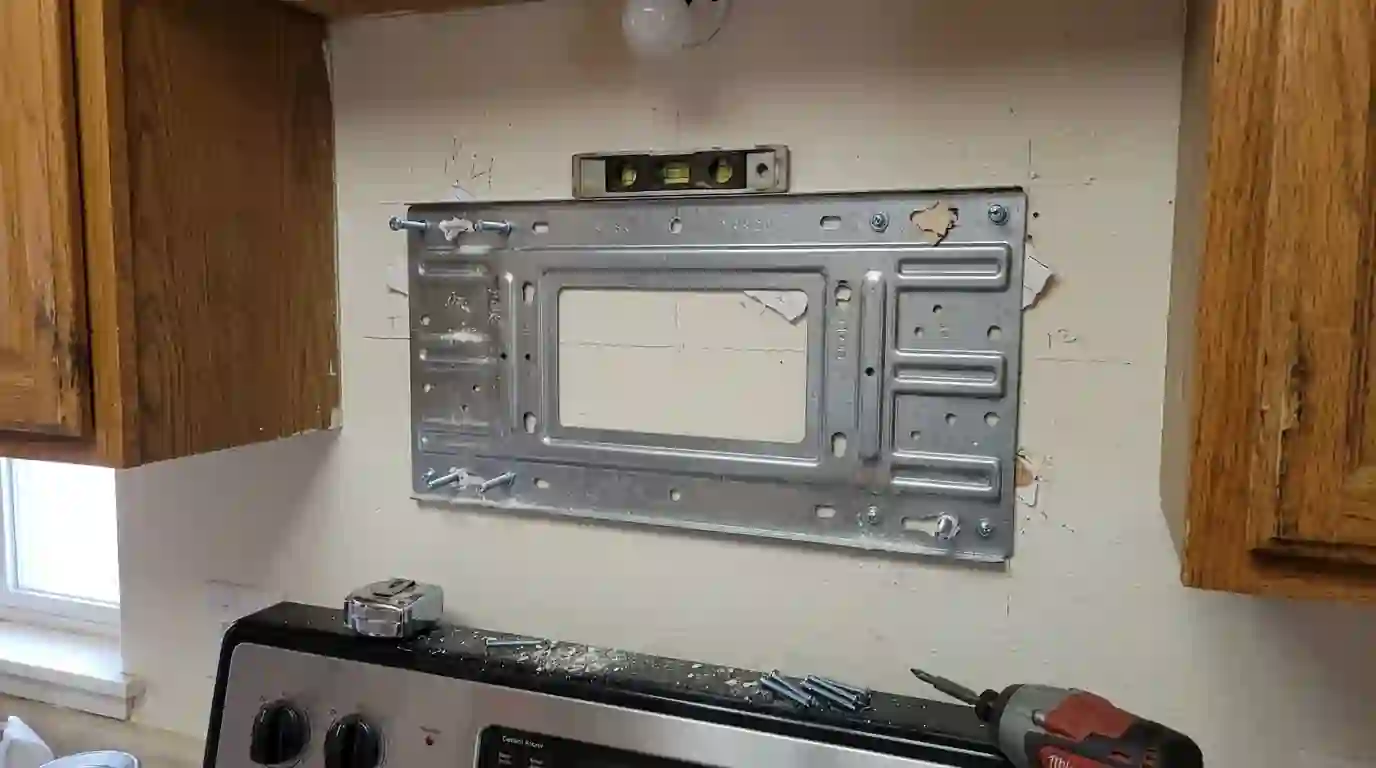
A basic countertop microwave rarely justifies a repair visit, and we'll say so on the phone if a new one costs about the same as the fix. Over-the-range and built-in units are different. Taking one down and hanging a replacement takes two people, often a new mounting plate and sometimes a new trim kit, so a mid-range repair usually costs far less than the new oven plus the install.
We lean toward repair when the oven is under ten years old, the cavity paint is intact and the failed part is a switch, diode, capacitor or fan motor. Replacement makes more sense when the magnetron fails on an older unit, the cavity has rusted through, or the control board is no longer made.
Ways to keep a microwave heating longer
- Plug countertop units into a surge protector, and consider a whole-house protector at the panel before monsoon season starts in July.
- Never run the microwave empty. Without food or water to absorb the energy, the magnetron takes the full hit.
- Wipe splatters off the waveguide cover, the small panel inside the cavity wall, before they carbonize and start arcing.
- Close the door gently. Slamming it wears the latch hooks and the interlock switches that every single cycle depends on.
- On over-the-range models, wash the metal grease filter monthly and replace the charcoal filter about twice a year if the fan recirculates.
Related repairs people book with microwave repair
Where we handle microwave repair
Farmington neighborhoods first, then the rest of San Juan County and southwest Colorado. Pick your area for local notes, or see all 41 locations.
Microwave Repair questions from Farmington homeowners
Why does my microwave run but not heat the food?
Usually the high-voltage diode, the capacitor or the magnetron has failed. The light, turntable and fan run on low voltage, so they keep working when the heating circuit is dead. A tech has to discharge the capacitor and test each part with a meter to find the bad one, since replacing parts at random gets expensive fast.
Is it safe to open a microwave and fix it myself?
We advise against it. The high-voltage capacitor inside can store a dangerous charge even after the oven has been unplugged for hours, and the transformer produces lethal voltage while running. Cleaning the cavity, changing filters and swapping a turntable plate are fine. Anything behind the outer cover belongs to someone trained to discharge and test it.
Can lightning or a power outage ruin a microwave control board?
Yes. Monsoon lightning and the quick power blips that follow storms in the Four Corners can scorch a relay or corrupt a microwave board. Common signs are a blank display, scrambled numbers, random beeping or an oven that shuts off mid-cycle. We test the board and the touchpad separately, because a bad keypad can mimic a board failure.
Can you repair an over-the-range microwave without taking it down?
Many repairs happen with the oven still on the wall, including door switches, fuses, lights and some fan motors. Magnetron, transformer and certain board jobs are easier with the unit lowered onto a padded counter. Our tech lowers it, makes the repair and rehangs it on the existing mounting plate.
Why does my microwave spark when it runs?
Sparking usually comes from a greasy or burned waveguide cover, chipped paint inside the cavity, or metal such as foil, twist ties or a gold-rimmed dish. If cleaning and removing the metal stops it, you're fine. If it keeps sparking, stop using it, because continued arcing can damage the magnetron.
Why does my microwave keep blowing its fuse?
A microwave fuse that keeps blowing is a symptom, not the real problem. The most common cause is a failed door interlock or monitor switch, followed by a shorted diode, capacitor or magnetron. We find the actual fault first, then replace the fuse so it holds.
Need microwave repair today?
Call any hour. A real person picks up, takes the model number and sets the visit.