Ice maker repair in Farmington, NM
An ice maker that stops making ice is usually starved of water, not broken. We trace the supply from the wall valve to the mold, clear the scale and frozen lines, and replace only what has actually failed.
- Answered 24/7
- Gas, electric and propane
- Farmington and the Four Corners
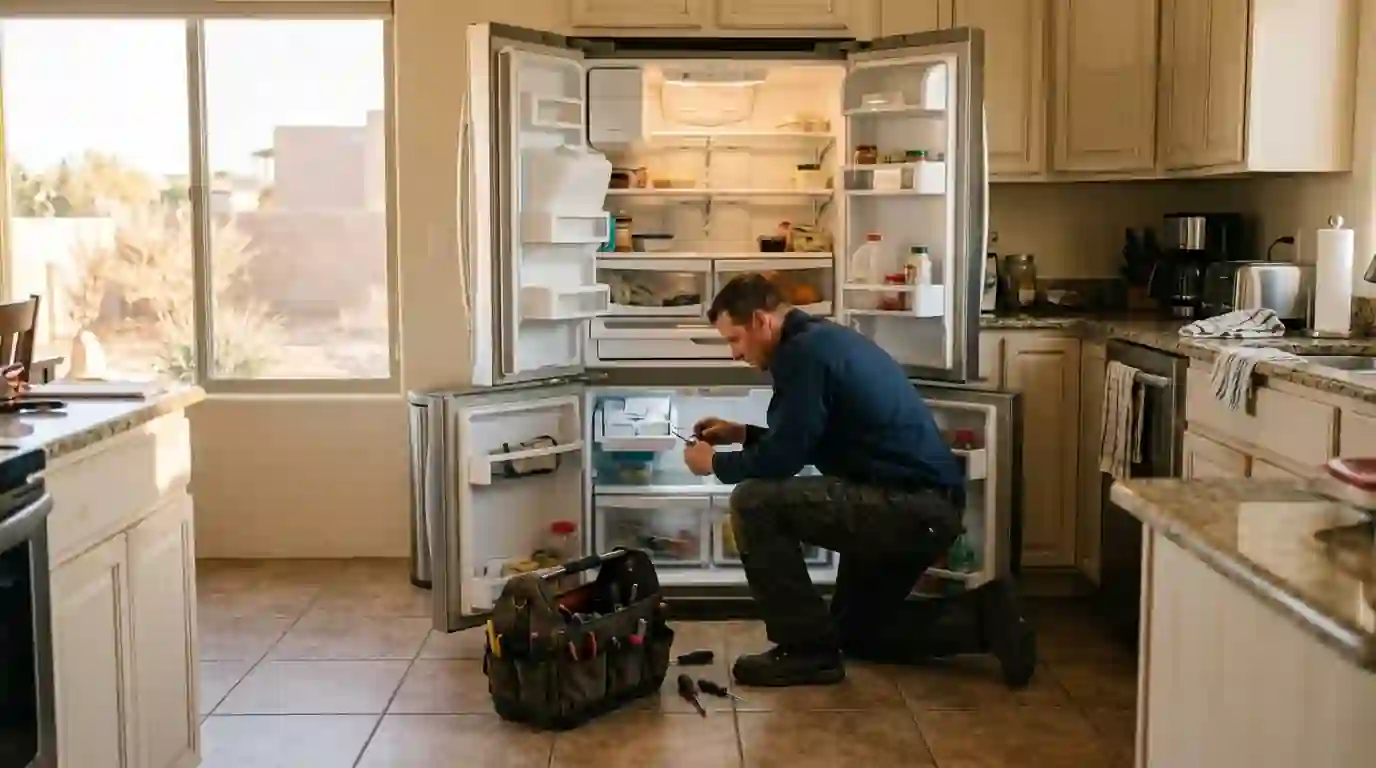
Ice maker trouble we fix
- Bin empty, freezer cold
- Tiny, hollow or cloudy cubes
- Dispenser grinds but no ice drops
Quick answer
Most ice makers around Farmington fail because hard water scale or a frozen fill tube blocks the water, or because the inlet valve or ice maker module wears out. Typical repairs here run about $129-$347. We test the water pressure and valve first, since that is the most common cause. Phone us 24/7; ice maker visits can land the same day if the route has an opening.
Brands we repair: Whirlpool, GE, Samsung, LG, Maytag, Frigidaire, KitchenAid, Bosch, Kenmore, Electrolux, Amana, Speed Queen, Sub-Zero, Hotpoint
Why ice makers quit, and why it is usually the water
An ice maker needs three things: a steady flow of water at decent pressure, a freezer cold enough to freeze the mold in a reasonable time, and a working module that fills, harvests and stops when the bin is full. When any one of those falls short, the bin stays empty, even though the rest of the fridge works fine.
Water is where most of our ice maker calls start. A clogged refrigerator filter, a saddle valve that has crusted shut, a kinked line behind the fridge, or a fill tube frozen solid will all stop ice production cold. The inlet valve on the back of the fridge has fine screens that catch minerals, and once they plug, the valve may only trickle or stop.
We fix ice makers in the freezer, in the door of French door models, and in the upper corner of the fresh food section on some newer fridges. We also work on the dispenser side: the auger motor that pushes cubes forward, the crusher blades, the door chute flap and the dispenser actuator. Tell us where your ice maker sits and what it does, and we'll narrow it down before the visit.
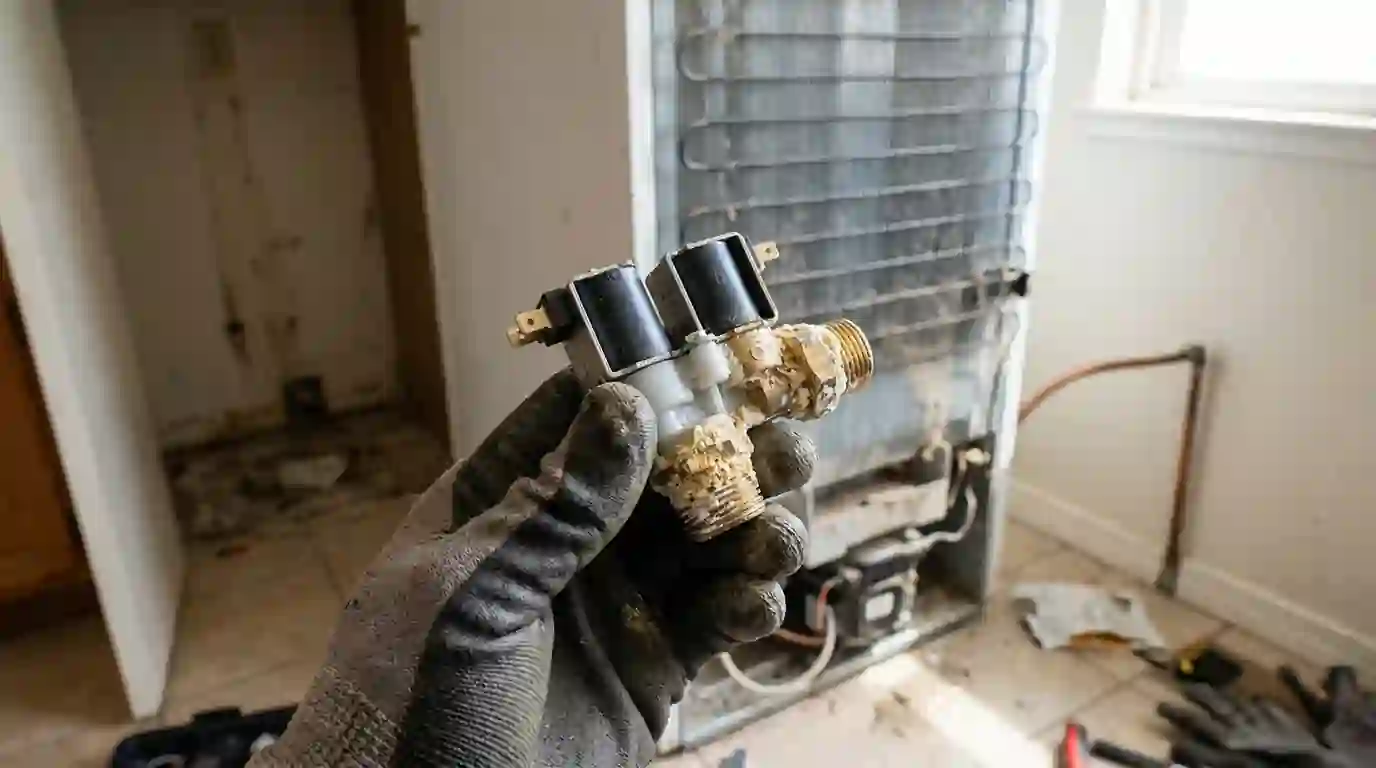
Ice maker parts and repairs we handle
These are the repairs that bring most ice makers back to steady production.
Water inlet valve
This solenoid valve on the back of the fridge opens to fill the mold. Hard water clogs its screens and wears the seat. We check the pressure at the valve and replace it if the flow is weak or it leaks.
Frozen fill tube
The short tube that delivers water to the mold can freeze when the valve drips or the freezer runs too cold. We thaw it, find out why it froze, and fix that cause so it doesn't return.
Ice maker module or assembly
The module runs the fill and harvest cycle and the shutoff arm. When its motor, thermostat or heater fails, the mold freezes but never ejects. We test it and swap the assembly when needed.
Auger motor and crusher
The auger turns the cubes toward the chute and drives the crusher blades. A seized motor or broken auger stops the dispenser even when the bin is full of ice.
Door ice maker freeze-ups
Ice makers in French door fridge doors can freeze up when a seal fails or the fan duct ices over. We melt out the compartment, check the seals and fan, and address the source.
Supply line and filter head
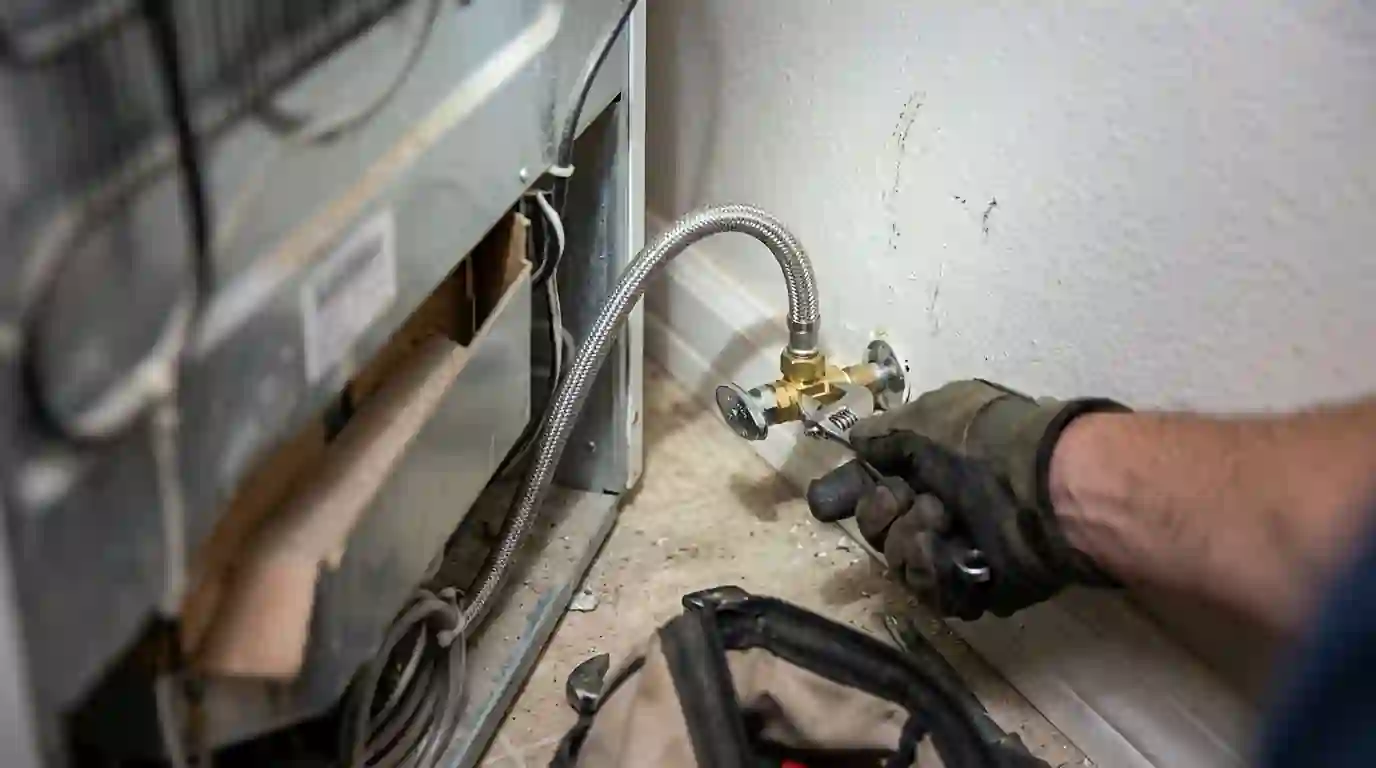
We replace brittle plastic lines, crusted saddle valves and leaking filter heads with a proper shutoff and braided or copper line, so the ice maker gets clean, steady water.
Signs your ice maker is struggling
Small changes in the cubes often show up before the ice stops completely.
Bin empty, freezer is cold
When the freezer holds zero degrees but no ice drops, water isn't reaching the mold. A clogged filter, a scaled inlet valve, or a frozen fill tube are the usual suspects, in roughly that order.
Small, hollow or crescent-thin cubes
Cubes that come out undersized or hollow mean the mold isn't filling all the way. Low water pressure from a tired filter or a partly blocked inlet valve screen is almost always behind it.
Ice clumped into a block
Cubes that fuse in the bin point to a dispenser that is rarely used, a freezer running warm and refreezing, or a door ice maker that is leaking water over the cubes.
Water leaking from the dispenser
A drip at the dispenser or a puddle under the fridge can mean a cracked fill tube, a stuck inlet valve that won't close, or a split line from the filter head.
Grinding with nothing coming out
If you hear the auger motor turn but no cubes drop, ice has jammed in the bin or chute. On door ice makers, frost can lock the auger so it won't turn at all.
Cloudy cubes with an odd taste
Cubes that taste flat or metallic usually mean the filter is overdue. On wells, minerals that pass the filter also leave a white film on cubes and inside the bin.
Ice maker repair prices around Farmington
These are typical ranges for ice maker repairs in this area, parts and labor included. They are not a quote.
| Thaw and clear frozen fill tube | $129-$214 |
|---|---|
| Water inlet valve replacement | $167-$296 |
| Ice maker module or full assembly | $198-$347 |
| Auger motor or dispenser actuator | $186-$332 |
| New shutoff valve and supply line | $139-$263 |
Door-mounted ice makers and dual-valve fridges with separate dispenser lines tend to cost more because of the extra disassembly. The final price depends on the part and the model.
Hard water in the Four Corners is tough on ice makers
Water in much of San Juan County is hard and mineral heavy, and private wells along the river valleys can be harder still. Every time the ice maker fills, a little calcium and magnesium stays behind in the inlet valve, the fill tube and the mold. Over a few years that scale narrows the openings, the fill gets shorter, and the cubes shrink until the ice maker gives up. That is why our techs look at the valve screens first on most Farmington ice maker calls.
Homes on wells near Kirtland, Waterflow, Flora Vista and La Plata also pick up sediment, which a refrigerator filter catches fast. A filter rated for six months may plug in three, and the first sign is usually thinner cubes rather than a warning light. If your home has a whole-house softener or sediment filter, the fridge filter lasts longer and the ice maker stays healthier.
Winter adds one more problem. A water line that runs through a cold crawl space or an exterior wall can slow down on January nights in the teens, so the mold gets a weak fill and the fill tube freezes. Ice makers in garage fridges are hit hardest, and sometimes the fix is simply rerouting the line away from cold air.
How we track down an ice maker problem
- First call
Where is the ice maker?
We ask whether it sits in the freezer, the door or the fresh food section, how old the filter is, and whether you are on city or well water.
- At the fridge
Check the freezer temperature
Ice makers need the freezer near zero. If it is warm, we fix that first, since a perfect ice maker can't keep up in a warm box.
- Minute 15
Measure the water flow
We test the pressure and flow at the inlet valve, check the filter and the line from the wall, and look for scale or a frozen fill tube.
- Same visit
Replace or clear
We clear the blockage or replace the valve, module or auger motor, then run a forced harvest cycle to confirm the mold fills and ejects.
- Next day
Watch the first bin
A healthy ice maker drops its first batch within a few hours. Toss the first few batches, which can carry loose scale or air from the line.
Fix the ice maker or live without it?
Most ice maker repairs are modest and well worth doing, especially when the fix is a valve, a filter line or a frozen tube. A full module replacement is still a small fraction of a new fridge. The one case where we may suggest otherwise is a door ice maker that keeps freezing up on an older model after its seals and fan have already been addressed. In that case, turning the door unit off and using a countertop or bin-style option can be the sensible call.
Simple ways to keep ice coming
- Change the refrigerator water filter on schedule, or sooner if you are on a well. A plugged filter is the cheapest ice maker problem to fix.
- If you have a whole-house water softener or sediment filter, keep it serviced. Softer water means less scale in the inlet valve and mold.
- Empty the ice bin every few weeks if you rarely use ice, so cubes don't fuse into a block that jams the auger.
- Keep the shutoff valve behind the fridge fully open, and replace an old saddle valve with a proper quarter-turn shutoff.
- If the fridge sits in a cold garage, turn the ice maker off for the winter so the fill tube doesn't freeze and crack.
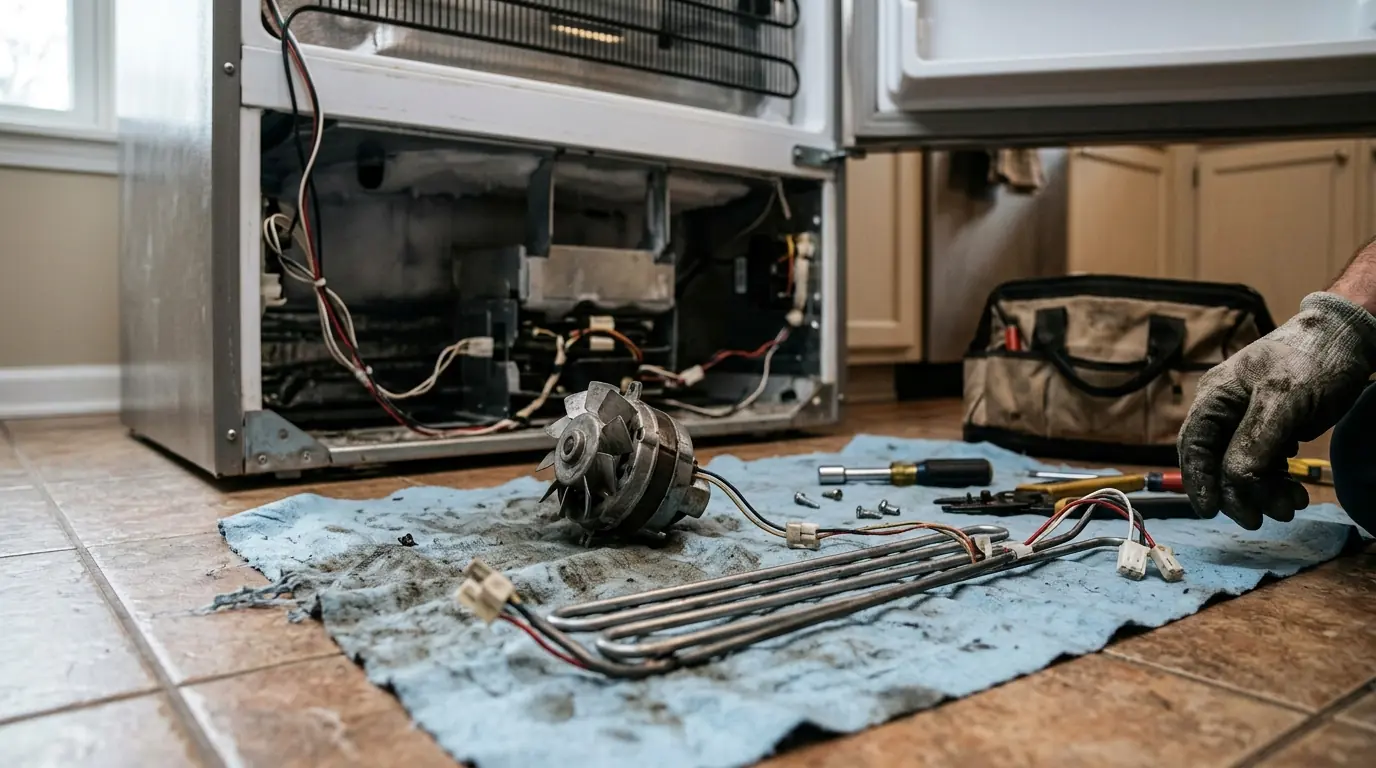
Related repairs people book with ice maker repair
Where we handle ice maker repair
Farmington neighborhoods first, then the rest of San Juan County and southwest Colorado. Pick your area for local notes, or see all 41 locations.
Ice Maker Repair questions from Farmington homeowners
Why does my ice maker make small or hollow cubes?
The mold isn't filling completely. The cause is usually low water pressure from a clogged filter, a scaled inlet valve screen, or a partly closed shutoff valve. Start by changing the filter; if the cubes stay small, the inlet valve likely needs replacing.
Can hard water ruin my refrigerator ice maker?
Over time, yes. Minerals build up in the inlet valve, the fill tube and the mold, slowing the fill until production stops. A good filter, and a softener on very hard well water, slow that buildup a lot. We clear or replace scaled parts when it does happen.
How do I know if my ice maker fill tube is frozen?
If the freezer is cold and the shutoff arm is down but no water enters the mold, look at the tube where it enters the ice maker. Visible ice there is a strong sign. Thawing it helps briefly, but the cause, often a leaky inlet valve, needs fixing.
Is it safe to keep using the ice dispenser when the ice maker leaks?
Turn the ice maker off and close the water shutoff behind the fridge until it is fixed. A leaking valve can soak the floor and the subfloor under the fridge, and water that refreezes in the door can damage the dispenser parts.
How long should a new ice maker take to make ice?
Most make the first batch within a few hours once the freezer is at zero, and a full bin takes about a day. Throw out the first two or three batches, since they can carry air bubbles and loose particles from the water line.
Do you repair ice makers in French door refrigerator doors?
Yes. Door ice makers are a common call, mostly for freeze-ups and auger jams. We melt out the compartment, check the seals, fan and defrost parts that keep it cold and dry, and replace the module or auger motor when needed.
Need ice maker repair today?
Call any hour. A real person picks up, takes the model number and sets the visit.