Appliance installation in Farmington, NM
A new appliance that rocks, leaks or trips a breaker on day one usually has an install problem. We set it, level it, make the water, gas, vent and power hookups, then test it before we go.
- Answered 24/7
- Gas, electric and propane
- Farmington and the Four Corners
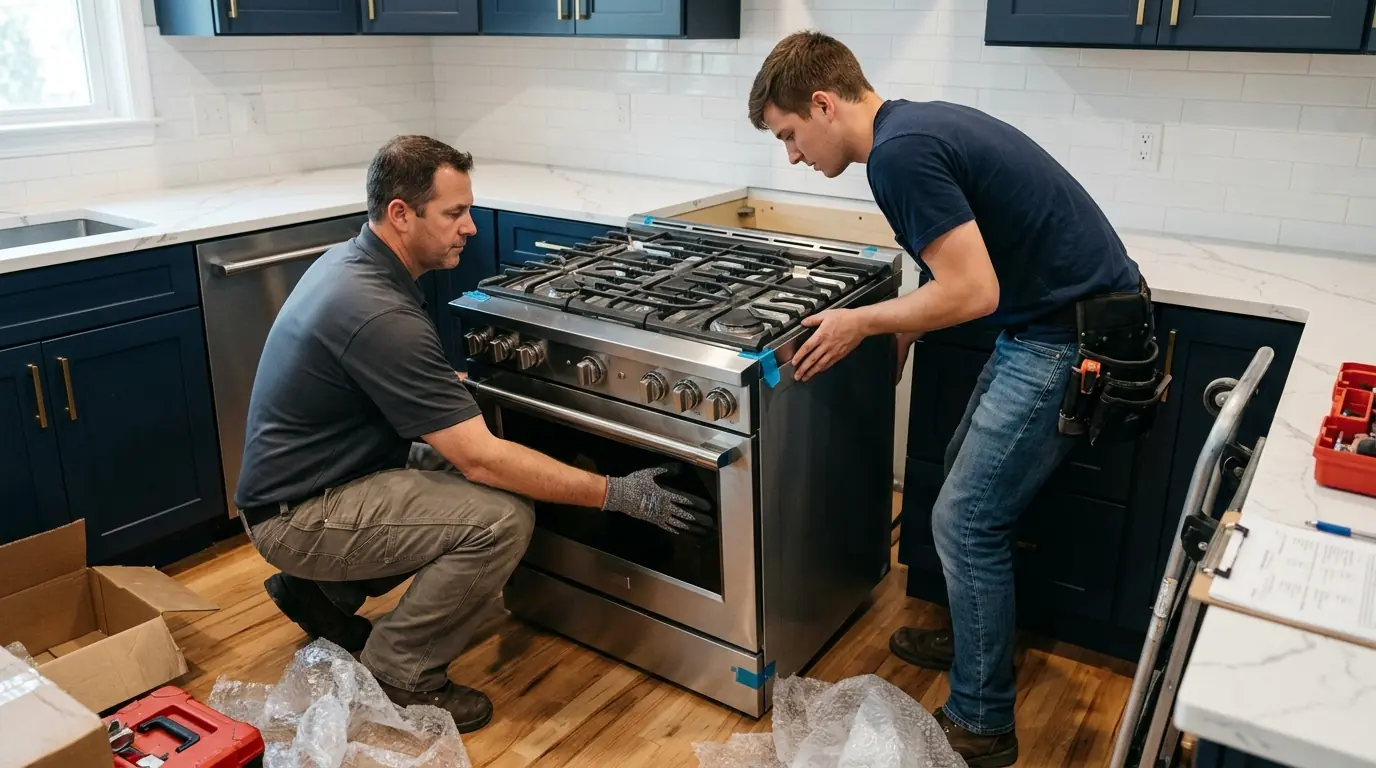
Installs we do most
- Fridge water line and door alignment
- Washer and dryer pairs set and leveled
- Ranges with anti-tip bracket in place
Quick answer
Most appliance installs in Farmington take one visit: we place the unit, level it, make the hookups and run a full test cycle. Typical install labor runs about $108-$243 for a plug-in appliance and more when gas, water or venting is involved. We pick up the phone 24/7, and many installs land the same week, sometimes the same day if a slot opens.
Brands we repair: Whirlpool, GE, Samsung, LG, Maytag, Frigidaire, KitchenAid, Bosch, Kenmore, Electrolux, Amana, Speed Queen, Sub-Zero, Hotpoint
Why a careful install keeps a new appliance from failing early
Most early failures we see on new appliances trace back to how they were set. A washer that walks across the floor still has a shipping bolt in it. A refrigerator with doors that won't close was never tilted back properly. A dryer that takes two cycles is pushed against a crushed vent. None of those are defects in the machine. They are setup mistakes, and they cost the owner a repair call in the first year.
Our installs cover the major household lineup: refrigerators, freezers, ranges, wall ovens, cooktops, dishwashers, washers, dryers, over-the-range microwaves and garbage disposals. Once the new unit is in your home, we unbox it and inspect it for shipping damage, disconnect the old one and set it aside where you want it, then slide the new one into place and make every hookup it needs. After that we run it, check each joint for water or gas leaks, and walk you through the controls.
Some installs uncover an existing problem in the house: a corroded shut-off valve, a 3-prong dryer outlet that doesn't match the cord you planned on, a drain standpipe that is too short, or no outlet where the microwave needs one. We point it out before starting, explain the options and what each costs, and only go ahead once you agree to the plan.
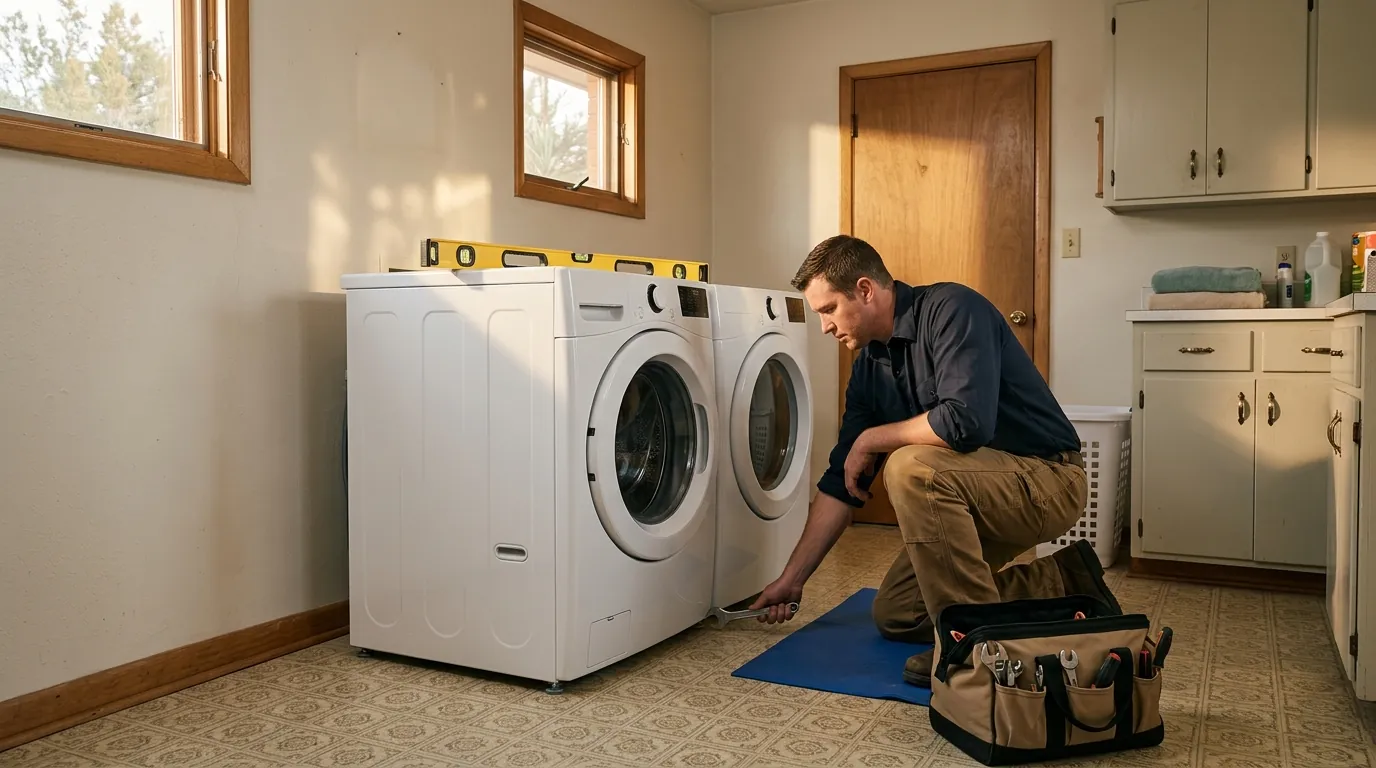
What our appliance installation includes
Every install covers these steps, adjusted for the appliance in front of us.
Inspection and placement
We check the new unit for shipping damage, remove packing, braces and shipping bolts, and move it into position without scraping your floor or the cabinet faces.
Leveling and anti-tip
Feet get adjusted and locked so the appliance sits solid, with refrigerators tilted slightly back. Ranges get their anti-tip bracket mounted and tested against the rear leg.
Water and drain hookups
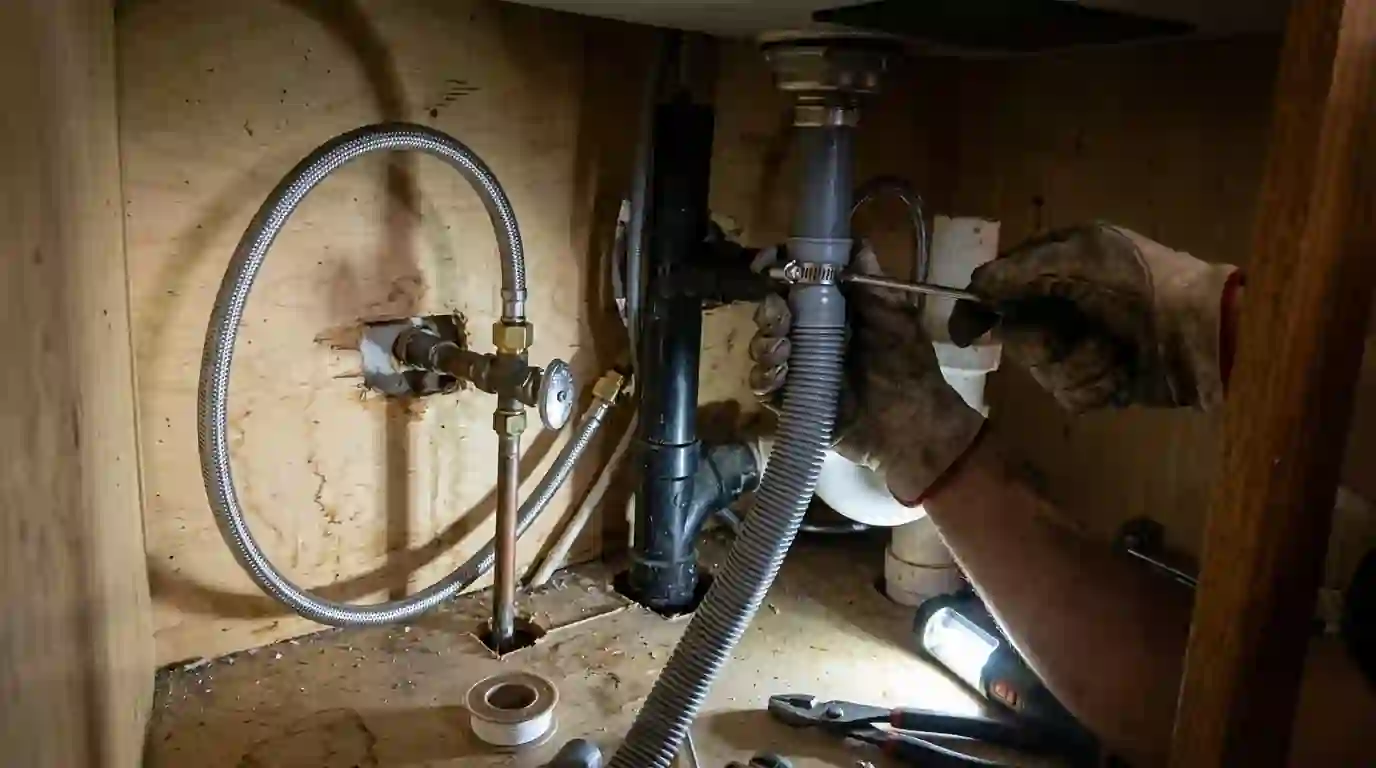
New braided supply hoses or lines, tightened and checked under pressure, plus drain hoses secured at the right height so washers and dishwashers don't siphon.
Gas hookups and leak testing
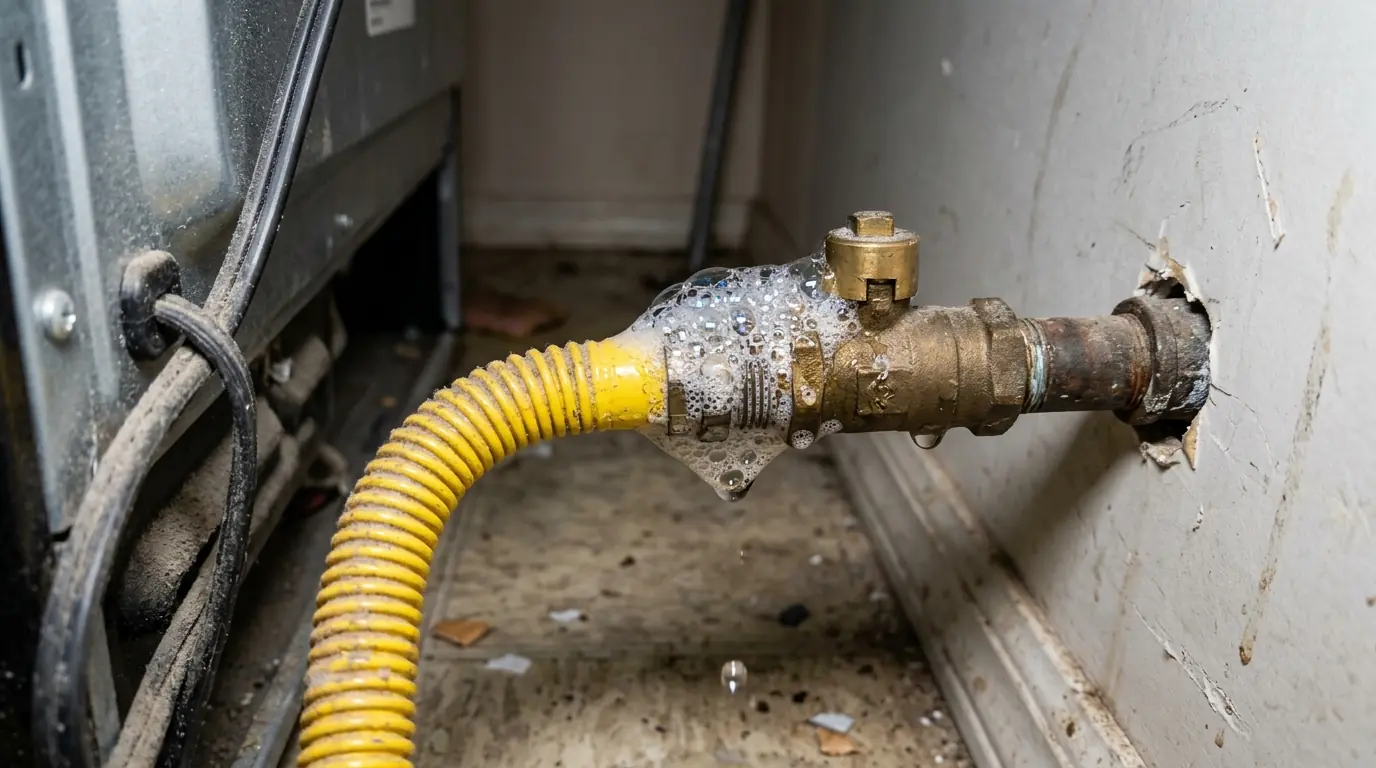
A new flexible connector, a working shut-off valve and leak solution on every joint. Propane homes get the appliance converted for LP before it is ever lit.
Dryer vent and power cord
Rigid or semi-rigid metal duct sized and routed short, and the correct 3- or 4-prong cord fitted with its strain relief to match your outlet.
Test run and walkthrough
We run a cycle or heat-up test, listen for odd noises, and show you the controls, filter locations and any first-use steps the manual calls for.
Signs your appliance was installed wrong
If a recently installed appliance shows any of these, the setup is the first thing we check.
Washer walks or bangs on spin
Shipping bolts left in a front loader, or feet that were never locked and leveled, let the drum slam the cabinet. That beats up the shock absorbers and the floor quickly.
Fridge doors drift open or won't seal
Refrigerators need the front set slightly higher than the back so doors swing shut. A cabinet tipped forward or a sagging floor leaves gaps at the gasket and frost on the evaporator.
Range tips when the door loads
An anti-tip bracket that is missing or not engaged with the rear leg is a real safety hazard, especially with kids around. We check that it actually catches.
Dryer runs hot, clothes stay damp
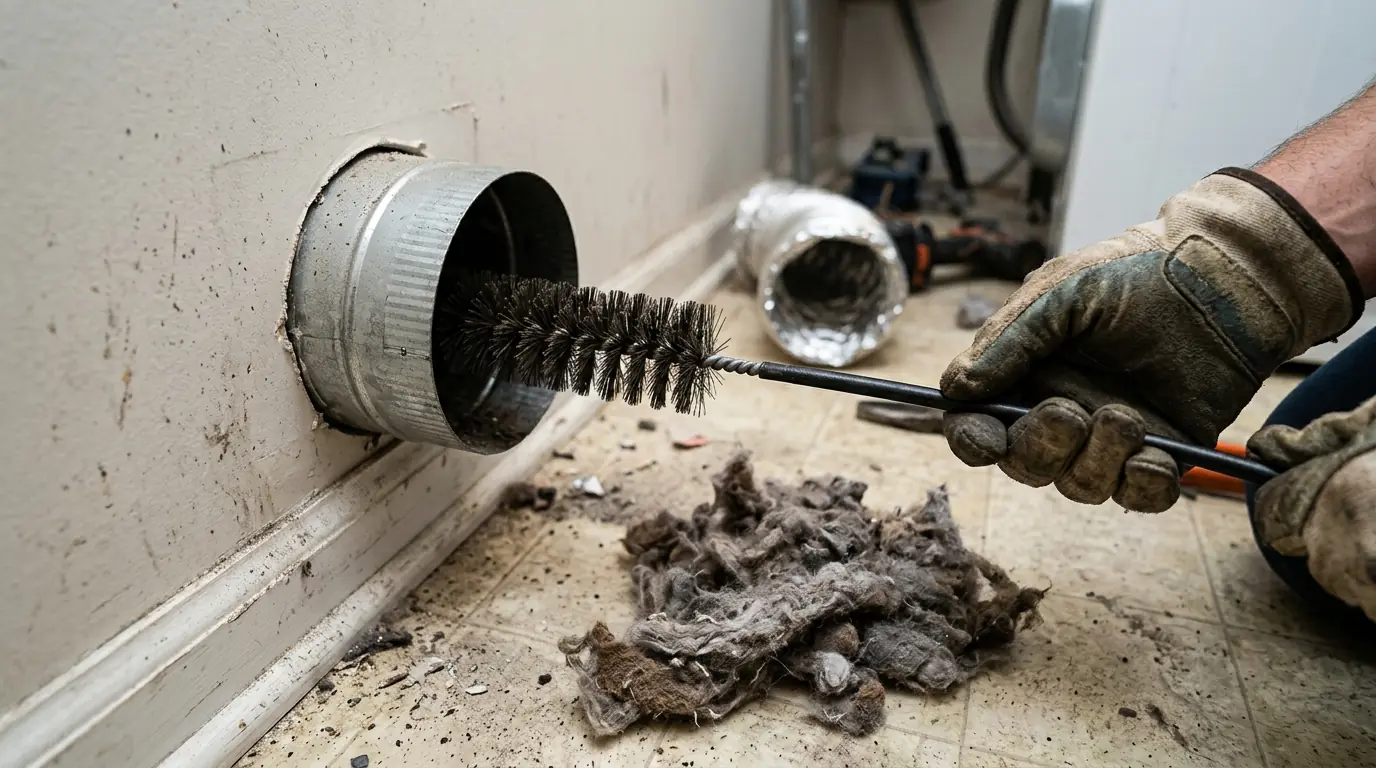
A vent hose crushed behind the dryer, or a long run of flimsy foil duct, chokes airflow. The dryer overheats, trips its thermal fuse and wastes hours of gas or power.
Water under the dishwasher or fridge
A compression fitting that was only hand-tightened, or a supply line that was cross-threaded, can weep for weeks before it shows on the floor. Swollen flooring is often the first clue.
Breaker trips or plug feels warm
A mismatched cord, loose screws on the terminal block, or a heavy appliance sharing a circuit with others causes trips and heat at the plug. That needs fixing before regular use.
Typical appliance installation prices in Farmington
Here is what install labor typically runs in this area. Parts like hoses, connectors and cords are added only when your setup needs them.
| Refrigerator with water line hookup | $124-$267 |
|---|---|
| Electric range or wall oven | $108-$243 |
| Gas range or gas dryer hookup | $146-$289 |
| Washer and dryer pair | $163-$318 |
| Dishwasher replacement | $172-$341 |
Prices move with access, the condition of existing valves and outlets, LP conversion, vent rerouting and how many appliances we set in one trip. These are typical local figures, and your own price comes after we see the space.
Farmington houses that make installs trickier than the manual says
Many Farmington ranch homes date from the 1950s to 1970s oil and gas boom. Their kitchens were built around smaller appliances, so a modern French door fridge may need the cabinet opening checked and the water line rerouted. Laundry closets often have older 3-prong dryer outlets, short standpipes and gate valves that barely turn. We look at all of that before the new unit comes off the dolly.
Fuel and water vary across the county too. Homes outside city gas run on propane, so a new gas range or dryer may ship set for natural gas and need its conversion kit installed during the hookup. Private wells bring hard, mineral-heavy water that clogs inlet screens and valves, and an inline filter on the refrigerator line can protect a brand-new ice maker from day one.
Manufactured homes, common around Bloomfield, Kirtland and the mesas, have lighter floors and tighter laundry spaces. Leveling a washer on a floor that flexes takes extra care, and dryer vents often run through the floor instead of a wall. We adjust for that rather than forcing a standard install, and we check the vent path under the home for crushed or disconnected duct before the first load.
From your call to the first test cycle
- First call
Share the model and space
Give us the model numbers and tell us what is being replaced. A photo of the existing hookups on your phone helps us bring the right valves, hoses and cords.
- Install day
Check the hookups first
Before anything moves, our tech looks at the shut-off valves, outlet, gas line, drain and vent to confirm the new appliance can hook up safely.
- Next
Set and level
We unpack, remove shipping hardware, slide the appliance into place and adjust the feet until it sits level and steady on your floor.
- Same visit
Hook up and test
Water, gas, drain, vent and power get attached, then we run the appliance, check every joint for leaks and watch it through a heat or wash cycle.
- Before we go
Walkthrough
You get a quick tour of the controls and filters, and we leave the manual and any spare brackets or parts where you can find them later.
Is a professional install worth it on a simple appliance?
A plug-in appliance with no water, gas or vent can be a fine do-it-yourself job if you can level it properly. The installs that justify a tech are the ones with hookups: gas lines, water supply, drains, vent runs and dryer cords. A small leak or a loose gas joint can do far more damage than the cost of the visit.
Many manufacturers also expect proper installation in their warranty terms, so a botched hookup can complicate a claim. Keep your receipt and the manual together in a kitchen drawer, and ask us to write down what we installed, which parts we used and what we tested if you want a record on paper.
Prep that makes install day go faster
- Measure the opening width, height and depth before you buy, and remember the fridge door swing and the path in from your front door.
- Clear the area around the old appliance and the hallway in from the door so nothing gets scraped on the way in.
- Find the water shut-off, gas valve and breaker for the space ahead of time, and note whether any of them are stuck or hard to reach.
- Check the dryer outlet and count the slots: three or four. New electric dryers usually ship without a cord, so we bring the one that matches.
- Keep the manual and any bag of brackets or hoses that came in the box. The anti-tip bracket and leveling parts are often packed inside.
Related repairs people book with appliance installation
Where we handle appliance installation
Farmington neighborhoods first, then the rest of San Juan County and southwest Colorado. Pick your area for local notes, or see all 41 locations.
Appliance Installation questions from Farmington homeowners
How long does a typical appliance installation take?
A plug-in fridge or electric range usually takes under an hour. Gas hookups, LP conversions, dishwasher swaps and washer and dryer pairs take longer because of leak testing and test cycles. We give you a time estimate when you call.
Can you install a new appliance I bought online or out of town?
Yes. It does not matter where the appliance came from. Once it is in your home, we inspect it for shipping damage, set it, make the hookups and test it. If something arrived broken, we show you before installation so you can take it up with the seller.
Do I need a new cord when installing a new electric dryer?
Usually, yes. Most new electric dryers ship without a cord because homes have either 3-prong or 4-prong outlets. We fit the cord that matches your outlet and set the ground strap correctly for that type.
Why does a refrigerator installation include leveling?
Most refrigerators are built to sit slightly tilted back so the doors close on their own and the gasket seals. A fridge set dead level or tipped forward can leave doors ajar, frost the freezer and stress the hinges.
Should I wait before running a new refrigerator or freezer after installation?
If the unit was laid on its side during transport, many manufacturers recommend letting it stand upright for a while before plugging in so oil drains back to the compressor. Upright delivery usually means it can run right away. We follow the manual for your model.
What happens if a shut-off valve fails during an appliance install?
Old gate and multi-turn valves sometimes won't close fully or start dripping once they are moved. We stop, show you, and replace the valve with a quarter-turn one if you approve. It is better found on install day than after months of a slow leak.
Need appliance installation today?
Call any hour. A real person picks up, takes the model number and sets the visit.