Built-in refrigerator repair in Farmington, NM
Built-in refrigerators are flush to the cabinets, so a problem hides behind custom panels and a top grille. We open them up carefully, repair the condenser, fans, controls and sealed system, and put your kitchen back exactly as it was.
- Answered 24/7
- Gas, electric and propane
- Farmington and the Four Corners
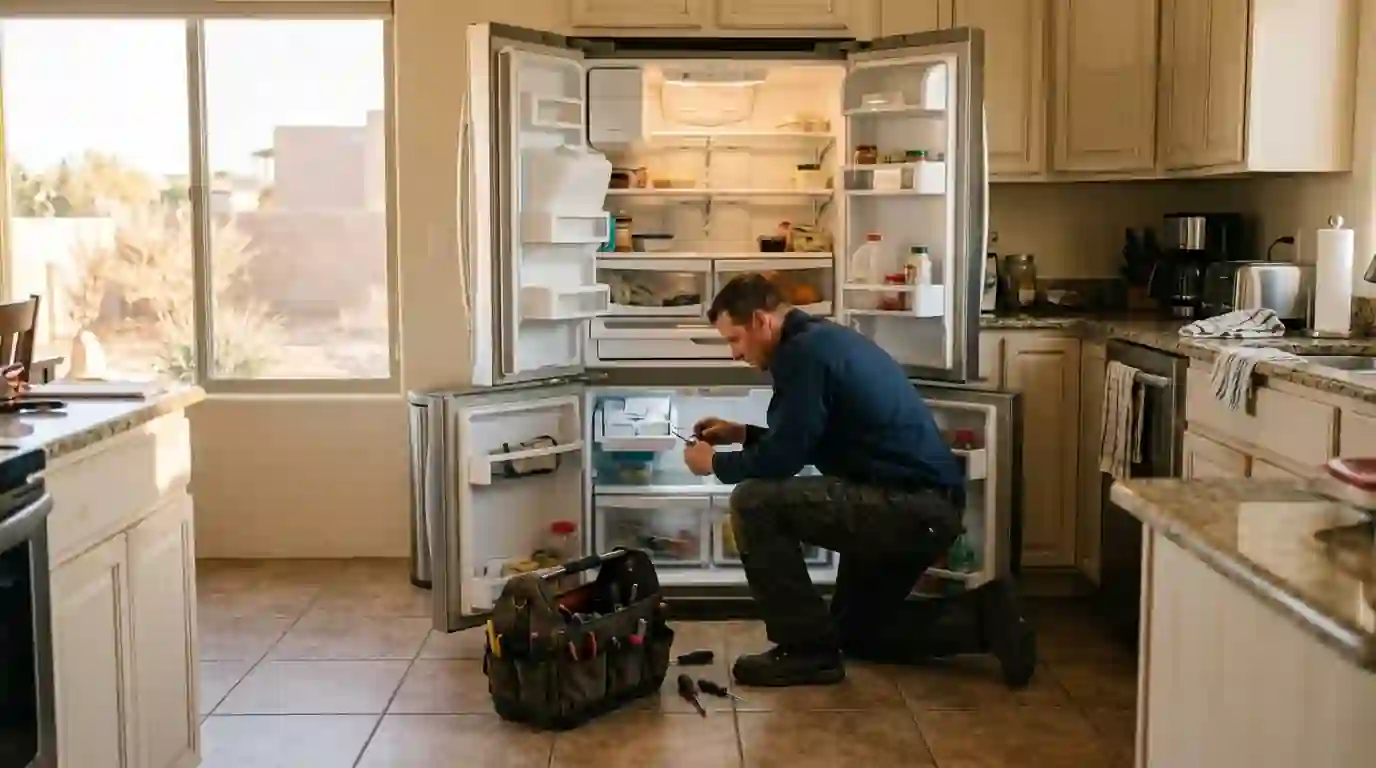
Built-in issues we see
- Top grille warm, cabinet running warm
- Column fridge alarming after a storm
- Panel door no longer seals flat
Quick answer
Built-in and column refrigerators usually fail at a dust-packed top condenser, a condenser or evaporator fan, an electronic control or sensor, or a sealed system leak. Around Farmington, typical built-in repairs run about $218-$642, with sealed system work running higher. We protect panels and cabinetry during the visit. A person picks up 24/7, though specialty built-in parts sometimes need a second trip.
Brands we repair: Whirlpool, GE, Samsung, LG, Maytag, Frigidaire, KitchenAid, Bosch, Kenmore, Electrolux, Amana, Speed Queen, Sub-Zero, Hotpoint
How built-in refrigerators differ from a standard fridge
A built-in refrigerator, the kind with a grille across the top and doors that match the cabinets, is engineered to sit flush in a cabinet opening with no air gap behind it. To make that work, the compressor and condenser usually live in a compartment at the top, behind the grille, and the unit breathes through the front instead of the back. That design keeps the kitchen clean looking, but it also means dust and heat collect in one small space.
Panel-ready column refrigerators and freezers take the idea further. Each column is its own appliance with its own sealed system, and many kitchens pair a fridge column with a freezer column. The doors carry heavy custom panels on adjustable hinges, so a sagging hinge or a twisted panel can break the door seal and make the compressor run constantly.
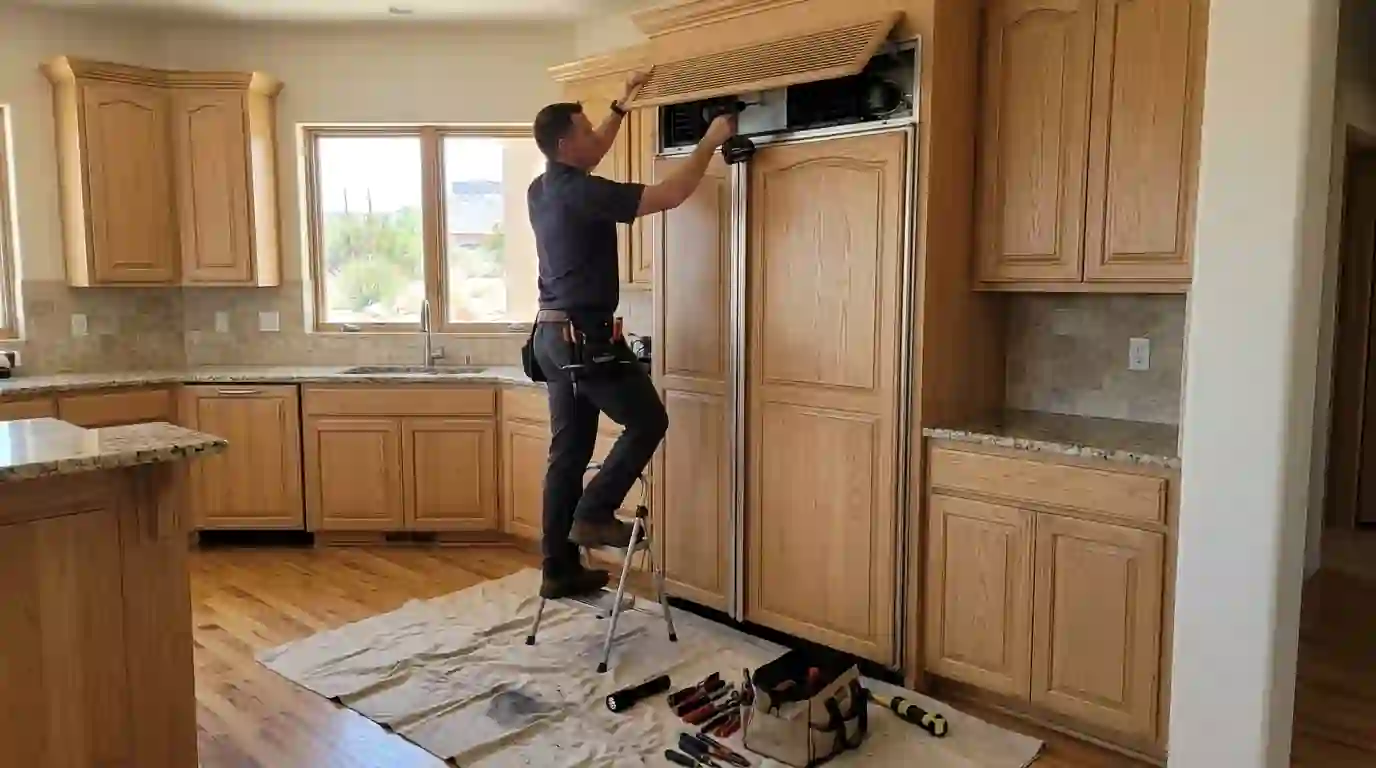
We repair Sub-Zero style built-ins, panel-ready columns and integrated undercounter units. Built-in repairs take a little more care: the unit often has to slide out on its rollers, the anti-tip bracket has to be released and reset, and the panels have to come off and go back on without a scratch. We plan for that time up front.
Built-in refrigerator repairs we perform
Most built-in repairs fall into one of these six groups.
Top condenser cleaning and fan
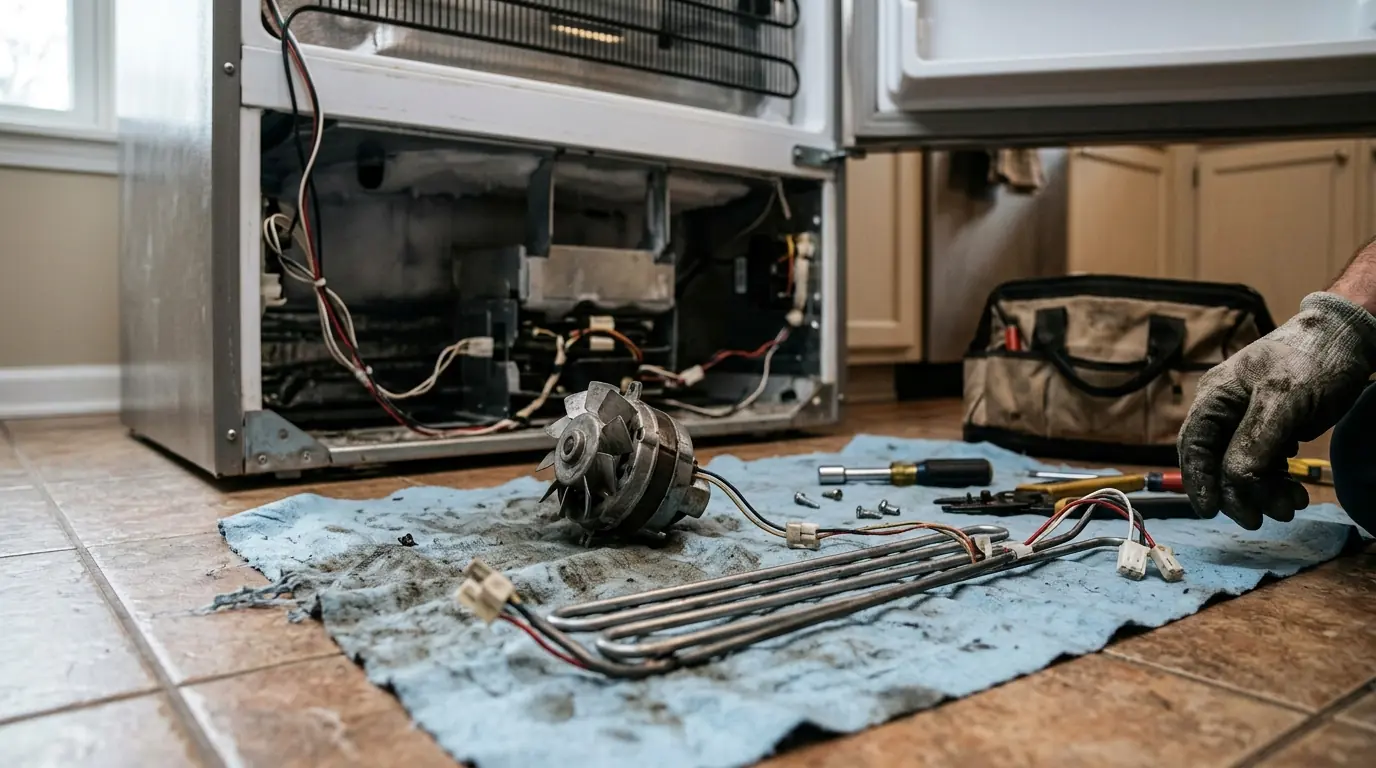
We remove the grille, vacuum and brush the condenser fins, and test the condenser fan motor. A seized fan gets replaced, and we check that the compressor draw drops back into its normal range.
Evaporator fan and defrost
When frost builds on the evaporator, airflow fails. We test the evaporator fan, the defrost heater and the defrost sensor, replace the failed part, and clear the ice from the coil.
Control and display boards
Built-ins use electronic controls with service diagnostics. We read stored codes, test sensors, and replace the control or display board only after the sensors and wiring check out.
Door hinges, closers and gaskets
We adjust the hinges and door closers so heavy panels seal evenly, and replace torn or flattened gaskets. A good seal reduces frost and stops the compressor from running nonstop.
Sealed system repair
Built-ins are worth repairing even with a sealed system issue. We find the leak, replace the drier, evacuate and recharge to the factory amount, and verify temperatures before closing up.
Water valve and filter housing
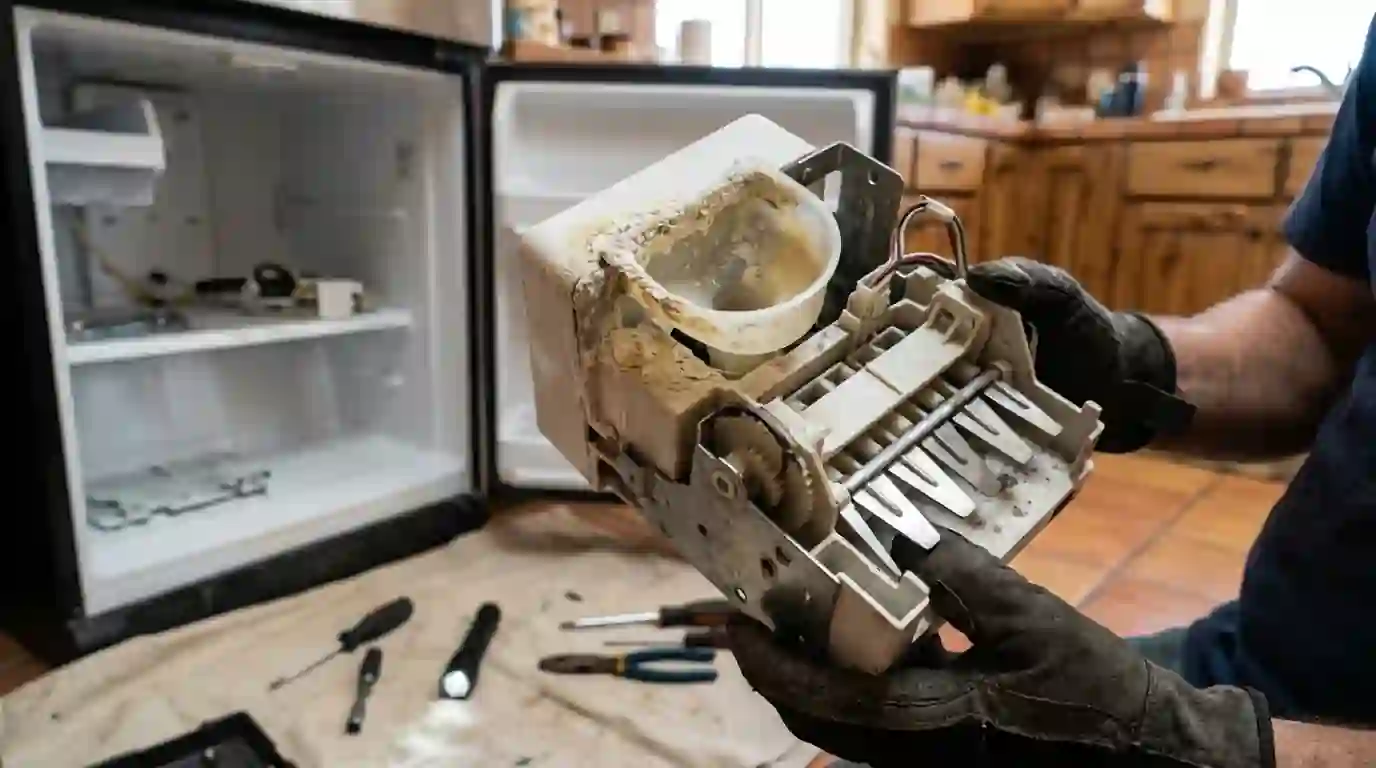
Built-ins with ice makers and dispensers have valves and filter housings tucked into the top or base. Hard water scales them, so we clean or replace them to restore flow and stop leaks.
Warning signs on a built-in or column fridge
Built-ins are quiet and steady when healthy, so changes in sound or temperature are worth noticing.
Top grille hot to the touch
Warm air at the grille is normal, but a grille that feels hot means the top condenser is packed with dust or its fan has failed. The compressor is working far harder than it should.
High temperature alarm keeps sounding
Built-ins watch their own temperatures. A repeated alarm can be a door seal, an iced evaporator, a failed fan or a sensor reading wrong, and the service mode codes help us sort that out.
Display blank after a storm
Electronic controls on built-ins are sensitive to surges. If the display went dark after a lightning night, the control board or power supply may be damaged even though the breaker held.
Door doesn't close flat
Heavy wood or stainless panels can pull a hinge out of adjustment. A door that stays slightly open, or a gap at one corner, lets warm air in and builds frost inside.
Constant running or loud cycling
A built-in that rarely shuts off, or one whose compressor sounds louder than before, often has a dirty condenser, a weak condenser fan, or low refrigerant from a slow leak.
Water on the floor or toe kick
Built-ins drain defrost water to a pan near the compressor. A clogged drain or a cracked pan can spill water behind the toe kick, where it may damage the cabinet base or flooring.
Typical built-in refrigerator repair costs
Built-in parts cost more than standard fridge parts, and labor runs longer. These ranges are typical for this area, not a quote.
| Top condenser cleaning and condenser fan | $218-$397 |
|---|---|
| Evaporator fan or defrost component | $264-$482 |
| Door hinge, closer or gasket | $231-$458 |
| Control or display board | $386-$642 |
| Sealed system leak repair and recharge | $1,138-$2,267 |
Prices depend on the model, the part, and how much the unit has to be pulled from the cabinetry. Column units with separate fridge and freezer systems are priced per column.
Why built-ins in Foothills and Piñon Hills kitchens need extra attention
Many of the built-in and panel-ready refrigerators we see are in the newer homes of the Foothills and Piñon Hills in north and east Farmington. Those kitchens tend to have double wall ovens, gas cooktops and fridge and freezer columns side by side, all set into custom cabinetry. When a column fails, the owner's first worry is the cabinetry, so we bring floor protection and pull units out slowly on their rollers.
Dust is the main enemy of a top-mounted condenser. Windy spring days in the high desert push fine grit through the grille, and it collects on the condenser fins above eye level, where nobody looks. Because the coil sits at the top of the unit, the heat it sheds can't rise away the way it does from a bottom coil, so a dirty top condenser cuts cooling quickly.
Monsoon lightning in July and August is the other risk. Built-ins carry more electronics than a basic fridge: control boards, display boards, sensors, and sometimes a separate power supply. A surge can damage any of them. A whole-home surge protector or a quality outlet protector is a sensible step for a refrigerator that costs this much.
How we handle a built-in refrigerator service call
- First call
Model and serial
We ask for the model and serial number from the tag inside the fridge, any error code on the display, and whether the top grille feels hot.
- At the kitchen
Protect the cabinets
Our tech lays down floor protection, removes the grille, and checks the condenser, fans and compressor before deciding if the unit has to slide out.
- During diagnosis
Read the service mode
We read the control's stored codes and live sensor values to find which part is failing, so we don't replace boards on a hunch.
- Same visit or return
Repair and reset
Common parts may be on hand; specialized built-in parts often have to ship. We reset the unit, refit the panels, and confirm the anti-tip bracket is secure.
- Afterward
Watch the temperatures
Built-ins take several hours to settle. Check the display the next morning; if temperatures aren't where they belong, call us and we'll follow up.
Built-ins are usually worth repairing
A built-in refrigerator is designed to last far longer than a freestanding model, and replacing it means matching the cabinet opening, the panels and the hinge style. That makes repair the right answer in most cases, even for sealed system work on an older unit. We'll explain the cost of each option, and if a part is no longer made, we'll tell you plainly so you can plan the replacement around your cabinetry.
Care tips for a built-in or panel-ready fridge
- Clean the top condenser twice a year, more often after windy spring weather. Remove the grille and brush the fins gently in the direction they run.
- Keep the grille vents clear. Don't stack trays, cutting boards or decor on top of the unit where they block airflow.
- If a heavy custom door starts closing unevenly, have the hinge adjusted early, before the gasket wears or frost builds inside.
- Use a quality surge protector on the circuit, especially before the July and August storm season brings lightning and power blips.
- Write down any error code the display shows before resetting anything. That code helps our tech bring the right part on the first trip.
Related repairs people book with built-in refrigerator repair
Where we handle built-in refrigerator repair
Farmington neighborhoods first, then the rest of San Juan County and southwest Colorado. Pick your area for local notes, or see all 41 locations.
Built-In Refrigerator Repair questions from Farmington homeowners
Why is the top grille on my built-in refrigerator so hot?
The condenser and compressor sit behind that grille, so some heat is normal. A grille that feels hot usually means the condenser fins are packed with dust or the condenser fan has stopped. Cleaning the coil and replacing a failed fan often restores cooling.
Do you have to pull my built-in refrigerator out of the cabinets?
Not always. Many repairs, including condenser cleaning, fans and controls, are done from the front through the top grille. Sealed system work and some drain repairs require sliding the unit out on its rollers, and we protect the floor and cabinets when we do.
Can you repair a panel-ready column refrigerator?
Yes. Each column has its own sealed system and controls, so we diagnose the column that is failing and repair it without disturbing the other. We also adjust hinges and closers on heavy panel doors so they seal properly.
Is a sealed system repair worth it on a built-in refrigerator?
Usually, yes. Built-ins are designed for long service lives and are costly to replace, especially with matched panels and cabinetry. A sealed repair on a built-in costs more than on a standard fridge but far less than a new built-in and the cabinet work that follows.
How often should I clean the condenser on a built-in refrigerator?
In Farmington's dusty climate, twice a year is a good target, and right after a windy spring is the best time. Remove the grille, unplug the unit or turn it off at the control, and brush and vacuum the fins gently.
What should I do if my built-in refrigerator shows an error code?
Write the code down, note what the unit was doing, and check the manual's code list. Don't power the unit off and on repeatedly to clear it. Give us a call with the code and the model number so we can narrow down the part.
Need built-in refrigerator repair today?
Call any hour. A real person picks up, takes the model number and sets the visit.