Refrigerator repair in Farmington, NM
A refrigerator that runs warm puts a week of groceries on a timer. We find the part that quit, usually a fan, a defrost part or a start relay, and explain the fix and the price before any work starts.
- Answered 24/7
- Gas, electric and propane
- Farmington and the Four Corners
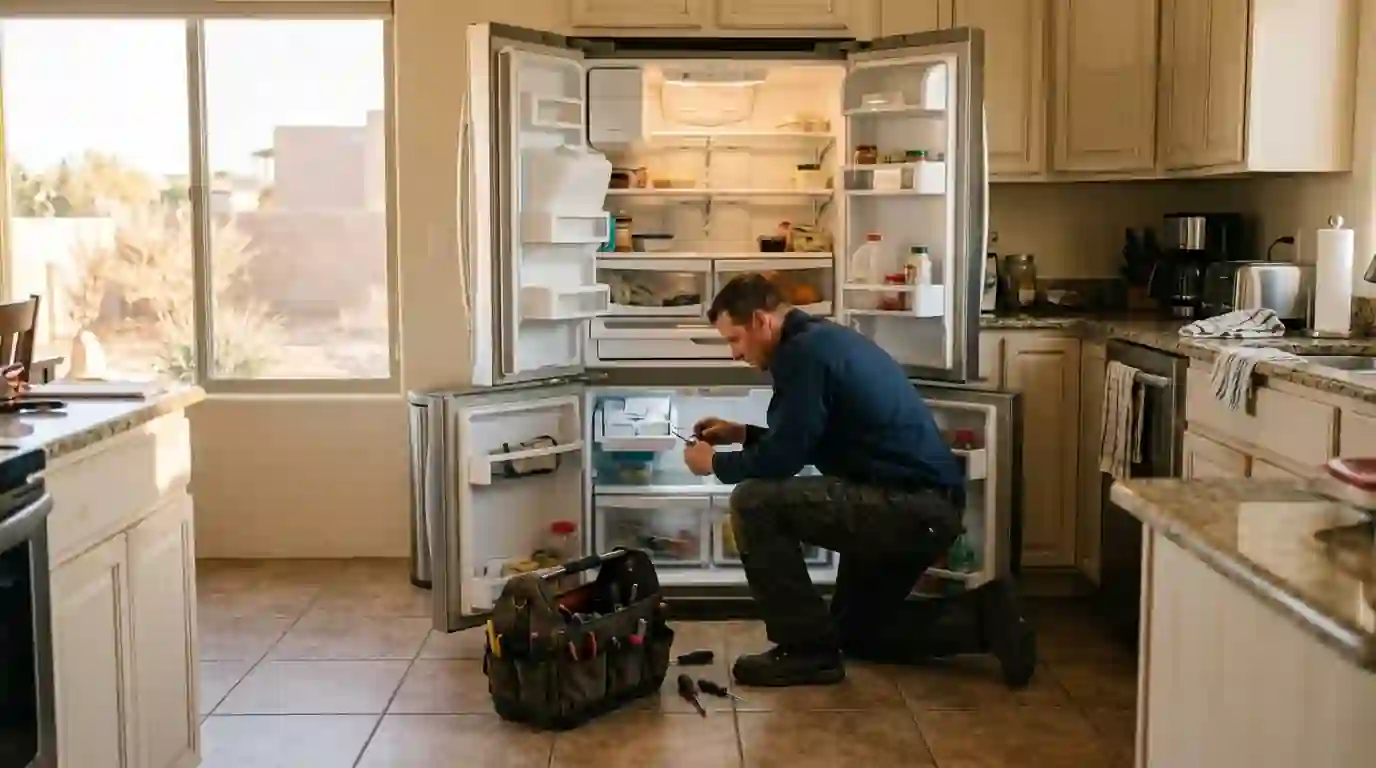
Fridge calls we hear most
- Freezer cold, fresh food side warm
- Clicking from the back every few minutes
- Water pooling under the crisper drawers
Quick answer
Most warm refrigerators in Farmington come down to a dust-clogged condenser, a dead evaporator or condenser fan, a failed defrost heater, or a bad start relay. Typical fridge repairs here run about $137-$356, and sealed-system work costs more. Our phones are answered 24/7, a fridge full of spoiling food gets a tech at any hour, and other visits are often same day if the schedule has room.
Brands we repair: Whirlpool, GE, Samsung, LG, Maytag, Frigidaire, KitchenAid, Bosch, Kenmore, Electrolux, Amana, Speed Queen, Sub-Zero, Hotpoint
What a warm refrigerator is trying to tell you
A refrigerator moves heat out of the box in a loop. The compressor pushes refrigerant through the condenser coil under or behind the cabinet, the evaporator coil in the freezer pulls heat out of the air, and two small fans move that air where it needs to go. When one link stops working, the cabinet warms slowly, which is why most people notice soft butter or warm milk a day or two after the real failure.
The good news is that the expensive part, the sealed system, is rarely the culprit. Far more often we find a fan motor that seized, a defrost heater that burned open and let the evaporator coil turn into a block of ice, or a start relay that cracked and left the compressor clicking on and off without ever running. Those are ordinary parts, and replacing them puts a fridge back in service for years.
We work on top-freezer, bottom-freezer, side-by-side and French door models, plus the second fridge out in the garage. When you call, read us the model number from the sticker inside the fresh food section and tell us what you hear. A fridge that is warm but humming sounds very different on the phone from one that has gone silent, and that difference helps our tech show up with the likely parts.
Symptoms that mean the fridge needs a tech this week
These are the complaints we hear most often on refrigerator calls around Farmington.
Freezer cold, fresh food side warm
Cold air reaches the fresh food side through a duct from the freezer. If the evaporator fan stops or frost blocks the coil, the freezer stays cold while the lower section creeps above 40 degrees.
Clicking every few minutes, no hum
A click followed by silence usually means the compressor tries to start and the overload trips it off. A failed start relay is the common cause, though a weak compressor can act the same way.
Running all the time
A compressor that never cycles off is fighting something: dirty condenser coils, a dead condenser fan, a torn door gasket or a defrost problem. Your power bill usually shows it before the food does.
Water under the crisper drawers
Defrost water runs down a drain tube to a pan under the fridge. When that tube freezes or clogs with debris, water backs up and spills inside the cabinet or out onto the kitchen floor.
Frost on the freezer's back panel
A white layer of frost on the rear panel points to a defrost part that has quit. Scraping it off by hand only buys a few days before the ice builds back and airflow stops again.
Lights on, nothing running
If the interior light works but the compressor and fans stay quiet, the main control board, a thermistor or the cold control may have failed. Storm power blips are a frequent trigger for this one.
How Farmington heat and spring dust wear down a refrigerator
July afternoons around 90 degrees push a refrigerator harder than any other month. Plenty of kitchens here are cooled by a swamp cooler rather than central air, so the room the fridge sits in can stay warm well into the evening. The compressor runs longer cycles to shed that heat, and any weak part, a tired condenser fan or a sticky relay, tends to give out during the hottest weeks of the year.
Spring is the other hard season. Windy days carry fine dust and sand through every gap in a house, and the condenser coil at the bottom of the fridge acts like a filter for it. A coated coil can't release heat, so the cabinet warms and the compressor overheats. We see this most in the oil-boom era ranch houses on the older side of town, where doors and windows rarely seal tight against a dust storm.
Then come the July and August monsoon storms, with lightning and short outages. A fridge that loses and regains power several times in one evening can trip its overload over and over, and a surge can kill a control board outright. If your fridge went dark after a storm, check the breaker and the outlet first; if both are fine, the board or a thermistor is the likely casualty.
How a refrigerator visit goes, start to finish
- First call
Tell us what it's doing
We ask for the model number, what you hear, and how warm each section feels, then set a visit. A fridge full of food that is warming fast moves to the front of the line.
- At the door
Temperatures first
Our tech checks both sections with a thermometer, listens to the compressor and fans, and looks at the condenser coil before pulling any panels off.
- Minute 20
Test, don't guess
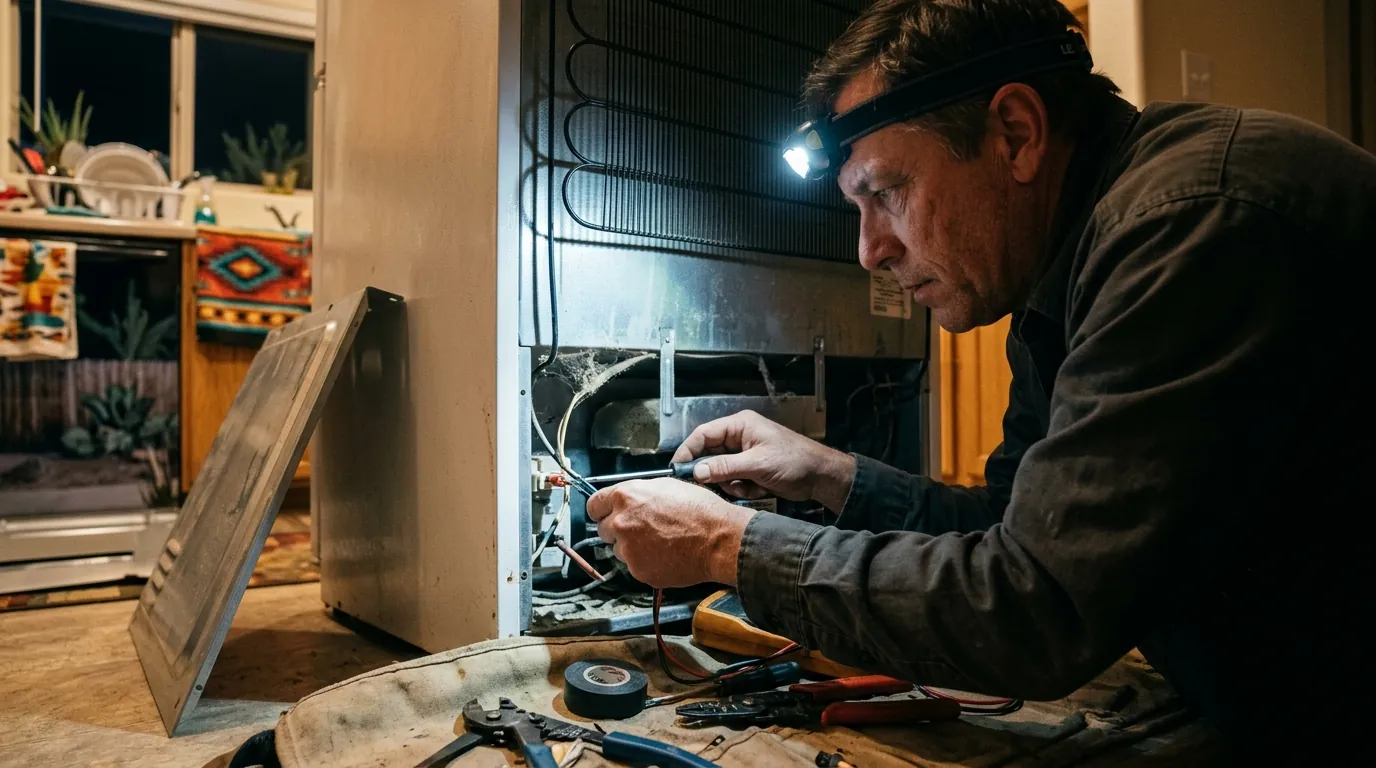
We meter the defrost circuit, the relay and the fan motors, and read the board's sensors. You hear the cause and the price before work begins.
- Same visit
Repair and clean
Common parts like fans, relays and defrost heaters often go in right away. We also clean the condenser coil while the fridge is open, because dust is half the story here.
- Afterward
Watch the next day
Give the fridge several hours to pull down to temperature. If the fresh food side isn't near 37 degrees by the next morning, give us another call and we'll recheck it.
Refrigerator parts we replace most often
These six repairs come up again and again on fridge calls across San Juan County.
Condenser fan motor
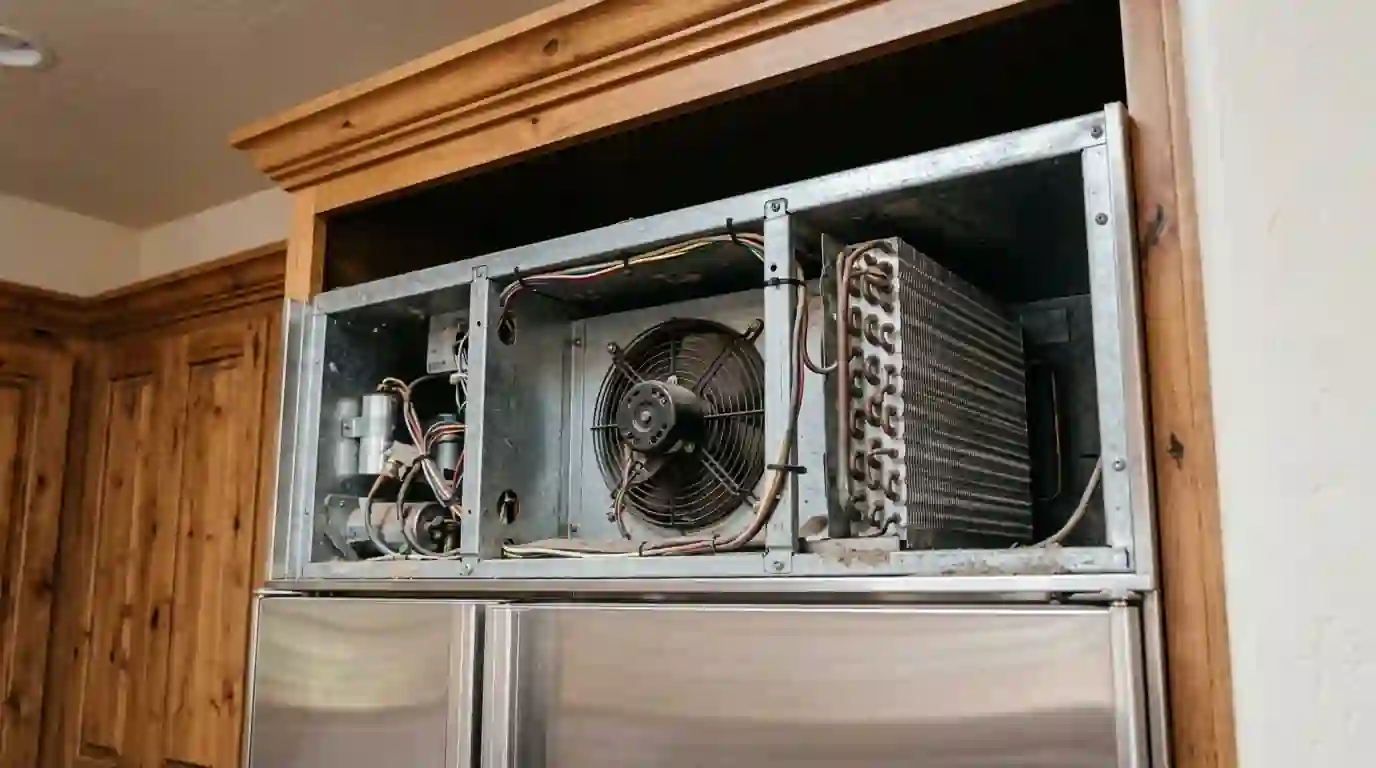
The fan beside the compressor pulls air across the condenser coil. When its bearings seize, the compressor overheats and the fridge warms. We test the motor, clean the coil while we are back there, and fit a new fan.
Evaporator fan motor
Behind the freezer's rear panel, this fan pushes cold air into both sections. A squeal that changes pitch when you open the freezer door is the classic early warning that the motor is wearing out.
Defrost heater and thermostat
Several times a day the defrost heater melts frost off the evaporator coil. If the heater, its thermostat or the defrost control fails, ice builds until airflow stops. We check each with a meter before replacing anything.
Start relay and overload
This small part clips onto the side of the compressor and gives it the kick to start. A cracked or burned relay causes the click-and-quit pattern, and it is one of the cheapest fixes on this list.
Main control board and thermistors
Newer fridges run the fans, defrost and compressor from an electronic board that reads temperature through thermistors. We read the sensors first, because a failed thermistor costs far less than the board it seems to blame.
Sealed system diagnosis
When the compressor runs but nothing gets cold, we check for a refrigerant leak, a restriction or a worn compressor. You get the cost before any sealed work starts, since this is the repair most likely to tip toward replacement.
What refrigerator repair usually costs around Farmington
Expect numbers like these on a typical Farmington fridge job, with the part and the labor both counted. Treat them as a guide, since your model and the exact failure set the real figure.
| Start relay and overload | $137-$243 |
|---|---|
| Condenser or evaporator fan motor | $168-$318 |
| Defrost heater, thermostat or sensor | $187-$356 |
| Main control board | $263-$524 |
| Sealed system leak or compressor | $787-$1,465 |
Prices move with the brand, how hard the part is to reach, and whether it is stocked nearby or has to ship. French door and counter-depth models with two evaporators usually land near the top of each range.
Five habits that keep a Farmington fridge out of trouble
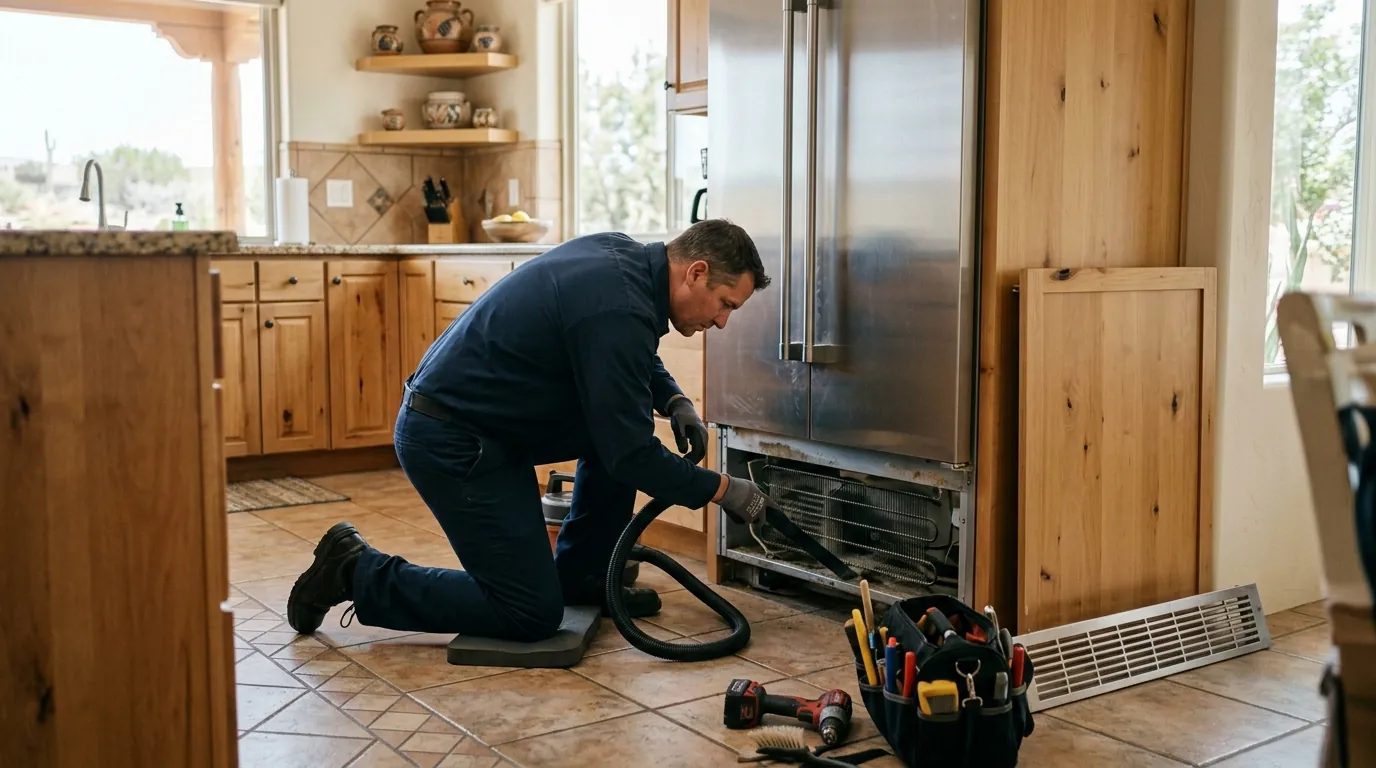
- Vacuum the condenser coils every spring after the windy season, and again in late summer. A long coil brush and a vacuum with a crevice tool take about ten minutes.
- Keep roughly an inch of clearance at the back and top of the cabinet so warm air from the condenser can escape instead of circling back in.
- Try the dollar bill test on the door gasket: close the door on a bill, and if it slides out with no drag, that spot is leaking cold air.
- Plug the fridge into a refrigerator-rated surge protector before monsoon season starts in July, so lightning blips don't reach the control board.
- Keep the fresh food side at 37 degrees and the freezer at zero, and confirm it with an inexpensive thermometer rather than trusting the dial.
Repair or replace: how we help you decide
Most fridge repairs make sense. A fan, relay, defrost part or board on a fridge under about ten years old is worth fixing, because the cabinet, doors and sealed system usually have plenty of life left. A new fridge of the same size often costs several times as much as the repair, before delivery and haul-away are added.
The math changes with sealed-system failures on older units. If a compressor dies on a 14-year-old top-freezer, we'll tell you plainly that replacement may be the better spend, and we'll note the model, the failure and our readings so you can compare. You make the call; we just lay out the facts.
Related repairs people book with refrigerator repair
Where we handle refrigerator repair
Farmington neighborhoods first, then the rest of San Juan County and southwest Colorado. Pick your area for local notes, or see all 41 locations.
Refrigerator Repair questions from Farmington homeowners
Why is my refrigerator warm but the freezer still cold?
That split almost always points to airflow. Cold air is made in the freezer and blown into the fresh food side, so a stalled evaporator fan, an iced-over evaporator coil from a defrost failure, or a stuck damper leaves the lower section warm. Open the freezer door and listen: if you hear no fan, that is a strong clue.
How long will food last when my refrigerator stops cooling?
Keep the door shut. An unopened fridge holds food safely for about four hours, according to federal food safety guidance. After that, move milk, meat and leftovers into a cooler with ice. Call us right away, because a full fridge that has quit is worth an urgent visit.
Is it worth cleaning my refrigerator coils myself?
Yes. Unplug the fridge, pull off the bottom grille, and use a coil brush and vacuum on the condenser. On rear-coil models, pull the fridge out and brush the back. In this dusty climate it is the single best thing you can do between visits.
Why does my refrigerator click and then go quiet?
The compressor is trying to start and the overload is shutting it off. A failed start relay is the usual cause and an inexpensive repair. If a new relay doesn't help, the compressor itself may be weak, which we confirm with an amp reading.
Do you repair the extra refrigerator in my garage?
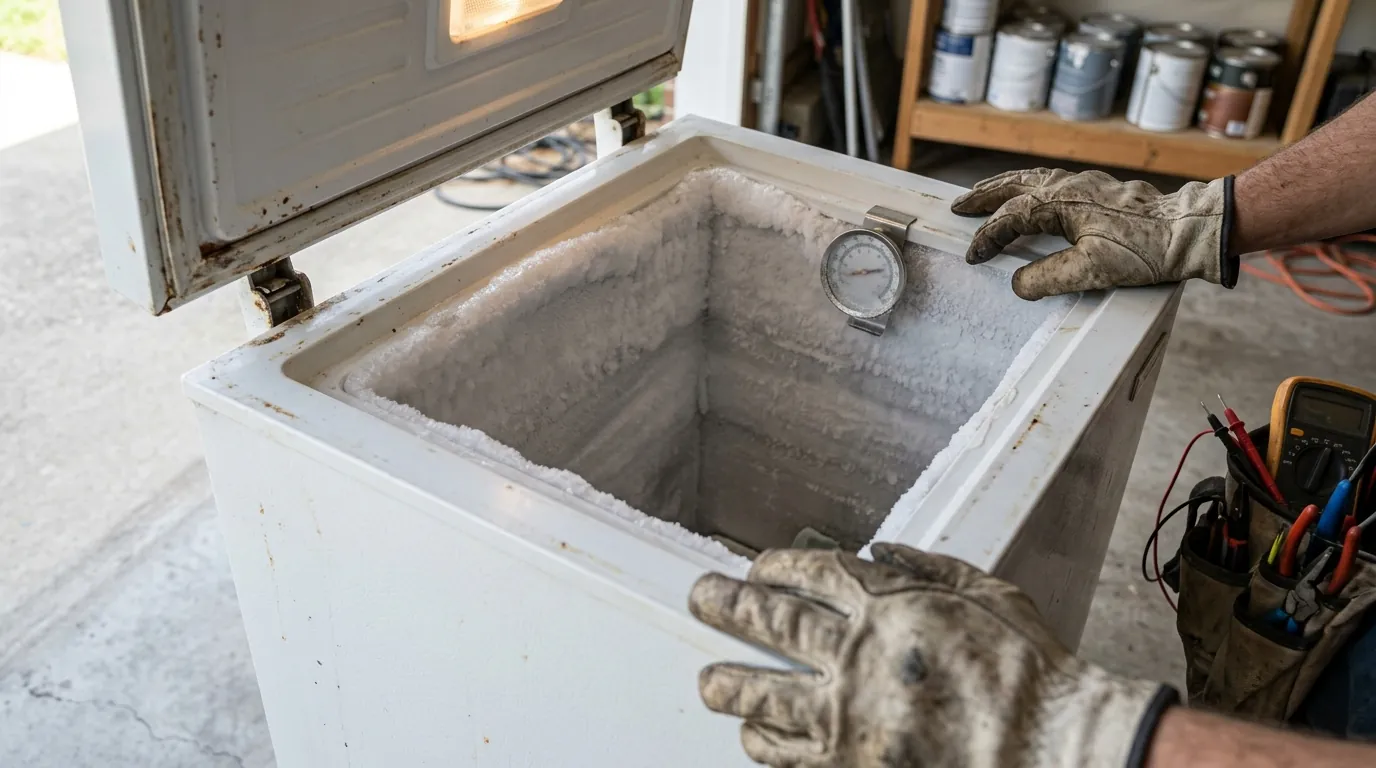
Yes. Garage fridges here take the summer heat head on, and they often share an older outlet with power tools. We check the outlet voltage along with the usual parts, since low voltage on a long garage circuit can make a compressor struggle to start.
Can you fix a refrigerator that is leaking water on the floor?
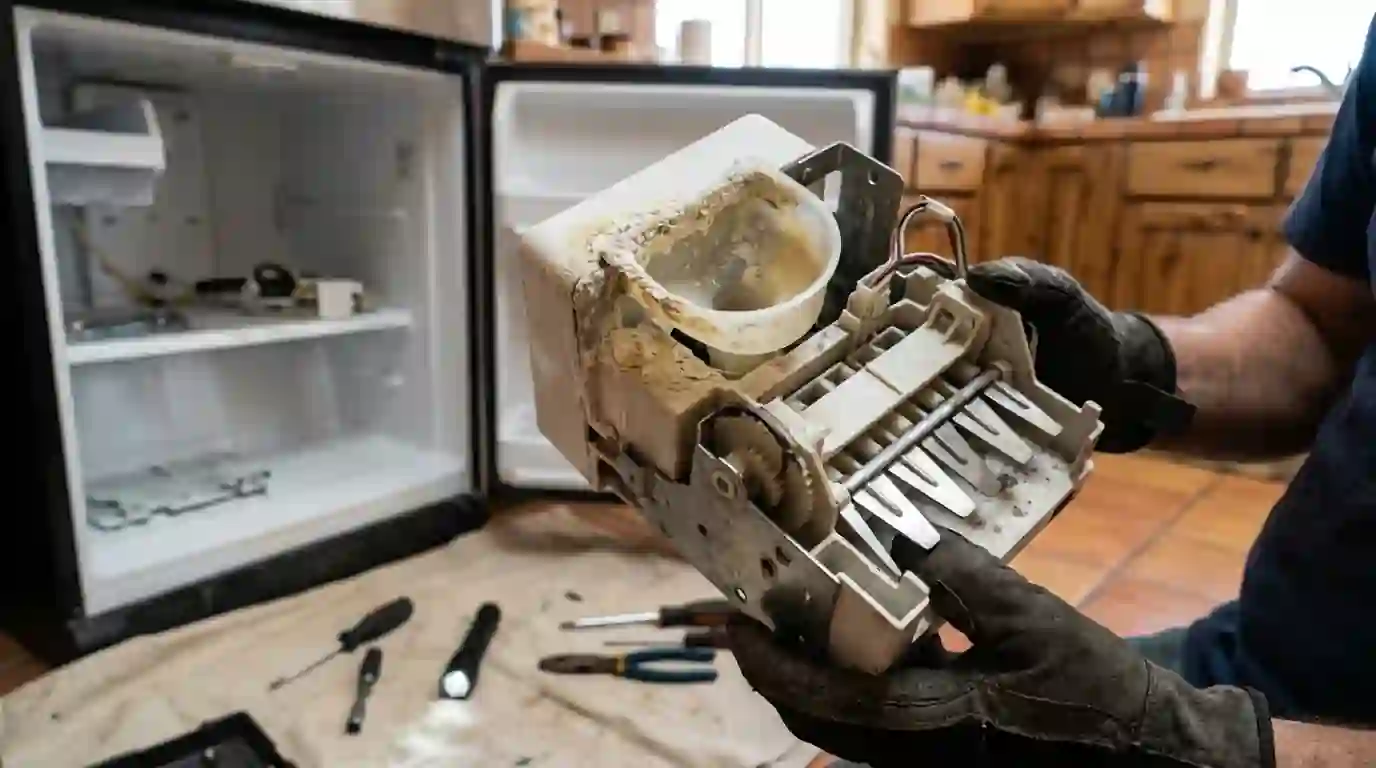
Usually, yes. The three common sources are a frozen or clogged defrost drain, a cracked drain pan, and a leaking water inlet valve or supply line on models with an ice maker or dispenser. Where the water shows up, and when, tells us which one it is.
Need refrigerator repair today?
Call any hour. A real person picks up, takes the model number and sets the visit.