Garbage disposal repair in Farmington, NM
A disposal that hums, won't turn or drips under the sink can back up the whole kitchen drain. We free jammed flywheels, fix resets and wiring, stop leaks and replace worn-out units when that's the honest answer.
- Answered 24/7
- Gas, electric and propane
- Farmington and the Four Corners
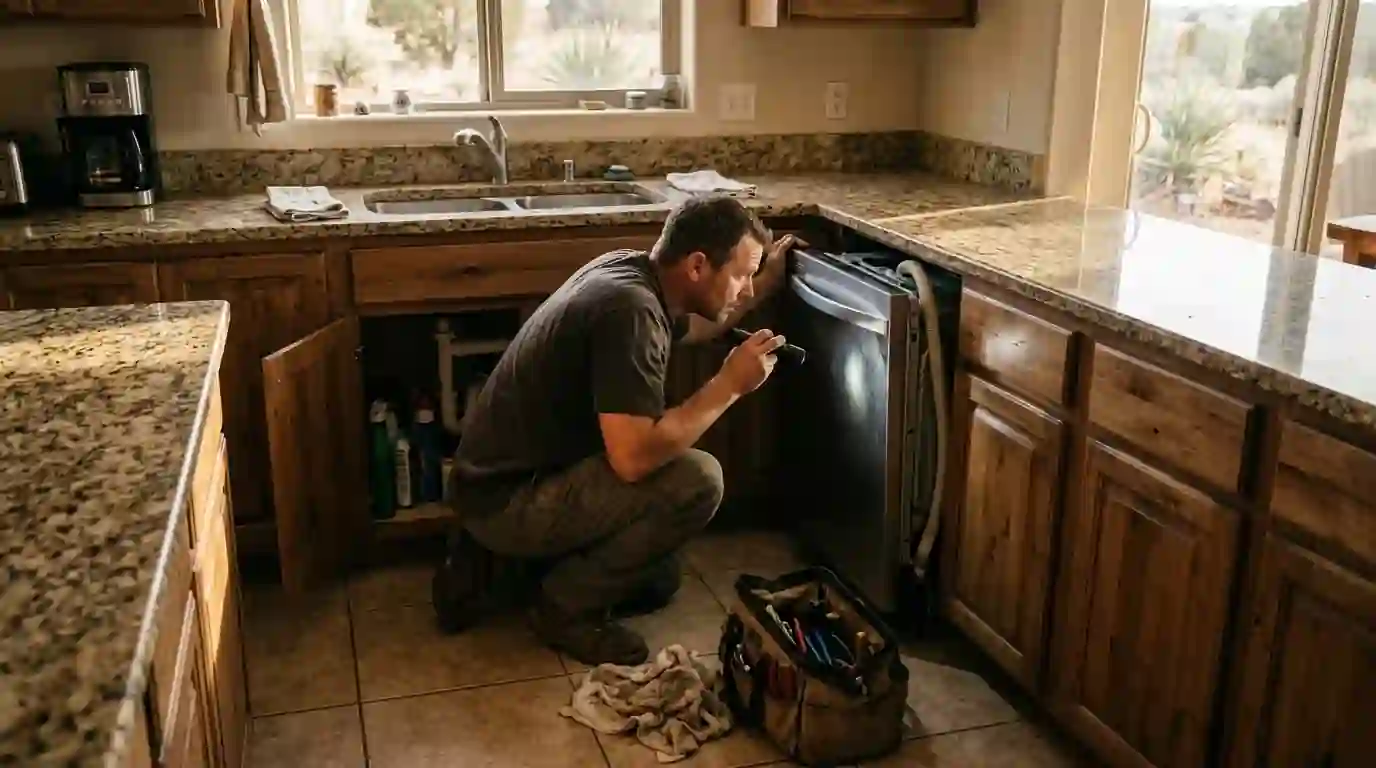
Disposal trouble we see
- Hums loudly but the blades won't move
- Water leaking into the sink cabinet
- Dead silent, even after the reset
Quick answer
A humming disposal is usually jammed, a silent one has tripped its reset button or lost power, and a leaking one has a failed sink flange seal, drain connection or cracked housing. Repairs in the Farmington area typically run about $96-$268, and replacing a worn unit costs more. Most disposal calls wrap up in one visit, and you can reach our phones 24/7 when the sink is backing up.
Brands we repair: Whirlpool, GE, Samsung, LG, Maytag, Frigidaire, KitchenAid, Bosch, Kenmore, Electrolux, Amana, Speed Queen, Sub-Zero, Hotpoint
What is going on inside a disposal that hums, leaks or sits silent
A garbage disposal is a motor under the sink spinning a flywheel plate with two swiveling impellers. Those lugs fling food against a stationary grind ring until the pieces are small enough to wash down the drain. There are no knife blades. When something hard lands between the plate and the ring, like a fruit pit, a bottle cap or a bone, the motor locks up. It hums because power is reaching it, but the plate can't turn.
A disposal that does nothing at all usually has a tripped thermal overload. The small red reset button on the bottom of the unit pops out when the motor overheats from a jam or a long run. If pressing it doesn't help, we check the wall switch, the outlet or hardwired connection, and the breaker. In older Farmington kitchens, the disposal sometimes shares a circuit with the dishwasher, and that can trip under a heavy load.
Leaks come from three places: the sink flange at the top, the dishwasher inlet or drain outlet on the side, or the housing itself at the bottom. Flange and connection leaks usually need a new gasket, plumber's putty or a tightened clamp. Drips from the bottom of the unit tell us the inner seal is gone and corrosion is working through, and that disposal needs replacing.
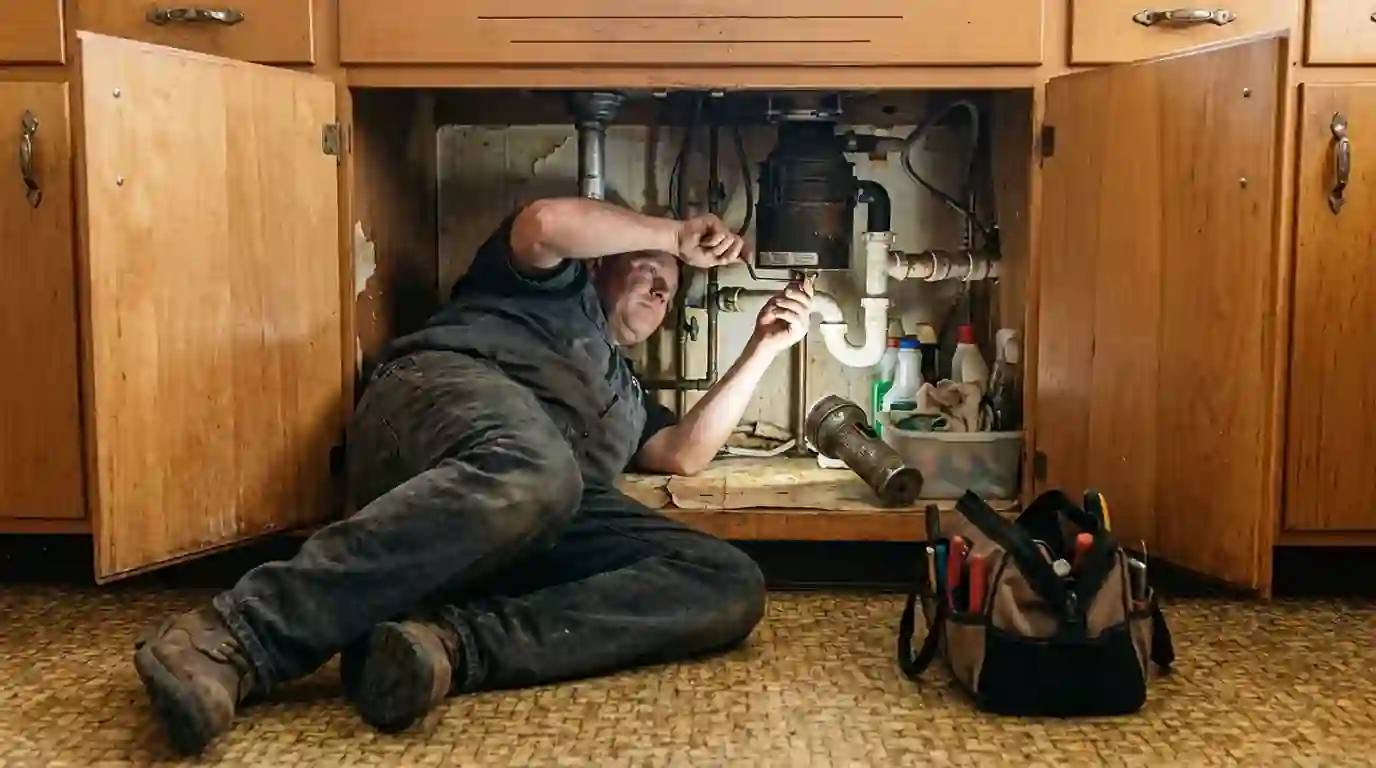
How to tell what your disposal needs
Each sound, or lack of one, points to a different fix.
Humming with no grinding
The motor is getting power but the flywheel is jammed. Turn it off right away, since a locked motor heats fast and trips the overload. A hex key in the bottom socket often frees it.
No sound when switched on
Look for the red reset button on the underside and press it firmly. If it won't stay in, or nothing changes, the problem is the switch, the outlet, the breaker or the motor itself.
Drip from the top flange
Water around the sink opening means the flange seal or putty has dried out, or the mounting ring has loosened. This is usually a reseal, not a new disposal.
Leak from the bottom of the unit
Water or rusty drips from the base of the housing mean the internal seals have failed. There is no repair for that, so the disposal needs to be replaced.
Slow drain or water backing up
If the sink drains slowly with the disposal running, the trap or drain line beyond it may be clogged. Grease, rice, pasta and coffee grounds pack into the pipe and act like cement.
Grinding stops and restarts
A motor that trips after a few seconds is overheating. That can be a partial jam, worn bearings or a unit too small for the load you're feeding it.
Older pipes, hard water and septic systems around San Juan County
Many Farmington homes built in the 1950s through 1970s have kitchen drain lines that are older and narrower than what a modern disposal expects. Galvanized or early plastic pipes, long horizontal runs and old traps collect grease and food until the line chokes. When a disposal suddenly seems weak, we often find the trouble is downstream. We open the trap, check the drain arm and tell you if the line needs a plumber's attention beyond the disposal.
Hard water leaves mineral crust on the grind ring, flywheel and the inside of the drain outlet. Combined with grease, it builds a rough coating that grabs food and slows drainage. Running cold water hard during and after grinding helps keep it moving. When we have the unit off the sink for a reseal or a jam, we scrape that crust off the outlet and the flywheel so it drains like it should again.
Out in the county, many homes on acreage use a septic tank. A disposal adds food solids to the tank, and some systems handle that better than others. If you're on septic, we can talk through how to use the disposal lightly, or whether a model built for septic use makes sense for your kitchen.
How we get a jammed or leaking disposal back in order
- First call
Tell us the sound
Hum, silence, leak or slow drain each point to different fixes. Let us know if the sink has standing water and whether a dishwasher drains into the disposal.
- At the sink
Power off first
We unplug the disposal or shut its breaker before any hand or tool goes near it, then clear the cabinet and set out a pan for water.
- Minute 15
Find the cause
We check the flywheel, reset, switch, connections and trap, then explain the problem and the cost of the fix before going further.
- Same visit
Repair or replace
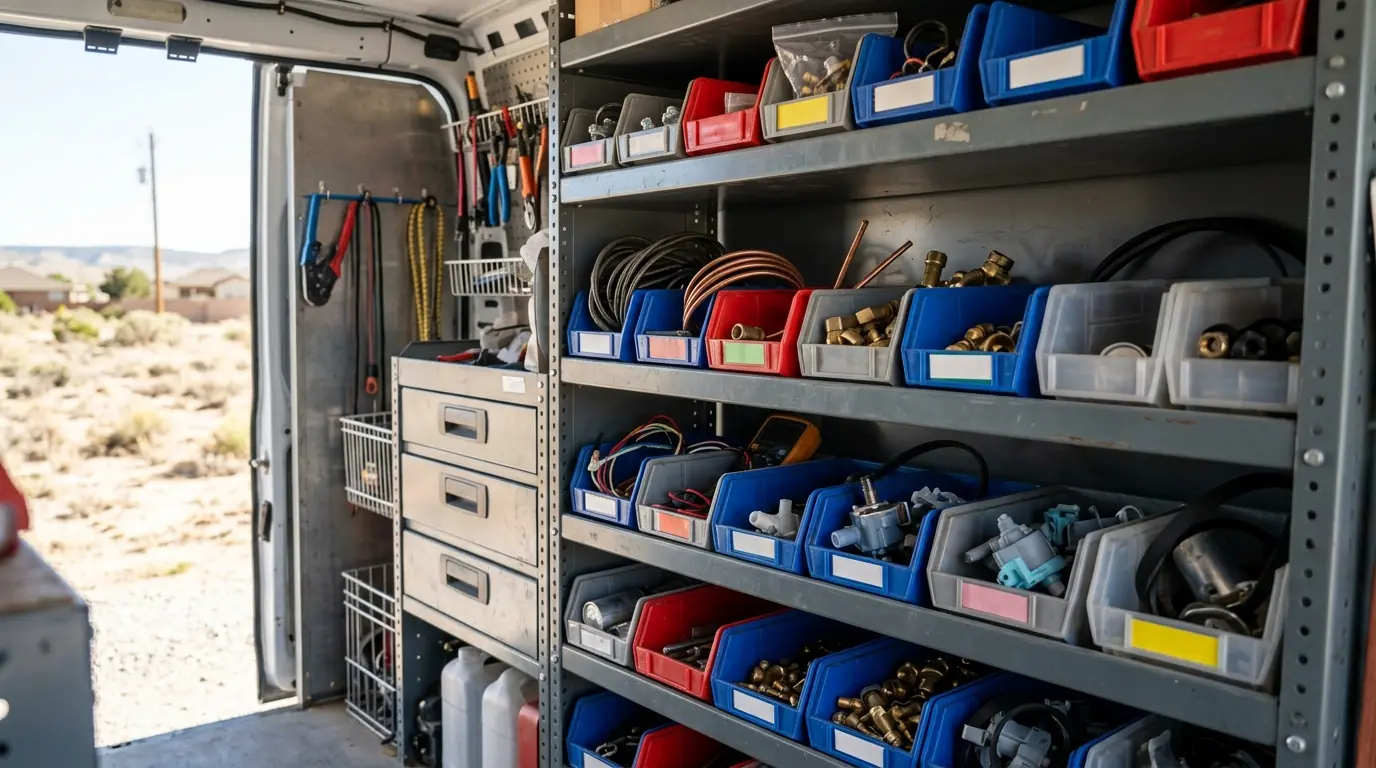
Most fixes use parts on the truck. If the unit needs replacing, we can usually install a new one on the same trip.
- Wrap-up
Run water and test
We run the disposal with cold water, start the dishwasher drain if it ties in, and check every joint with a dry paper towel for drips.
Disposal repairs we make under the sink
Most disposal visits end with one of these fixes.
Clearing jams
With the power off, we work the flywheel free from below, pull out the pit, glass or metal that locked it, and check the impellers swing freely before testing the motor again.
Reset and electrical faults
We test the thermal overload, wall switch, air switch button on some sinks, outlet and plug or hardwired connection. A worn switch or loose wire is a common reason a disposal stays dead.
Sink flange reseal
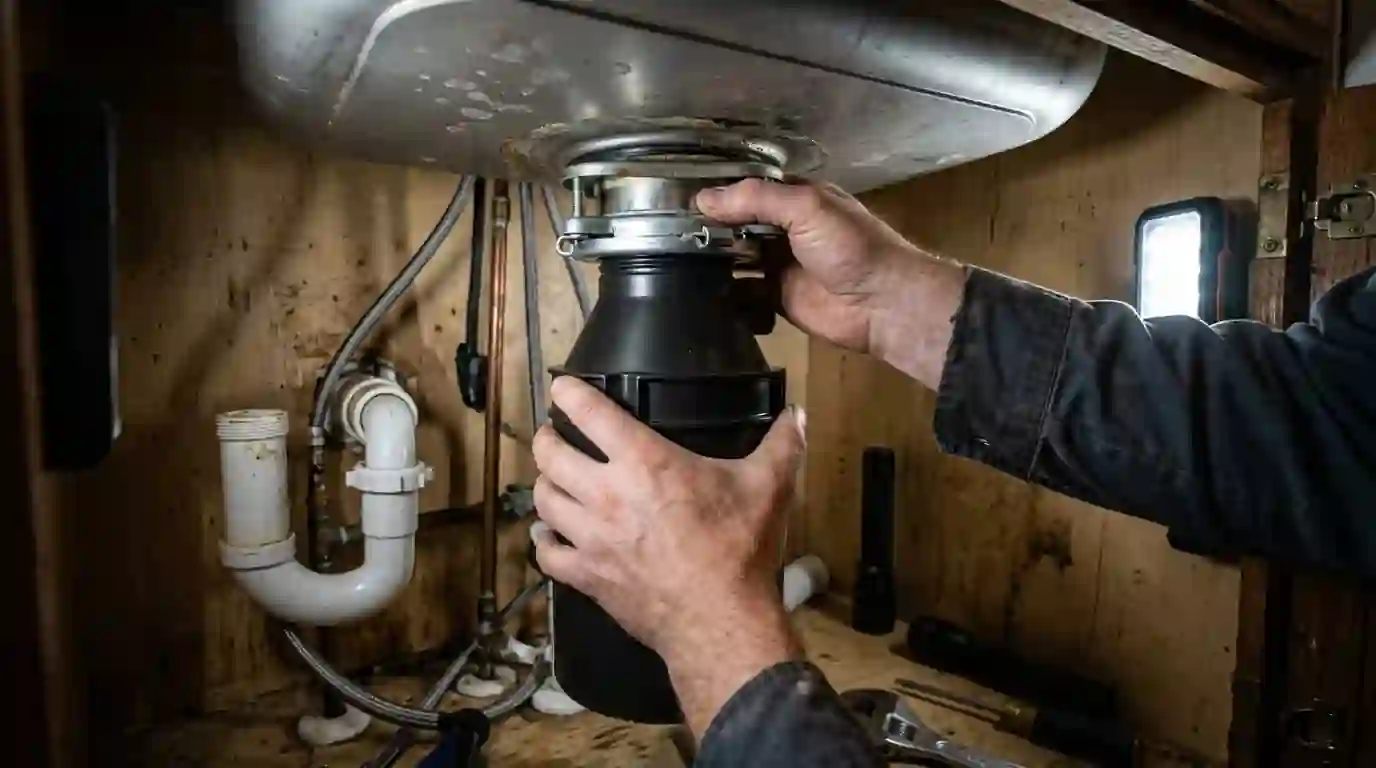
We drop the unit, clean off the old putty, reset the flange with fresh putty and gaskets, and tighten the mounting ring so the top stays dry.
Drain and dishwasher connections
We replace cracked drain elbows and worn gaskets and tighten the clamp on the dishwasher inlet hose. Many side leaks stop with fresh gaskets and a properly seated tailpiece.
Trap and drain arm clearing
When water backs up, we remove and clean the P-trap and drain arm under the sink, then run water to confirm the disposal and the line both drain freely.
Disposal replacement
When the housing leaks, the motor is burned out or the grind parts are worn smooth, we install a new disposal sized for your household and reconnect the dishwasher drain.
What garbage disposal repair usually runs in Farmington
These ranges cover typical disposal repairs around here, part and labor together. A replacement unit is priced by horsepower and features.
| Jam clearing and reset | $96-$158 |
|---|---|
| Wall switch or wiring repair | $112-$197 |
| Sink flange reseal | $127-$212 |
| Drain elbow, gaskets or dishwasher inlet | $118-$203 |
| Disposal replacement, unit and labor | $246-$467 |
These are typical local figures, not a quote. Corroded mounting hardware, a clogged drain line beyond the trap and larger motors raise the total, while a quick jam clear is at the bottom.
Small habits that keep a disposal grinding
- Let cold water run hard while the disposal grinds and for a short while after, which flushes scraps past the trap and on down the drain.
- Grease, coffee grounds, eggshells, rice, pasta and stringy peels like celery or corn husks belong in the trash, not the disposal.
- Grind a handful of ice cubes now and then to knock buildup off the grind ring and impellers.
- Keep the hex key that came with the disposal under the sink, so you can free a minor jam with the power off.
- Never reach into the disposal with your hand. Use tongs or pliers, and only after the power is off.
Repair a disposal or swap in a new one?
Jams, tripped resets, switch faults and flange leaks are all worth repairing, since they're quick fixes that leave the motor in service. If the disposal is newer and the motor runs strongly, there's little reason to replace it. A unit that has simply been fed the wrong things usually goes right back to work once it's cleared.
Replacement is the right call when water leaks from the bottom of the housing, the motor hums even with the flywheel turning freely, or the grind ring and impellers are worn smooth. Disposals are relatively inexpensive, so we won't push a costly repair on an old unit that will fail again soon.
Related repairs people book with garbage disposal repair
Where we handle garbage disposal repair
Farmington neighborhoods first, then the rest of San Juan County and southwest Colorado. Pick your area for local notes, or see all 41 locations.
Garbage Disposal Repair questions from Farmington homeowners
Why does my garbage disposal hum but not turn?
A humming garbage disposal is almost always jammed. Something hard, like a pit, a bottle cap or a piece of glass, is wedged between the flywheel and the grind ring. Turn it off at once. With the power off, a hex key in the socket on the bottom often frees it. If not, call us.
Where is the reset button on a garbage disposal?
The garbage disposal reset button is a small red button on the bottom of the unit, under the sink. Let the motor cool for a few minutes, then press it firmly until it clicks. If it pops back out right away or nothing happens, the problem is likely electrical or the motor itself.
Can a leaking garbage disposal be repaired?
It depends on where the garbage disposal is leaking. Leaks at the sink flange, the dishwasher inlet or the drain elbow can usually be fixed with new gaskets or putty. If water drips from the base of the housing, the seals inside have given out, and that unit has to be swapped for a new one.
Is it safe to use a garbage disposal with a septic tank?
Many homes with septic tanks use a garbage disposal without trouble, as long as it's used lightly and the tank is pumped on schedule. Food solids add to the sludge layer. Avoid grease and large loads, and consider a disposal designed for septic systems if you use it daily.
Why does my sink back up when the garbage disposal runs?
If the sink backs up while the garbage disposal runs, the clog is usually in the trap or drain line beyond it. Grease, rice, pasta and coffee grounds pack together there. We clear the trap and drain arm under the sink and tell you if the line further in needs more attention.
Is a broken garbage disposal an emergency?
A dead garbage disposal isn't usually an emergency, but a leak into the cabinet or a sink full of standing water can be. Switch off the disposal and hold off on running the dishwasher. Someone answers our line at any hour, and we'll find the soonest opening on the schedule.
Need garbage disposal repair today?
Call any hour. A real person picks up, takes the model number and sets the visit.