Gas appliance repair in Farmington, NM
Any burner that refuses to catch, a yellow flame or a faint gas odor near an appliance needs attention today, not next month. We repair gas ranges, ovens, dryers and water heaters on natural gas and propane, and we set them up correctly for this altitude.
- Answered 24/7
- Gas, electric and propane
- Farmington and the Four Corners
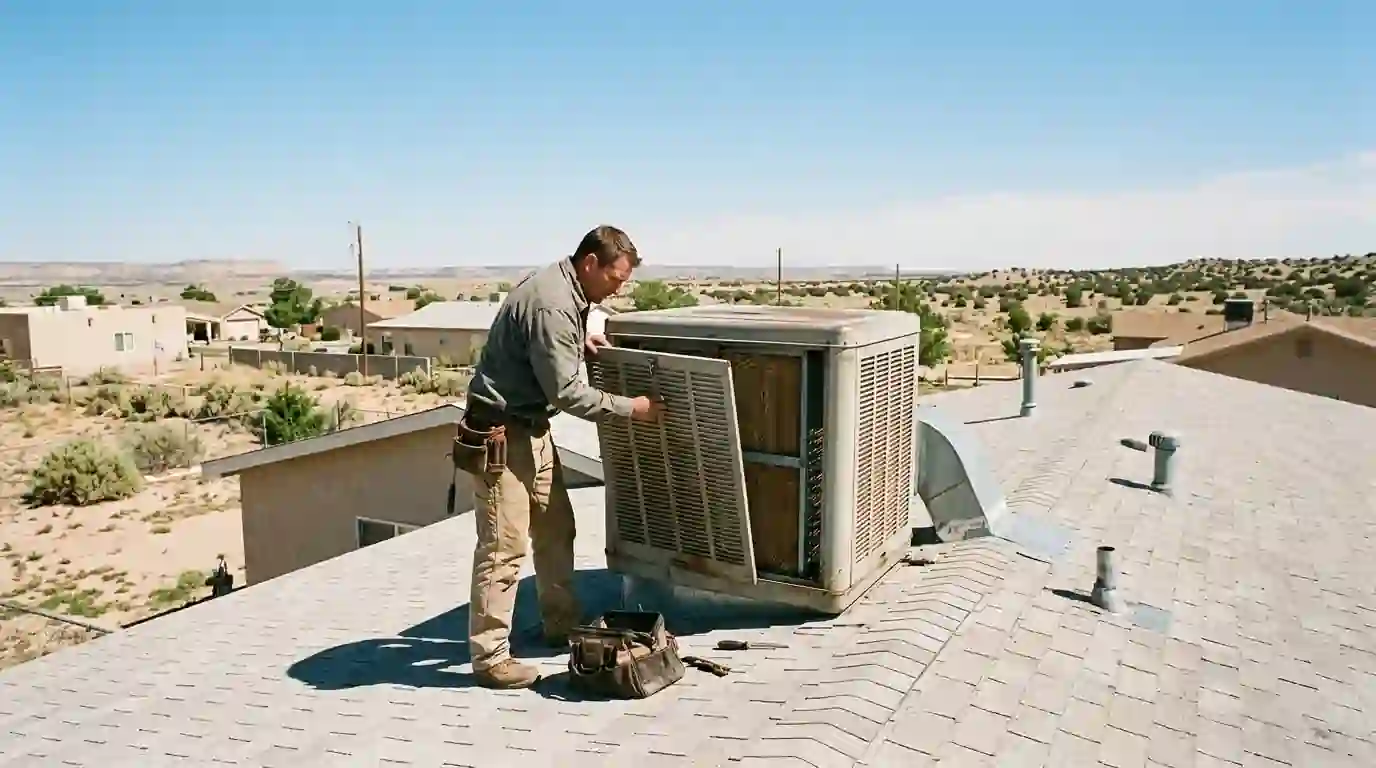
Gas trouble we answer
- Oven or burner won't light
- Yellow, lazy or lifting flame
- Pilot light keeps going out
Quick answer
Gas appliance problems around Farmington usually come down to ignition parts, dirty burners, failed valves or a fuel and altitude setup that doesn't match the home. Typical repairs here run about $128-$412. A gas smell comes first: get everyone outdoors, and from a neighbor's porch or the sidewalk, alert the utility's emergency line or 911. Our phones are answered 24/7, and for real emergencies we send a tech at any hour.
Brands we repair: Whirlpool, GE, Samsung, LG, Maytag, Frigidaire, KitchenAid, Bosch, Kenmore, Electrolux, Amana, Speed Queen, Sub-Zero, Hotpoint
One trip for every gas appliance in the house
Most homes around Farmington have at least one gas appliance, and many have three or four: a range or cooktop, a wall oven, a dryer and a water heater. They share the same basic layout. Gas reaches each one through a shutoff valve and a flexible connector, a valve or regulator controls the flow, an orifice meters it into a burner, and an igniter, spark electrode or pilot lights it. A flame-sensing part then proves the flame is there so the valve stays open.
Because the systems are so similar, our techs approach them the same way. We confirm the fuel type and supply pressure, check the connector and valve for leaks, and watch the flame. Its color, height and stability tell us a great deal before we pick up a meter. Then we test the ignition part, the sensor and the valve, and replace only what has actually failed.
If more than one gas appliance misbehaves at once, mention it on the phone. A low propane tank, a failing regulator at the tank or a partly closed main valve can make several appliances misbehave at once, and that needs a different answer than a bad igniter. We can look at the range, dryer and water heater in a single visit.
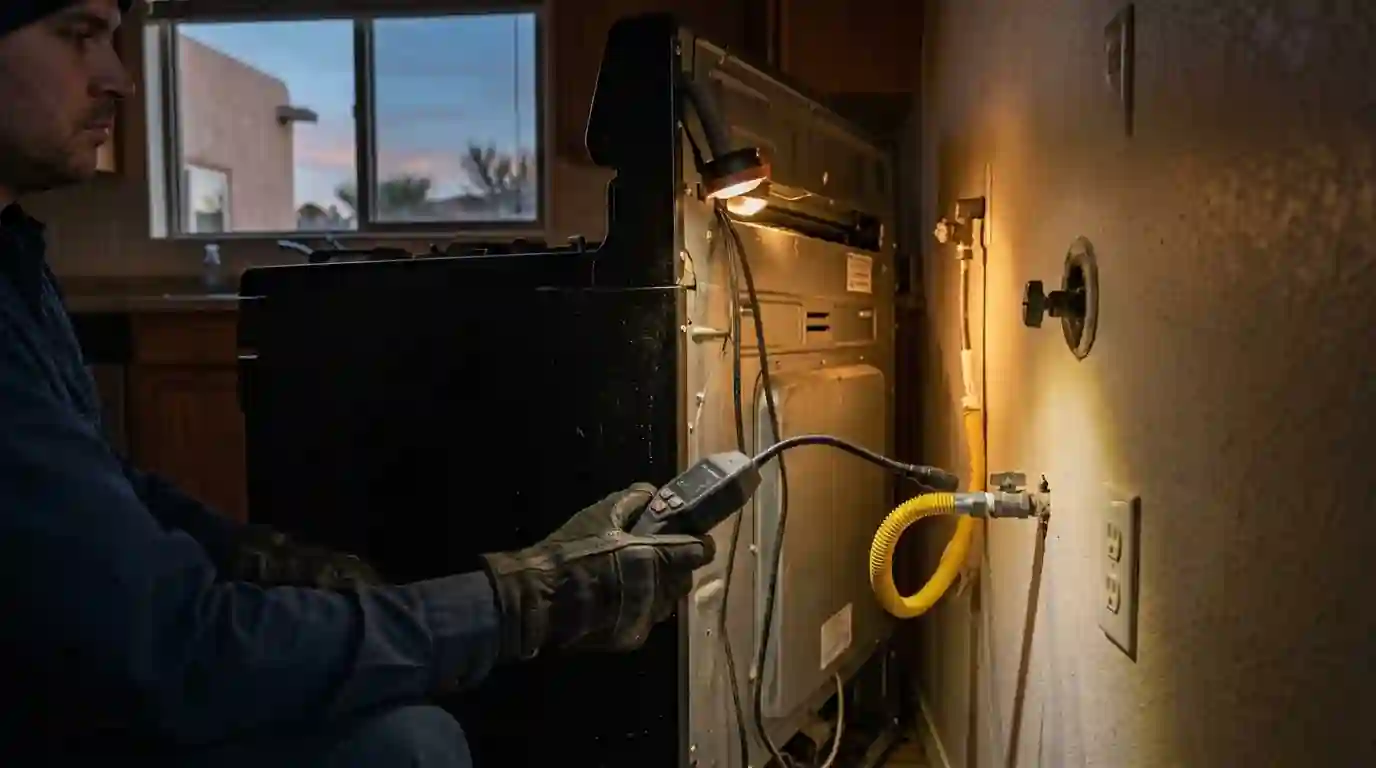
What the flame and the sounds are telling you
Gas appliances give clear warnings before they fail completely, and each one points toward a likely cause.
Strong smell of gas
Get out now, without flipping switches or touching appliance controls. Once you're outdoors, phone the gas utility or 911. After they shut off and clear the leak, ring us about the appliance.
Yellow flame with soot
A healthy flame is mostly blue with small inner cones. Yellow tips, soot on pans or black marks above a water heater point to a dirty burner, a poor air setting or the wrong orifice.
Flame lifting or blowing out
Flames that float above the burner ports or blow out when you turn the knob down often mean the gas pressure or orifice does not suit the fuel being supplied.
Slow or delayed ignition
A whoosh or small bang when an oven or dryer burner finally lights is delayed ignition. A weak igniter or a dirty burner usually causes it, and it should be fixed promptly.
Pilot will not stay lit
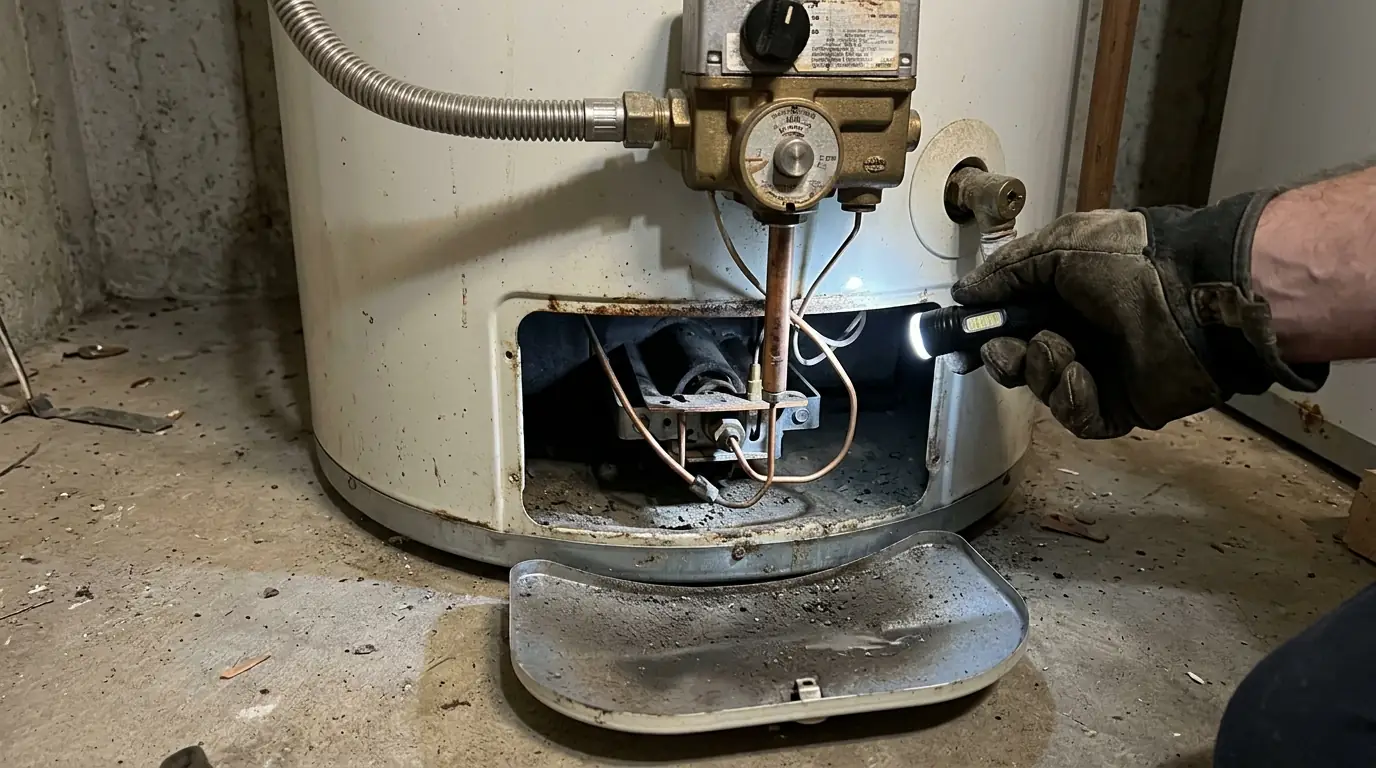
On water heaters and older ranges, a pilot that goes out when you release the knob usually means a worn thermocouple, a dirty pilot assembly or a failing gas control valve.
Clicking that never stops
A range that keeps sparking after the burner lights often has a wet or failed spark switch, a cracked electrode or a burner cap sitting off center.
Propane tanks, natural gas and life at 5,400 feet
Homes inside city limits and in many subdivisions run on natural gas, but much of San Juan County and the nearby Colorado counties burns propane from a tank. The two fuels are delivered at different pressures and need different orifice sizes. An appliance set up for natural gas and hooked to propane burns with a tall, yellow flame and makes soot and carbon monoxide. One set for propane and run on natural gas burns weak and may not light reliably. We check the fuel setup on every gas call.
At roughly 5,400 feet in Farmington, and higher still in Durango, Cortez and Mancos, each breath of air carries less oxygen, so a burner adjusted for sea level can run a little rich. Manufacturers publish high-altitude instructions for many ranges, dryers and water heaters, and a few specify a reduced orifice once you pass a stated elevation. Soot on pans, a flame that wavers off the ports or burners slow to catch all suggest the setup needs a look.
Many Farmington homes from the 1950s to 1970s still have older shutoff valves and connectors, and the dusty, windy spring weather here blows grit into burner ports and pilot assemblies. Monsoon storms bring brief outages that can leave a pilot out. A lot of gas calls we take are simple cleaning, a new thermocouple or an adjustment, but we never skip the leak test.
How we handle a gas appliance call safely
- Before you call us
Get safe first
A gas odor means everyone walks out first. Use a cell phone well away from the house to alert 911 or your gas provider, then reach us once the leak is cleared.
- On the phone
Appliance, fuel and symptoms
We ask which appliance, whether the home runs on propane or natural gas, what the flame looks like and when the problem started.
- At the door
Leak check first
Before anything else, our tech checks the shutoff valve, connector and fittings for leaks and confirms the gas supply is steady.
- Diagnosis
Watch the flame and test
We watch a full ignition sequence, then test the igniter, sensor, thermocouple or valve to find the actual failed part.
- Same visit
Repair and leak-test again
After the repair, we leak-test every fitting we touched, check flame color on each burner and confirm the appliance shuts off properly.
Gas repairs our techs make most often
These six repairs cover most of the gas appliance calls we get around the Four Corners.
Oven and dryer igniters
Hot surface igniters weaken with age until they can no longer pull enough amperage to trigger the valve. We check the amp draw or resistance, then replace the igniter so the burner lights promptly and cleanly.
Thermocouples and pilot assemblies
On water heaters and standing-pilot ranges, we clean the pilot orifice and replace a worn thermocouple so the pilot stays lit and the gas control valve holds open.
Burner cleaning and adjustment
We clear blocked ports, align burner caps and set the air shutter so the flame burns blue and steady. Dust and boil-overs are the usual causes of a poor flame.
Gas valves and regulators
A valve that leaks, sticks or will not hold a low flame gets replaced. We also test the appliance regulator, since a failed one affects every burner on that appliance.
Fuel and altitude setup
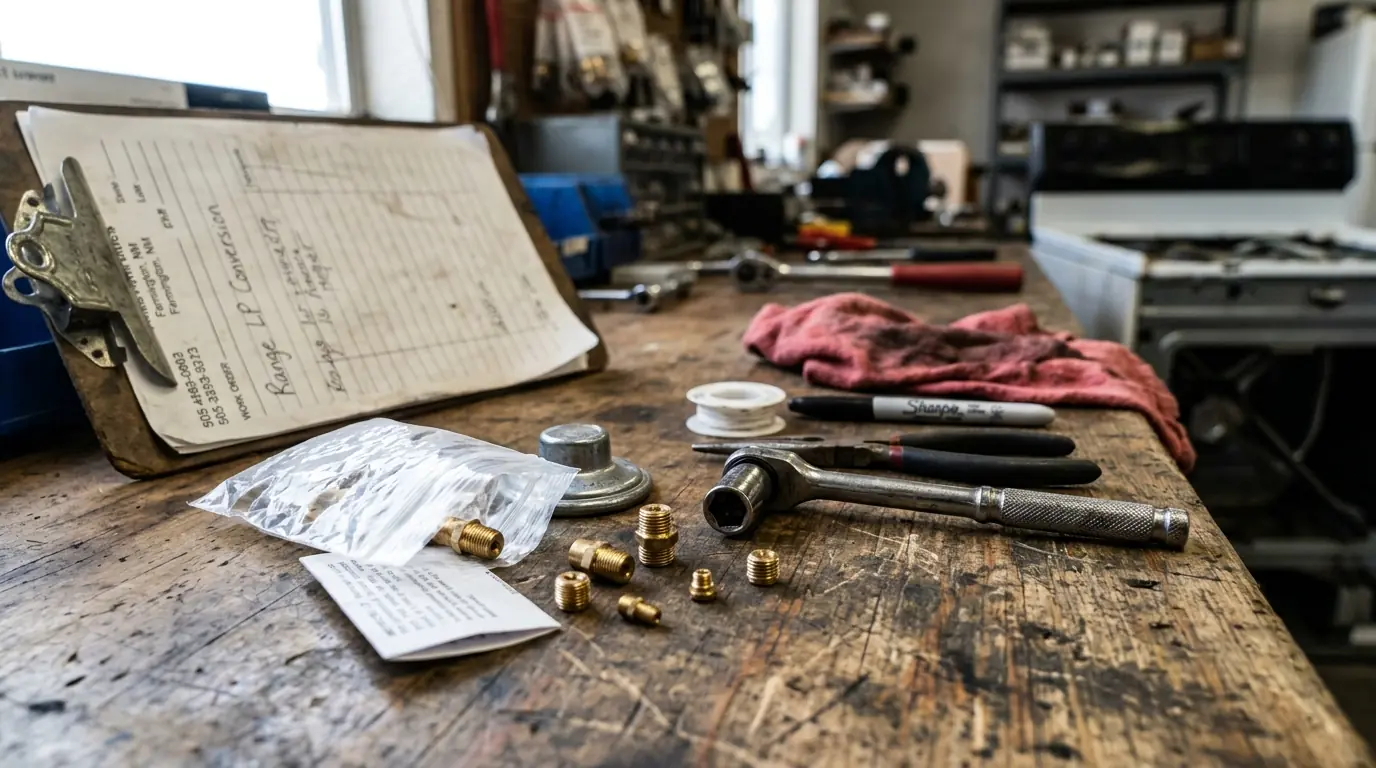
We install LP or natural gas orifices, set the regulator for the right fuel and follow the manufacturer's high-altitude guidance, then check every burner for a clean flame.
Connector and shutoff valve
Cracked, kinked or old uncoated brass connectors and stiff shutoff valves are replaced with new parts, then leak-tested with solution or an electronic detector.
Gas repair price ranges we see near Farmington
Parts and labor are both counted in these figures. Use them to plan, not as a quote.
| Oven or dryer igniter | $138-$262 |
|---|---|
| Water heater thermocouple or pilot assembly | $128-$234 |
| Burner cleaning and flame adjustment | $132-$219 |
| Gas valve or appliance regulator | $196-$412 |
| Gas connector and shutoff valve | $141-$276 |
Price depends on the appliance, the model's part costs and how much has to come apart. After-hours emergency visits cost more than daytime calls, and we tell you before we start.
Gas safety habits for Farmington and Four Corners homes
- Know where the shutoff valve sits behind each gas appliance and where the main valve or tank valve is, so anyone in the house can close it quickly.
- Put a CO alarm outside each bedroom area and on every level that has a gas appliance, and test it when you change your clocks.
- Keep propane tanks above about a fifth full in winter. Very low tanks can lose pressure on cold nights and starve the appliances.
- Wipe up boil-overs once the cooktop is cool so food doesn't bake into the burner ports and spark electrodes.
- Never use a gas oven or range to heat the house. It isn't designed for that and can build up carbon monoxide.
When a gas appliance is worth fixing
Most gas appliance repairs are ignition parts, sensors, valves or cleaning, and they cost far less than replacing the appliance. A well-built gas range or dryer can run for many years with occasional parts. We suggest replacement when a range has a cracked or rusted-through burner box, a dryer's drum and motor are both worn out, or a water heater tank is leaking. Leaking tanks cannot be repaired.
If you do replace a gas appliance, the new one needs the right orifices for your fuel, the altitude setup the manufacturer calls for, a new connector and a leak test. We can do that hookup and haul the old unit to your curb or garage.
Related repairs people book with gas appliance repair
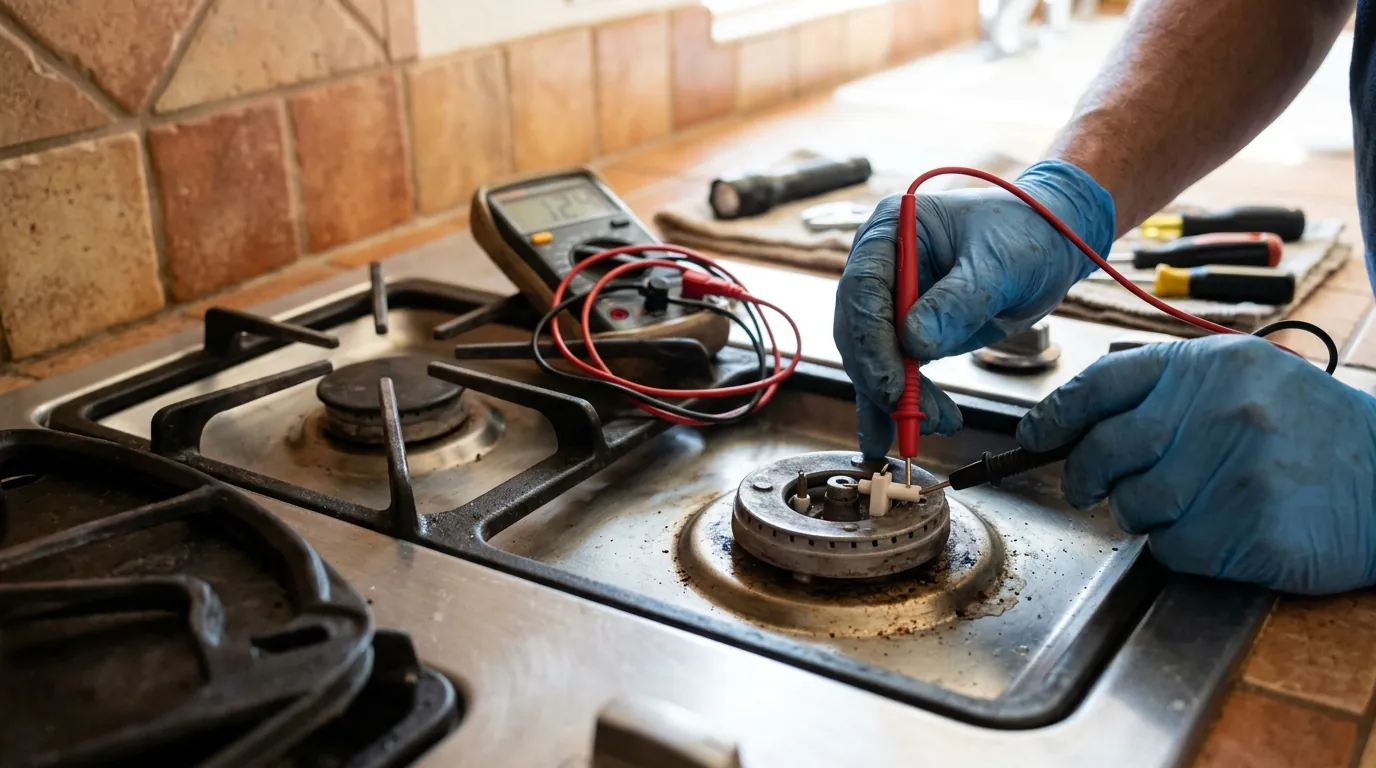
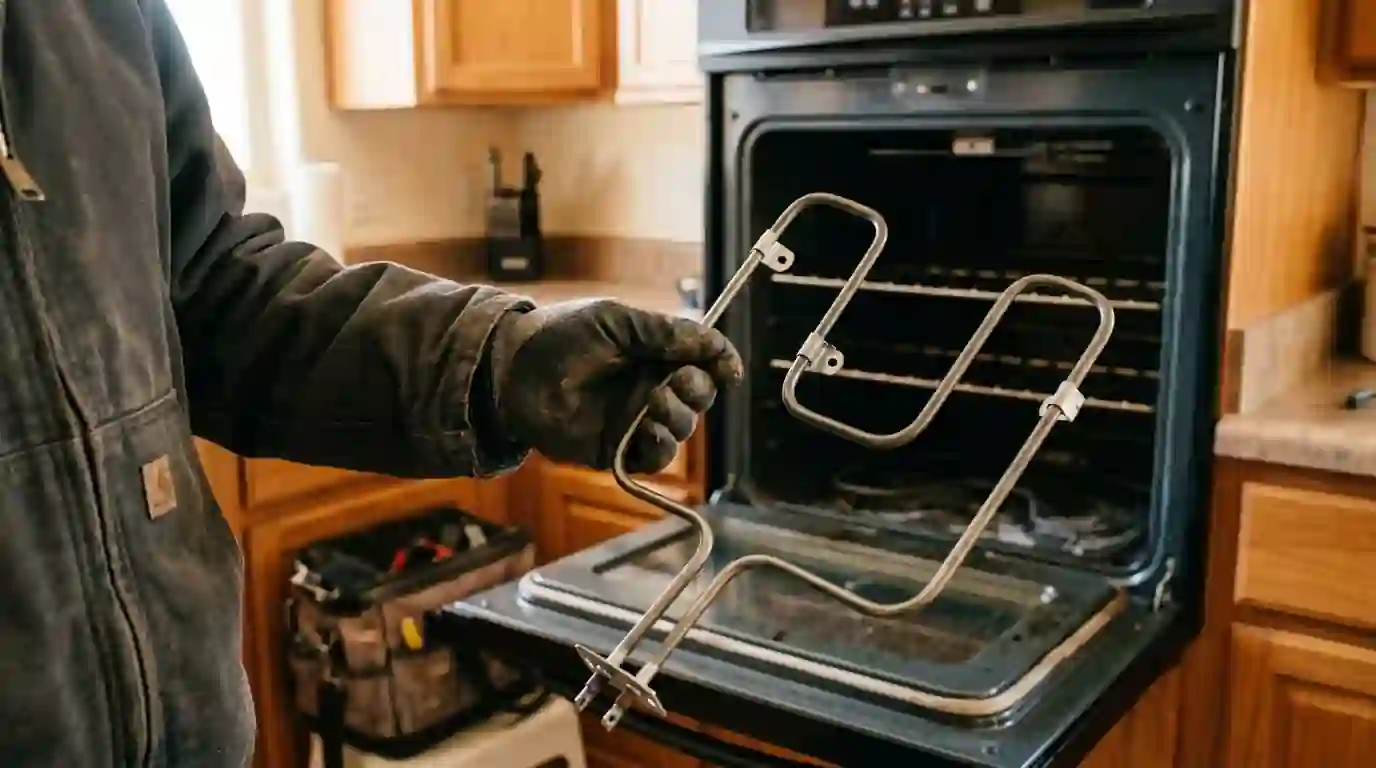
Where we handle gas appliance repair
Farmington neighborhoods first, then the rest of San Juan County and southwest Colorado. Pick your area for local notes, or see all 41 locations.
Gas Appliance Repair questions from Farmington homeowners
What is the first step if a gas stove or water heater smells of gas?
Get everyone out of the house right away. Do not turn lights, switches or appliances on or off, and do not use a phone indoors. Standing at the curb or in the street, get 911 or the gas provider's emergency number on the line. When they have stopped the leak and cleared the home, call us and we will find and repair the appliance problem that caused it.
Why is the flame on my gas appliance yellow instead of blue?
A yellow or orange flame usually means incomplete combustion. Common causes are dirty burner ports, a poorly set air shutter, the wrong orifice for propane or natural gas, or an appliance not set up for this altitude. Some orange flecks from dust are normal. A mostly yellow flame or soot is not, and it should be checked.
Can one technician repair several gas appliances on the same visit?
Yes. Our techs work on ranges, ovens, cooktops, dryers and water heaters, so one visit can cover several. If more than one gas appliance is acting up at once, mention it on the call, because a low propane tank or a failing tank regulator can affect them all together.
Is it normal for a gas appliance to smell briefly when it lights?
A faint whiff for a second or two as an oven or dryer burner lights can be normal, especially on older models. A smell that lingers, grows stronger or appears when the appliance is off is not normal. Walk everyone outdoors, phone the gas company or 911 from there, and have the appliance checked once they clear it.
Do gas appliances in Farmington need different settings than at sea level?
Many do. At about 5,400 feet the air holds less oxygen, and manufacturers publish high-altitude instructions for many gas ranges, dryers and water heaters. Some call for smaller orifices or adjusted air settings above a certain elevation. We follow the specific manufacturer's guidance for your model.
Will you come out at night for a gas appliance emergency?
Yes, for real emergencies. Our phones are answered 24/7. If the gas utility or fire department has been out and cleared a leak, or a gas water heater is leaking, we can send a tech at any hour. Less urgent problems, like a single burner that will not light, are scheduled for daytime.
Need gas appliance repair today?
Call any hour. A real person picks up, takes the model number and sets the visit.