Swamp cooler installation in Farmington, NM
A rusted-out cooler, or one too small for the house, leaves the back rooms hot all July. We size the new evaporative cooler, set it on the jack, stand or window, then plumb, wire and start it.
- Answered 24/7
- Gas, electric and propane
- Farmington and the Four Corners
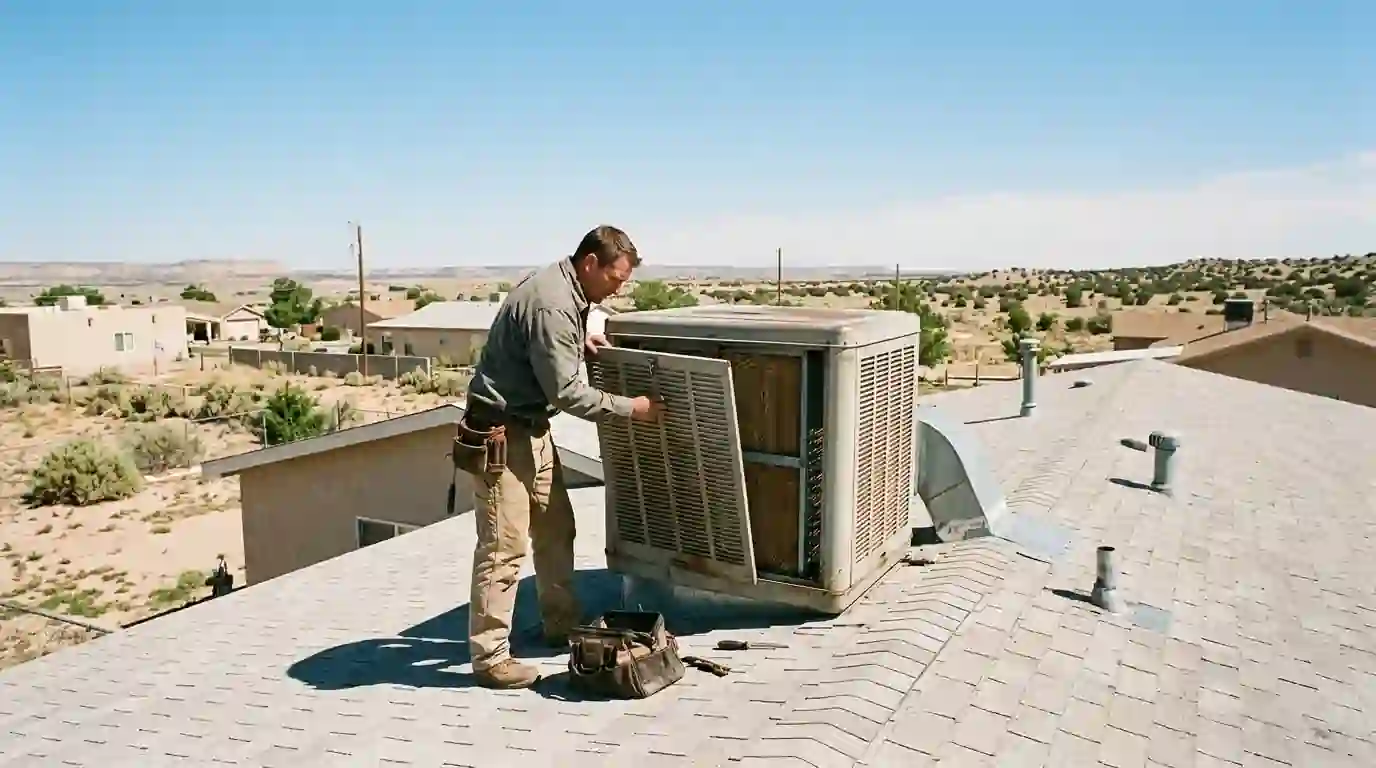
Install jobs we see most
- Rusted pan dripping through the ceiling
- Old cooler too small after an addition
- Window unit for a shop or bedroom
Quick answer
Installing a swamp cooler means sizing it to the house, setting it on a roof jack, stand or window bracket, sealing the duct transition, running a water line with a shut-off, adding a drain and bleed-off, and wiring the motor and pump. Around Farmington, labor and hookup parts for a roof unit typically run about $386-$893, plus the cooler. Most swaps take one day, and our phones are answered 24/7.
Brands we repair: Whirlpool, GE, Samsung, LG, Maytag, Frigidaire, KitchenAid, Bosch, Kenmore, Electrolux, Amana, Speed Queen, Sub-Zero, Hotpoint
What goes into a new evaporative cooler install
A new cooler is only as good as the way it sits and gets its water. Most of our installs replace an old roof unit that rusted through, so the opening, the ceiling register and the power are already in place. We take the old cabinet down, look over the roof jack or stand it sat on, and set the new cooler level so water spreads evenly across the pads and the pan drains toward its overflow instead of pooling in one corner.
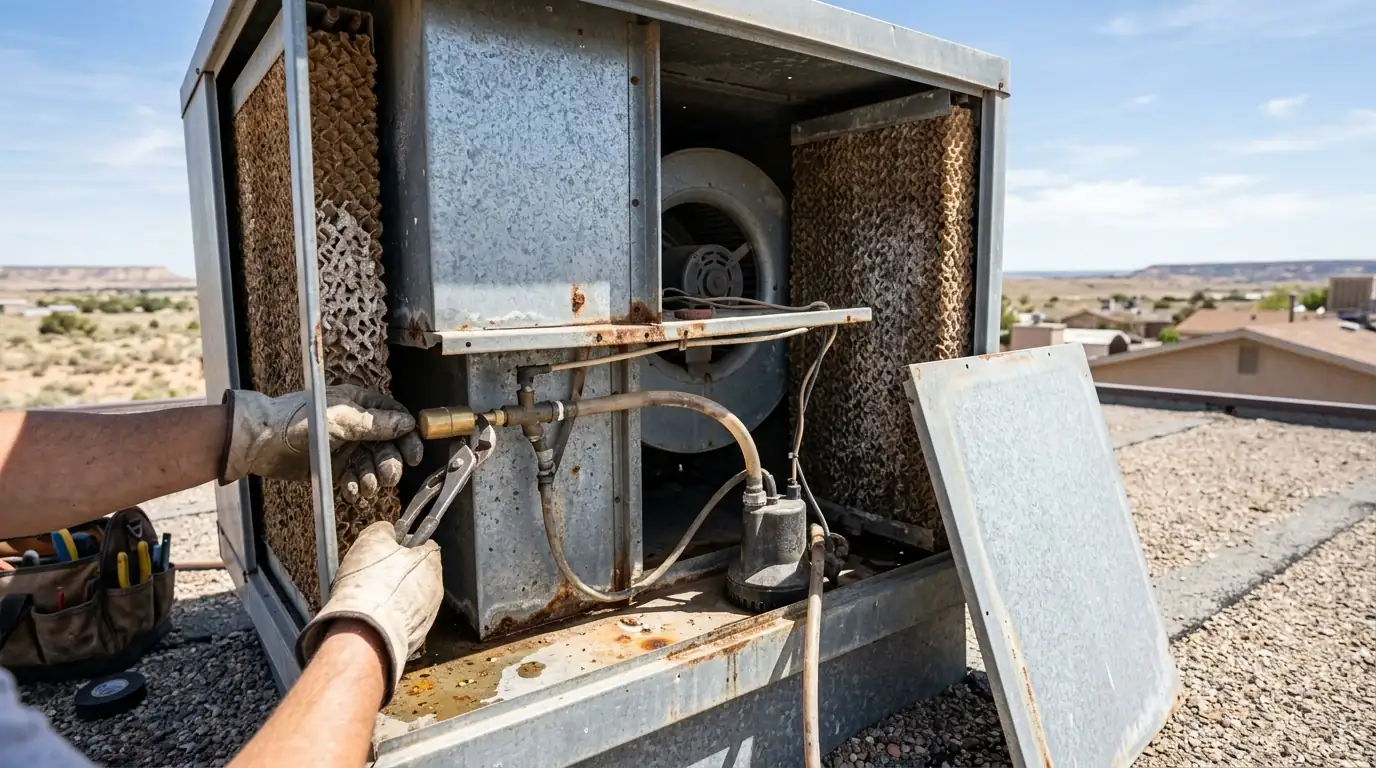
From there it's plumbing and wiring at the cooler. We run a new supply line from a proper shut-off valve, set the float valve so water stays below the overflow, and add a bleed-off kit that sends a small stream of mineral-heavy water to the drain. The motor and pump get wired to the existing two-speed control, and we fit the pulley, tension the belt and confirm both speeds plus the pump setting work before the panels go back on.
Our work stops at the cooler and its connection to the house. We don't repair roofing, so soft decking or failed flashing around the jack needs fixing before the new cabinet goes up, and we don't rebuild attic ductwork. What we do handle is the transition between the cooler and the existing duct or register, sealed so cool air drops into the rooms instead of leaking into the attic. Window and side-draft units get the same attention to seals, water and drainage.
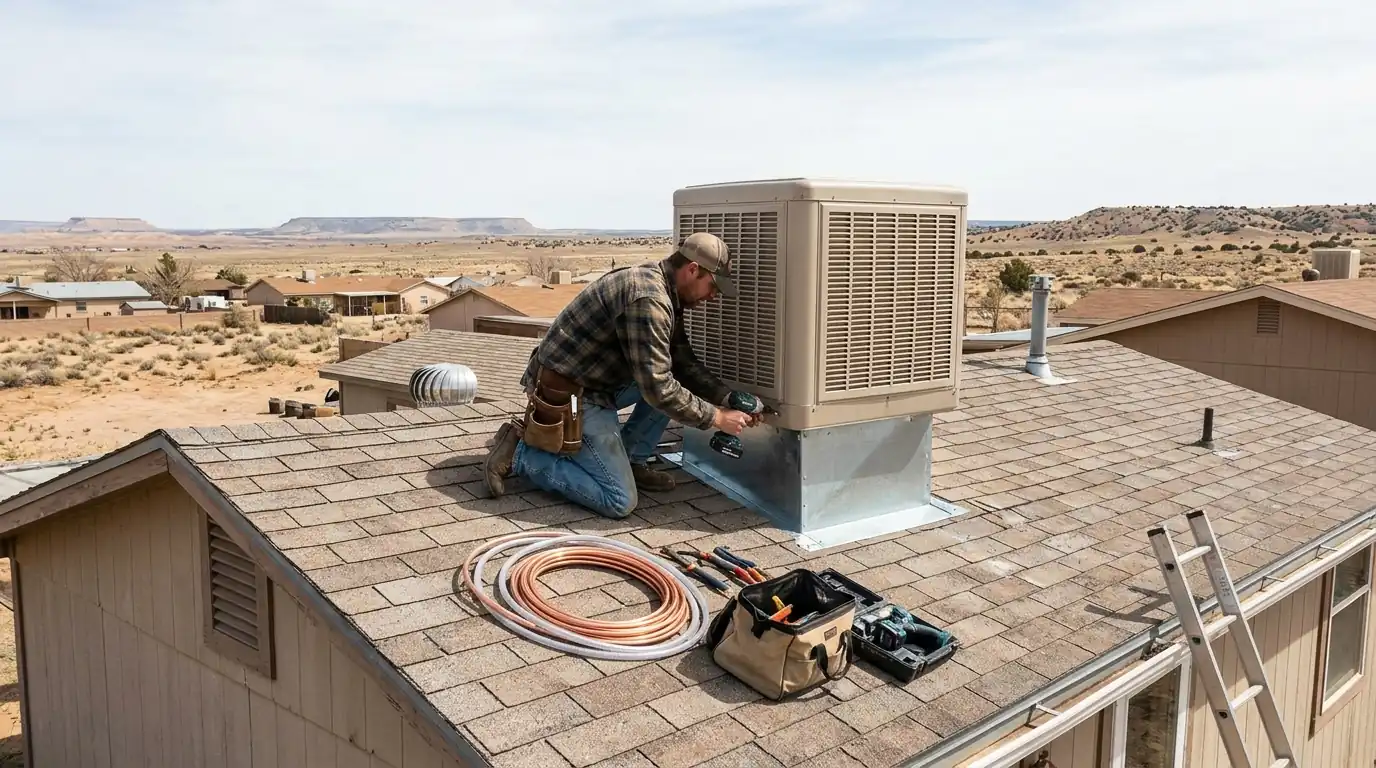
What we set, plumb and wire on a new cooler
Every install covers the same core pieces, and these are where a careful setup pays off for years.
Roof jack or stand setting
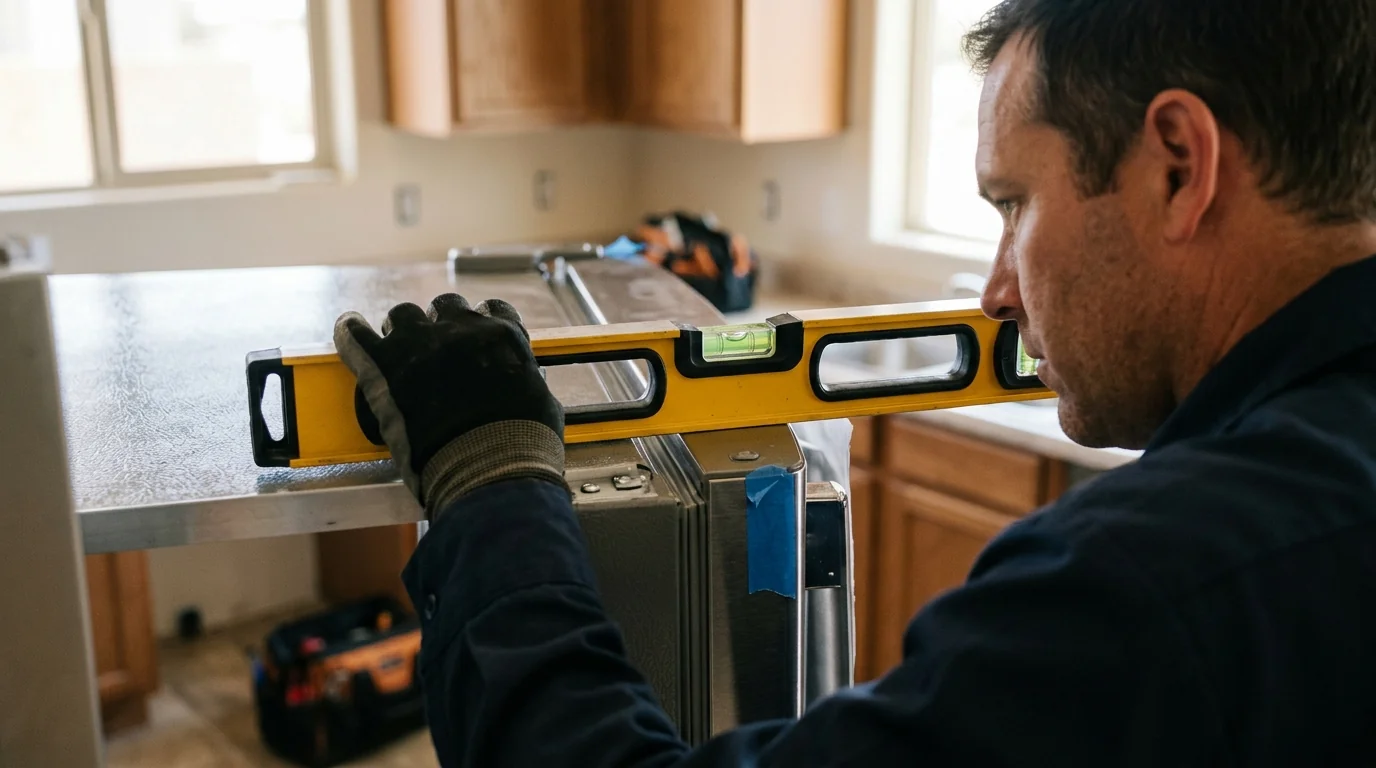
We set the cabinet on the existing roof jack or a steel stand, check it with a level both ways, shim where needed and fasten it down so spring wind can't shift it.
Duct transition and seal
The opening between the cooler and the house duct or ceiling register gets a fitted transition and a weatherproof seal, so the air goes into the rooms and not into the attic.
Water supply line and shut-off
New supply tubing runs from a shut-off valve, routed away from sharp edges and kinks, with a drain-down fitting so the line can be emptied before the first hard freeze.
Float valve and overflow drain
The float valve is set so water sits just below the overflow, and the overflow and drain fittings are routed to a safe spot instead of streaking down the siding.
Bleed-off kit
A small tee at the pump outlet sends a steady trickle to the drain. That constant flush stops minerals from concentrating in the pan, so pads and the pump last longer in hard water.
Motor, pump and control wiring
We wire the motor and pump to the existing two-speed switch or thermostat control, fit the blower pulley, set belt tension and check amperage so the motor isn't straining.
Signs your house is ready for a new cooler
These are the clues that tell us another repair would only buy a few more weeks.
Rust holes in the water pan
Once the pan rusts through, water drips into the roof jack and onto the ceiling. Patches and pan coatings slow it down, but the sheet metal around them keeps thinning every season.
Ceiling stain below the register
A brown ring around the ceiling register usually traces back to a leaking pan or a split cabinet seam. Catching it early saves drywall, and it often marks the end for that cooler.
Back bedrooms never cool off
If the rooms farthest from the register stay warm even with windows cracked, the cooler may be too small for the house, especially after an addition or a converted garage.
Motor, pump and cabinet all tired
When an old cooler needs a motor, a pump and pads in the same season, and the cabinet is scaly with rust as well, the parts bill starts to close in on the price of a new unit.
Panels and louvers falling apart
Bent side panels and crumbling louvers let air sneak around the pads. The blower still roars, but the air coming out stays warm because it never passes through wet media.
Shop or garage needs cooling
A detached shop, a garage workspace or one hot bedroom can often be cooled with a window or small side-draft unit on its own stand, leaving the main house cooler alone.
Typical swamp cooler installation costs around Farmington
These ranges cover labor and hookup parts for common installs in the Farmington area. The cooler itself is priced separately by size and pad type, and none of this is a quote.
| Downdraft cooler swap on an existing roof jack | $386-$742 |
|---|---|
| Side-draft cooler on a stand with duct transition | $468-$893 |
| Window cooler with support bracket | $167-$338 |
| New supply line with shut-off and drain-down | $112-$236 |
| Bleed-off kit and float valve setup | $58-$124 |
An outlet that needs a curb adapter, a long water line, a switch from downdraft to side-draft, or a larger cabinet that needs a new stand raises the total. A like-for-like swap on a sound jack lands near the low end.
Why cooler setup matters more in the Four Corners
Evaporative cooling works here because the air is dry, with July highs around 90 and well under 10 inches of rain in a year. A cooler does its strongest work in June and early July. When the monsoon storms roll in during July and August, humid spells weaken the cooling for a few days, and owners sometimes blame a new unit. Sizing it right from the start, with enough airflow for the whole house, gives you margin through those sticky afternoons.
Hard water shapes a lot of the install. Farmington's water, and private well water around the county even more, leaves minerals on everything it evaporates from. That's why we push for a bleed-off kit on every new cooler and talk through rigid media, which sheds scale better than aspen. A cabinet set slightly out of level also lets minerals pile up at the low corner, so we take our time with the shims and check level in both directions.
Wind and winter finish the picture. Spring gusts can rock a cooler that's only resting on its jack, so we fasten the cabinet down. Manufactured homes have lighter roofs and a full pan is heavy, so on those homes we look closely at the stand and support, and a window or side-draft unit can be the better fit where an opening already exists. Every supply line we run gets a drain-down point, since a full line splits on a January night in the teens.
How a cooler install runs from sizing to the first cool breeze
- First call
House size and setup
Tell us the square footage, ceiling height, where the current cooler sits and whether it blows down or sideways. That lets us size the new unit and bring the right adapter.
- Site visit
Measure and size
Our tech checks the jack or stand, the duct opening, the water source and the power, then recommends a cooler size and pad type with a price before anything is ordered.
- Install day
Old out, new in
We take down the old cabinet, clean and inspect the opening, set and fasten the new cooler, seal the transition and run the supply, drain and bleed-off lines.
- Startup
Wire, fill and run
With the motor and pump wired, we fill the pan, set the float, adjust the belt and run both speeds while watching the pads soak evenly and the drain flow.
- First fall
Plan the drain-down
We show you the shut-off and the drain-down fitting so the line can be emptied each October, and we can add the new cooler to our fall winterizing calendar.
Repair the old cooler or put in a new one?
A sound cabinet with a bad motor or pump is a repair, not a replacement. Pads, belts, floats and pumps are wear parts, and swapping them is ordinary upkeep. The math changes when the pan has rusted through, the ceiling is staining, or the cooler simply can't move enough air for the house. At that point a new unit costs less over a few summers than patching an old one season after season.
Size matters as much as condition. If the old cooler was undersized from day one, a like-for-like swap just repeats the problem. We measure the house, look at the duct opening and give you a size and a price, then you decide. Call us in early spring and the install can be done before the heat settles in.
Getting the most out of a brand new cooler
- Leave a window open a few inches in the rooms farthest from the register, so the moist air has a way out and the house stays cool instead of clammy.
- Let new pads soak for several minutes with only the pump running before you start the blower, so the very first air through them comes out cool.
- Glance at the bleed-off line during the first week. A steady trickle means it's working, while a dry line means the tee is clogged or its valve is closed.
- Write the pad size and cooler model on the inside of a utility closet door, so ordering replacement pads next spring takes one short phone call.
- Shut the water off and empty the supply line before the first hard freeze in fall, even when the cooler is only a few months old.
Related repairs people book with swamp cooler installation
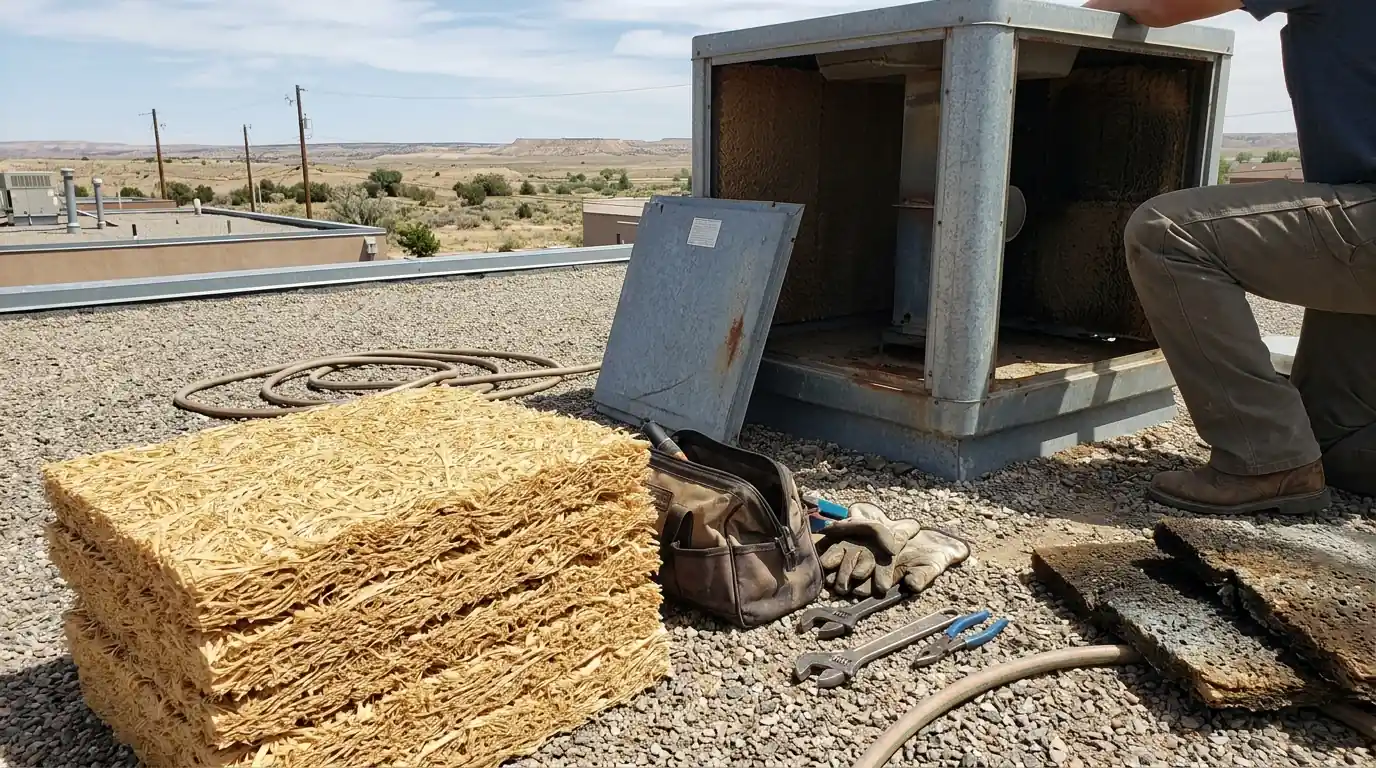
Where we handle swamp cooler installation
Farmington neighborhoods first, then the rest of San Juan County and southwest Colorado. Pick your area for local notes, or see all 41 locations.
Swamp Cooler Installation questions from Farmington homeowners
What size swamp cooler does a Farmington house need?
Cooler airflow is rated in CFM. A common rule in dry climates divides the home's cubic footage by two or three. A 1,500 square foot ranch with 8-foot ceilings holds about 12,000 cubic feet, so it usually wants a cooler around 4,000 to 6,000 CFM. Layout, shade and the number of rooms move that number.
Should I choose a downdraft or side-draft swamp cooler?
It mostly depends on where the old one sat. Downdraft coolers sit on a roof jack and blow straight down into a ceiling register. Side-draft units blow sideways into a duct and can sit on a roof stand, on the ground or in a window. Matching the existing opening keeps the install simple and the price down.
Is a rigid media swamp cooler worth the higher price?
In hard water, often yes. Rigid media holds its shape for several seasons, resists sagging and tolerates mineral buildup better than aspen, so the cooling stays more even. Aspen-pad coolers cost less up front and the pads are cheap, but around here they usually get replaced every summer.
Can a new swamp cooler sit on my existing roof jack?
Usually, if the jack is solid and the new cabinet's outlet lines up with its opening. We check the jack for rust and the seal around it. If the outlet size differs, a curb adapter bridges the two. Rotted decking or failed flashing has to be repaired before we set the new cooler, since we don't do roofing.
Does a new evaporative cooler need a bleed-off kit?
Here, we recommend one on every install. Without a bleed-off, minerals concentrate in the pan as water evaporates, and they coat the pads, the pump and the float. The kit sends a small, steady stream to the drain so fresh water keeps diluting what's in the pan.
Can you install a window swamp cooler for one room or a shop?
Yes. Window and small side-draft coolers work well for a bedroom, a garage workspace or a detached shop. We fit the window adapter or support bracket, seal the gaps around the cabinet, run the water line, set the drain away from the wall and check the outlet the cooler will plug into.
Need swamp cooler installation today?
Call any hour. A real person picks up, takes the model number and sets the visit.