Ice maker and water line installation in Farmington, NM
A fridge water line that drips behind the cabinet can rot a floor for months before anyone notices. We run a proper line from a real shut-off valve, add a filter for hard water, and leak-check every fitting.
- Answered 24/7
- Gas, electric and propane
- Farmington and the Four Corners
Lines we run most
- New fridge needs a water hookup
- Old saddle valve dripping behind the wall
- Ice tastes off, filter needs adding
Quick answer
A sound refrigerator water hookup uses a quarter-turn shut-off valve on a real tee, a braided stainless or copper line, a filter where water is hard, and a leak check after pressurizing. Typical labor in Farmington runs about $116-$248 for a standard hookup and more for long runs. Most jobs take one visit. Our line is staffed 24/7, and we can sometimes come out the day you call if a tech is free.
Brands we repair: Whirlpool, GE, Samsung, LG, Maytag, Frigidaire, KitchenAid, Bosch, Kenmore, Electrolux, Amana, Speed Queen, Sub-Zero, Hotpoint
Why the line behind your fridge matters as much as the ice maker
Ice makers and door dispensers depend on a small water line that runs from a cold supply pipe to the back of the refrigerator. It sits behind a heavy appliance that gets pushed and pulled for cleaning, and it carries full house pressure all day and night. A kinked plastic line, a loose compression nut or a corroded valve stays hidden until water seeps into the subfloor or the ceiling below.
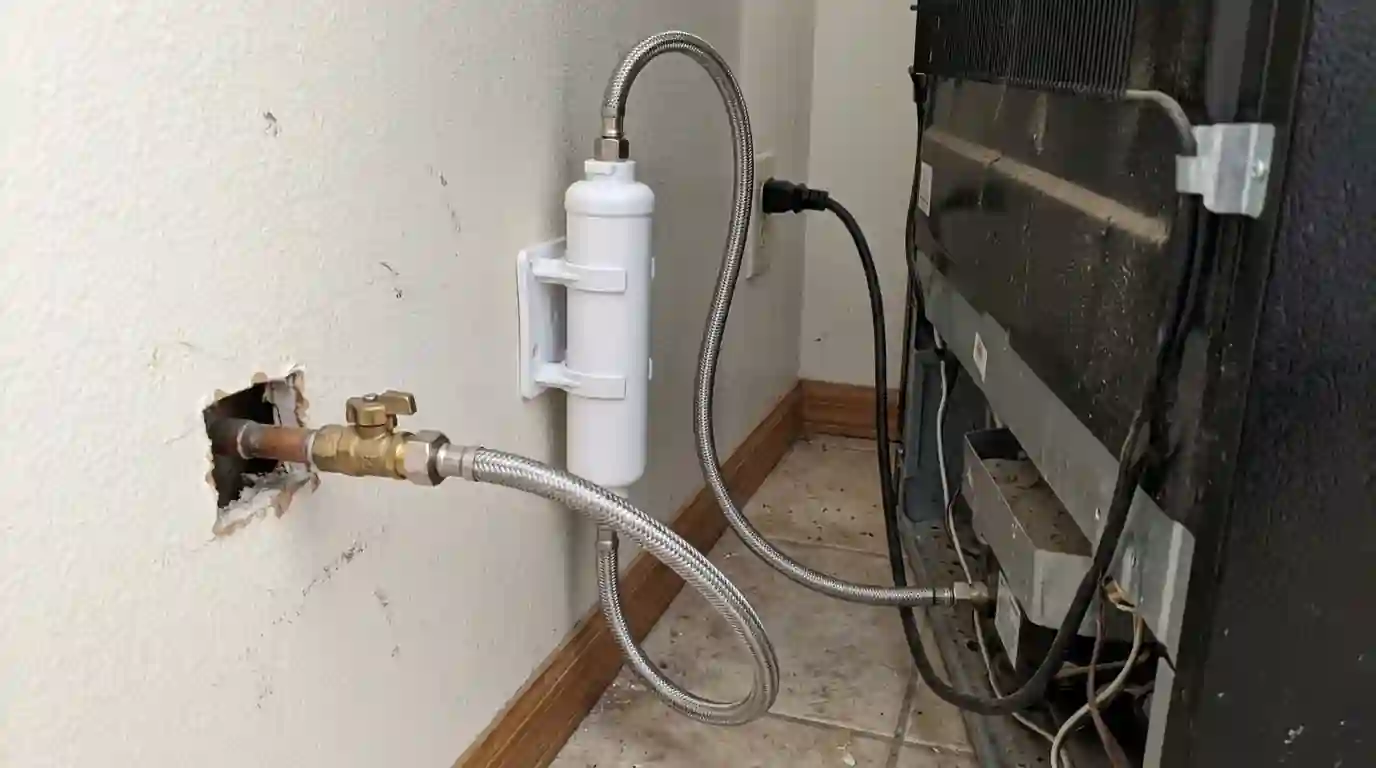
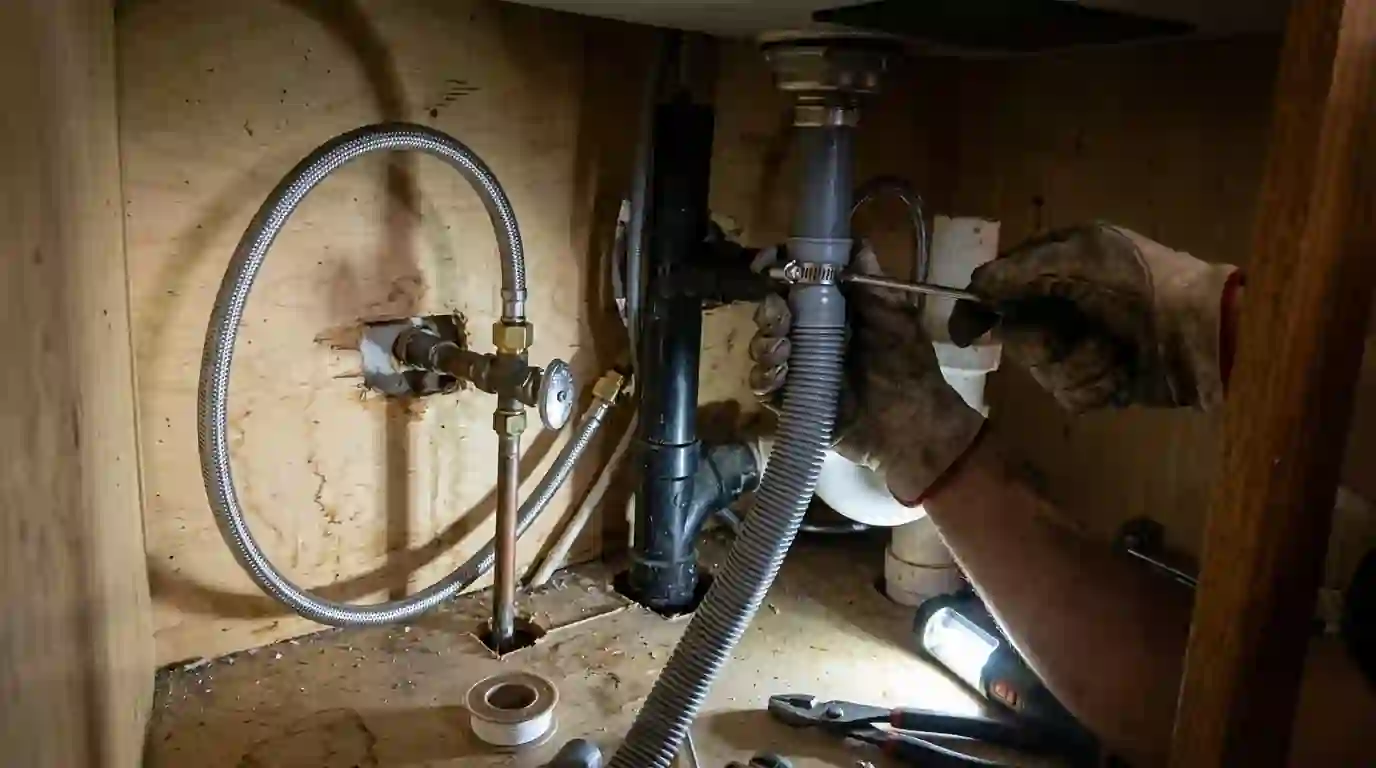
When we install a line, our tech starts at the source. The best tap is a proper tee fitting on a cold water pipe under the sink or in the basement, with a quarter-turn shut-off valve you can reach. From there we run a braided stainless line, or copper where it has to travel through a wall or floor, to the fridge connection. Enough slack is coiled behind the refrigerator so it can slide out without straining the fitting.
Before the fridge goes back, we flush the line into a bucket to clear air and debris, then connect it, open the valve and check every joint dry with a paper towel. We also confirm the ice maker's arm or switch is on and the inlet valve on the fridge is getting water. The first batches of ice get thrown out, since they carry air and any fine sediment from the new line.
What our ice maker and water line install includes
Here is everything that goes into a water line we would trust behind our own fridge.
Proper tee and shut-off valve
We cut in a real tee on a cold water pipe and install a quarter-turn shut-off valve, replacing any saddle valve that is already there.
Braided or copper supply line
Braided stainless line for short runs behind the fridge, copper where the line travels through a cabinet, wall or floor, with fittings tightened and checked.
Filter for hard water
If your fridge has a built-in filter, we install or replace the cartridge. If not, we add an inline filter on the supply line and label it.
Flush and pressure check
The line is flushed into a bucket to clear air and debris, then connected and pressurized while we watch every joint for drips.
Ice maker activation
We confirm the ice maker module or arm is on, the water valve on the fridge opens, and the mold fills to the right level on the first cycle.
Slack loop and placement
A coil of slack line behind the refrigerator lets it roll out for cleaning without pulling the fitting, and we check the line isn't pinched against the wall.
Signs your water line was installed wrong or needs replacing
These are the most common problems we find behind refrigerators in Farmington homes.
A saddle valve on the pipe
Saddle valves clamp on and pierce the pipe with a needle. They clog with minerals, weep at the seal and often won't close fully, so we replace them with a proper tee and valve.
Thin white plastic tubing
Clear or white plastic tubing turns brittle with age and cracks where it bends behind the fridge. Braided stainless or copper lasts far longer and resists kinks.
Damp floor or warped boards
A slow drip at the fridge connection or valve soaks the subfloor first. Soft spots, warped laminate or a musty smell near the refrigerator are early warning signs.
Ice cubes small, hollow or slow
Low water flow from a kinked line, a partly closed valve or a clogged filter starves the ice maker. The ice maker module cycles but fills its mold only partway.
Dispenser water tastes off
An old filter, a long line run through a warm garage, or a new line that was never flushed can leave a plastic, metallic or stale taste in the water.
Hammering when the valve closes
A loud knock in the wall after the ice maker fills can come from a loose line or high water pressure. It stresses fittings and should be addressed.
Water line and ice maker hookup prices around Farmington
Typical local ranges for refrigerator water line work. Your price depends on the distance to the water source and what is already there.
| Standard hookup from a nearby cold line | $116-$248 |
|---|---|
| Saddle valve replaced with tee and valve | $84-$176 |
| Long run through cabinet, wall or floor | $193-$378 |
| Inline water filter added | $47-$112 |
| Ice maker module hookup on new fridge | $96-$213 |
Distance from the water source, pipe type, access under the floor or through cabinets and the filter you choose can each shift the bill. Use these as a local guide only; the actual number comes once we see the setup.
Hard water and garage fridges change how we run the line
Much of the water here is hard and loaded with minerals, and private wells out in the county tend to be the worst. Minerals build up in the refrigerator's water inlet valve, the ice maker fill tube and any saddle valve on the line. A filter at the fridge, or an inline filter on the supply when the fridge has none, cuts down on that scale and improves ice taste. We show you where it sits and how to change it.
Garages here get hot in summer and cold in winter, and plenty of homes keep a second fridge or freezer with an ice maker out there. A line run along an exterior garage wall can freeze during a hard January cold snap, and a frozen line splits at the fittings. We route garage lines along interior walls where possible and avoid long exposed runs.
How we run a fridge water line, from source to ice
- First call
Fridge and source
Tell us the refrigerator model and where the nearest cold water pipe is: under the kitchen sink, a basement or crawlspace, or a utility room.
- At the house
Find the water source
Our tech shuts off the water, checks the pipe material and condition, and picks the route that keeps the line protected and short.
- Install
Tee, valve and line
We cut in the tee and valve, run the braided or copper line to the fridge, and add a filter where the water is hard.
- Same visit
Flush and connect
The line is flushed, connected to the fridge, pressurized and checked for drips at every fitting, then the fridge rolls back into place.
- Afterward
First ice
We confirm the ice maker fills, and you toss the first batches. Check behind the fridge once over the next few days for any dampness.
Replace an old line now or wait for a leak?
If you have a saddle valve, plastic tubing or a line that has been behind the fridge for many years, replacing it before it fails is cheap insurance against a soaked floor. Water damage behind a refrigerator often goes unseen until the flooring lifts or the ceiling below stains.
If the line is braided stainless with a proper valve and the floor is dry, it can stay. We look at it whenever we work on the fridge, run a hand along the fittings for dampness, and tell you plainly whether it is fine for now or due for replacement on that visit.
Water line tips for ice that keeps coming
- Learn where the shut-off for the fridge line is and keep it reachable. If the ice maker ever floods, that valve stops it in seconds.
- Change the refrigerator water filter on schedule. In hard water it clogs faster, and a choked filter slows ice production.
- When you pull the fridge out to clean, slide it straight and slowly so the slack loop uncoils instead of kinking.
- Throw out the first few batches of ice after a new line or filter. They can carry air bubbles, carbon fines or a plastic taste.
- If you leave town for a long stretch, turn off the ice maker and the line valve so a failure can't leak while the house sits empty.
Related repairs people book with ice maker & water line installation
Where we handle ice maker & water line installation
Farmington neighborhoods first, then the rest of San Juan County and southwest Colorado. Pick your area for local notes, or see all 41 locations.
Ice Maker & Water Line Installation questions from Farmington homeowners
Is a saddle valve okay for an ice maker water line?
Saddle valves are common but not ideal. They pierce the pipe, clog with minerals and tend to leak or fail to close fully. A tee fitting with a quarter-turn valve is more reliable, and we replace saddle valves when we install a new line.
Should I use copper or braided line for my refrigerator water supply?
Braided stainless line is flexible, kink-resistant and the easiest choice behind the fridge. Copper works well for runs through walls, floors and cabinets. Thin plastic tubing is the one to avoid, since it gets brittle and cracks.
Do I need a water filter for my ice maker in Farmington?
With hard, mineral-heavy water in much of the area, a filter helps protect the inlet valve and ice maker from scale and improves taste. Many fridges have one built in. If yours doesn't, we add an inline filter on the supply line.
Can you run a water line to a refrigerator in the garage?
Yes, but garages here freeze in winter, so the route matters. We run garage lines along interior walls and avoid exposed exterior runs. On the coldest nights, some homeowners shut off the garage fridge line valve as a precaution.
Why is my new ice maker making no ice after the water line install?
Common causes are a closed valve, air still in the line, the ice maker switched off, or the freezer not yet cold enough. Many ice makers wait until the freezer reaches temperature before the first cycle, which can take several hours.
How often should a refrigerator water line be replaced?
There is no fixed schedule, but plastic tubing and saddle valves should be replaced whenever you notice them. Braided lines with good valves can last many years. If you see corrosion, kinks or any dampness, replace the line.
Need ice maker & water line installation today?
Call any hour. A real person picks up, takes the model number and sets the visit.