Over-the-range microwave installation in Farmington, NM
An over-the-range microwave hangs a lot of weight above a hot stove, so a wall plate on drywall alone won't cut it. We mount it to studs, bolt it to the cabinet, set the vent direction and test it.
- Answered 24/7
- Gas, electric and propane
- Farmington and the Four Corners
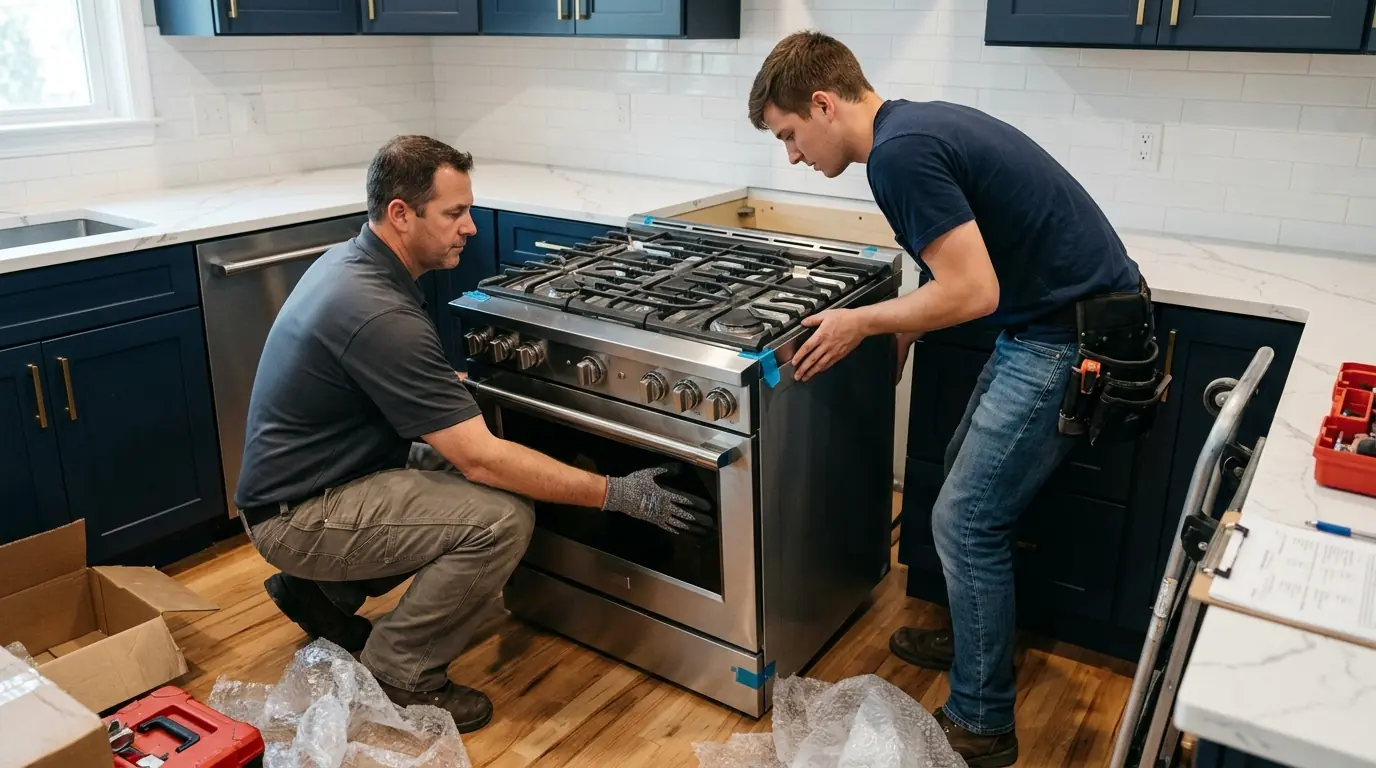
What we mount most
- Old microwave swapped for a new one
- Range hood replaced with a microwave
- Vent switched from inside to outside
Quick answer
Installing an over-the-range microwave means a wall plate anchored into studs, through-bolts in the upper cabinet, the blower set for outside or recirculating venting and a check of the outlet above. Typical install labor around Farmington is about $129-$262, more if we convert a range hood setup. Most take one visit. Phones are picked up 24/7, and if the calendar has a gap we can often mount it that same day.
Brands we repair: Whirlpool, GE, Samsung, LG, Maytag, Frigidaire, KitchenAid, Bosch, Kenmore, Electrolux, Amana, Speed Queen, Sub-Zero, Hotpoint
Why an over-the-range microwave needs a careful mount
An over-the-range microwave weighs as much as a small suitcase, then gets its door pulled open and loaded with heavy dishes several times a day. All of that weight hangs from two things: a steel mounting plate on the wall and bolts through the bottom of the cabinet above. If the plate screws only grab drywall, or the cabinet bolts are too short, the microwave slowly sags forward. Eventually it pulls loose from the wall.
Our tech starts by finding the studs behind the wall plate and checking the cabinet bottom for thickness and gaps. Most installs need at least one plate screw into a stud, with the rest in heavy toggle bolts. The template that comes with the microwave tells us where the plate and cabinet holes go, and we drill those carefully so the unit sits centered and level over the cooktop.
Venting comes next. These microwaves double as a range hood, and the blower can blow outside through a duct or recirculate through a charcoal filter back into the kitchen. The blower ships set one way, and switching it means turning the blower motor inside the unit before it is mounted. We match the setup to your duct, fit the damper, and confirm the outlet in the cabinet above is the right type and in working order.
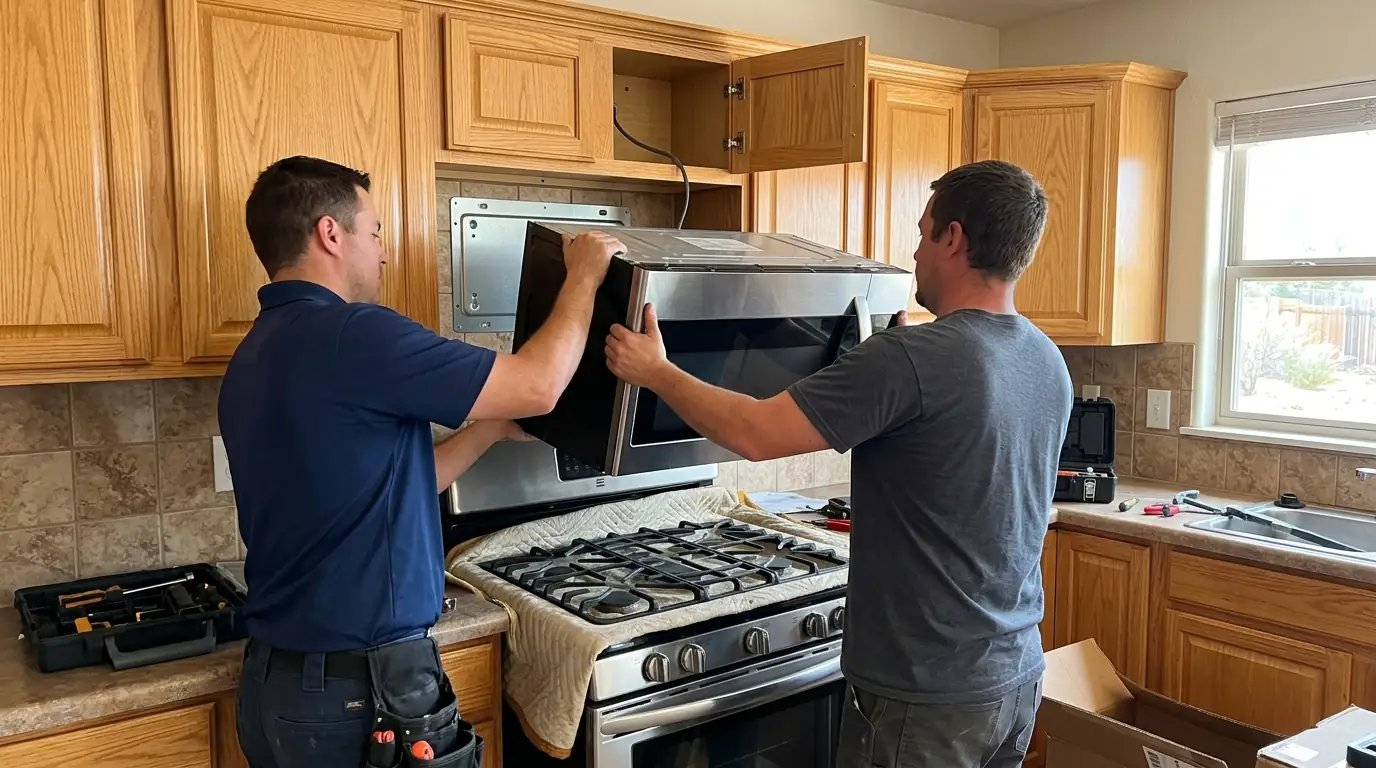
What our microwave installation includes
This is what goes into hanging an over-the-range microwave that stays put.
Old unit or hood removal
We take down the old microwave or range hood, cap or reuse the old wiring and duct as appropriate, and patch-check the wall before the new plate goes up.
Wall plate into studs
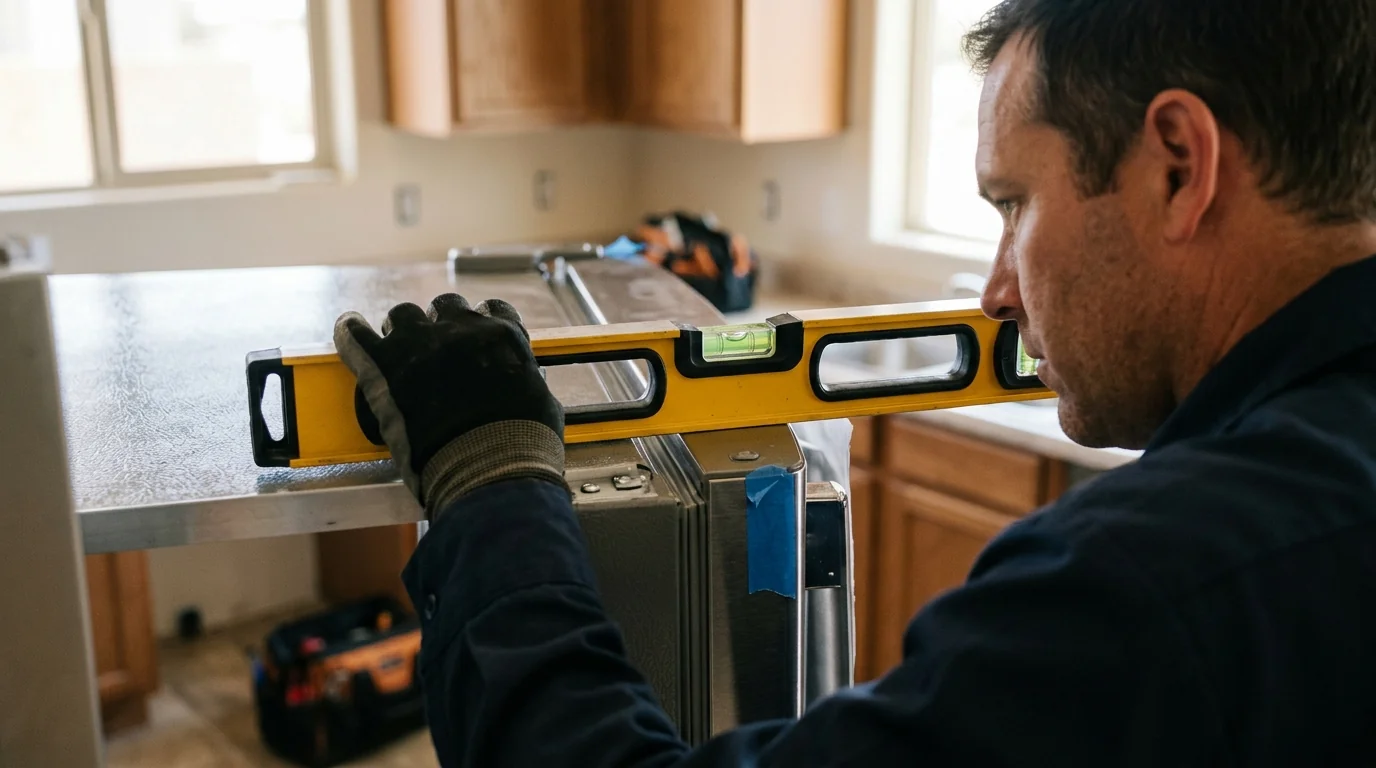
The mounting plate is leveled and fastened with at least one screw into a stud and heavy toggle bolts for the rest, following the template from the box.
Cabinet bolts and cord routing
We drill the cabinet bottom, run the cord through a protected hole and use bolts long enough to pull the microwave snug without crushing the cabinet.
Blower set for your venting
Before mounting, the blower is turned for outside or recirculating airflow to match your kitchen. For recirculating, we install the charcoal filter.
Duct and damper connection
On outside venting, the microwave's damper plate is fitted and lined up with the wall or roof duct, and we check the outside cap opens freely.
Power and function test
We confirm the outlet works and is the correct type, then test heating, the turntable, the cooktop light and every fan speed before we leave.
Signs your microwave is mounted or vented wrong
If your over-the-range microwave shows any of these, the mount or vent setup is the likely cause.
Front edge sags or tilts down
The wall plate is pulling out of drywall, or the cabinet bolts are loose. A sagging microwave can drop without warning, so stop using it and have the mount checked.
Steam and smoke stay in kitchen
The blower may be set for recirculating while the house has an outside duct, or the damper is stuck closed. You get noise from the fan but very little actual venting.
Grease drips from the vent grille
Grease filters that were never cleaned, or a duct that drops back toward the unit, let grease condense and run out of the top grille onto the cabinet.
Outlet cord stretched or crushed
The cord should route through the cabinet bottom to an outlet inside the cabinet above. A cord pinched against the wall or stretched to a distant outlet can overheat.
Backdraft of cold air in winter
A missing or stuck damper at the outside vent cap lets cold air pour back down the duct on windy January nights, and dust blows in during the spring.
Too little room above the cooktop
Each microwave has a minimum clearance from the cooktop surface. Mounted too low, it blocks pots and gets cooked from below by tall burner flames.
Microwave installation prices in the Farmington area
These are typical local ranges for over-the-range microwave installs. Your price depends on what is already on the wall.
| Replace existing over-the-range microwave | $129-$262 |
|---|---|
| Replace range hood with microwave | $187-$349 |
| Blower conversion to outside venting | $42-$96 |
| Charcoal filter for recirculating setup | $23-$58 |
| Cabinet shims and long bolt kit | $18-$47 |
Duct alignment, missing outlets, old hardwired hoods, cabinet condition and wall type move the total. Use the bands as a local guide, not a quote for your kitchen.
Older Farmington kitchens and windy days change the install
Many kitchens in the ranch homes built through the 1950s to 1970s had a simple range hood vented straight up through the cabinet and roof, or no hood at all. Swapping that hood for an over-the-range microwave means checking that the old duct lines up with the microwave's exhaust and that an outlet exists in the cabinet above. Older homes often had the hood hardwired, so a plug-in microwave needs a proper receptacle installed first.
Cabinet construction varies a lot in older homes and manufactured homes. Some upper cabinets have thin bottoms or a recessed panel with a gap, and the bolts have to bridge that without crushing the wood. We shim where needed, and if a cabinet bottom is too weak to carry the load, we tell you before drilling rather than hanging a heavy unit from it.
Fine dust on windy spring days is part of life here, and it gets into kitchen ducts through vent caps with tired dampers. When we install an outside-vented microwave, we check that the damper at the wall or roof cap swings freely and closes on its own. A damper that works keeps blowing dust out of your kitchen, and it keeps winter heat from escaping up the duct.
How the microwave goes up, step by step
- First call
Model and current setup
Give us the new microwave model and tell us what's over the range now. A photo of the cabinet bottom and wall helps us plan the mount.
- At the door
Check outlet and duct
Our tech confirms there's a receptacle in the cabinet above, finds the studs and looks at the duct path before taking anything down.
- Prep
Plate and template
The old unit or hood comes off, the wall plate is leveled and fastened, and the cabinet holes are marked and drilled from the template.
- Mounting
Hang and bolt
With two people lifting, the microwave hooks onto the plate, tilts up into place and is bolted through the cabinet while the cord feeds up.
- Same visit
Test everything
We heat a cup of water, check the turntable, run every fan speed, test the cooktop light and confirm air moves through the vent.
Over-the-range microwave or a separate range hood?
An over-the-range microwave saves counter space, but it doesn't vent as strongly as a dedicated hood, and it sits close to the cooktop. If you cook a lot with high heat, especially on a big gas range, a hood with a stronger blower and a countertop or drawer microwave may serve you better.
If you mostly reheat and want the counter clear, the over-the-range model works well. We can tell you whether your existing duct and outlet suit one or the other, what the switch would involve, and roughly what each path costs before you commit. Either way, the mount and vent get done right the first time.
Microwave install tips before you buy
- Measure the space between the cabinets and the height above the cooktop. Most over-the-range models fit a 30-inch opening, but check the clearance listed in the specs.
- Look inside the cabinet above the range for an outlet. If there is none, plan for one to be installed before the microwave can go up.
- Figure out where your current hood vents. If there's a duct through the wall or roof, outside venting will clear smoke better than recirculating.
- Wash the metal grease filters under the microwave every month or two. Greasy filters slow the fan and drip onto the stove.
- Do not hang heavy items from the microwave handle or use the door as a shelf. The extra strain loosens the mount over time.
Related repairs people book with over-the-range microwave installation
Where we handle over-the-range microwave installation
Farmington neighborhoods first, then the rest of San Juan County and southwest Colorado. Pick your area for local notes, or see all 41 locations.
Over-the-Range Microwave Installation questions from Farmington homeowners
Can I install an over-the-range microwave where my range hood is now?
Usually, yes. The opening needs to be the right width, the cabinet above needs a working receptacle, and the duct should line up with the microwave's exhaust. Old hardwired hoods need the wiring capped and an outlet installed first.
Should my over-the-range microwave vent outside or recirculate?
Outside venting removes smoke, steam and cooking odors from the house and is the better choice if you have a duct. Recirculating uses a charcoal filter and cleans grease but returns warm, moist air to the kitchen.
How high should an over-the-range microwave be above the stove?
Manufacturers set a minimum clearance between the cooktop and the bottom of the microwave, often around 30 inches from the cooktop to the cabinet bottom. The installation sheet for your model lists the exact number.
Why is my new over-the-range microwave sagging at the front?
The cabinet bolts may be too short or not tightened, or the wall plate may be anchored only into drywall. Stop using it until it is checked, since a loose microwave can fall. We remount it with stud screws and proper bolts.
Does an over-the-range microwave need its own circuit?
Many manufacturers call for a dedicated circuit for over-the-range microwaves because they draw a lot of current. Check your model's installation sheet. If the outlet is shared with other kitchen loads and trips, that is a sign to address it.
How many people does a microwave installation take?
Lifting and hooking the microwave onto the wall plate while feeding the cord up is a two-person job. We bring the help, so you won't be asked to hold a heavy unit over the stove while we fasten the bolts.
Need over-the-range microwave installation today?
Call any hour. A real person picks up, takes the model number and sets the visit.