Dishwasher repair in Farmington, NM
A dishwasher that leaves water in the tub, spots every glass or won't latch is usually fighting scale, a clog or a worn part. We clear drains, replace pumps, heaters and latches, and get the cycle finishing clean.
- Answered 24/7
- Gas, electric and propane
- Farmington and the Four Corners
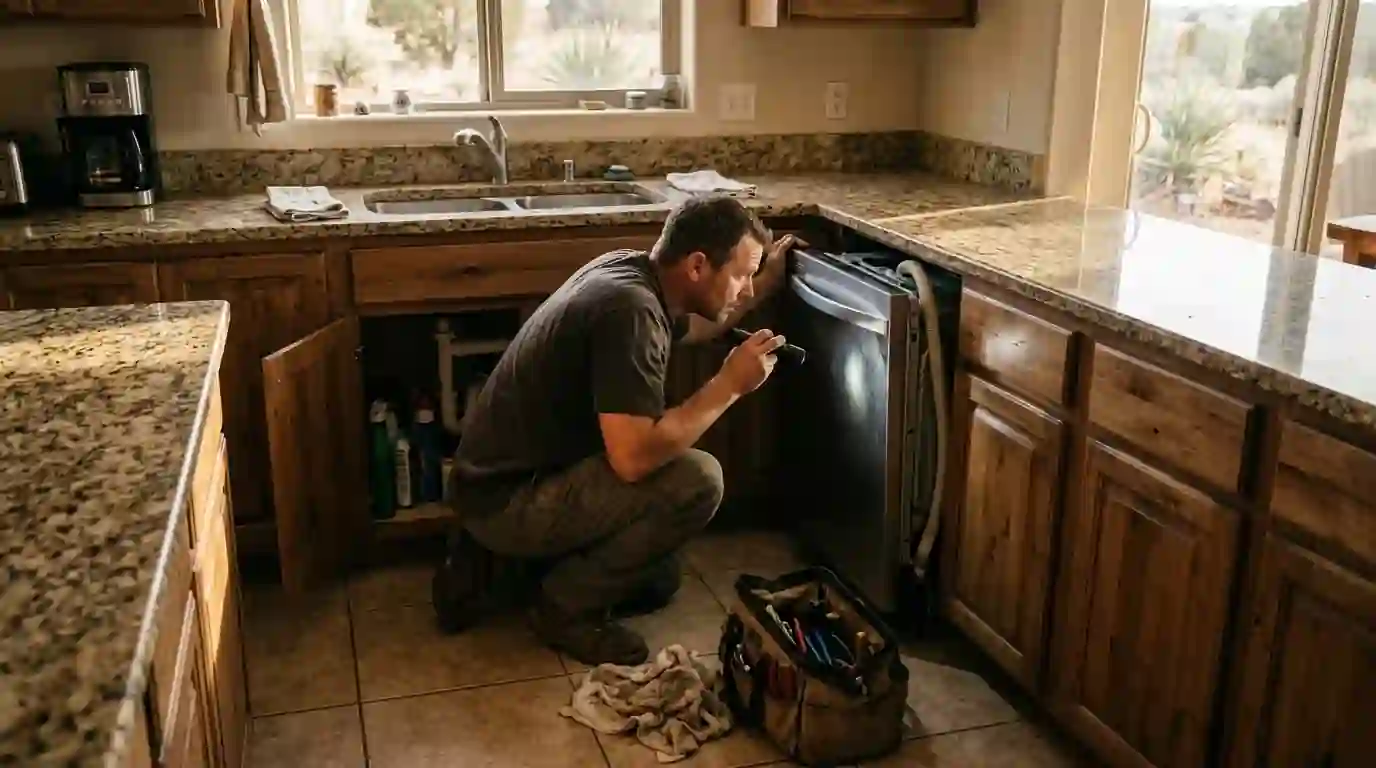
What brings most dishwasher calls
- Dirty water pooled in the bottom
- White film and spots on every glass
- Door won't latch, so the cycle won't start
Quick answer
Dishwashers here most often fail at the drain pump, the inlet valve, the door latch or the heating element, and hard water scale speeds up nearly all of it. Typical Farmington-area repairs cost about $124-$368 depending on the part and brand. A clogged drain or a latch usually gets sorted out on the first trip, and our line stays staffed 24/7 for water on the floor.
Brands we repair: Whirlpool, GE, Samsung, LG, Maytag, Frigidaire, KitchenAid, Bosch, Kenmore, Electrolux, Amana, Speed Queen, Sub-Zero, Hotpoint
Why dishwashers break down so often in hard water country
A dishwasher runs a short loop over and over. The inlet valve lets water in, a float switch tells the control when to stop, the circulation or wash motor sprays it through the arms, the heating element warms it, and the drain pump pushes it out to the sink drain or disposal. A door latch and switch must close before any of that starts. Most breakdowns come from one link in that chain, and the symptom usually tells us which one.
Standing water is the call we get most. Food debris, broken glass, seeds and labels end up in the filter assembly and the drain pump inlet, and a kinked or clogged drain hose finishes the job. If the disposal was just installed, a knockout plug left in the inlet will keep the dishwasher from draining at all. We check the filter, pump, hose and air gap before deciding a part has failed.
Poor cleaning is the second big complaint. Gritty dishes, cloudy glasses and a gray film on plastic mean water isn't reaching the racks with enough force or heat. Spray arm holes plug up, the wash motor weakens, or the heating element stops warming water and drying the load. We test water temperature, check the spray arms and listen to the motor so we don't sell you a part you don't need.
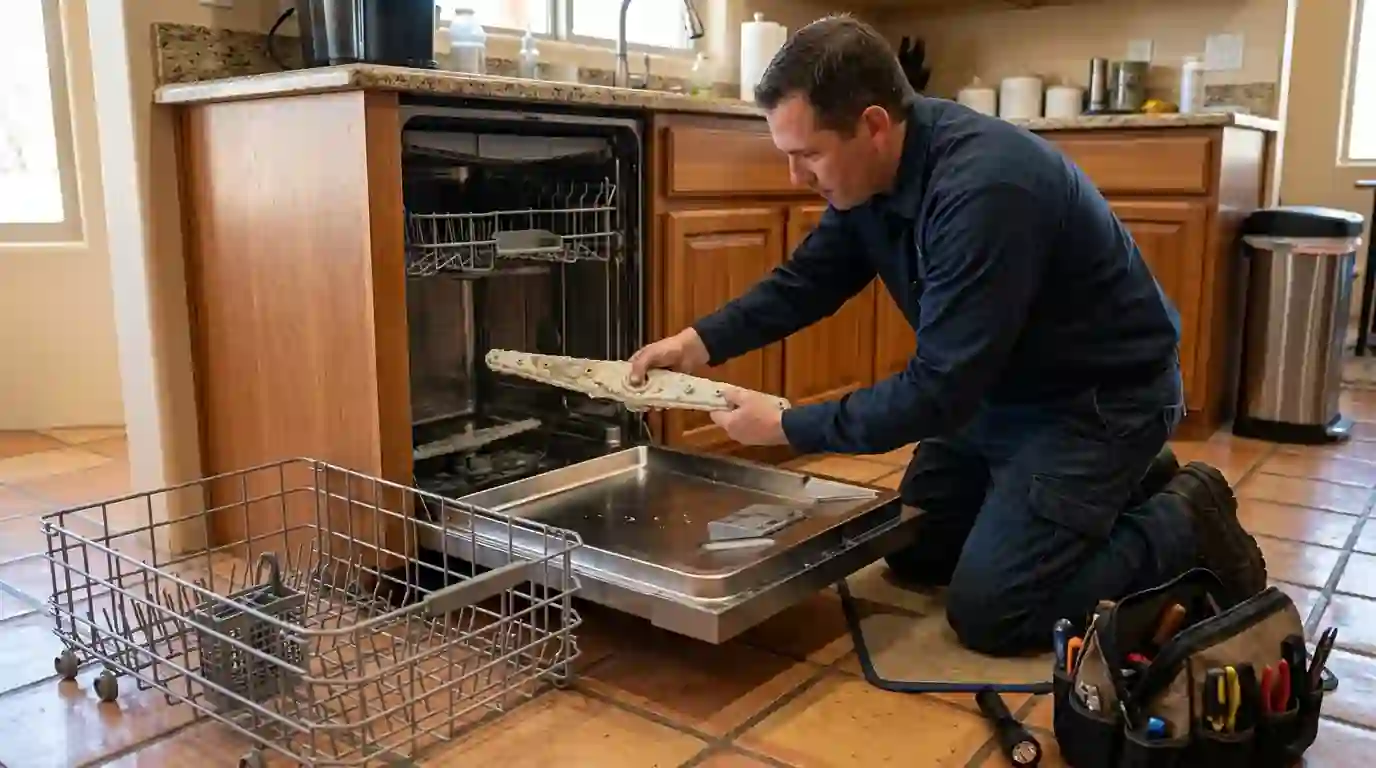
Dishwasher parts we repair and replace
Most of our dishwasher work falls into these six jobs.
Drain pump and check valve
We clear debris from the pump inlet, test the motor and replace it if it hums without moving water. A stuck check valve can let dirty water flow back in, so we check that too.
Water inlet valve
A scaled inlet valve fills slowly, overfills or drips into the tub with the machine off. We replace the valve, clean the supply connection and check the shutoff under the sink.
Wash or circulation motor
When the spray arms barely turn or the dishwasher hums without washing, the circulation motor may be jammed or worn. We test the motor and its capacitor and replace the assembly when needed.
Heating element and thermostat
No dry and lukewarm water point to an open heating element, a failed high-limit thermostat or a thermistor reading wrong. We test each on a meter before ordering parts by model number.
Door latch and door switch
A latch that won't catch or a switch that doesn't close keeps the cycle from starting. We replace the latch assembly and adjust the strike so the door seals and starts every time.
Door gasket, hoses and float switch
We replace torn tub gaskets, cracked drain hoses and loose clamps, then free or replace a float switch that sticks from scale and stops the fill or leaves water running.
Clues that a dishwasher needs a technician
Most of these show up before the machine quits completely, so catching them early saves a bigger repair.
Water left in the tub
An inch of dirty water after the cycle means the filter is packed, the drain hose is blocked or the drain pump is weakening. Clean the filter first. If water still sits there, the pump or its check valve is next.
Cloudy glasses and white crust
Chalky film on glassware and white crust on the tub walls are hard water scale. It clogs spray arm holes, coats the heater and slowly starves the wash motor of clean flow.
Leaking from the door or underneath
Water at the front edge usually means a worn door gasket or the wrong detergent foaming over. Water under the unit points to a pump seal, a loose hose clamp or a cracked tub.
Door won't latch or cycle won't start
If the panel lights up but nothing happens, the door latch or its switch is a prime suspect. A latch that doesn't catch firmly will stop the dishwasher from starting every time.
Dishes still wet at the end
Wet dishes with no heat at all suggest a failed heating element, a high-limit thermostat or a fan that has stopped on models that blow air. Rinse aid and a hot first fill help, too.
Grinding, humming or no water fill
A hum with no spray often means a jammed or failed wash motor. No fill at all points to a clogged inlet valve screen, a closed supply valve or a float switch stuck in the up position.
Dishwasher repair costs we see in the Farmington area
Here are typical local ranges for common dishwasher repairs, part and labor together. Brand, model year and part availability decide where your repair lands.
| Door latch or door switch | $124-$213 |
|---|---|
| Water inlet valve | $136-$228 |
| Drain pump replacement | $157-$274 |
| Heating element or high-limit thermostat | $148-$263 |
| Circulation motor or control board | $219-$368 |
Use these as typical numbers, not a quote. Heavy scale that needs extra cleaning, built-in panel-ready models and boards that must be ordered can raise the total, while a simple drain clog clears at the low end.
Hard water, wells and scale inside Farmington dishwashers
Much of San Juan County has hard water, and the private wells out toward Kirtland, Flora Vista and along the river valleys tend to be the hardest of all. Every cycle leaves a little calcium behind. Over months it lines the inlet valve screen, the spray arm holes, the heating element and the inside of the circulation pump. A dishwasher that cleaned well at installation slowly gets weaker, louder and slower, and the owner often blames the detergent before the scale.
Scale changes how we repair a dishwasher here. When we replace an inlet valve, we look at the supply line and shutoff for the same crust. When a heating element fails, we check whether scale insulated it and made it overheat. When a spray arm won't spin, we clear the bearing and holes instead of simply swapping the arm. Fixing the part without dealing with the scale just sets up the next call.
Homes with a water softener see much less of this, though an unbalanced softener can send salty, etching water through the machine instead. If you're on a well, ask us about descaling cycles and the right rinse aid setting for your water. Some newer dishwashers also have a water hardness setting buried in the menu, and we can set it to match what actually comes out of your tap.
From a full tub of water to clean dishes again
- When you call
Describe the cycle
Tell us where the cycle stops, whether water is in the tub, and read the model number from the edge of the door. Mention if you're on a well.
- On arrival
Protect the floor
We lay towels, bail out standing water and pull the lower rack and filter so we can see the sump, pump inlet and spray arms.
- First half hour
Trace the fault
We test the latch, inlet valve, float switch, pump, motor and heater in order, then tell you the cause and the repair cost before any work starts.
- Same visit
Repair and clear scale
We install the part, clear scale from the screens and spray arms we touched, and check the drain hose loop or air gap under the sink.
- Final check
Run a test cycle
We start a quick program with you watching, confirm it fills, washes, heats and drains, and look underneath for drips before we pack up.
When a dishwasher repair makes sense, and when it doesn't
Most dishwasher repairs are worth doing on a machine under about eight years old. Pumps, valves, latches, heaters and gaskets are reasonably priced, and a mid-range or higher model usually has a sturdier tub and quieter build than a budget replacement. Removing an old unit and setting a new one also adds install labor and new hoses.
Replacement starts to win when the tub is cracked, the control board and motor fail together, or rust has eaten through the door frame or rack rails. If heavy scale has damaged several parts at once, we'll tell you plainly whether the total makes sense.
Simple habits that help a dishwasher last
- Clean the filter at the bottom of the tub every couple of weeks. Most modern dishwashers have a manual filter that twists out by hand.
- Run an empty hot cycle with a dishwasher descaler or a cup of white vinegar every month if your water leaves white crust.
- Keep the rinse aid dispenser full. It helps water sheet off in hard water and makes the heated dry far more effective.
- Run the kitchen tap until it's hot before starting a load, so the first fill isn't cold water that has sat in the line.
- Scrape food into the trash rather than the dishwasher. Seeds, bones and labels jam the drain pump faster than anything else.
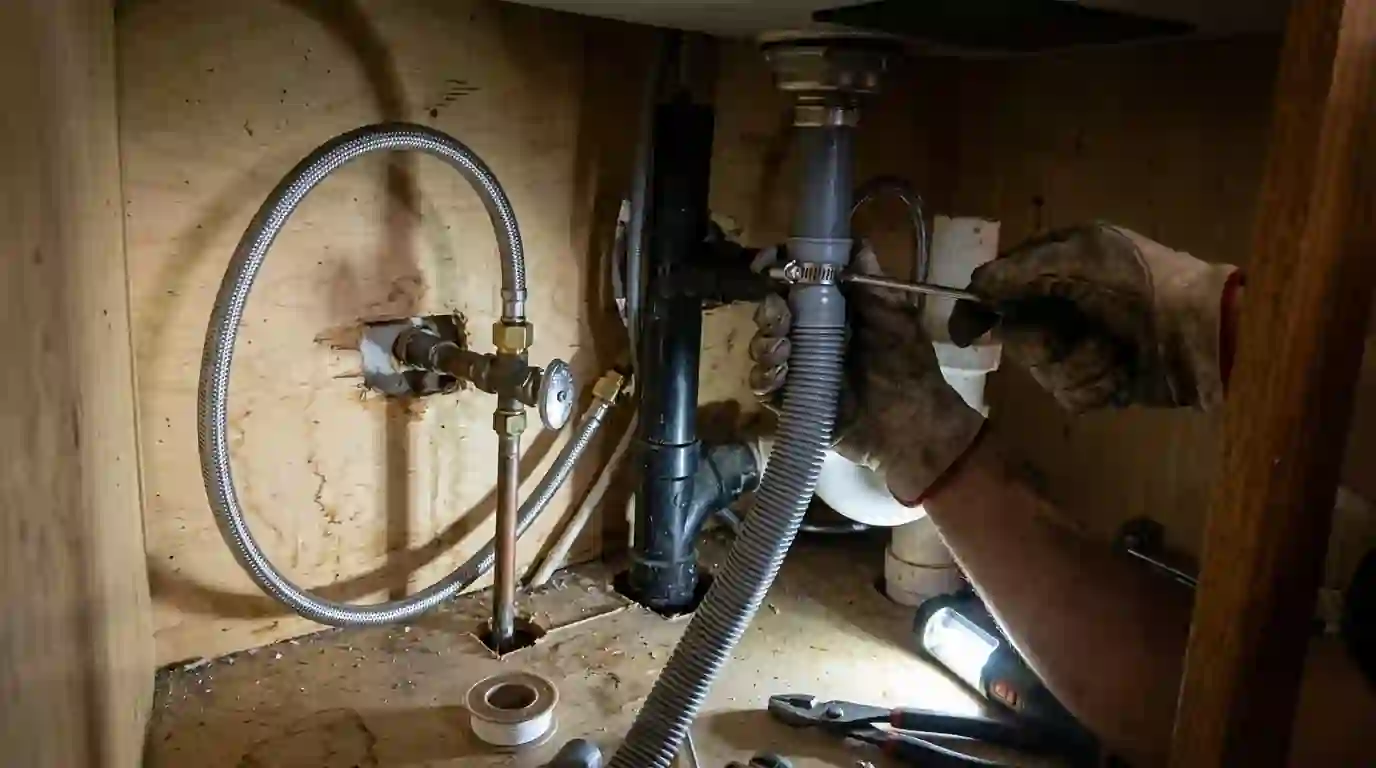
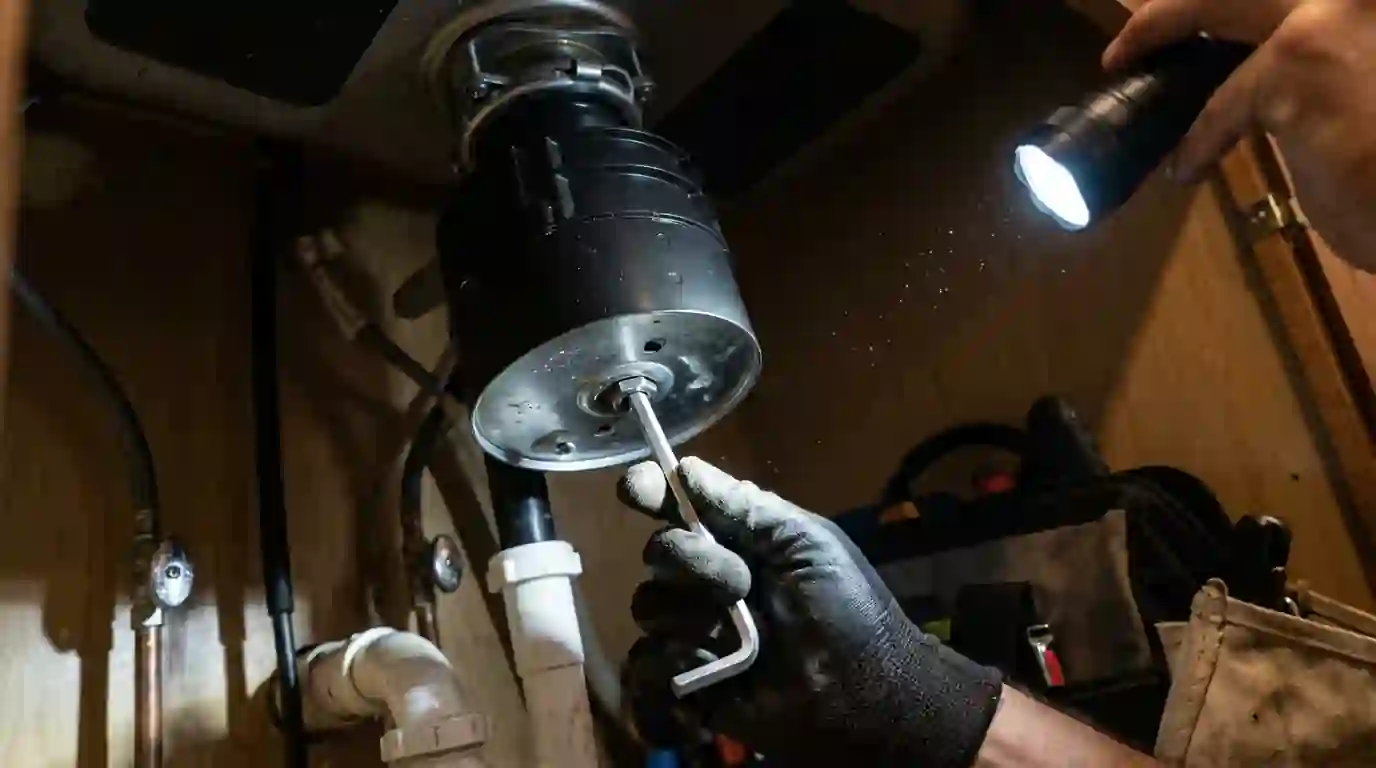
Related repairs people book with dishwasher repair
Where we handle dishwasher repair
Farmington neighborhoods first, then the rest of San Juan County and southwest Colorado. Pick your area for local notes, or see all 41 locations.
Dishwasher Repair questions from Farmington homeowners
Why is there water sitting in the bottom of my dishwasher?
Standing water in a dishwasher tub usually traces to a dirty filter, a kinked or plugged drain hose, a stuck check valve or a failing drain pump. If a disposal was just installed, the knockout plug may still be in its inlet. Clean the filter first, then call us if water still sits after a cycle.
Does hard water really damage a dishwasher?
Yes. Hard water leaves calcium scale on the inlet valve screen, spray arms, heating element and pump. Over time a dishwasher fills slower, cleans worse and works harder. In San Juan County, especially on wells, regular descaling and a full rinse aid dispenser slow the damage noticeably.
Why won't my dishwasher start even though the lights come on?
When a dishwasher panel lights up but the cycle won't start, the door latch or its switch is the most common cause. Child lock settings, a delay start left on, or a failed control board can also do it. We test the latch switch first, since it's the simplest and most frequent fix.
Why are my dishes coming out of the dishwasher wet?
Wet dishes after a full dishwasher cycle usually trace to an empty rinse aid dispenser, a failed heating element or high-limit thermostat, or a drying fan that has stopped. Plastic items also dry poorly by nature. If even glass and dishes stay wet with rinse aid full, the heat circuit likely needs testing.
Is my leaking dishwasher an emergency?
A dishwasher leak can soak the subfloor and the cabinet base quickly. Shut the dishwasher water supply valve under the sink and turn off the breaker, then ring us. Calls reach a real person 24/7, and we book the earliest dishwasher visit we can.
How long should a dishwasher last before it needs replacing?
Many dishwashers last around nine to twelve years, with hard water and heavy use shortening that. A dishwasher with a stainless tub and good care often runs longer. Age alone isn't the deciding factor; the condition of the tub, door and motor matters more.
Need dishwasher repair today?
Call any hour. A real person picks up, takes the model number and sets the visit.