Washer and dryer installation in Farmington, NM
A new laundry pair can leak, rock or overheat when the hookup is rushed. We attach the water, drain, power or gas and vent, level both machines, then run a test load before leaving.
- Answered 24/7
- Gas, electric and propane
- Farmington and the Four Corners
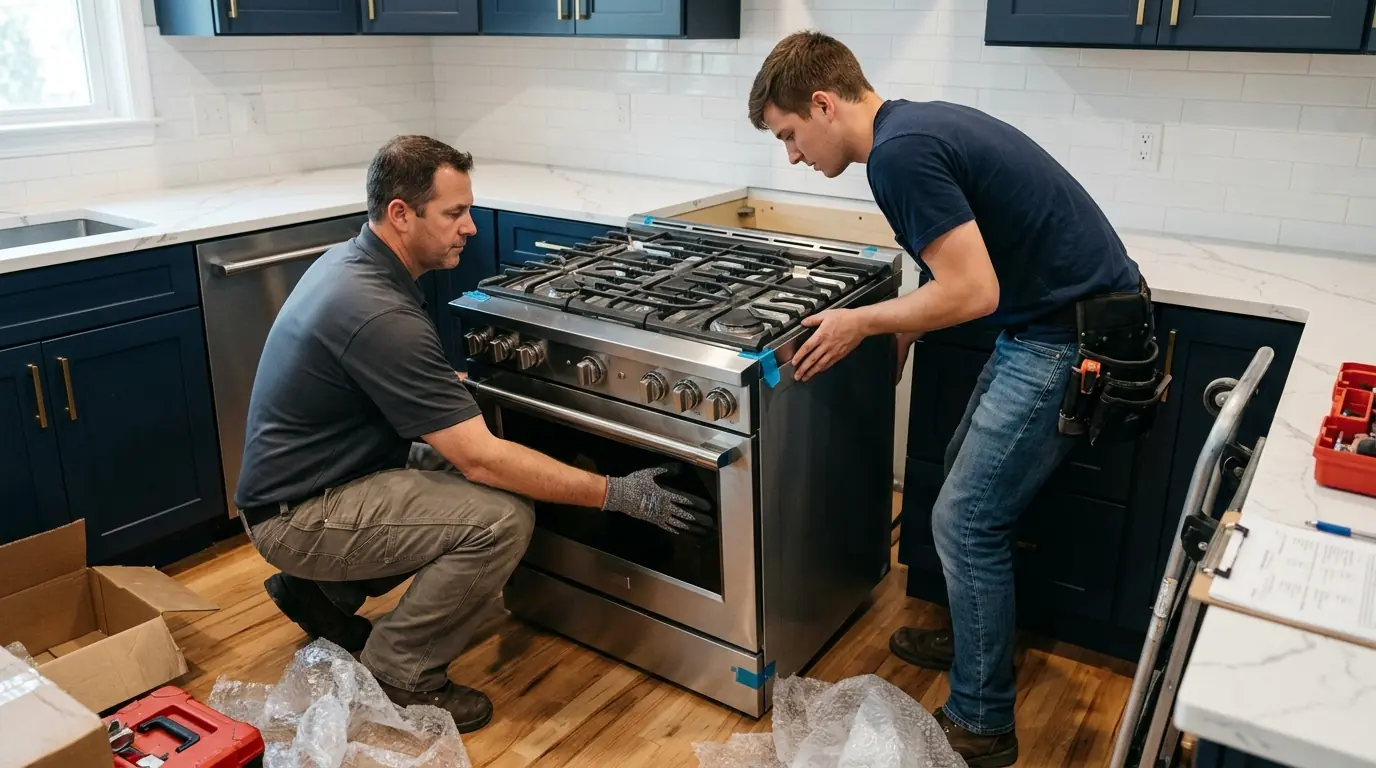
Hookups we handle most
- New dryer with the wrong cord type
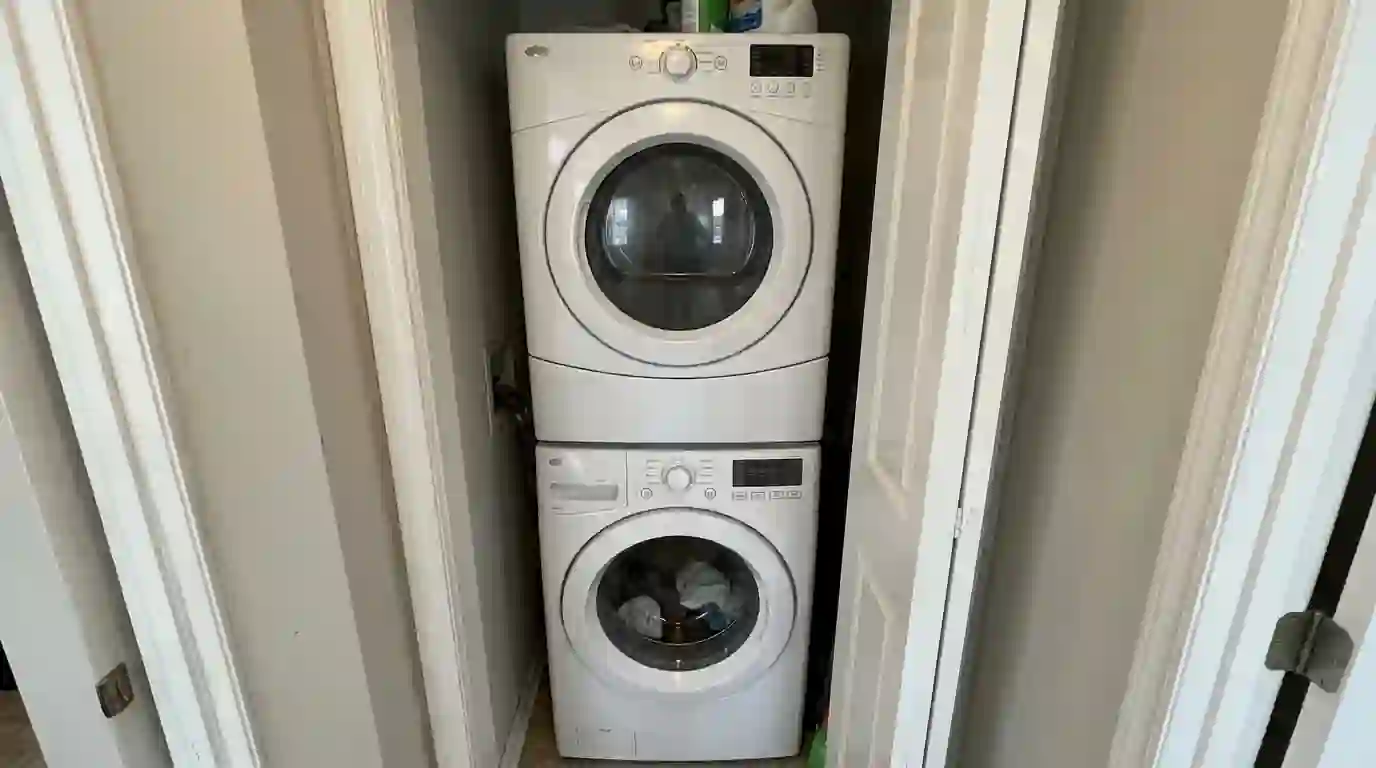
- Stacking a front-load pair in a closet
- Gas dryer going onto a propane line
Quick answer
A washer and dryer installation covers new fill hoses, a drain check, the right 240-volt cord or a gas flex connector with a leak test, a short metal vent run and leveling. Around Farmington, a typical pair runs about $187-$364 depending on fuel, stacking and vent work. Most installs finish in one visit of a few hours. Ring us any hour once the new pair is home, since our line is staffed 24/7.
Brands we repair: Whirlpool, GE, Samsung, LG, Maytag, Frigidaire, KitchenAid, Bosch, Kenmore, Electrolux, Amana, Speed Queen, Sub-Zero, Hotpoint
What a proper washer and dryer hookup includes
Most laundry pairs come home with a power cord on the washer and an empty terminal block on the dryer. The hoses, the dryer cord, the gas connector and the vent are separate pieces, and choosing the wrong one is where trouble starts. Our tech brings new hot and cold fill hoses, checks that both shut-off valves open and close without weeping, and sets the washer drain hose into the standpipe at a height that keeps it from siphoning or spilling over.
On the dryer side, the cord has to match your outlet. An electric dryer takes either a three-prong or a four-prong 240-volt cord, and the ground strap on the terminal block gets set to suit. A gas dryer gets a new flexible connector, fresh thread sealant on the fitting and a leak test with soap solution before it ever runs. Then we attach the vent with rigid or semi-rigid metal duct, keeping the run short and free of crushed bends.
Setup finishes the job. We level each machine on all four feet, lock the feet, pull the shipping bolts from a front-loader, and seat a stacking kit or pedestal if you bought one. A test cycle on each machine shows water filling hot and cold, draining cleanly and spinning without walking, plus a dryer that heats with good airflow. Our visit covers the hookup itself, so have the new pair on site and plan for the old one before we arrive.
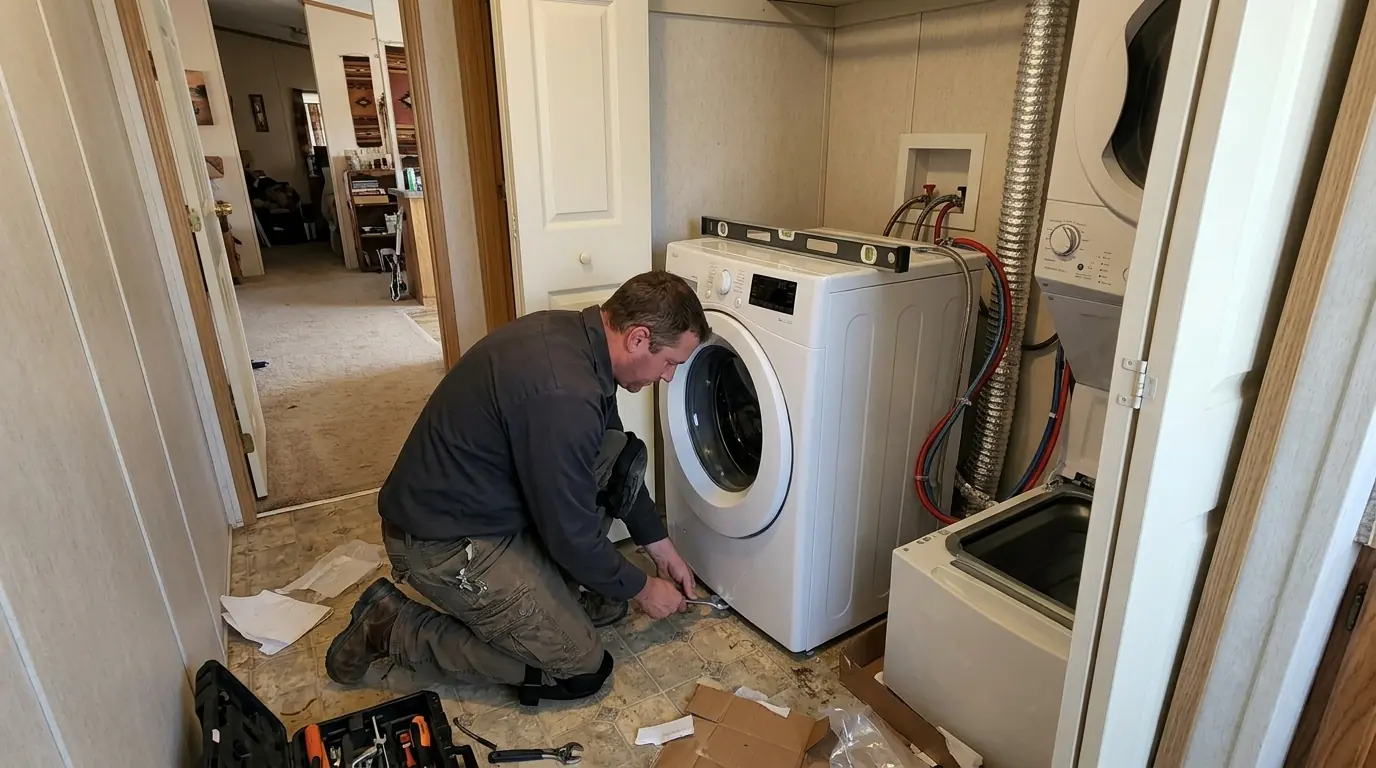
Parts and steps that go into every laundry install
Each install runs through the same pieces, and these are the ones that get the most care.
Fill hoses and shut-off valves
We install new braided stainless fill hoses with fresh rubber washers, snug each fitting by hand plus a short turn, then open both valves and watch for drips at the wall and at the washer.
Standpipe drain setup
The drain hose goes into the standpipe with a hose guide at the right depth, so it can't pop out under pump pressure or pull water out of the tub halfway through a cycle.
240-volt dryer cord
A three-prong or four-prong cord gets matched to your receptacle. We set the ground strap correctly, tighten every terminal screw and install the strain relief so the cord can't work loose.
Gas flex connector and leak test
Gas dryers get a new flexible connector sized for the appliance, sealant on the threads and a soap-solution test at each joint. Then we light the burner and look at the flame.
Metal vent connection
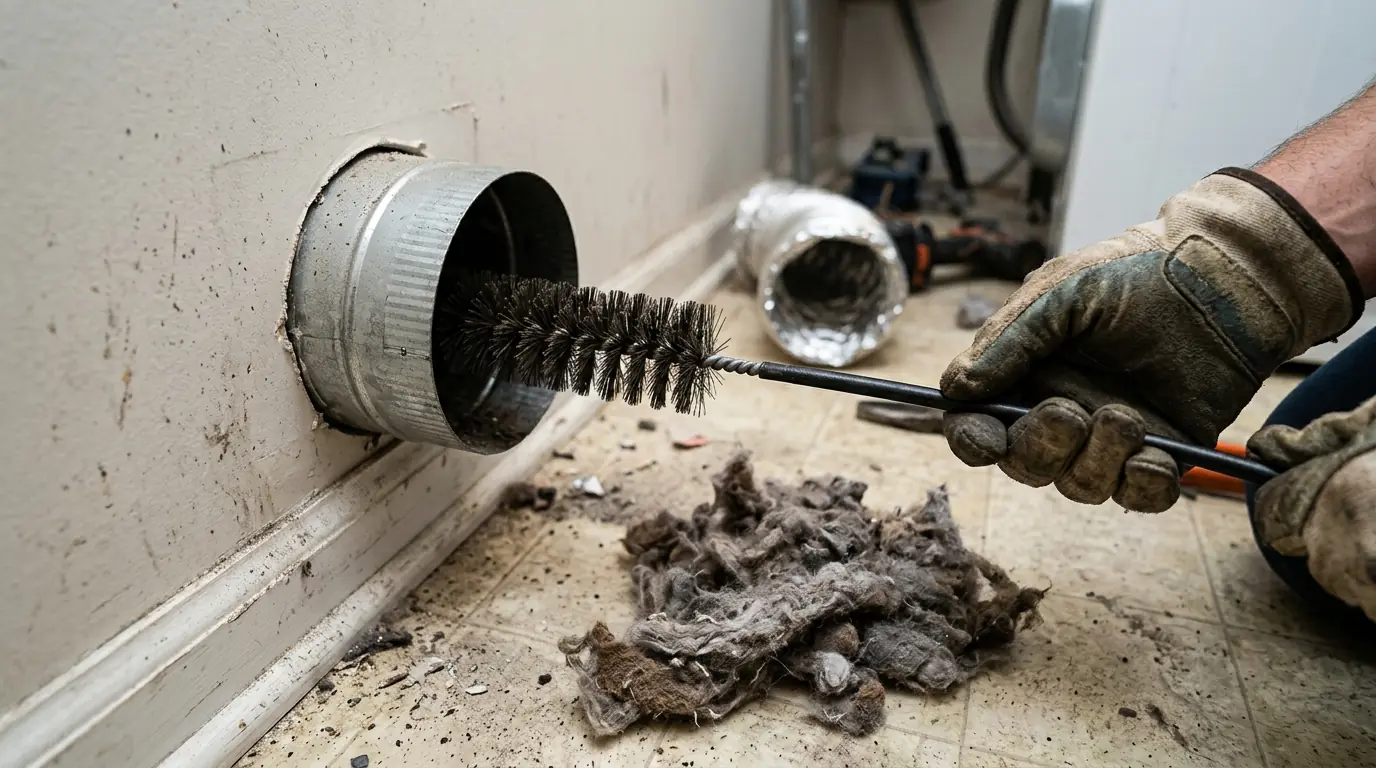
We run rigid or semi-rigid metal duct from the dryer to the wall, seal joints with foil tape rather than screws, and skip plastic or thin foil accordion duct that crushes and holds lint.
Stacking kit, pedestal and leveling
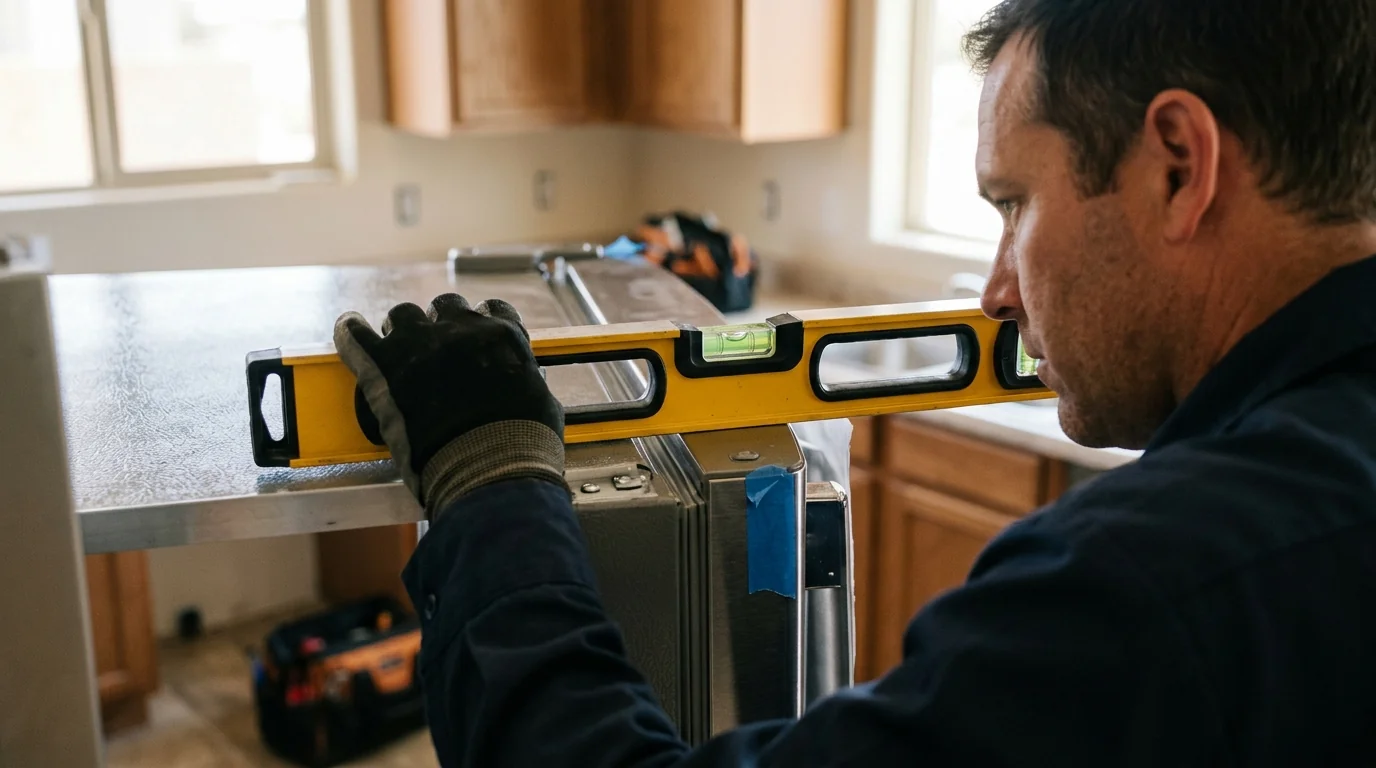
In closets we mount the matching stacking kit so the dryer locks onto the washer. Pedestals get bolted on. Every foot is then leveled with a bubble level and locked down tight.
Clues that a washer or dryer was hooked up wrong
These are the problems we find most often when a new pair went in on a rushed afternoon.
Water under the washer
A puddle after the fill usually means a reused hose with a tired rubber washer, a cross-threaded fitting, or a drain hose pushed so deep into the standpipe that water siphons back out.
Washer walks during spin
Feet that were never leveled and locked let the cabinet rock. A front-loader still holding its shipping bolts will shake hard enough to slide across the laundry floor on the first spin.
Dryer runs but stays cool
A long, crushed or kinked vent traps heat and moisture, so the high-limit thermostat keeps cutting the heat. Towels need two or three cycles, and the top of the cabinet feels hot.
Burning smell near the cord
A loose terminal screw or a cord that doesn't suit the outlet can arc at the terminal block. Shut that breaker off and have the connection checked before running another load.
Gas odor around the dryer
Smell gas by the laundry? Walk everyone outside before anything else, and from the driveway dial 911 or the gas utility. Once they declare the house safe, we check the flex connector, every fitting and the shut-off valve behind the dryer.
Slow fill or weak flow
On well water, sand and mineral grit gather in the small inlet screens where the hoses meet the washer. The fill crawls, and some machines post an error before the tub is full.
What washer and dryer installation runs around Farmington
These are typical ranges for laundry installs in the Farmington area. They aren't a quote, since parts, fuel type and the vent run decide your final number.
| Washer hookup with new fill hoses | $96-$187 |
|---|---|
| Electric dryer hookup with new cord | $108-$196 |
| Gas dryer hookup with flex connector and leak test | $134-$238 |
| Stacking kit or pedestal mounting | $87-$173 |
| Vent replacement with rigid or semi-rigid duct | $127-$264 |
A seized shut-off valve, a vent run through a wall or floor, a propane conversion kit or extra hose length pushes the total up. An electric pair set side by side with a short vent usually lands near the low end.
How Farmington homes change the laundry hookup
Many Farmington ranch homes went up between the 1950s and the 1970s, and their laundry spaces show it: a utility room off the carport, a narrow hall closet, an old three-prong dryer receptacle and water valves nobody has turned in decades. We work those valves gently before anything else, because a stuck valve that snaps mid-install is a much bigger problem than a stiff one found early. If the receptacle has three slots, the dryer gets a matching cord instead of a forced adapter.
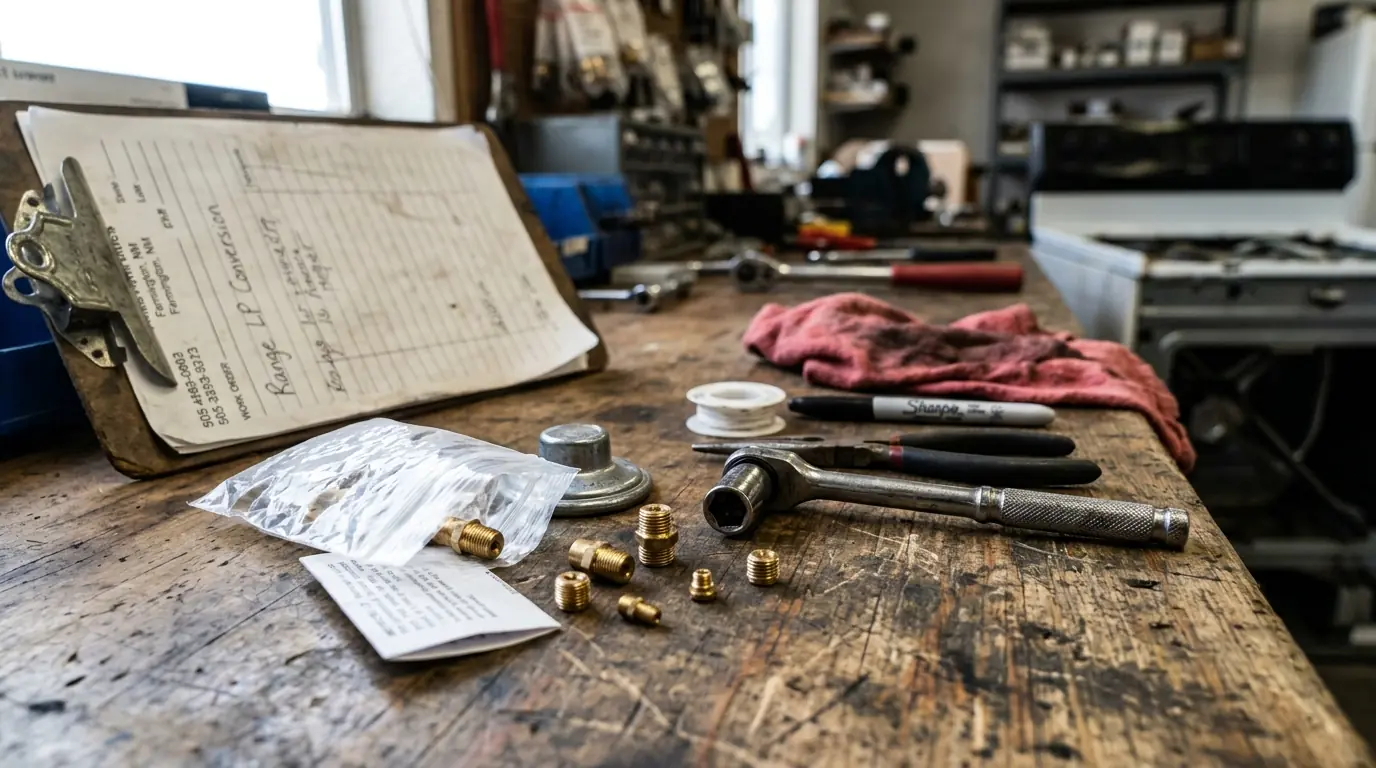
Across San Juan County, manufactured homes often tuck the laundry into a tight closet with a short vent path through the wall or floor. Those closets call for careful measuring of height, depth and door swing before stacking. Homes outside city gas service usually feed a gas dryer from propane, which means the maker's LP conversion has to be in place before the burner lights. At about 5,400 feet in town and higher toward Durango and Mancos, we set the burner by the high-altitude instructions in the manual.
Hard well water and blowing dust round out the list. We clean the inlet screens on the washer, and on a private well we can add a sediment screen at the hose end so grit stops there instead of in the inlet valve. Fine spring dust packs into dryer vents, so smooth metal duct matters more here than in a damp climate. A washer in an unheated garage or carport can freeze on January nights in the teens, and we'll show you how to drain the hoses.
How a laundry install goes from the first call to the test load
- First call
Gas or electric?
Tell us both model numbers, whether the dryer runs on gas, propane or electricity, and how many prongs the dryer outlet has, so the right cord and hoses ride along.
- At the door
Look over the space
Our tech checks the valves, the standpipe, the receptacle or gas stub and the vent opening, and measures the closet if stacking is planned, before either machine moves into place.
- Hour one
Hook up and vent
Fill hoses go on, the drain gets set, the cord or gas connector is attached, any gas joint is leak-tested, and metal duct runs to the wall with sealed joints.
- Before we leave
Level and test
Both machines are leveled and locked, then we run a short wash and spin plus a timed dryer cycle, checking the floor for drips and the outside hood for strong airflow.
- Afterward
Know your shut-offs
We point out the water valves, the dryer breaker or gas valve and the lint screen, so everyone in the house knows how to stop a leak fast.
Should you install a washer and dryer yourself?
Plenty of people can thread two fill hoses and drop a drain hose into a standpipe. The trouble spots are on the dryer: choosing between a three-prong and four-prong cord, setting the ground strap, sealing a gas fitting and proving it holds, and building a vent run that won't trap lint. Those are the steps that lead to scorched cords, gas leaks and burned-out heating parts when they go wrong.
If your old pair was electric, the new one is too and the vent is short, a careful homeowner may do fine alone. For gas, propane, stacking, a pedestal or a cramped closet, give us a call and our tech will handle the hookup and the test run.
Laundry room habits that protect a new install
- Close the washer's hot and cold valves when you leave town for more than a few days. A burst fill hose can't flood the house if the water is off.
- Pull lint off the dryer screen each time you unload, and every spring look at the outside vent hood for packed dust, nests or a flap stuck shut.
- Swap washer fill hoses every five years or so, sooner if the rubber near the fittings looks cracked or the braid has started to bulge.
- Leave a few inches behind the dryer so the vent duct doesn't get pressed flat when someone pushes the machine back against the wall.
- Put the washer on an appliance-rated surge protector before monsoon season, because lightning blips can damage the control board in a newer machine.
Related repairs people book with washer & dryer installation
Where we handle washer & dryer installation
Farmington neighborhoods first, then the rest of San Juan County and southwest Colorado. Pick your area for local notes, or see all 41 locations.
Washer & Dryer Installation questions from Farmington homeowners
Does my new dryer in Farmington need a three-prong or four-prong cord?
That depends on the receptacle in your wall, not the dryer. Older homes often have a three-prong outlet, while newer wiring uses four prongs with a separate ground. We match the cord to the outlet and set the ground strap on the terminal block to suit, so the dryer is grounded correctly.
Can you install a gas dryer that runs on propane?
Yes. Most gas dryers ship set up for natural gas, which means a house on a propane tank needs the LP kit the maker lists for that model. It changes the burner orifice and, on some dryers, the valve setting. Our tech fits the kit, adds a new flex connector, soap-tests each joint and studies the flame during a long heat cycle.
Does a washer and dryer installation include delivery or removing the old pair?
No. Our visit covers the hookup only, so plan the delivery of the new machines and what happens to the old ones before we arrive. If the old washer and dryer are still in place, we can disconnect them, close the valves and cap the gas line so they're ready to move.
Can a washer and dryer be stacked in a manufactured home closet?
Often, yes, as long as both are a front-load pair built to stack and the maker sells a stacking kit for them. We measure the closet height, depth and door swing, check that the floor is solid, mount the kit and plan a short vent path before lifting the dryer into place.
Why does a new washer fill slowly on well water?
Sand and mineral grit from a well often clog the small screens inside the washer's inlet valve or the hose ends. We clean those screens and can add a sediment screen at the hose so debris gets caught before it reaches the valve, which keeps the fill time normal.
What vent duct should a new dryer be hooked to?
Use metal, either rigid or the semi-rigid kind. Plastic and thin foil accordion duct crush easily, catch lint and can melt. We keep the run short with as few bends as possible, seal the joints with foil tape and make sure the outside hood flap swings open freely.
Need washer & dryer installation today?
Call any hour. A real person picks up, takes the model number and sets the visit.