Front-load washer repair in Farmington, NM
Front-loaders fail in their own ways: a musty smell that won't wash out, a roar on spin, a door that stays locked. We replace boot gaskets, door locks, drain pumps, bearings and spider arms on front-load washers.
- Answered 24/7
- Gas, electric and propane
- Farmington and the Four Corners
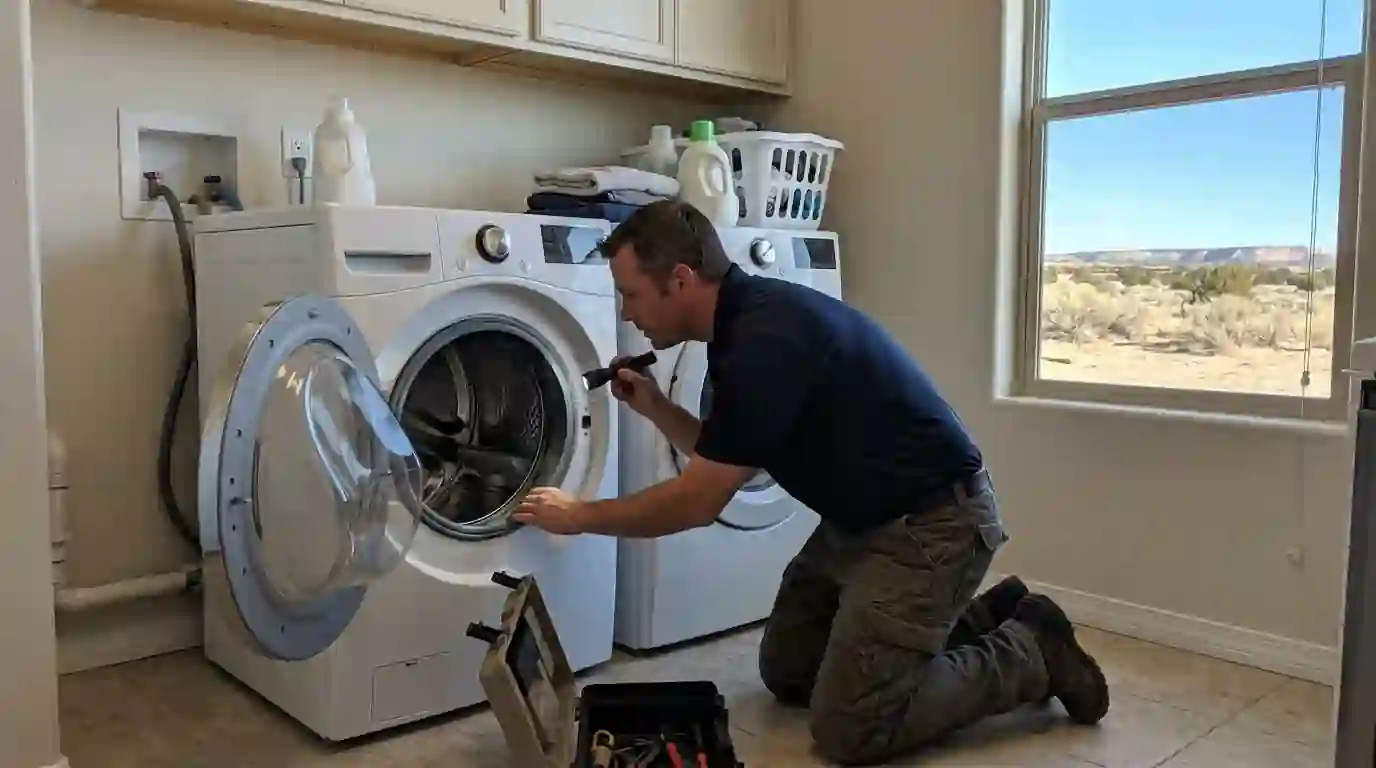
Front-loader complaints
- Sour smell in the drum and towels
- Jet-engine roar when the drum spins
- Door locked with water still inside
Quick answer
Front-load washers most often need a door boot gasket, a door lock, a drain pump or its coin trap filter cleared, or rear bearings when the spin gets loud. Odor usually comes from residue in the boot and pump. Typical Farmington-area repairs run about $118-$612, with bearings and spider arms at the top. Most boot, lock and pump jobs wrap up on the first trip, and the phone is picked up 24/7.
Brands we repair: Whirlpool, GE, Samsung, LG, Maytag, Frigidaire, KitchenAid, Bosch, Kenmore, Electrolux, Amana, Speed Queen, Sub-Zero, Hotpoint
Where front-load washers usually break down
A front-load washer tumbles clothes through a small pool of water instead of soaking them in a full tub. That saves water and is gentler on fabric, but it puts more weight on a few parts. The drum hangs on a cast aluminum spider arm bolted to its back, which rides on a shaft and a pair of bearings sealed into the outer tub. Shock absorbers and springs hold that assembly in place while it spins at high speed. The rubber door boot seals the front.
Because the door is on the side, the washer can't start or drain safely until the door lock confirms it's latched. A failed lock leaves the washer dead at the start of a cycle or holds your clothes hostage at the end. Because it uses so little water, the drain pump has a coin trap filter behind a small access panel at the bottom front. Lint, hair, coins and bra wires collect there, and when the filter clogs the washer stops draining and throws an error code.
Most of our front-loader calls fall into four groups: odor and mildew, a door that won't lock or won't release, water left in the drum, and noise on spin. Each has a short list of likely parts. We use the service test mode built into the machine to confirm which one has failed before we replace anything at all.
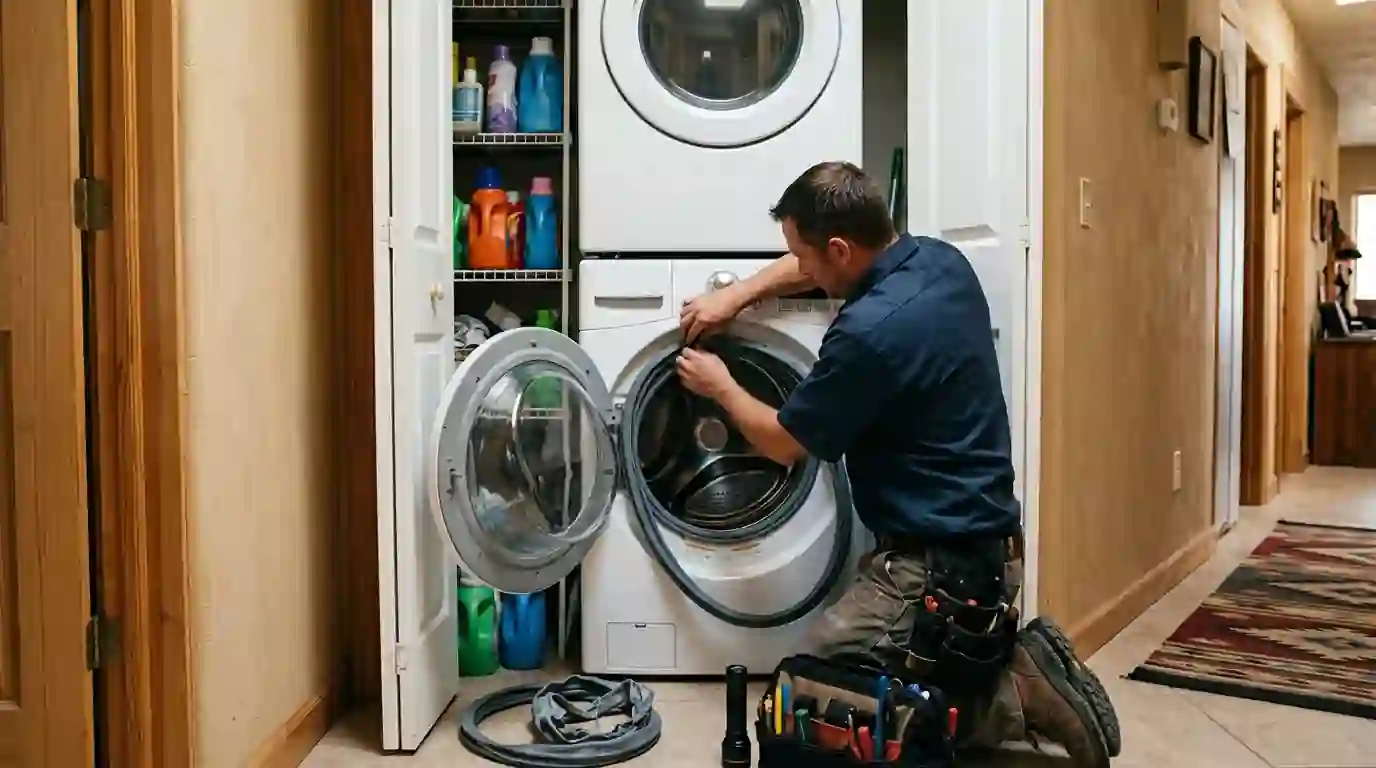
Front-load washer parts we repair and replace
These are the jobs that cover most front-loader visits.
Door boot gasket
We remove the outer and inner clamps, peel off the old boot, clean the tub lip and fit a new gasket with the drain holes facing down. It stops front-edge leaks and much of the odor.
Door lock assembly
We test the lock motor, switch and wiring through the service mode and replace the lock when it won't confirm. We also check the hinge and the latch hook on the door.
Drain pump and coin trap
We clear the coin trap filter and the pump housing, check the impeller for broken vanes, and replace the pump when it hums without moving water or leaks at the seal.
Rear tub bearings and seal
On machines where the bearings can be serviced, we split the tub, press out the worn bearings, fit new ones with a fresh seal and reassemble. It is a big job, so we price it first.
Spider arm replacement
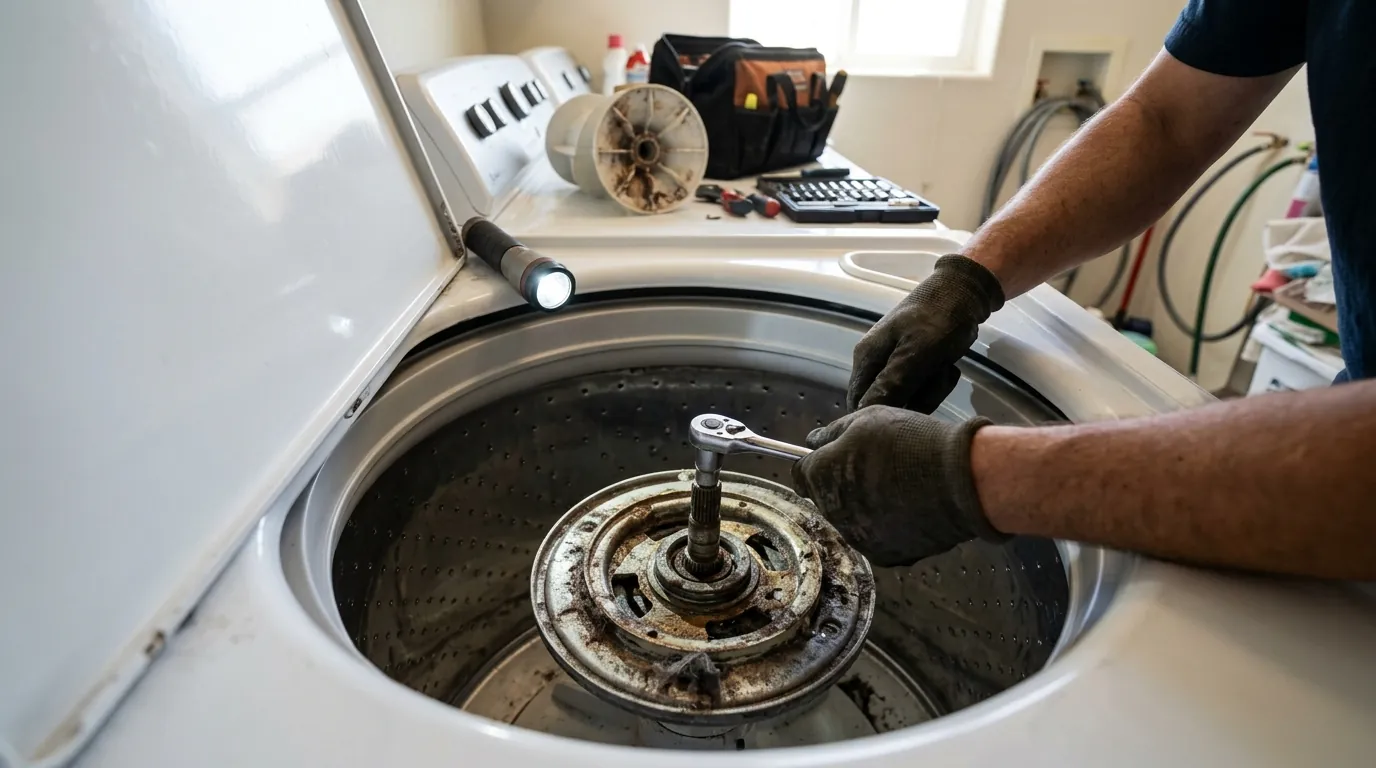
Hard water and detergent residue corrode the aluminum spider arm until it cracks or breaks off the shaft. A broken spider usually shows as clunking and an off-center drum, and the drum assembly may need replacing too.
Shock absorbers and springs
Worn shocks let the drum bang into the cabinet. We replace them as a set, check the suspension springs and level the washer, then test with an unbalanced load.
What a front-load washer is telling you
Front-loaders give fairly clear warnings, and catching them early often saves the bearings and the tub.
Musty or sour smell
A smell that comes back after every wash usually lives in the folds of the door boot, the pump filter and the detergent drawer. Heavy detergent and a closed door after washing make it worse.
Water left in the drum
If the cycle ends with water behind the glass, the pump coin trap filter is probably clogged, or the drain pump has failed. Drain it from the small hose behind the bottom panel into a shallow pan.
Door won't lock or release
A washer that blinks and won't start, or finishes but keeps the door locked, often has a failed door lock assembly. A bent door hinge or a broken latch hook can also stop it confirming.
Roaring or rumbling on spin
A deep roar that grows louder over weeks is the classic sign of worn rear tub bearings. Rust streaks on the back of the cabinet or under the drum confirm the seal has been leaking.
Water at the front edge
Drips at the bottom of the door usually mean a torn or punctured boot gasket. Coins, underwire and pet hair caught in the folds can tear the boot over time.
Shaking and walking across the floor
Heavy vibration often means worn shock absorbers or dampers, shipping bolts never removed after install, or a machine sitting on an uneven floor. Pedestals amplify it.
Typical front-load washer repair costs near Farmington
These ranges cover the front-loader repairs we see most, parts and labor together. Bearing and spider jobs vary the most by brand.
| Coin trap filter clean and drain | $118-$176 |
|---|---|
| Door lock assembly | $153-$268 |
| Door boot gasket replacement | $187-$332 |
| Drain pump replacement | $171-$298 |
| Rear bearings or spider arm | $382-$612 |
Think of these as typical for this area, not a quote. Stacked installs, pedestals and models where the bearings come only as a full outer tub raise the price, while a cleared filter stays at the low end.
Hard water, odor and laundry closets in Farmington homes
Hard water and front-loaders are a tough combination. Minerals react with detergent and leave a waxy residue on the drum, the boot folds and the outer tub, and that residue is what feeds the musty smell. In San Juan County, where many homes use mineral-heavy well water, we see odor complaints on washers only a few years old. The fix is usually a boot replacement or deep cleaning, a cleared pump filter, a lower detergent dose and a monthly hot cleaning cycle.
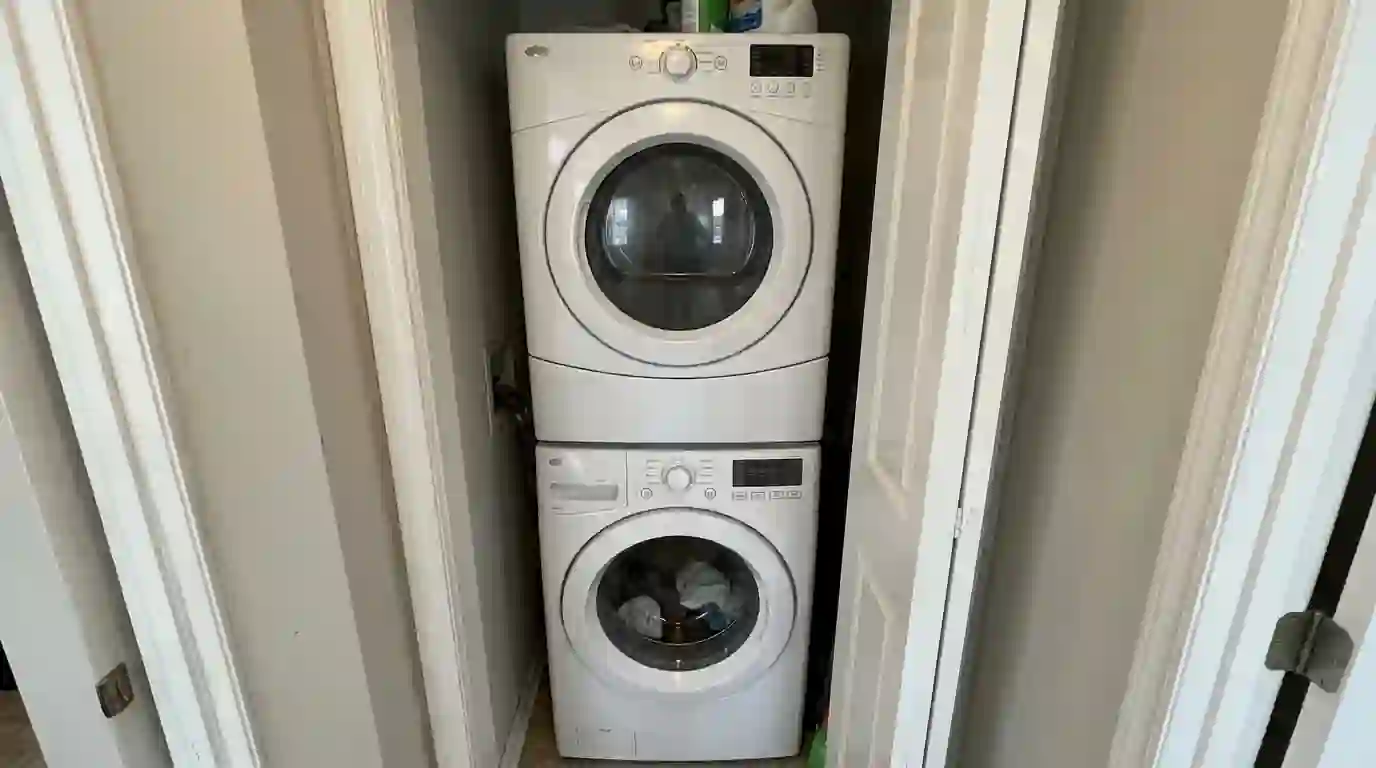
Many newer homes in the Foothills and Piñon Hills have front-load pairs on pedestals, and manufactured homes across the county often put the laundry in a small closet off a hallway. A front-loader spinning at full speed in a tight closet on a lighter floor shakes more than it would on a slab, which wears shock absorbers and loosens the drum. We check the floor, level the feet carefully and make sure the shipping bolts were removed when the washer went in.
The dry air here is a small help. Leaving the door and drawer open between loads lets the boot dry out quickly, which a front-loader in a humid climate never gets. That one habit prevents much of the odor we're called about. A quick wipe of the boot folds once the day's laundry is done finishes the job, and it takes less than a minute with an old towel kept on the dryer.
How we work on a front-load washer
- On the phone
Code and symptom
Read us the error code and describe the smell, noise or leak. The model label is usually on the door frame or the back of the cabinet.
- At the washer
Drain it down
We open the bottom panel, drain the drum through the pump hose into a pan, clear the coin trap, and get the door open if it's locked.
- Minute 25
Service mode tests
We run the washer's built-in test to check the lock, pump, valves and motor, then spin the drum by hand to feel for bearing play.
- Same visit
Repair what failed
Boots, locks and pumps usually go in the same day. Bearing and spider work may need a return trip once the parts arrive.
- Afterward
Clean cycle and leveling
We run a hot test cycle, check the boot and pump for drips, level the feet and show you where the coin trap is for next time.
Worth repairing a front-load washer?
Door boots, locks, pumps and shock absorbers are almost always worth replacing on a front-loader under ten years old. These are wear parts, and a washer that gets them is good for years more. A new front-load pair is a big expense, so a moderate repair usually makes sense.
Bearings and spider arms are where the decision gets real. On some models the bearings can be pressed out and replaced, while others sell the outer tub as one sealed piece. If a bearing job runs close to half the price of a comparable new washer on an older machine, replacement often makes more sense, and we'll show you the numbers.
Keeping a front-loader fresh and quiet
- Use only HE detergent, and less than the cap suggests. Too much soap is the main cause of residue, odor and sudsing errors in front-loaders.
- Leave the door and detergent drawer cracked open between loads so the boot and drum dry out in our dry desert air.
- Wipe the folds of the door boot every week or two and check them for coins, hair ties and pet hair.
- Open the coin trap filter at the bottom front every month or two, with a shallow pan and a towel ready.
- Run the washer's clean cycle, or an empty hot wash with a washer cleaner, about once a month if your water is hard.
Related repairs people book with front-load washer repair
Where we handle front-load washer repair
Farmington neighborhoods first, then the rest of San Juan County and southwest Colorado. Pick your area for local notes, or see all 41 locations.
Front-Load Washer Repair questions from Farmington homeowners
How do I get rid of the smell in my front-load washer?
Most front-load washer odor comes from detergent residue and lint trapped in the door boot, the coin trap filter and the detergent drawer. Clean all three, use less HE detergent, run a hot clean cycle monthly and leave the door open between loads. If the boot is torn or stained deep in the folds, replacing it fixes the smell.
Why is my front-load washer door stuck locked?
A front-load washer keeps the door locked while water is inside or the drum is spinning. If the cycle has ended and it stays locked, the drum may still hold water, the door lock assembly may have failed, or the control lost track after a power blip. Unplug for a few minutes and try again before forcing it.
Why is my front-load washer so loud when it spins?
A loud roar or rumble from a front-load washer during spin usually points to worn rear tub bearings. Clunking and an off-center drum suggest a cracked spider arm. Before assuming the worst, check for coins in the drum, a loose item in the boot, and whether the shipping bolts were removed.
Where is the drain filter on a front-load washer?
On most front-load washers the coin trap filter sits behind a small panel at the bottom front corner. There is usually a small drain hose beside it. Set out a shallow pan and towels, drain the water through the hose first, then twist the filter out slowly to clean it.
Is it worth replacing the bearings on a front-load washer?
Replacing front-load washer bearings is worth it on a newer, higher-end machine where the outer tub can be split and the drum is in good shape. On an older or budget washer, or one where the tub is sold only as a sealed unit, the cost often approaches a new washer.
Why does my front-load washer leak from the front?
A front-load washer leaking at the front usually has a torn or punctured door boot gasket. Other causes are a clogged detergent drawer overflowing, a loose boot clamp, or too much detergent creating suds that push past the seal. We find which one before replacing parts.
Need front-load washer repair today?
Call any hour. A real person picks up, takes the model number and sets the visit.