Gas range and dryer hookup in Farmington, NM
A gas appliance hooked up with an old connector or the wrong orifices is a hazard, not a shortcut. We hook up your range or dryer, set it for natural gas or propane, test every joint and check the flame.
- Answered 24/7
- Gas, electric and propane
- Farmington and the Four Corners
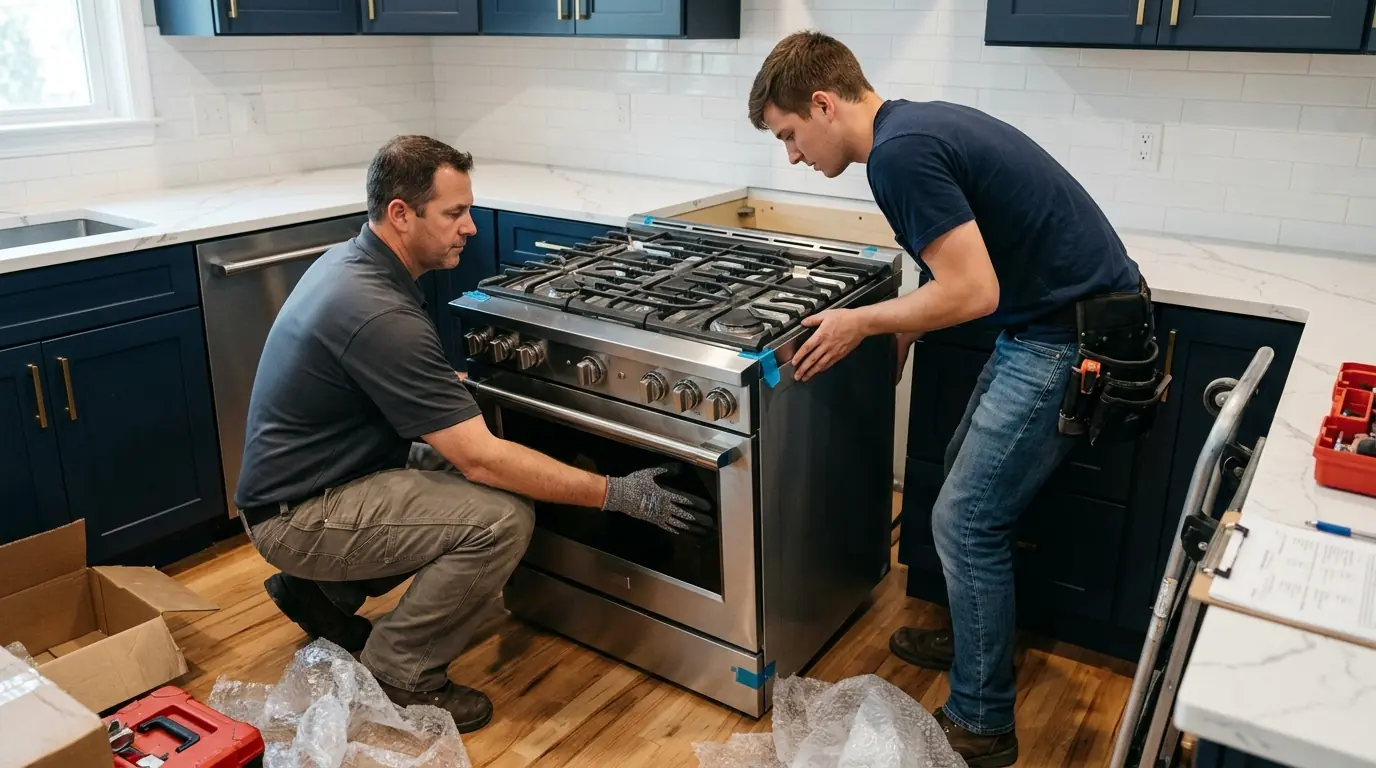
Hookups we handle
- New gas range on propane or city gas
- Gas dryer connected and vented right
- Old brass connector swapped for new
Quick answer
A safe gas hookup means a fresh flex connector, a shut-off valve that actually closes, leak solution on every joint, the right orifices for propane or natural gas and a flame check. Typical hookup labor in Farmington is about $146-$289, with LP conversion adding to that. Most hookups take one visit. A real person picks up at any hour, and a hookup can happen the day you call if our route has an opening.
Brands we repair: Whirlpool, GE, Samsung, LG, Maytag, Frigidaire, KitchenAid, Bosch, Kenmore, Electrolux, Amana, Speed Queen, Sub-Zero, Hotpoint
What a safe gas range or dryer hookup involves
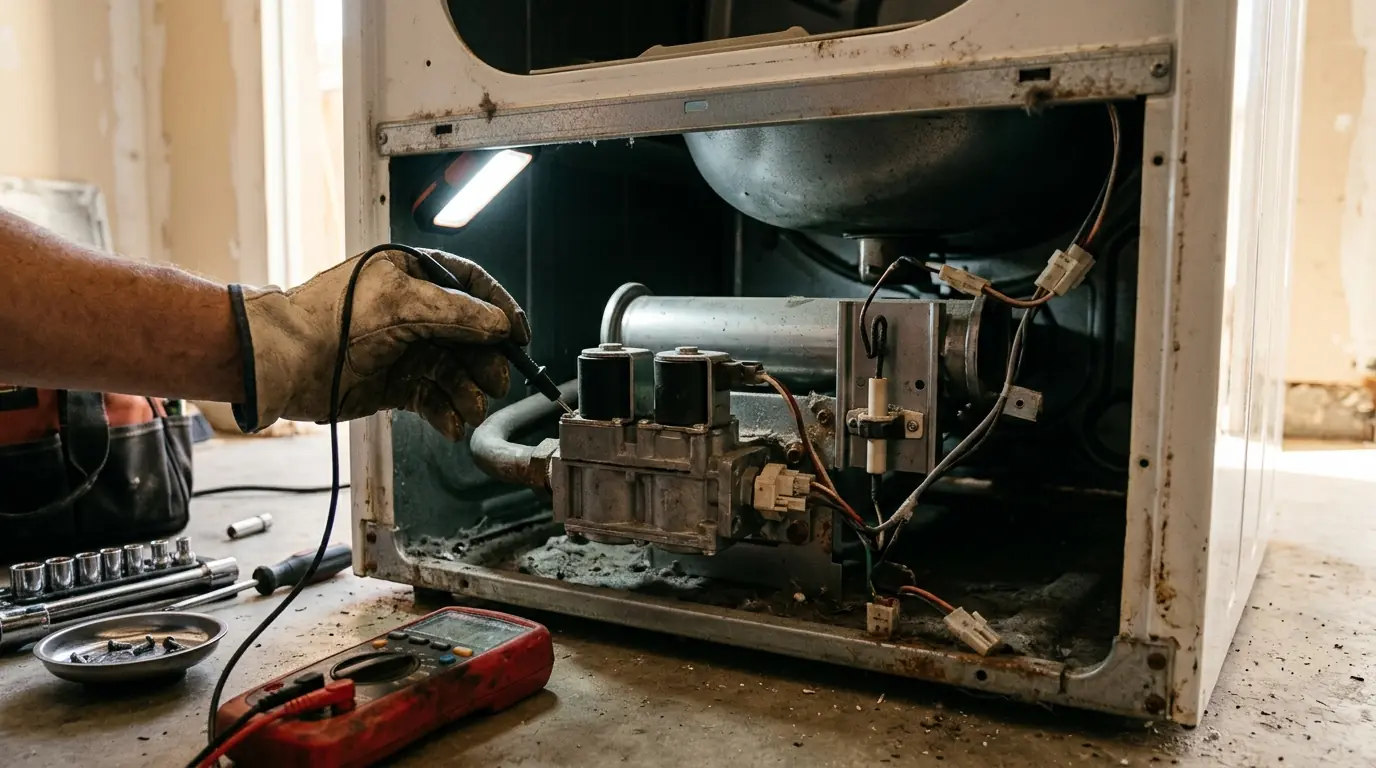
Connecting a gas appliance takes only a few fittings, but each one matters. The connector carries gas from your house line to the appliance regulator, the shut-off valve lets you stop that flow in seconds, and every threaded joint has to be sealed and tested. A connector that was kinked when the range was pushed back, or an old uncoated brass one reused from the last stove, can crack and leak behind the appliance where nobody sees it.
Before anything is connected, our tech confirms what fuel your home uses. A new range or dryer usually ships set for natural gas. On propane, the orifices and regulator have to be changed to the LP settings in the manufacturer's kit, and running an appliance on the wrong setup gives you tall, sooty flames or burners that won't stay lit. We do that conversion as part of the hookup, before the first burner is ever lit.
If anyone smells gas at any point, the rule doesn't change: get everyone out, then phone the gas utility or 911 once you're outside. Once the utility has cleared it, call us for the appliance. During a hookup, we check the shut-off and connector before opening the gas, and we test each joint with leak detection solution after it is pressurized.
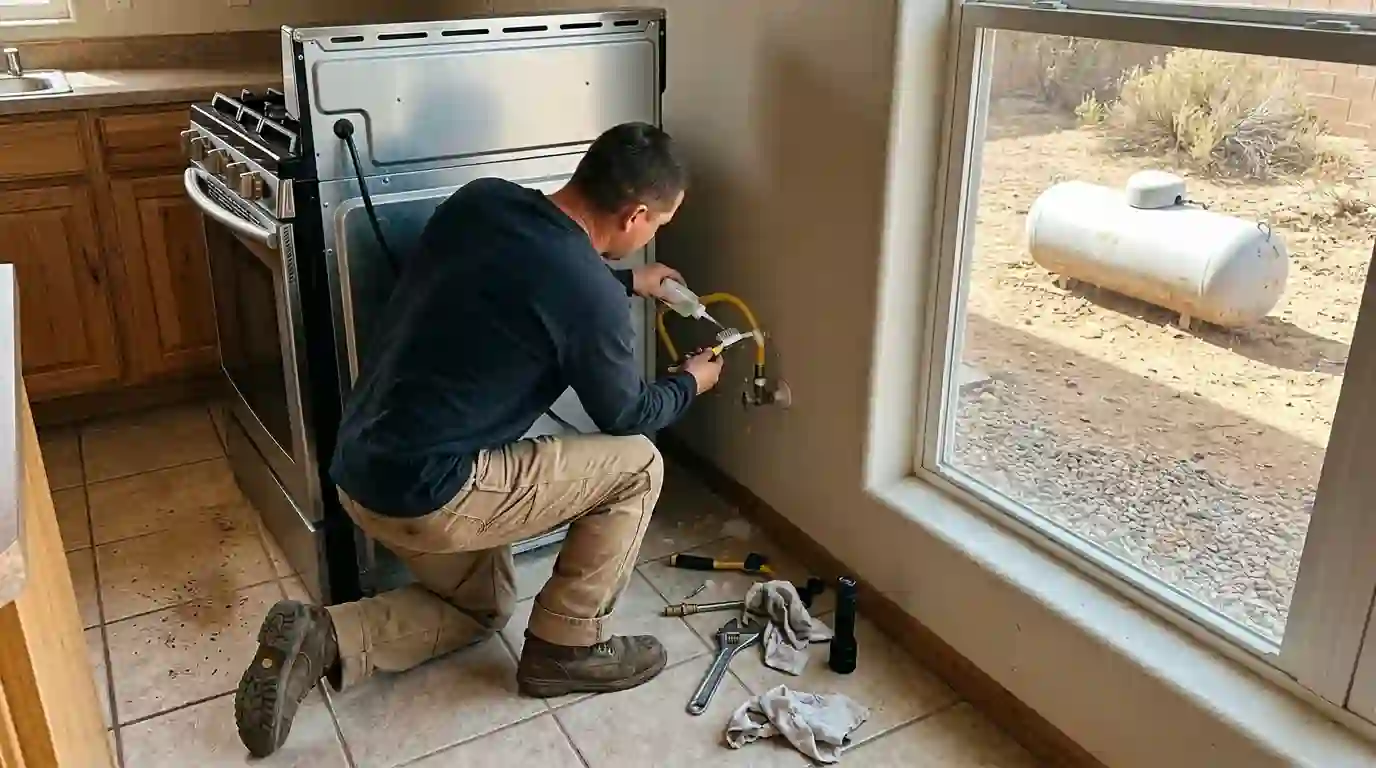
What our gas range and dryer hookup includes
Every gas hookup we do covers these steps, start to finish.
New flexible gas connector
A new coated or stainless connector sized for the appliance, with the right fittings and thread sealant rated for gas. We never reuse the connector from the old range or dryer.
Shut-off valve check or swap
We confirm the valve opens and closes fully and doesn't weep. Stiff or leaking valves are replaced with a quarter-turn gas ball valve you can reach.
Leak test on every joint
With gas on, each fitting gets leak detection solution and a careful look for bubbles. We recheck after the appliance is pushed into place, since moving it can shift a joint.
Propane or natural gas setup
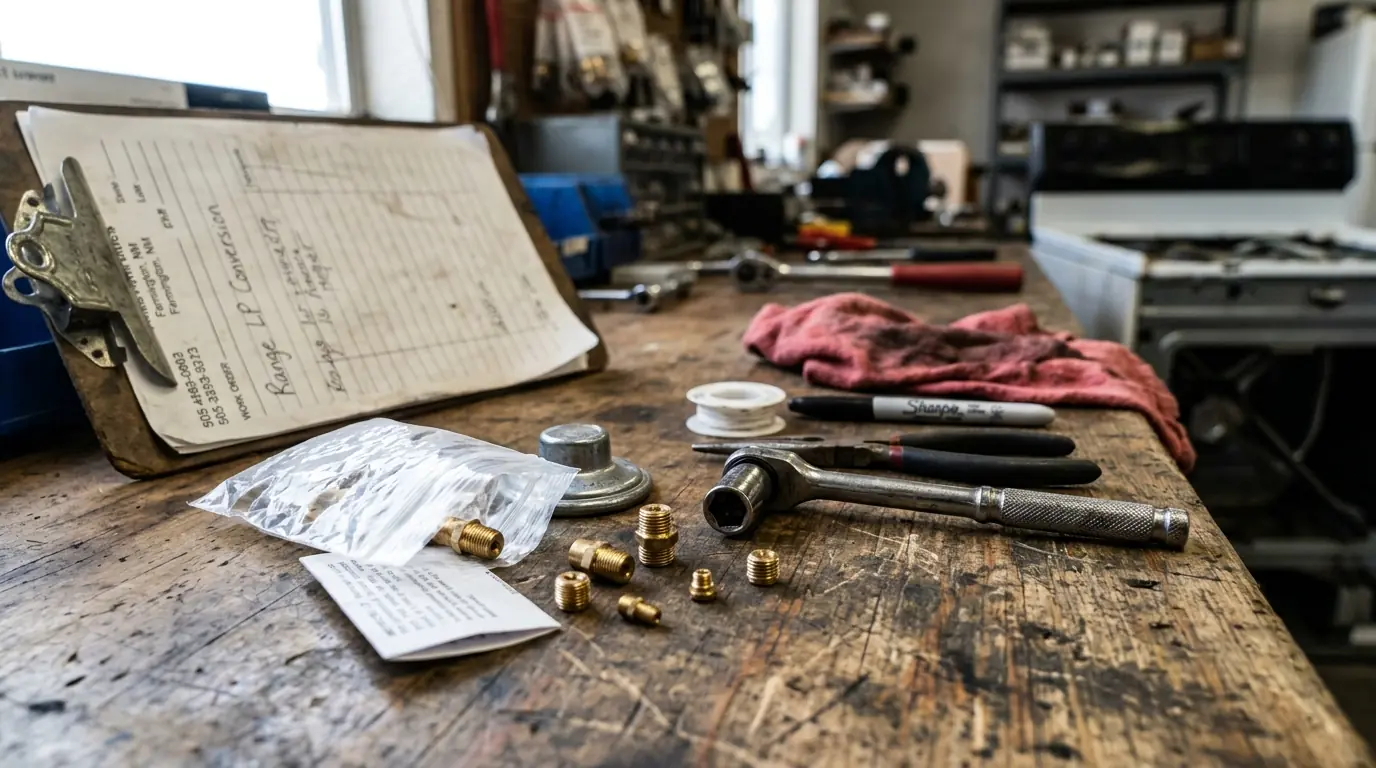
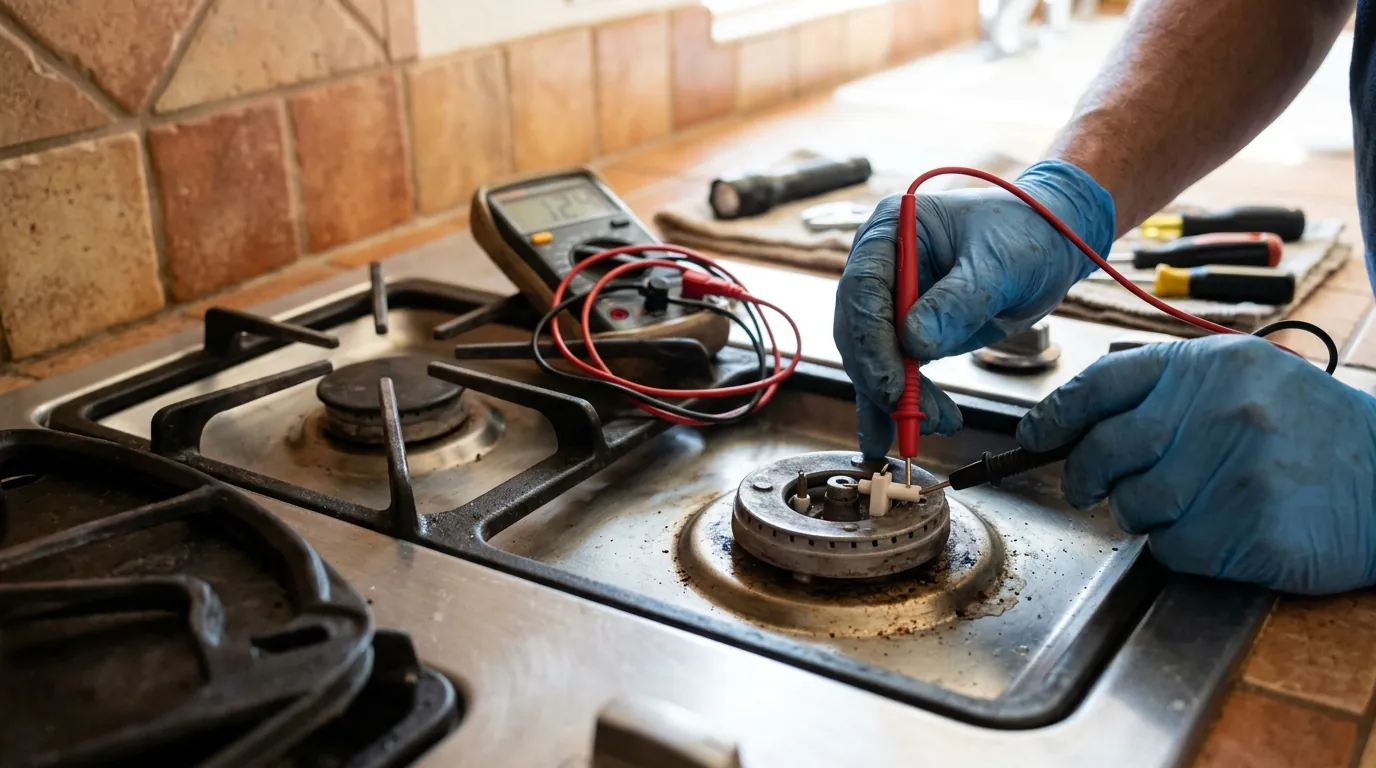
Orifices, regulator and, on some ovens, the bake and broil settings are set for your fuel using the manufacturer's kit and instructions, then each burner is lit and checked.
Anti-tip bracket on ranges
We mount the bracket to the floor or wall and confirm the rear leg locks into it, so a heavy pot or a child on the open door can't tip the range.
Dryer vent and ignition test
For gas dryers we attach a metal vent with a short run, then run the dryer to confirm the igniter glows, the gas valve opens and the flame holds.
Signs your gas hookup was done wrong or needs replacing
These are the warning signs our techs look for on a gas range or dryer connection.
Faint gas odor near the appliance
Get out of the house and ring the gas company or 911 from the yard. Once it is cleared, a weeping flare nut, a cracked connector or a loose regulator fitting are what we usually find behind the appliance.
Yellow, lazy or lifting flames
On a gas range, flames should be mostly blue and steady. Yellow tips, soot on pans or flames lifting off the burner point to the wrong orifices, a missed propane conversion or air shutter problems.
Old uncoated brass connector
Older flexible brass connectors can crack at the flare joints over time. If yours is dull gold rather than coated or stainless, it should be replaced, not reused on a new range.
Shut-off valve that won't turn
A valve frozen in the open position does you no good in a leak. We replace stuck or dripping valves with a quarter-turn ball valve rated for gas.
Range rocks when the oven door opens
That means the anti-tip bracket is missing or the rear leg isn't seated in it. A loaded oven door can pull a range forward and tear the gas connection.
Dryer takes two cycles to dry
On a gas dryer, a crushed vent or incorrect burner setup causes long dry times and overheating. The gas side and the vent side both need to be right at hookup.
Gas range and dryer hookup costs in Farmington
Typical figures in this area for hooking up gas appliances. Parts like connectors and valves are added only when needed.
| Gas range hookup with new connector | $146-$289 |
|---|---|
| Gas dryer hookup with metal vent | $138-$276 |
| Propane conversion during hookup | $87-$194 |
| Quarter-turn gas valve replacement | $73-$158 |
| Anti-tip bracket install on existing range | $46-$93 |
Access behind the appliance, whether a conversion kit is included, the condition of the existing valve and vent, and the number of appliances set in one trip change the total. These are ballpark local numbers, not a quote.
Propane, altitude and older gas lines around the Four Corners
Many homes outside Farmington's city gas service run on propane, from the mesas above town to the acreage along the river valleys. A propane appliance needs smaller orifices and a regulator set for LP, and the conversion kit is often taped inside the range or dryer, easy to miss. We look for it before we start and install it as part of the hookup. Skipping the conversion is one of the most common gas problems we find on new appliances out in the county.
Elevation adds another layer. Farmington sits near 5,400 feet, Aztec around 5,640, and Durango and Mancos well above that. Thinner air changes how gas burns, and many manufacturers publish high-altitude instructions or adjustments for their gas appliances. We follow those for your model and then check the flame on each burner. A lazy, yellow or lifting flame, or slow ignition, tells us something still needs adjusting.
Older homes from the 1950s to 1970s boom years often have rigid gas pipe ending right behind the range, with an old valve that hasn't been turned in decades. We look at the stub-out, valve and connector before connecting a new appliance. If the valve is stiff or the old connector is cracked, we replace it rather than attach a new range to a weak link.
How a gas appliance gets hooked up safely
- First call
Fuel and model
Tell us the model and whether your home is on propane or city gas. If you are unsure, the tank in the yard or the meter by the house answers it.
- At the door
Shut the gas
We close the appliance valve, pull out the old unit if there is one, and inspect the stub-out, valve and wall or floor behind the space.
- Next
Convert if needed
For propane homes, the LP kit goes in now: orifices swapped, regulator set, and any oven adjustments made per the manufacturer's instructions.
- Same visit
Connect and test
New connector attached, gas turned on, every joint leak-tested, then the appliance is pushed back and the joints are tested again.
- Before leaving
Flame and bracket check
We light each burner, oven and broiler or run the dryer, check the flame color and confirm the anti-tip bracket catches the range leg.
Why a gas hookup is not a do-it-yourself job
Plenty of homeowners can level a fridge or hook up a washer hose, but gas is different. A leak at a flare joint can be too small to smell at first, and the wrong orifices on propane can produce soot and carbon monoxide. The fittings are inexpensive. Mistakes on gas are not.
If you are setting up a new range or dryer, have the old connector and valve looked at before the new unit goes in, and make sure the conversion for your fuel type is done. That combination prevents most of the gas problems we are called to fix later.
Gas appliance tips for Farmington homes
- Know where your gas shut-off valve is behind the range or dryer and how to turn it, before you ever need it in a hurry.
- If you buy a gas appliance for a propane home, check the box or manual for the LP conversion kit and keep it with the appliance.
- Never shove a gas range back hard against the wall. A kinked connector can crack, and the crack is hidden right behind the unit.
- Watch burner flames for a few days after a new hookup. Mostly blue and steady is right; yellow, noisy or lifting flames need a call.
- Put a carbon monoxide alarm near sleeping areas and the kitchen, and test it when you change clocks in spring and fall.
Related repairs people book with gas range & dryer hookup
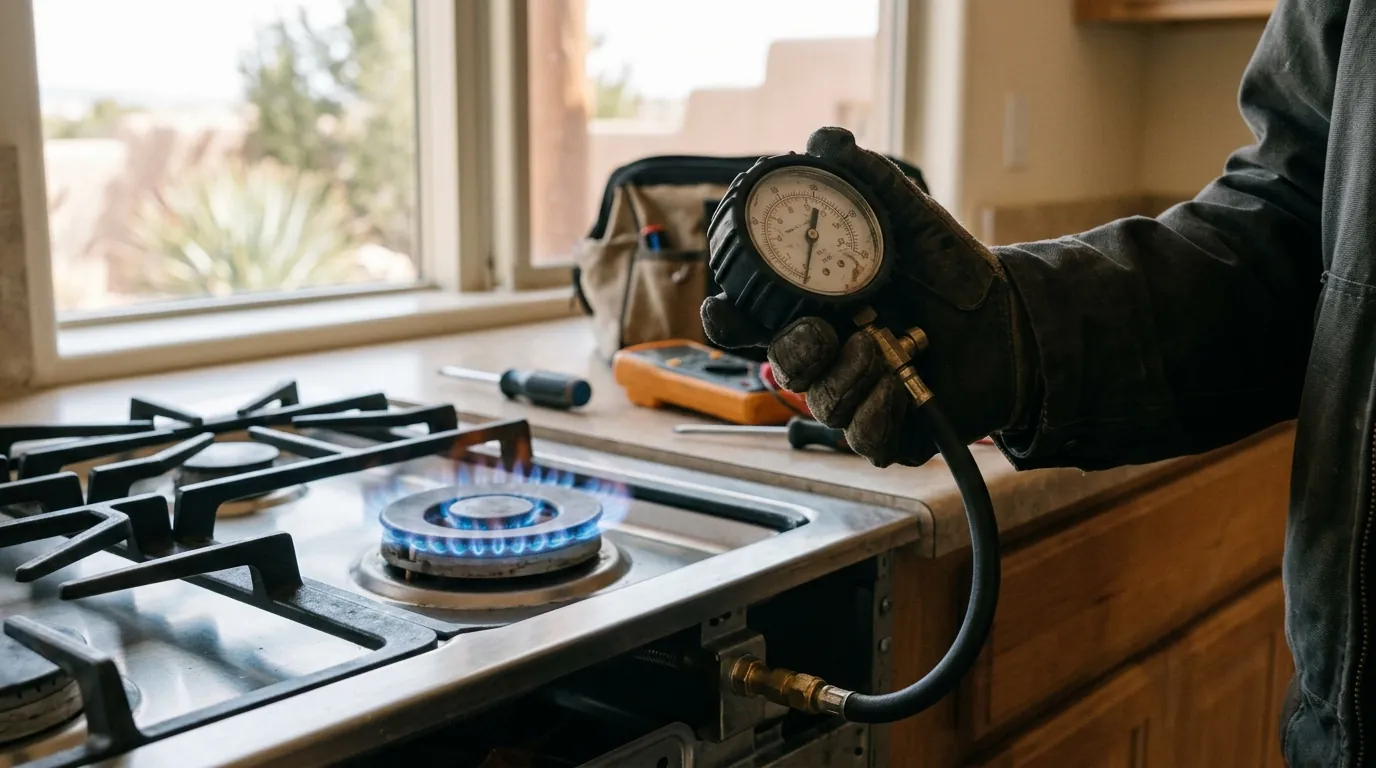
Where we handle gas range & dryer hookup
Farmington neighborhoods first, then the rest of San Juan County and southwest Colorado. Pick your area for local notes, or see all 41 locations.
Gas Range & Dryer Hookup questions from Farmington homeowners
Can my new gas range be converted to propane?
Most residential gas ranges can run on propane with the manufacturer's LP conversion kit, which swaps the orifices and sets the regulator. Many ranges include it in the box. If yours doesn't, we look up the correct kit for your model.
Should I reuse the old gas connector on my new range?
No. Connectors flex and age every time an appliance is moved, and older uncoated brass connectors can crack at the joints. A new connector is inexpensive and is the standard way to hook up a new gas appliance.
Is it safe to stay home if my gas dryer gives off a gas smell?
No. Walk everyone outside right away, and from there phone 911 or your gas supplier. Don't flip switches or start the car in the garage. Once the utility has checked it and cleared it, call us to find and repair the problem at the dryer.
Does altitude affect a gas range installation in Farmington?
It can. At around 5,400 feet the air is thinner, and some manufacturers list high-altitude instructions or adjustments for their gas appliances. We follow those for your model and check that each burner flame looks right afterward.
Why does a gas range need an anti-tip bracket?
A loaded oven door, a pot pulled forward or a child climbing on the door can tip a range that isn't anchored. The bracket holds the rear leg so the range stays put, which protects people and the gas connection.
Can you hook up a gas dryer in a manufactured home?
Yes, as long as the dryer is approved for that installation and the home has a gas supply in the laundry space. We check that the vent path, often through the floor, is metal duct, short and properly sealed to the outside.
Need gas range & dryer hookup today?
Call any hour. A real person picks up, takes the model number and sets the visit.