Propane conversion in Farmington, NM
A range or dryer built for natural gas will not burn propane safely until it is converted. We swap the orifices, set the regulator or valve for LP, follow the altitude instructions and test every burner before we leave.
- Answered 24/7
- Gas, electric and propane
- Farmington and the Four Corners
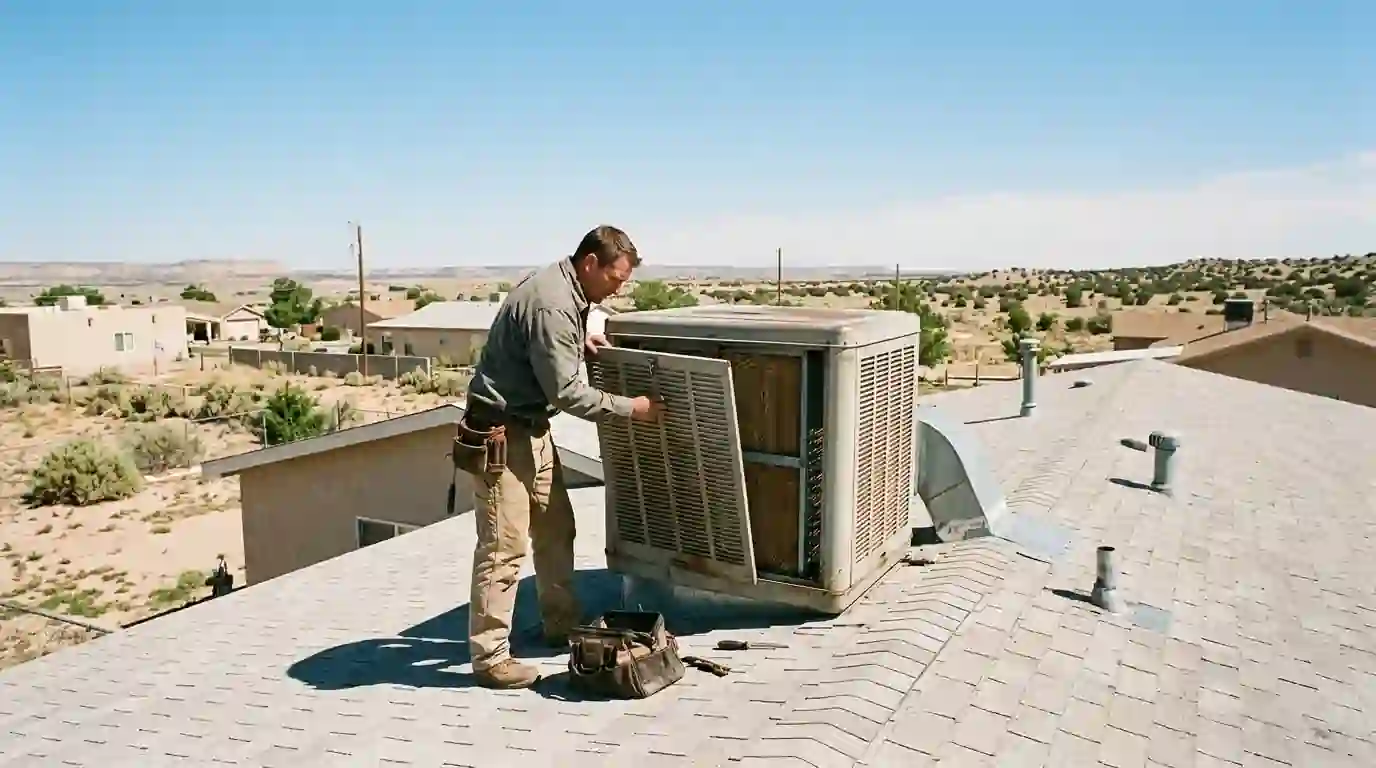
Conversions we handle
- New range bought for a propane house
- Dryer moved from town to acreage
- Switching back to city natural gas
Quick answer
Converting a gas appliance means fitting the manufacturer's LP or natural gas orifices, changing the regulator or valve setting, and adjusting the flame. Around Farmington, a typical range conversion runs about $187-$362 and a dryer about $134-$248, kit availability permitting. Most take one to two hours. The line is staffed 24/7, and most conversions can be booked within a few days.
Brands we repair: Whirlpool, GE, Samsung, LG, Maytag, Frigidaire, KitchenAid, Bosch, Kenmore, Electrolux, Amana, Speed Queen, Sub-Zero, Hotpoint
Why a gas appliance has to match its fuel
Natural gas and propane are both clean-burning fuels, but they are delivered very differently. Natural gas arrives at low pressure and carries less heat per cubic foot. Propane arrives at higher pressure from a tank regulator and carries far more energy in the same volume. An appliance's orifices, the tiny brass jets that meter gas into each burner, are drilled for one fuel or the other, and the appliance regulator or gas valve is set to match.
Hook a natural gas range to a propane tank without converting it and you push too much fuel through holes that are too big. The flames run tall, yellow and sooty, the oven overheats and the burners can produce carbon monoxide. Put an LP-configured unit on a city line and you get the reverse: weak, lifting flames that may not light or stay lit. Neither situation is safe to live with.
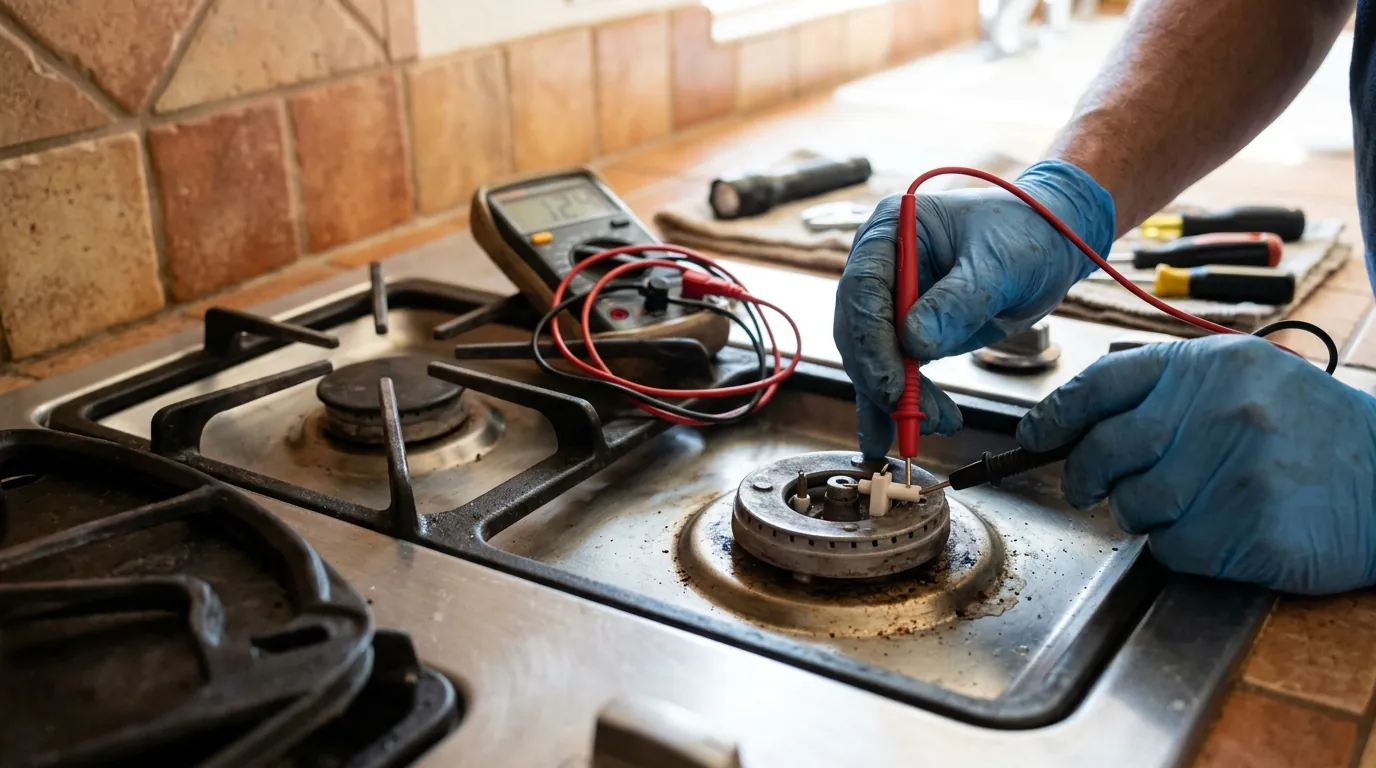
Our conversion work starts with the manufacturer's kit. Many ranges ship with LP orifices in a bag behind the drawer or taped inside the back panel. Dryers and water heaters usually need a separate kit ordered by model number. We fit each orifice, flip or replace the regulator, adjust the low flame on every surface burner and the oven air shutter, then leak-test and check every flame.
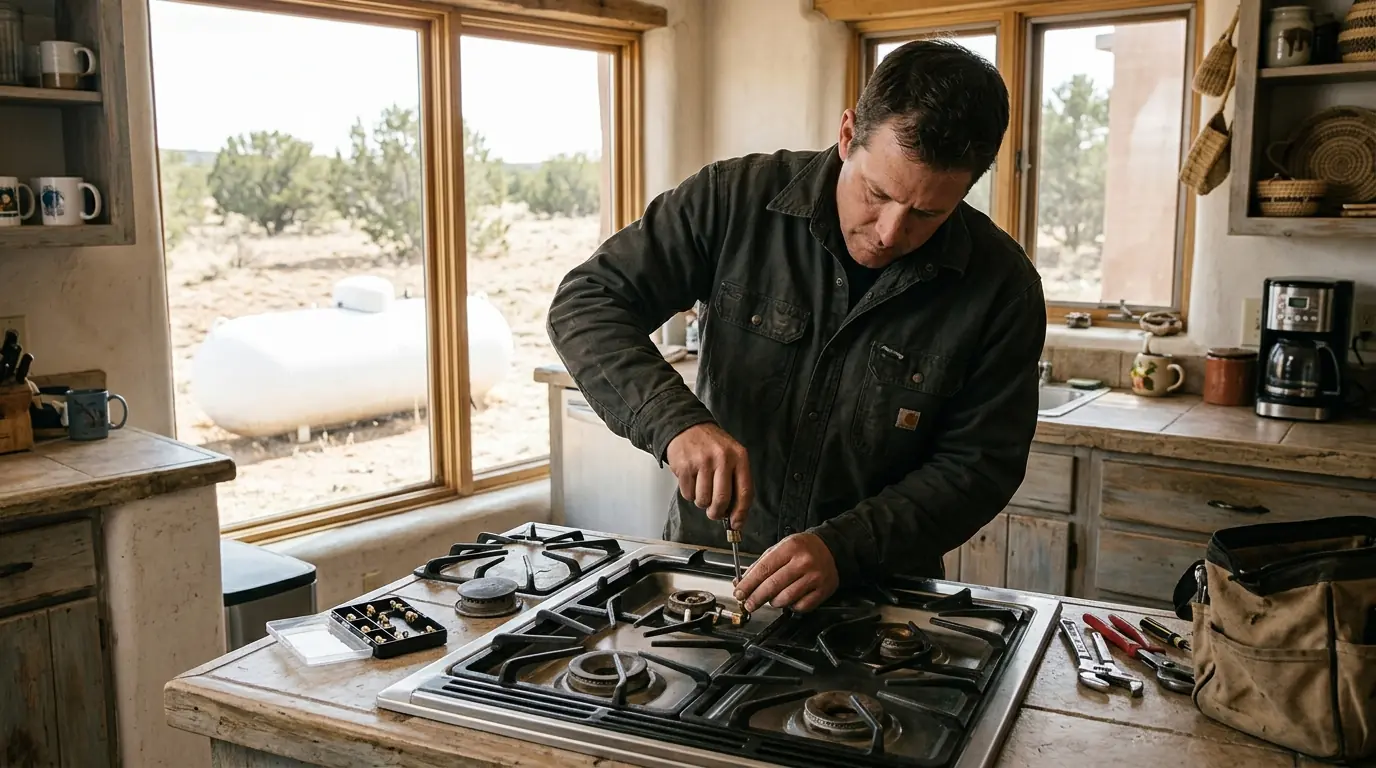
What we change during a propane conversion
A complete conversion touches every part that meters or regulates gas, not just the burners you can see.
Surface burner orifices
Each cooktop burner gets the correct orifice for the fuel. On many ranges, the orifice sits under the burner base; on others it threads into the valve behind the knob.
Oven bake and broil orifices
The oven burners have their own orifices, often reached through the oven floor or the back panel. We change them and set the air shutter for a steady blue flame.
Appliance regulator
Most range regulators have a reversible cap or insert that switches between natural gas and LP. We set it correctly and confirm outlet pressure where the model allows.
Dryer burner and valve
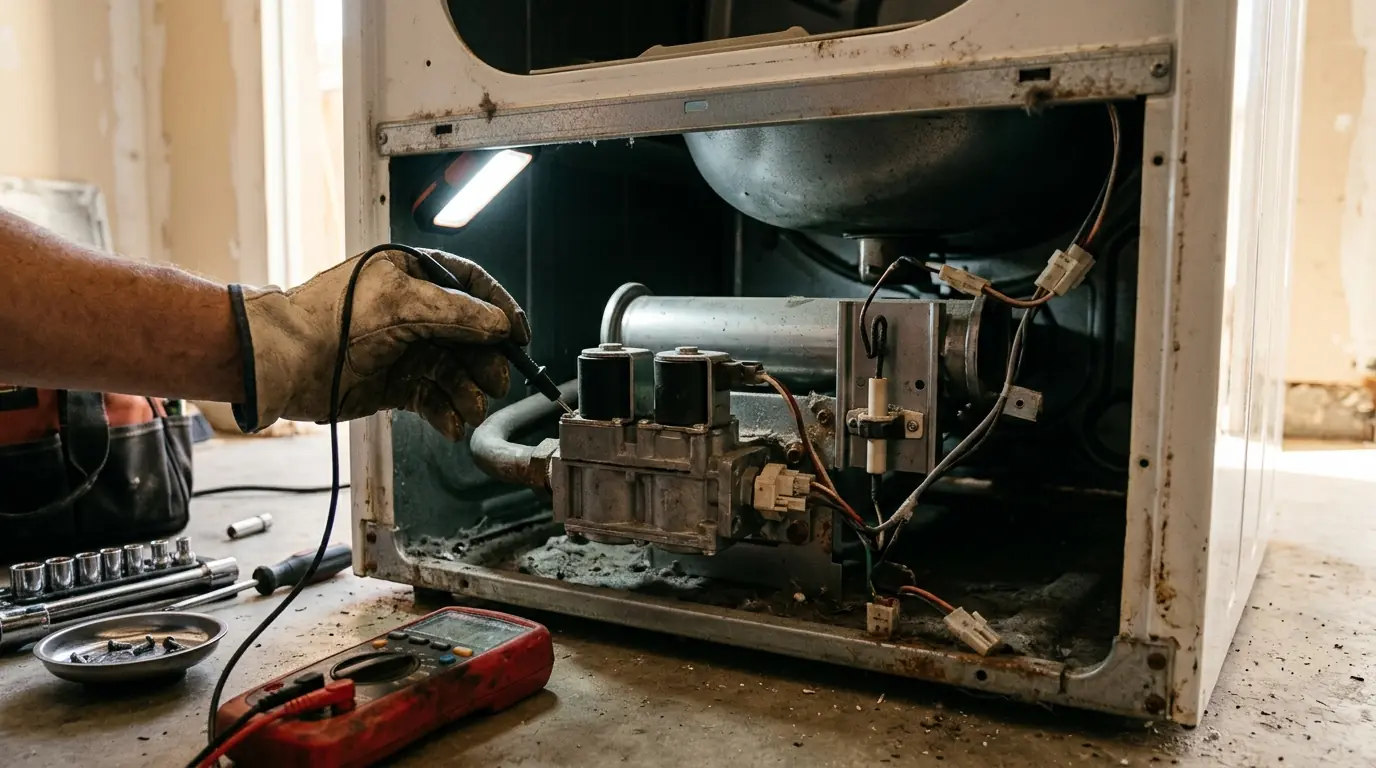
Gas dryers get an LP burner orifice and, on many models, a valve conversion. We run a full heat cycle and check the flame through the sight hole.
Water heater gas control
Water heaters often need a fuel-specific gas control valve and pilot orifice, or a factory LP model. We tell you plainly when a conversion isn't offered for your heater.
Low flame and simmer settings
After the orifices change, each surface valve's low setting must be adjusted so burners don't go out on simmer. We set every knob individually.
Signs an appliance is on the wrong fuel setup
These are the clues we look for in homes where a conversion was skipped or done halfway.
Tall, yellow burner flames
Flames that lick up the side of a pot, roar, or burn mostly yellow on a propane home almost always mean natural gas orifices are still in place.
Soot on pans or walls
Black marks on cookware, inside the oven, around a dryer burner or above a water heater show incomplete combustion, a common result of an unconverted appliance.
Flames that won't stay lit
Weak, lifting flames that blow out at low settings can mean a propane-set appliance is running on natural gas, or the regulator was never switched.
Oven runs far too hot
An unconverted oven on propane can overshoot its set temperature badly. Burnt cookies at 350 degrees can be a fuel problem, not a thermostat problem.
Unopened kit still in the drawer
If the LP orifice bag is still taped to the back of your range or stored in the drawer, the appliance was probably never converted.
Moved from town to the country
Appliances that came from a natural gas house in Farmington to a propane home in Kirtland, Flora Vista or out by Navajo Lake need conversion before use.
Typical propane conversion costs around Farmington
Here is what conversions usually run in this area, labor included. Kits are extra when one isn't packed with the appliance, and none of this is a quote.
| Freestanding gas range conversion | $187-$362 |
|---|---|
| Gas dryer conversion | $134-$248 |
| Gas cooktop or wall oven conversion | $163-$317 |
| Range converted back to natural gas | $178-$341 |
| Conversion kit when not included | $37-$128 |
Pro-style ranges with many burners, models that need the cooktop lifted, and kits that must be ordered all raise the cost. We price your exact appliance before ordering parts.
Why so many homes around the Four Corners need conversions
City natural gas lines cover most of Farmington and Aztec, but they thin out fast beyond town. Homes in Kirtland, Waterflow, Crouch Mesa, Spencerville, along the river valleys and on rural acreage across San Juan County often run on a propane tank in the yard. The same is true across much of La Plata and Montezuma counties in Colorado. Because most new ranges and dryers leave the factory set for natural gas, every new appliance delivered to one of these homes needs converting before its first use.
Conversions also run the other way. Families moving from a rural place into town sometimes bring a propane-set range or dryer with them, and it must go back to natural gas orifices before it can run on a city line. Landlords who own houses both in town and out on tank fuel swap appliances between them too. We handle both directions, and we keep the removed orifices with the appliance so the next change is simpler.
Elevation adds one more step. Farmington is near 5,400 feet, Durango and Cortez sit higher, and Mancos is about 7,000 feet. Many manufacturers list separate high-altitude orifices or derating instructions, and the conversion kit may not cover them. We check the installation manual for your model and follow its altitude guidance during the conversion, so the flame burns clean at your elevation and not just on paper.
How a conversion appointment works
- Before the visit
Model number and kit
We ask for the model number and whether a bag of orifices came with the appliance, then confirm or order the correct kit.
- At the door
Check supply and connector
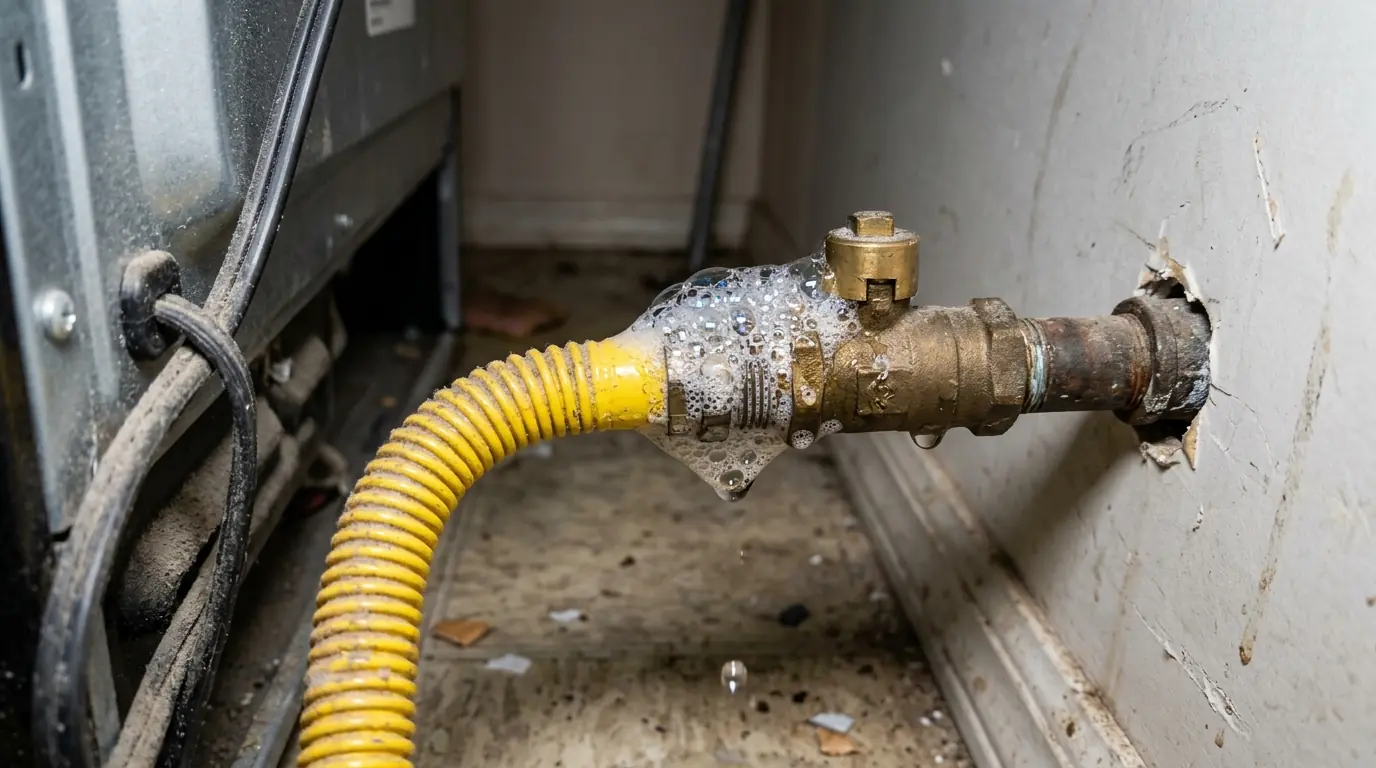
We confirm what fuel is actually at the wall, look over the shutoff valve and connector, and replace either if it is old or damaged.
- First hour
Swap orifices and regulator
Our tech changes every surface, oven and broil orifice, sets the regulator for the new fuel and records what was changed.
- Same visit
Adjust and leak-test
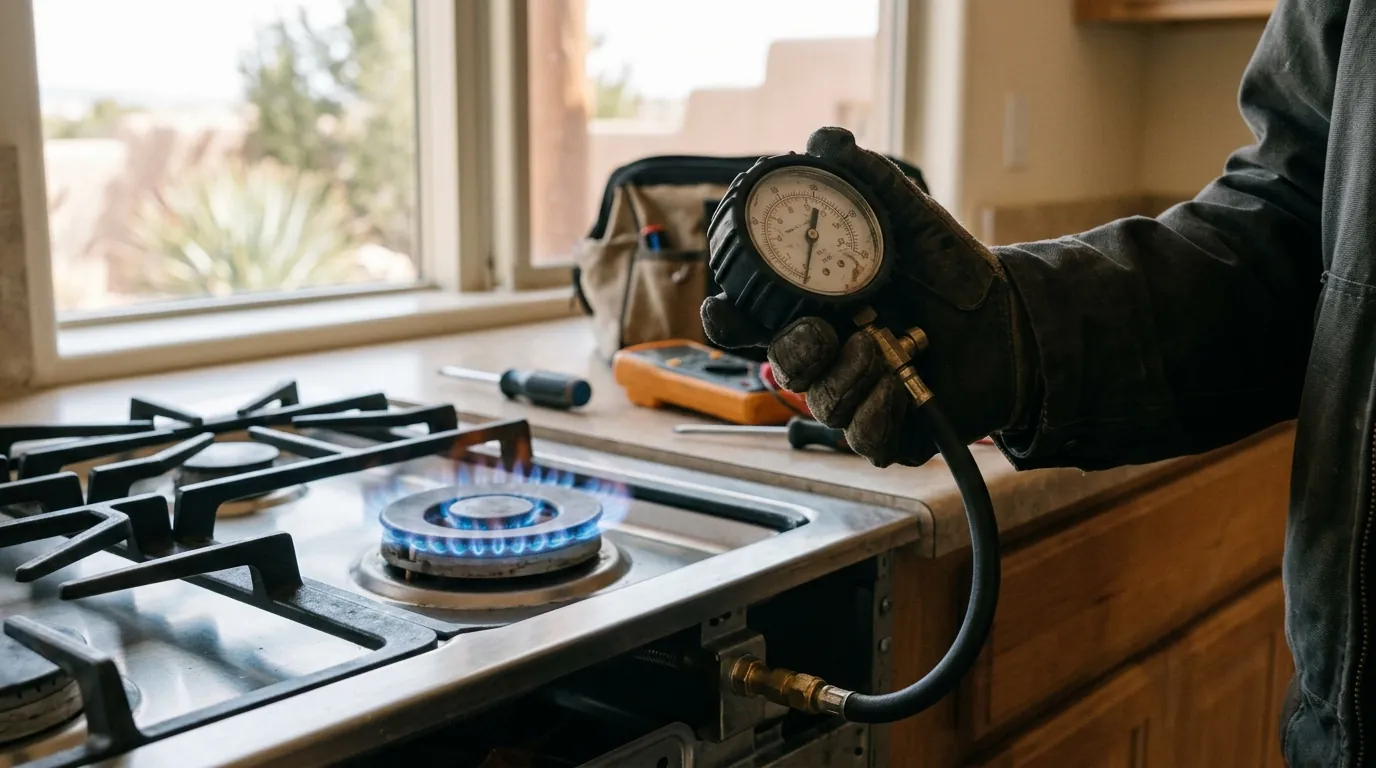
We light each burner, adjust air shutters and simmer settings, and leak-test every fitting with solution or an electronic detector.
- Afterward
Label the conversion
We complete the conversion sticker from the kit and attach it near the rating plate, so the next owner or tech knows the fuel setup.
When a conversion makes sense, and when it does not
Most freestanding ranges, cooktops, wall ovens and gas dryers can be converted with the maker's kit, and the cost is small next to the price of the appliance. Converting is the right call when the kit exists for your model and the appliance is in good shape. If the manufacturer offers no conversion kit, we will not improvise one with drilled orifices.
Water heaters are the exception that catches people out. Many are sold as natural gas or propane models with no field conversion offered, so buying the right version up front matters. Older appliances with worn valves can be converted, but it sometimes makes sense to fix the valve at the same time.
Planning a propane conversion the easy way
- Look behind the drawer and on the back of a new range for a small bag of brass orifices before you throw away any packing.
- Tell the store or delivery crew your home runs on propane, but don't let anyone light the appliance until it has been converted.
- Keep the conversion label and any spare orifices in a bag taped inside the drawer, in case you ever move back to natural gas.
- Have your propane supplier check the tank regulator if every appliance in the house seems weak, since a single bad regulator affects them all.
- If you are shopping for a dryer or water heater for a propane home, ask whether an LP version or kit is available before you buy.
Related repairs people book with propane conversion
Where we handle propane conversion
Farmington neighborhoods first, then the rest of San Juan County and southwest Colorado. Pick your area for local notes, or see all 41 locations.
Propane Conversion questions from Farmington homeowners
Can any gas range be converted to propane?
Nearly every home gas range sold in the US accepts a maker's LP kit. Many include the LP orifices in the box. A few models, especially older or imported ones, have no kit available, and we will not convert them with improvised parts. Send us the model number and we will check what your range supports.
How long does a propane conversion on a gas range take?
A typical freestanding range takes about one to two hours to convert and test. Ranges with sealed burners that need the cooktop lifted, pro-style ranges with six burners and a griddle, and dual-fuel models can take longer. Dryer conversions are usually quicker, often under an hour.
Is it dangerous to run a natural gas dryer on propane without converting it?
Yes. Without LP orifices the burner gets far too much fuel. That causes an oversized yellow flame, soot, overheating and carbon monoxide that the dryer vents toward the outside but can also leak into the laundry room if the vent is restricted. Don't run it until it has been converted.
Can a propane conversion be reversed if I move to a home with natural gas?
Yes. We remove the LP orifices, put the natural gas orifices back or install new ones, return the regulator to its natural gas setting and readjust the burners. Keep the original orifices if you still have them; it can save the cost of a new kit.
Does a propane conversion need different settings at high altitude?
It can. Some manufacturers list separate orifices or derating steps for elevations like Farmington's roughly 5,400 feet or higher, and the standard LP kit doesn't always cover them. We read the model's installation instructions and follow its altitude guidance so the converted appliance burns cleanly where you live.
Should I convert my water heater from natural gas to propane?
Only if the manufacturer offers a field conversion kit for that exact model, and many don't. Often the right answer is a water heater built for propane from the start. We check the label and model number and tell you whether converting or replacing is the safer option.
Need propane conversion today?
Call any hour. A real person picks up, takes the model number and sets the visit.