Swamp cooler repair in Farmington, NM
When the evaporative cooler quits on a 95 degree afternoon, the house heats up fast. We climb up, find out whether it's the motor, pump, belt, float or wiring, and get cool air moving again.
- Answered 24/7
- Gas, electric and propane
- Farmington and the Four Corners
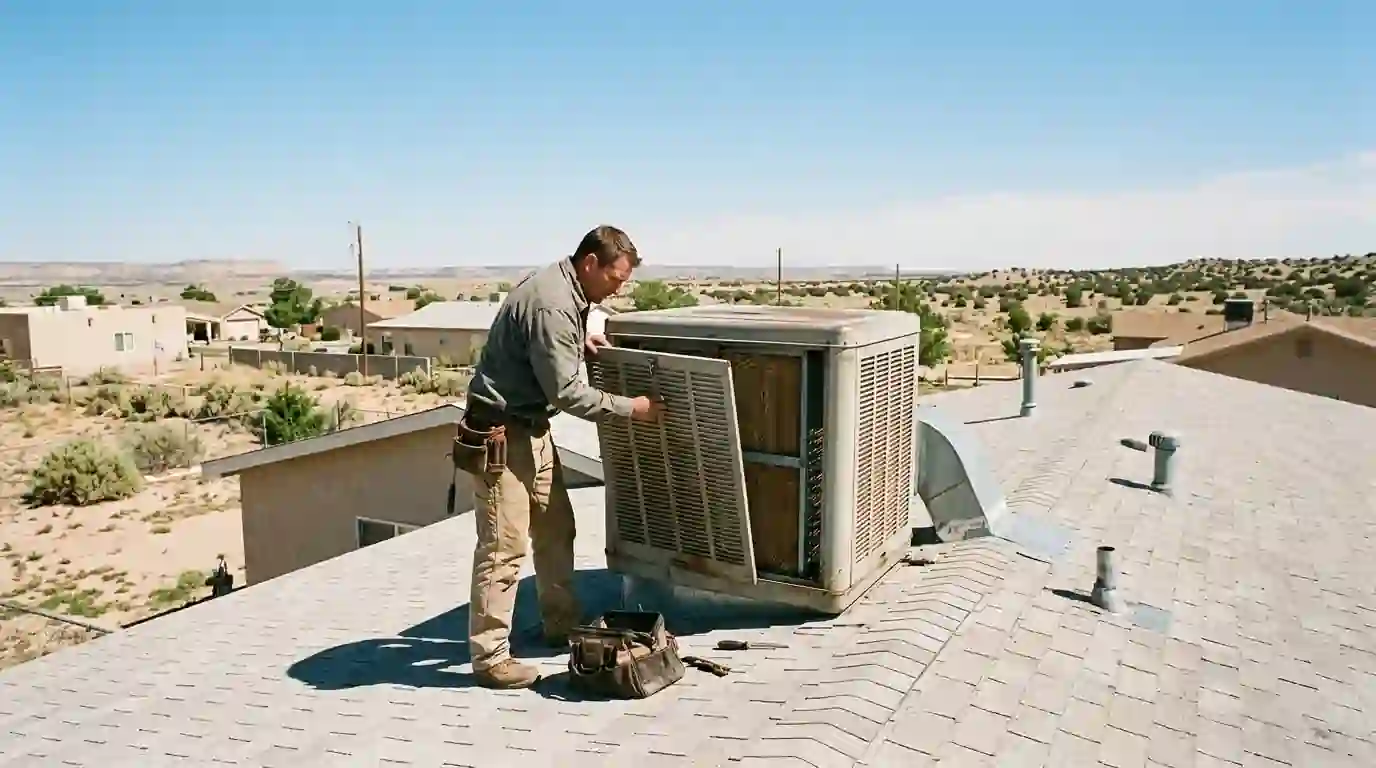
Cooler breakdowns we fix
- Fan runs, air comes out warm
- No air at all from the vents
- Water streaming down the eaves
Quick answer
Most swamp cooler breakdowns around Farmington are a failed recirculating pump, a snapped or slipping belt, a burned-out blower motor, a stuck float valve or a bad switch or wire. Typical repairs here run about $96-$468 depending on the part. Many coolers are running again in a single visit. Our phones are answered 24/7, and summer calls are booked the same day when the schedule allows.
Brands we repair: Whirlpool, GE, Samsung, LG, Maytag, Frigidaire, KitchenAid, Bosch, Kenmore, Electrolux, Amana, Speed Queen, Sub-Zero, Hotpoint
Getting a dead swamp cooler blowing cold again
An evaporative cooler is simple: a recirculating pump lifts water from the pan to a distributor, the water trickles down through the pads, and a blower wheel pulls hot outside air through the wet pads and pushes it into the house. A float valve keeps the pan filled from a small water line. A two-speed motor turns the blower through a belt and pulleys on most units, or drives it directly on some. When any piece stops, the cooler either blows warm air or nothing at all.
Warm air with good airflow almost always means water isn't reaching the pads. The pump has seized, its intake screen is clogged, the distributor lines are plugged with scale or the pan is dry because the float valve stuck shut. Weak or no airflow points to the belt, the motor, the motor's capacitor on some models or the wall switch and wiring.
Our tech diagnoses from the roof, not from guesses on the phone. We open the cooler, check power at the motor and pump, spin the blower by hand to feel the bearings, look at the belt, and confirm the pan is filling and the pads are getting wet. Most coolers have only a handful of parts, so the fix is usually quick once we know which one failed.
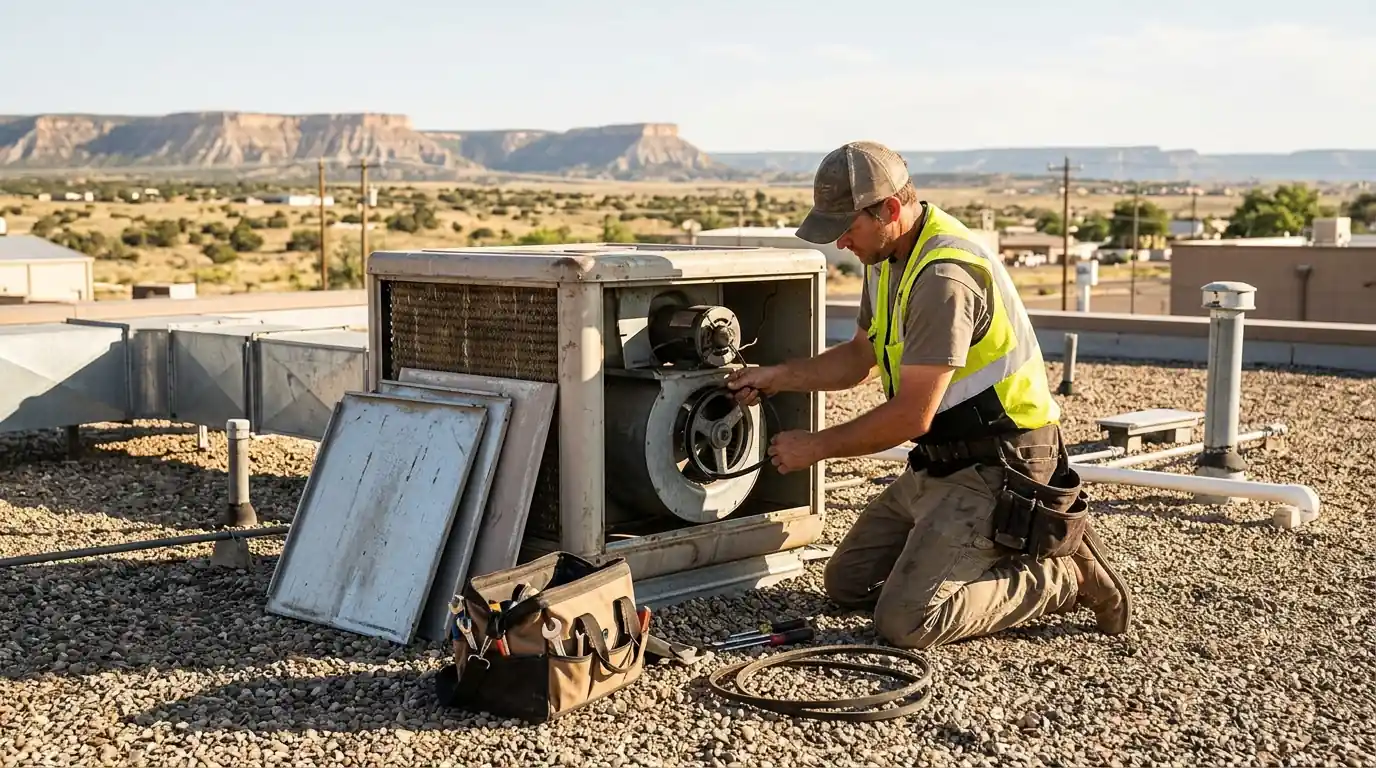
Swamp cooler failures and what usually caused them
The cooler's symptom points us straight at one or two parts.
Blowing air, but it's warm
The pads are dry. The pump failed, its screen is clogged with scale, the spider tubes are blocked or the float valve shut off the water. We check each in order.
Motor hums, blower won't turn
A seized blower bearing, a failed motor bearing or, on some motors, a bad start capacitor can leave the motor humming without turning. Running it this way burns the windings.
No air and no hum
No sound at all usually means a tripped breaker, a failed wall switch, a burned wire in the cooler or a motor with an open winding or tripped internal overload.
Squealing or slapping noise
A glazed, cracked or loose belt squeals and slips, then snaps. Misaligned pulleys wear belts out in weeks. We replace the belt and line the pulleys up properly.
Water running down the shingles
An overfilling float, a cracked pan, a loose overflow fitting or a split water line sends water down the roof. Shut the cooler's water valve until it's fixed.
Cooler runs, house stays muggy
Evaporative coolers need an exit for the air. If windows are closed or a monsoon spell has raised the humidity, cooling drops. Clogged pads make it worse.
Why Farmington's heat, dust and hard water break coolers
Swamp coolers are common on roofs and in windows across the Four Corners because the air here is so dry for most of the summer. Many run hard from about May to September, and July highs near 90, with hotter spells into the mid-90s, keep the blower and pump running all afternoon. A motor that struggled through June often fails during the first long heat wave, just when everyone wants their cooler working.
Hard, mineral-heavy water is the biggest enemy of a cooler's wet side. Scale builds on the pads, the pump's intake screen and the distributor tubes, and it can freeze a float valve in place. Homes on private wells in Kirtland, Flora Vista and the river valleys see this fastest. Spring wind adds fine sand to the pan, where it chews up pump impellers and coats the pads.
Late-summer monsoon cells and the brief outages that ride along with them can fry a cooler motor or its switch, and brief humid spells make any cooler feel weak. In fall, a cooler that wasn't drained can crack its pump housing or burst its water line during January nights in the teens, which turns into a spring repair call.
From your call to cool air in the house
- On the phone
Describe what it's doing
Tell us if the cooler blows warm, blows nothing, hums or leaks, where it is mounted (rooftop, side wall or window frame) and roughly how old it is.
- Right away
Protect the roof
If water is spilling, close the cooler's supply valve, usually at the water heater or under the sink, and turn the cooler off at the switch.
- On the roof
Power and parts check
Our tech checks power at the motor and pump, spins the blower, inspects the belt and float, and watches the pads wet as the pump runs.
- Same visit
Replace and run
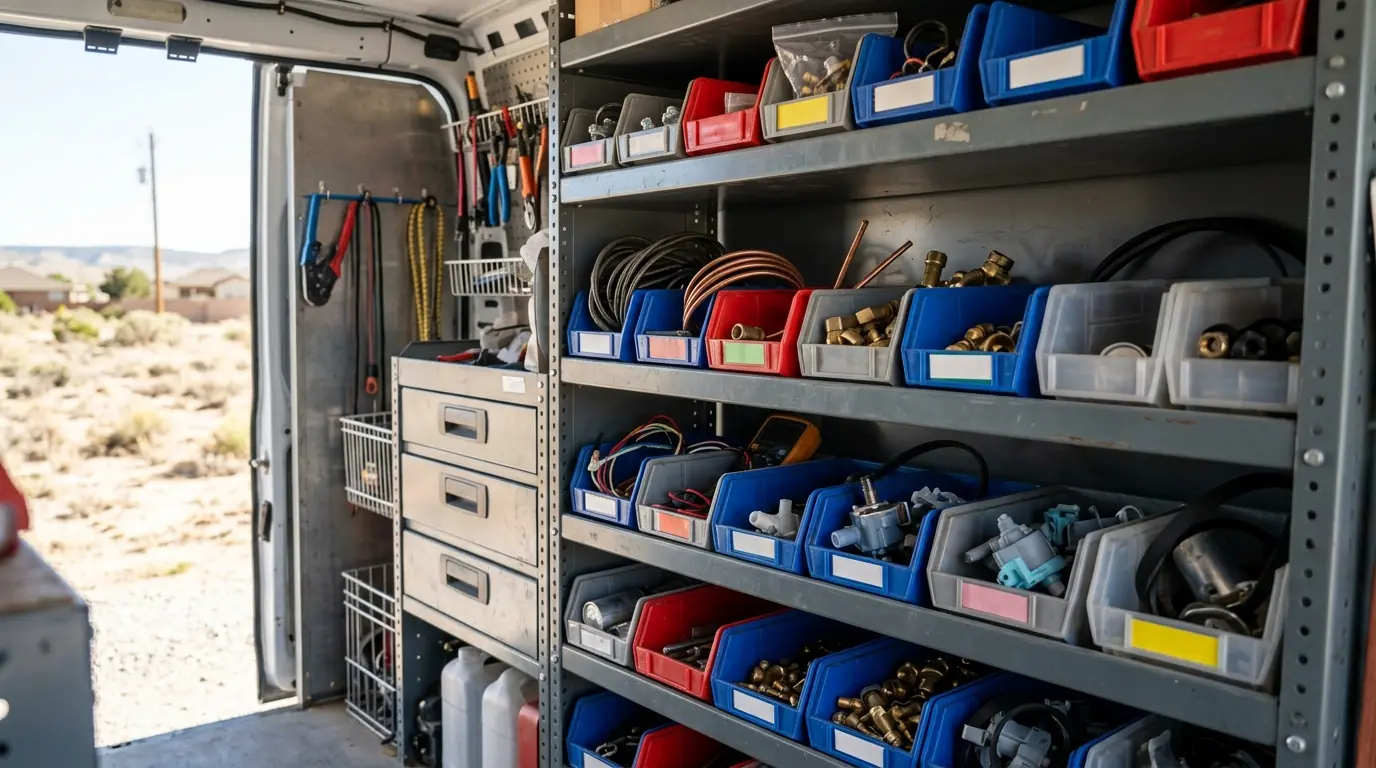
We replace the failed part from stock on the truck when we can, then run the cooler on both speeds and with the pump on and off.
- Before we leave
Check the airflow inside
We confirm cool air at the vents and explain how far to open windows so the cooler can push air through the house properly.
Swamp cooler parts we replace on repair calls
These six repairs cover most of the coolers we get running again.
Recirculating pump
A seized or burned-out pump is the most common cause of warm air. We install a new pump, clean the pan and distributor, and confirm water flows evenly over every pad.
Blower motor
We match the replacement motor's horsepower, speed and frame to the cooler, wire it to the two-speed switch, set the pulley and check the amp draw on both speeds.
Belt and pulleys
We fit a new belt, set the tension so it deflects about an inch, align the motor and blower pulleys, and replace a worn adjustable pulley that won't hold its setting.
Float valve and water line
A float stuck shut or open gets cleaned or replaced and reset to the right water level. Cracked plastic supply tubing and fittings get new lines and compression parts.
Blower bearings and shaft
Dry or noisy blower bearings are replaced before they seize. We also check the shaft for wear and the blower wheel for loose blades or rust that throws it off balance.
Switches and wiring
A worn wall switch, scorched terminal block or burned wire in the cooler cabinet stops the motor or pump. We replace the faulty part and check the power cord or junction box.
Typical swamp cooler repair prices around Farmington
Here is roughly what each fix runs in this area with the part included. These numbers help you plan; your actual price depends on the cooler and the part.
| Recirculating pump replacement | $114-$227 |
|---|---|
| Belt replacement with pulley alignment | $96-$178 |
| Blower motor replacement | $238-$468 |
| Float valve and water line repair | $107-$213 |
| Blower bearings and shaft | $187-$364 |
Down-draft coolers, steep roofs, large commercial-size units and motors that must be ordered raise the cost. We price the repair once we see the cooler.
Small habits that prevent a midsummer cooler breakdown
- Listen for a new squeal when the cooler starts. A slipping belt is cheap to replace before it snaps on the hottest day of the week.
- If your cooler has a pump-only or pre-wet setting, use it for a few minutes before starting the fan, so the pads are soaked first.
- Clean the pump intake screen in midsummer, especially on well water. Scale on the screen slowly starves the pads of water.
- Unplug or switch off the cooler during close monsoon lightning, since surges can take out the motor and the switch.
- Know where your cooler's water supply valve is so you can shut it off quickly if water starts running off the roof.
Repair the cooler, or time for a new one?
Most swamp cooler repairs are inexpensive, since pumps, belts, floats and even motors cost far less than a new cooler and a roof installation. Repair makes sense when the cabinet and pan are solid. We recommend replacement when the pan has rusted through, the cabinet is falling apart, the blower housing is badly corroded, or a cooler that is too small for the house needs a new motor anyway.
If your cooler is still sound but tired, a repair now and a full startup service next spring is usually the most economical path. Before you buy a replacement, compare the cooler's airflow rating to the square footage it serves. A unit sized too small for the house will run flat out all afternoon and wear through motors and pumps faster than a correctly sized one.
Related repairs people book with swamp cooler repair
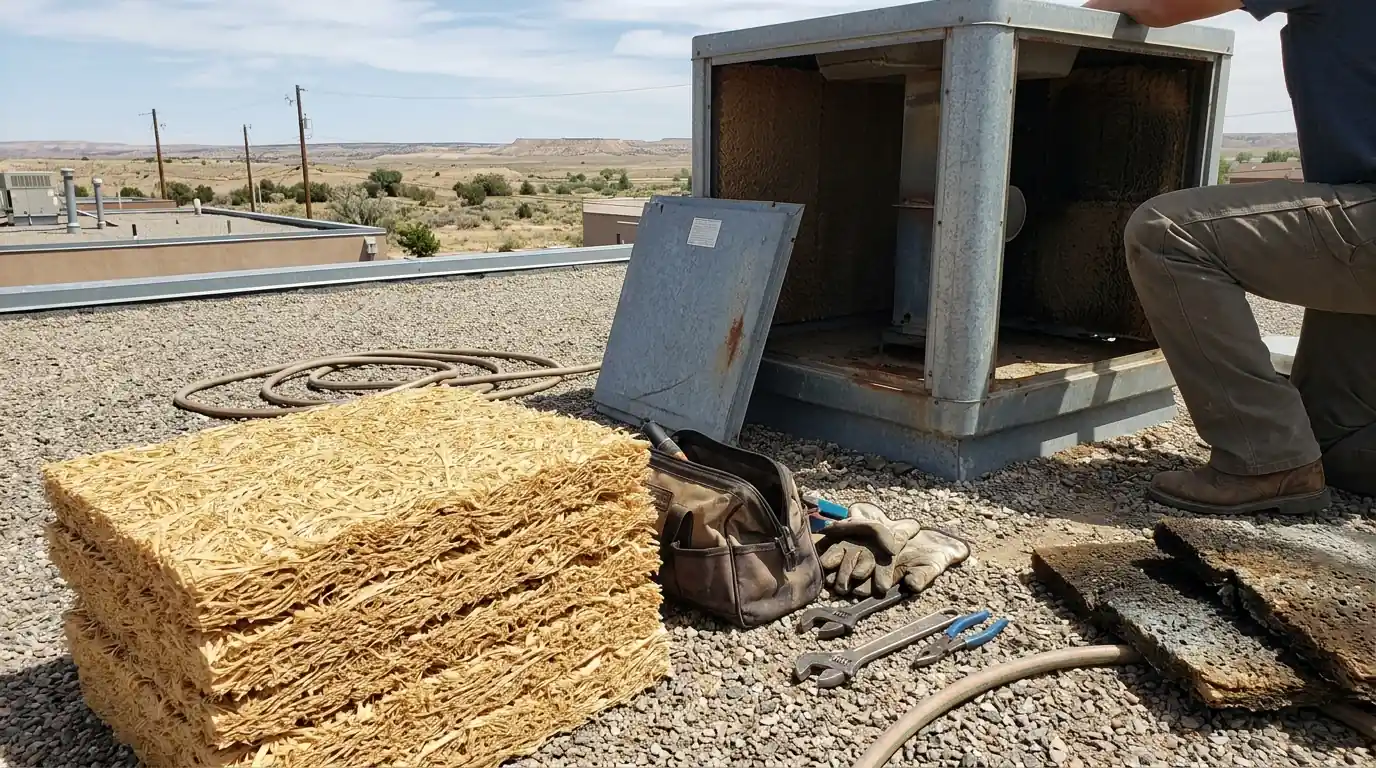
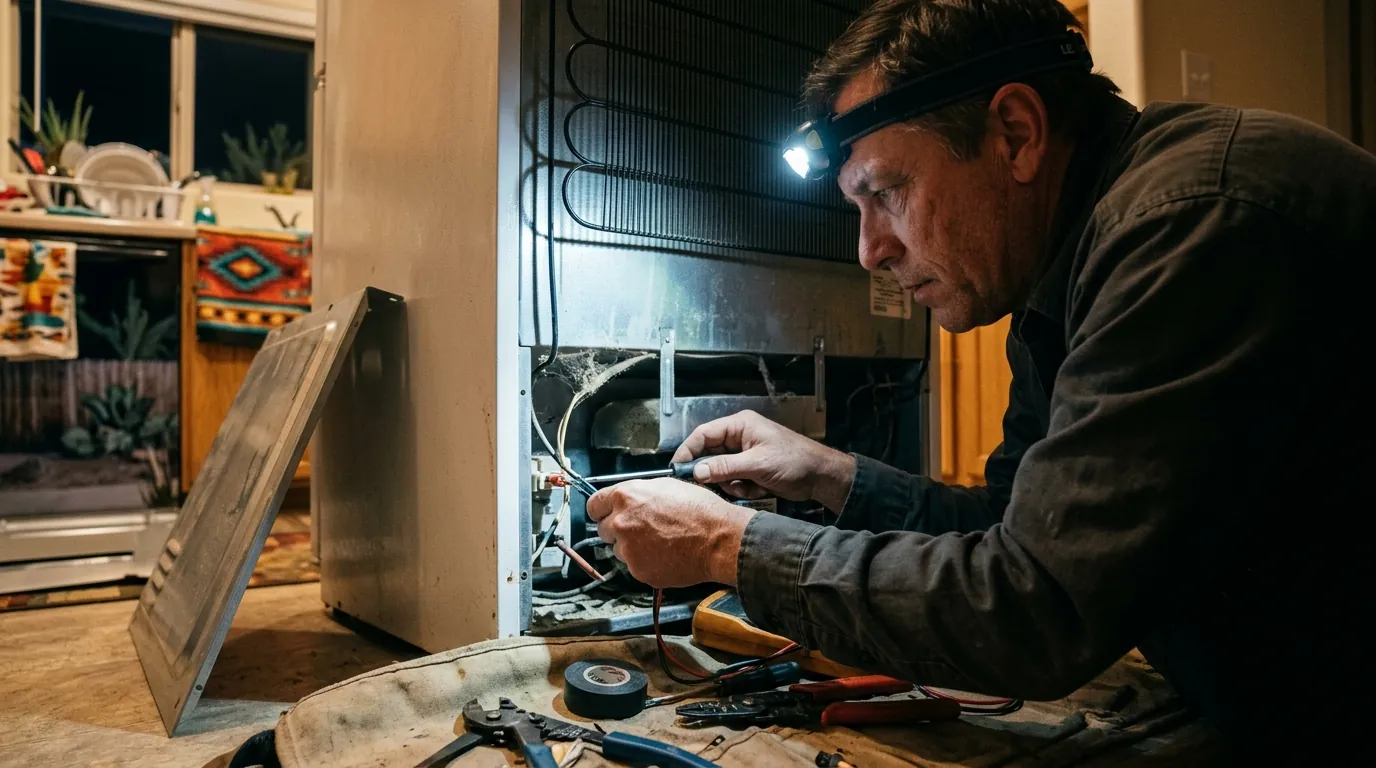
Where we handle swamp cooler repair
Farmington neighborhoods first, then the rest of San Juan County and southwest Colorado. Pick your area for local notes, or see all 41 locations.
Swamp Cooler Repair questions from Farmington homeowners
Why is my swamp cooler blowing warm air?
Warm air with normal airflow means the pads aren't getting wet. The recirculating pump may have failed, its intake screen may be packed with scale, the distributor tubes may be blocked, or the float valve may have stuck and left the pan dry. Check that the water supply valve is open, then call us if the pads are still dry.
Why does my swamp cooler motor hum but not spin?
A humming motor that won't turn the blower usually has seized bearings, either in the motor or the blower, or a failed start capacitor on motors that use one. Turn it off right away, because running a stalled motor overheats the windings. We test the bearings and capacitor before recommending a new motor.
What should I do if my swamp cooler is leaking water off the roof?
Turn the cooler off and close its water supply valve, often found near the water heater, under a sink or at an outside hose bib. Water running off the roof usually comes from a stuck float valve, a cracked pan or a split supply line. Leaving it running can soak the roof deck and ceiling.
Can you repair a window swamp cooler as well as a roof unit?
Yes. Window and side-draft coolers use the same kinds of pumps, motors, floats and pads as roof units, just in a different frame. They are easier to reach, which often makes repairs quicker. We check the mounting brackets and the window seal at the same time.
How long does a swamp cooler motor usually last?
In Farmington's climate a cooler motor often lasts many seasons, but bearings wear faster with dust, poor belt tension or a motor running in standing water. Squealing, overheating, a burning smell or tripping the breaker are warning signs. Replacing a motor before it fails on a heat wave weekend avoids a long, hot wait.
Why does my evaporative cooler feel weak during monsoon season?
Swamp coolers work by evaporation, and they lose cooling power when outdoor humidity rises during July and August monsoon spells. Clogged pads, low water flow and closed windows make it worse. If the cooler also feels weak on dry days, the pads, pump or belt likely need attention.
Need swamp cooler repair today?
Call any hour. A real person picks up, takes the model number and sets the visit.