Dryer repair in Farmington, NM
A dryer that tumbles cold, takes three cycles to dry jeans or squeals like a fan belt is wasting power and running hot. We replace heating elements, thermal fuses, belts, rollers and idler pulleys, and we check the vent behind it.
- Answered 24/7
- Gas, electric and propane
- Farmington and the Four Corners
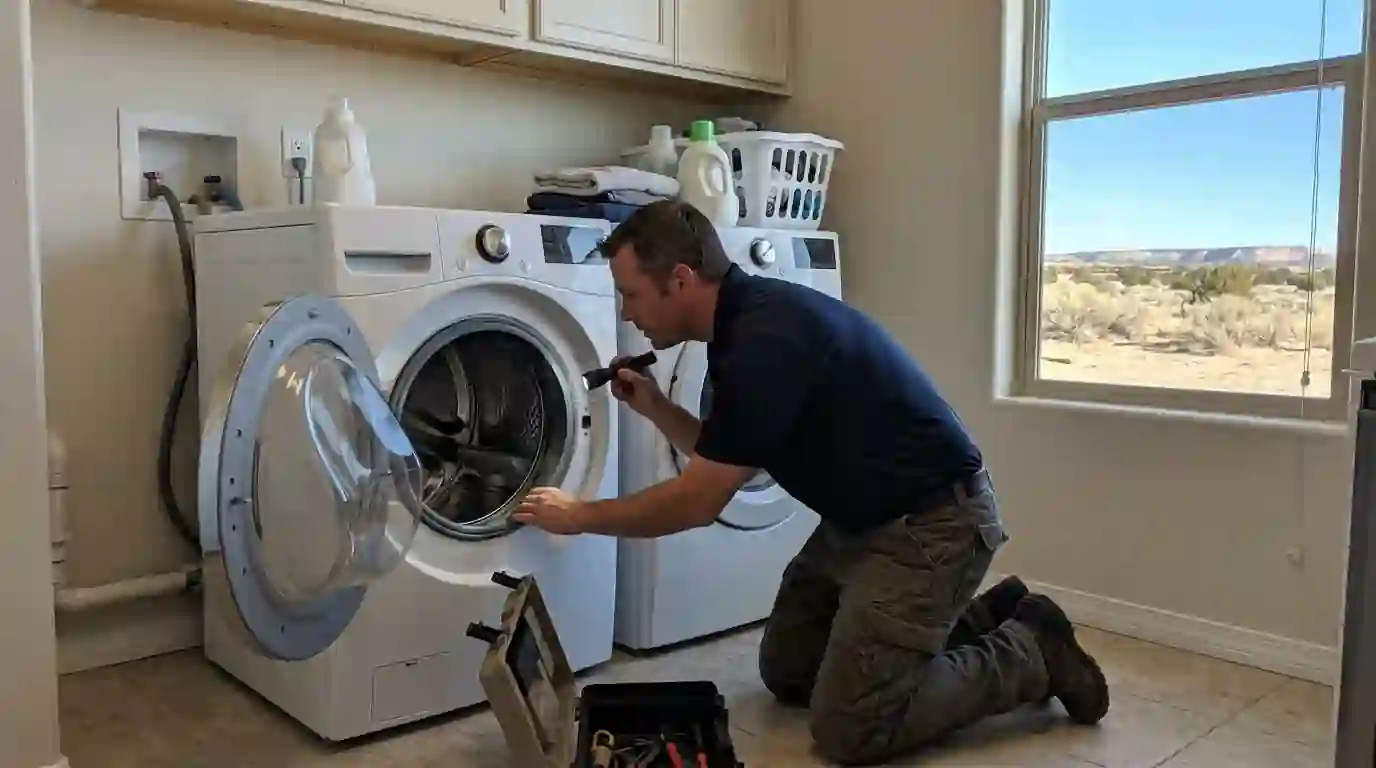
Dryer calls we answer most
- Drum turns but clothes stay cold
- Takes two or three cycles per load
- Thumping, squealing or a dead start
Quick answer
Electric dryers that stop heating usually have a blown thermal fuse, a burned-out heating element or a failed cycling or high-limit thermostat, and a clogged vent is often the reason. A dryer that won't turn has a broken belt or a worn idler pulley. Farmington-area repairs typically cost about $109-$347, most get finished on the first trip, and a person answers our line around the clock.
Brands we repair: Whirlpool, GE, Samsung, LG, Maytag, Frigidaire, KitchenAid, Bosch, Kenmore, Electrolux, Amana, Speed Queen, Sub-Zero, Hotpoint
Why an electric dryer stops heating or tumbling
An electric dryer heats air with a coiled element and pushes it through the drum with a blower wheel, then out the vent. A motor turns the drum through a long belt held tight by an idler pulley, and the drum rides on rollers or glides. Several safety parts sit in the airflow: a thermal fuse that blows when exhaust gets too hot, a high-limit thermostat on the heater housing, and a cycling thermostat that turns the heat on and off to hold temperature.
The most common no-heat call is a blown thermal fuse, and it almost never fails on its own. Something made the dryer run hot first, usually a lint-packed vent, a crushed duct behind the machine or a lint screen that hasn't been cleaned. Swapping the fuse without fixing the airflow means it will blow again, sometimes on the first load. We test the fuse, the element and both thermostats, then check airflow at the outside vent hood.
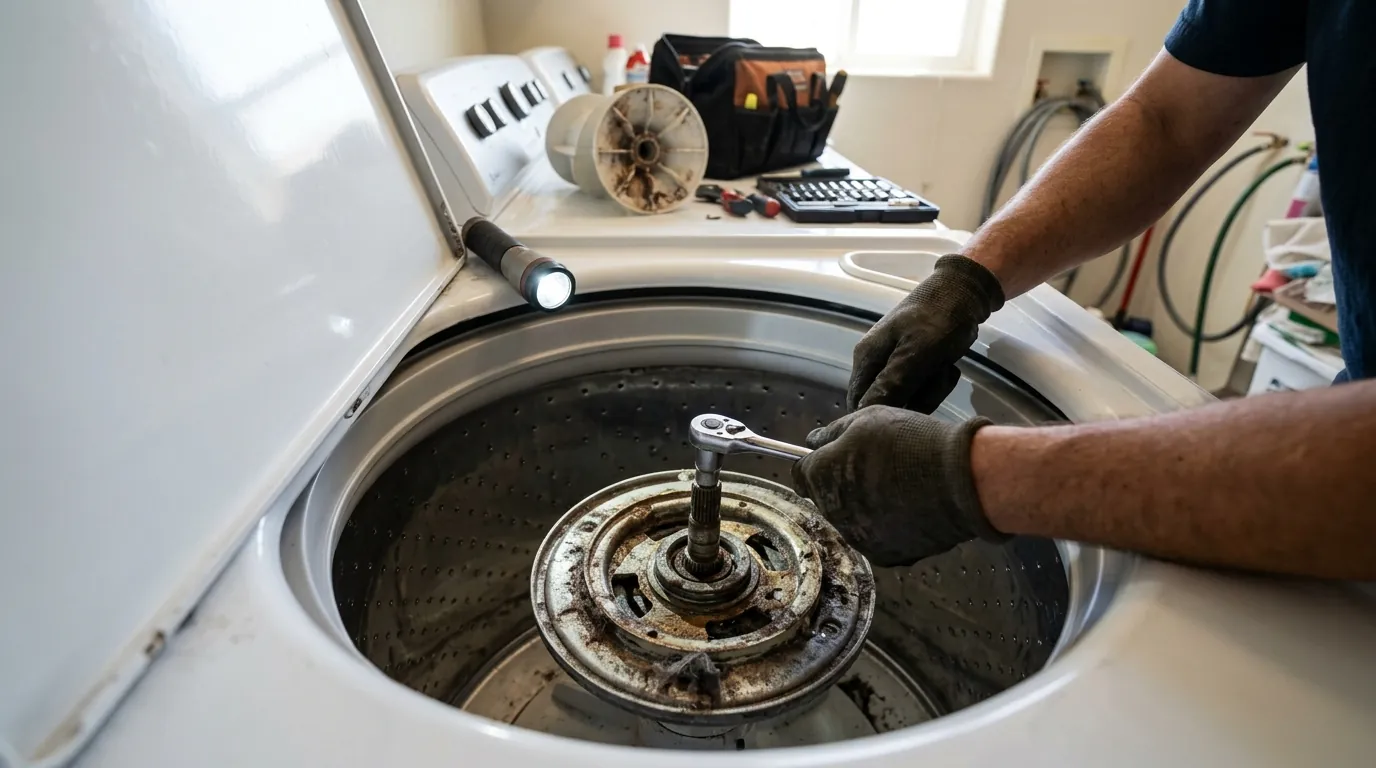
Tumbling problems are mechanical. A snapped belt leaves the motor humming with a still drum, and many dryers have a belt switch that stops the motor entirely. Worn drum rollers thump and squeal, a dry idler pulley chirps, and worn front glides let the drum scrape metal. These parts wear out on a schedule, so we often replace them together while the dryer is open.
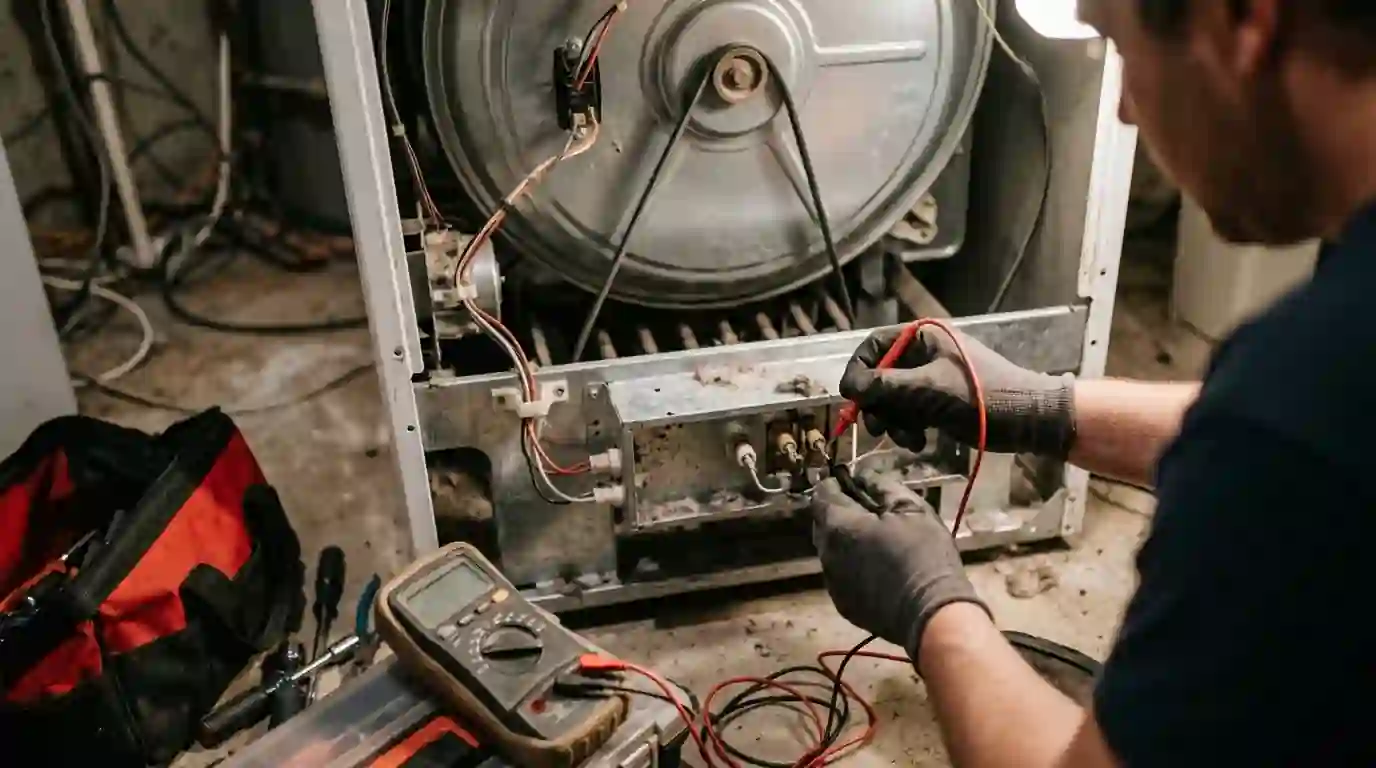
Electric dryer parts we test and replace
These are the dryer repairs we make most around town.
Thermal fuse and thermostats
We meter the thermal fuse and both thermostats (high-limit and cycling), replace the failed part, and find what made the dryer overheat so the new fuse doesn't blow again.
Heating element
An open or grounded element leaves the dryer cold or tripping the breaker. We replace the coil or the full heater assembly, check the terminals for scorching and confirm both legs of the 240-volt supply.
Drum belt and idler pulley
A broken belt stops the drum, and a worn idler pulley squeals and lets the belt slip. We replace both together and check the motor pulley for wear.
Drum rollers and glides
Worn rollers thump and front or rear glides scrape. We replace rollers in pairs, fit new glides or a rear drum bearing, and clean out the lint that collects inside the cabinet.
Door switch and start switch
A dryer that won't start or stops when the door is bumped often has a worn door switch or a failed start switch. Both are quick, inexpensive fixes once tested.
Moisture sensor and timer
Sensor bars coated with dryer sheet film end cycles early, and worn timers stop advancing. We clean or replace the sensor and replace a failed timer or control.
Signs your dryer needs repair, not just another cycle
Adding time to every load hides these problems for a while, but it also runs the dryer hotter and harder.
Tumbles but no heat at all
Cold air with a turning drum usually means a blown thermal fuse, an open heating element or a failed thermostat. On an electric dryer, one tripped breaker on a 240-volt circuit can also leave it tumbling cold.
Takes forever to dry
Two or three cycles for one load usually points to a restricted vent, a crushed duct, or a heating element that has broken in one spot. A moisture sensor coated with fabric softener film can also stop cycles early.
Won't start or just hums
A dead dryer can be the door switch, the start switch, the thermal fuse on some models or a broken belt tripping the belt switch. A hum without turning often points to the motor or a seized blower.
Thumping or squealing noise
A rhythmic thump comes from worn drum rollers or a flat spot on one. A high squeal usually means a dry idler pulley or worn drum glides. Both get louder until something breaks.
Very hot outside, damp inside
If the cabinet top gets hot but clothes stay damp, hot air is trapped by a clogged vent. That is the condition that burns out elements and blows fuses, and it raises fire risk.
Burning or scorched smell
Lint near the heater housing, a melted wire or a motor overheating can all smell scorched. Stop the dryer, unplug it, and have it checked before running another load.
Typical dryer repair costs in the Farmington area
Expect figures like these for the electric dryer jobs we do most, with the part and our labor both included. Brand and how far the dryer must come apart set the final number.
| Thermal fuse or thermostat | $109-$187 |
|---|---|
| Door switch, start switch or sensor | $114-$203 |
| Drum belt and idler pulley | $138-$236 |
| Heating element replacement | $164-$287 |
| Drum rollers and glides | $176-$347 |
Read these as ballpark local numbers rather than a quote. Stacked units, heavy lint cleanout inside the cabinet and back-ordered parts add to it, and a single fuse on an open-back dryer sits near the bottom.
Windy dust, long vent runs and Farmington laundry rooms
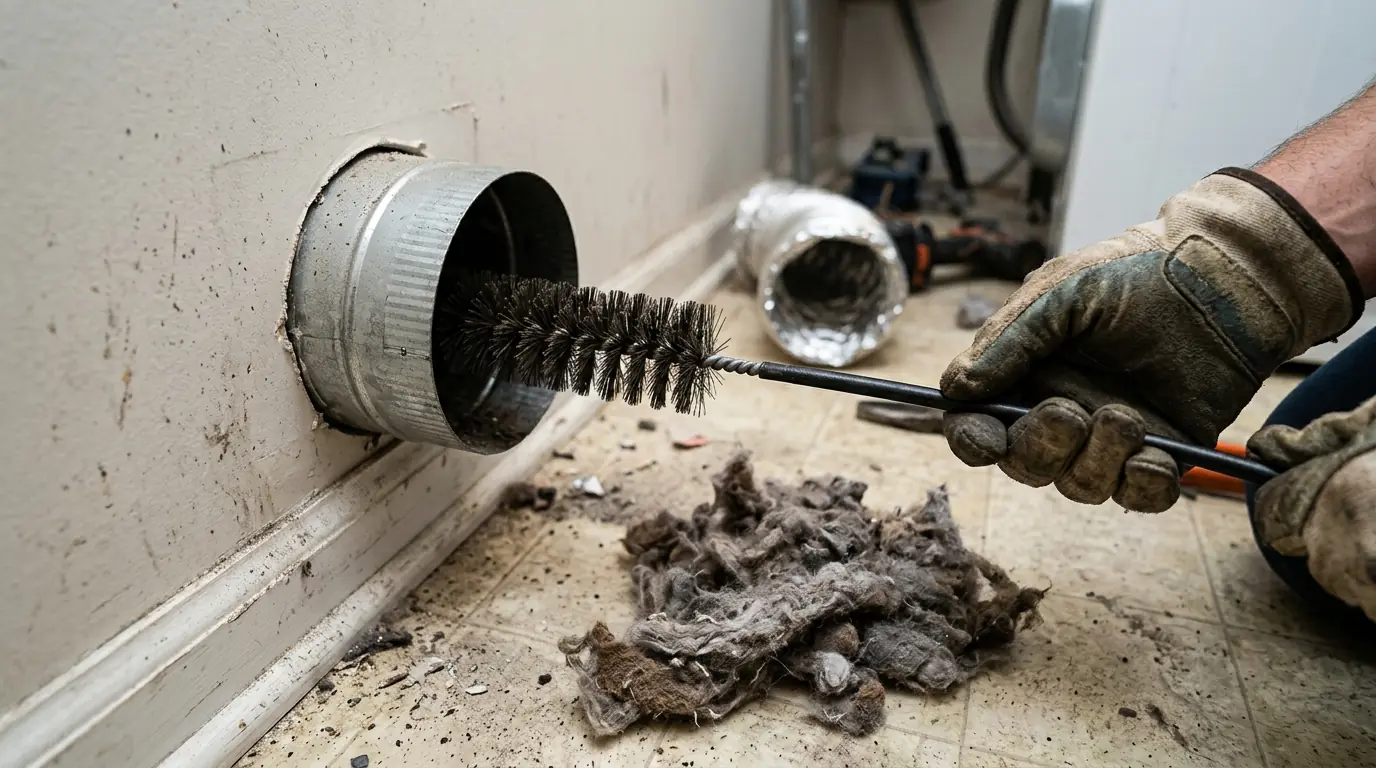
Spring wind in the Four Corners blows fine dust and sand into everything, and dryer vents are no exception. A vent hood with a stuck flap lets dust drift in and mix with lint along the duct walls. Birds nest in open vent hoods, and tumbleweeds and blown debris pile against vents near the ground. Every one of those slows the airflow, and slow airflow is what overheats the element and blows the thermal fuse.
Many ranch homes from the 1950s to 1970s around Farmington have laundry in a back utility room or carport, with the dryer vent running a long way through a wall, a crawlspace or an attic. Long runs with several elbows, flexible foil duct behind the machine and runs that sag and collect lint all choke a dryer. When we fix a no-heat problem, we measure airflow at the outside hood and tell you plainly if the vent needs cleaning or rerouting.
Manufactured homes across San Juan County often vent the dryer down through the floor into the skirting. That short vent can disconnect or fill with lint under the home where no one sees it. We check that it's still attached and clear, since a disconnected vent blows hot, linty air under the house and leaves moisture sitting against the floor framing.
How we take a dryer from cold to dry again
- When you call
Heat, spin or noise
Tell us whether it heats, turns or makes noise, and read the model number from inside the door rim. Mention how far your vent runs to the outside.
- At the door
Unplug and pull out
We unplug the dryer, slide it out carefully, look at the duct behind it and check the outside vent hood for flow and blockage.
- Minute 20
Test the heat circuit
We test the thermal fuse, element and thermostats, check the belt and rollers by hand, and tell you the cause and the price before work starts.
- Same visit
Repair and clean inside
We replace the failed part and vacuum lint from the cabinet, blower housing and heater area while the dryer is apart.
- Last step
Heat and airflow test
We run a timed heat cycle, measure exhaust temperature and flow at the vent, and push the dryer back without crushing the duct.
Should you repair or replace a dryer?
Dryers are among the most repairable appliances in the house. Fuses, elements, belts, rollers and switches are reasonably priced and long-lasting, and the drum and cabinet rarely wear out. A dryer under fifteen years old with a sound drum is usually worth fixing, even when it needs a belt and rollers in the same visit.
Replacement makes more sense if the drum is cracked or rusting, the motor and control fail together, or the dryer is very old and the parts are scarce. With a gas dryer, any gas odor means everyone steps outdoors first. From the driveway, phone 911 or your gas utility, and once they clear the house, ring us about the dryer.
Habits that keep a dryer heating and safe
- Clean the lint screen before every load, and scrub it with warm soapy water every few months if you use dryer sheets.
- Replace thin foil or vinyl duct behind the dryer with rigid or semi-rigid metal duct, kept short with as few bends as possible.
- After windy spring days, check the outside vent hood: the flap should swing freely and the opening should be clear.
- Wipe the moisture sensor bars inside the drum with rubbing alcohol now and then, so auto-dry cycles read moisture correctly.
- Don't run the dryer when you leave home or go to bed, and keep the area around it free of lint and stored laundry.
Related repairs people book with dryer repair
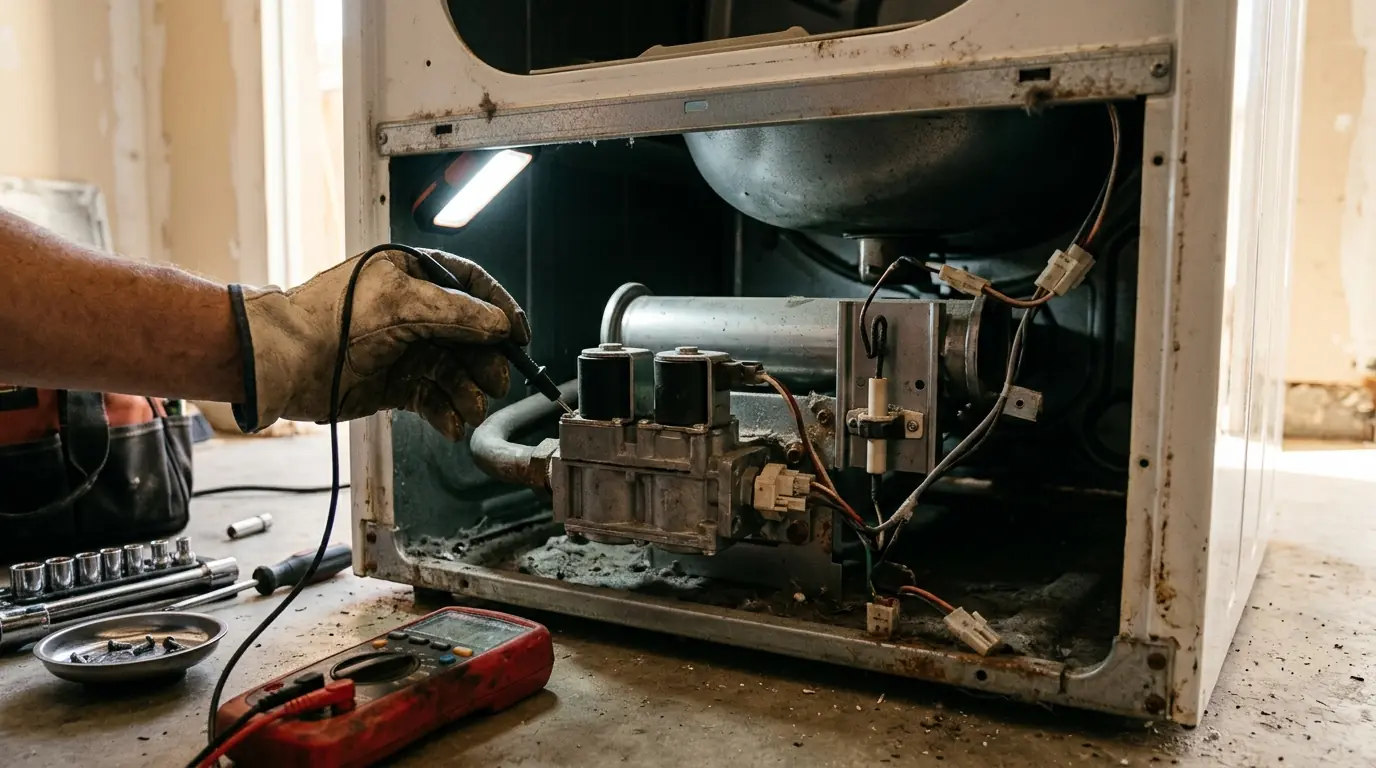
Where we handle dryer repair
Farmington neighborhoods first, then the rest of San Juan County and southwest Colorado. Pick your area for local notes, or see all 41 locations.
Dryer Repair questions from Farmington homeowners
Why is my electric dryer running but not heating?
An electric dryer that tumbles without heat usually has a blown thermal fuse, an open heating element or a failed thermostat. Check the breaker too, since a 240-volt dryer can lose one leg and keep tumbling cold. A blown fuse usually means the vent is restricted, so the airflow needs checking as well.
Why does my dryer keep blowing the thermal fuse?
A dryer thermal fuse blows when exhaust air gets too hot, and that nearly always traces to restricted airflow: a lint-packed vent, a crushed duct, a clogged lint screen or a blocked outside hood. A failed cycling thermostat can do it too. Replacing the fuse without fixing the cause means it blows again.
How do I know if my dryer vent is clogged?
Clues that the dryer vent is clogged include loads taking longer, the top of the dryer getting hot, a weak puff at the outside hood, a burning smell, and lint on the floor behind the machine. On windy days, dust and nests can block the hood quickly. We check flow at the hood when we service the dryer.
What makes a dryer squeal or thump while it runs?
A dryer that squeals usually has a dry idler pulley or worn drum glides, while a rhythmic thump comes from worn drum rollers with flat spots. Both get worse with time and can lead to a broken belt. Replacing rollers, the pulley and the belt together is the usual fix.
Is a dryer that smells like burning dangerous?
A burning smell from a dryer is a warning to stop it and unplug it. Lint near the heater, a melted wire or an overheating motor can all smell scorched, and lint is very flammable. Don't run another load until the dryer and its vent have been checked.
Can you repair a dryer in a manufactured home?
Yes. Dryers in manufactured homes use the same parts, but the vent often runs through the floor into the skirting. That vent can come loose or fill with lint under the home. We check it along with the dryer, since a disconnected vent can blow hot, linty air beneath the floor.
Need dryer repair today?
Call any hour. A real person picks up, takes the model number and sets the visit.