Gas dryer repair in Farmington, NM
A gas dryer that tumbles for an hour and leaves the towels damp almost always has an ignition problem. Our tech checks the igniter, the radiant sensor and the valve coils one at a time, then confirms the burner matches your fuel and elevation.
- Answered 24/7
- Gas, electric and propane
- Farmington and the Four Corners
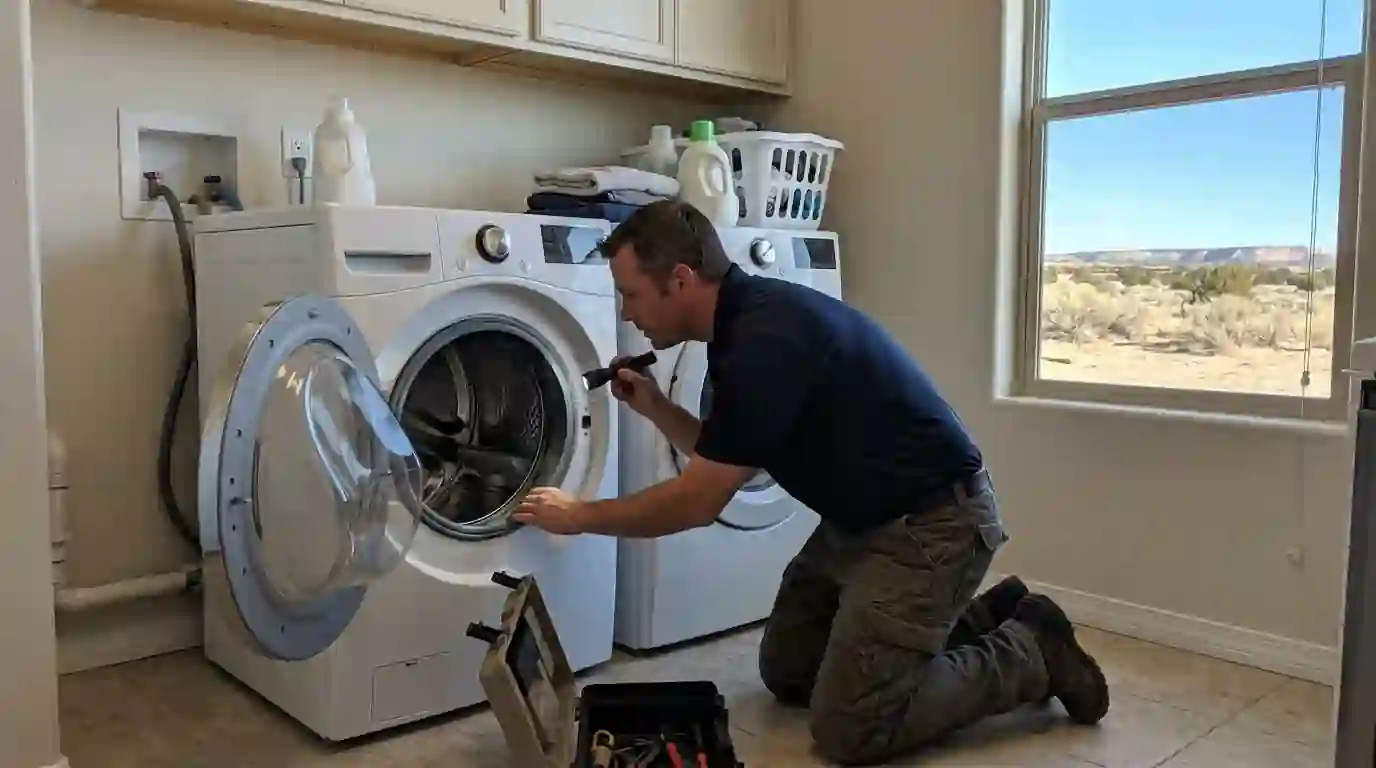
Gas dryer calls we get
- Drum turns but the air stays cold
- Igniter glows orange, then no flame
- Flame lights, then cuts out in seconds
Quick answer
When a gas dryer runs without heat, the usual culprits are a weak igniter, a failed flame sensor, worn gas valve coils, or a blown thermal fuse caused by a clogged vent. Typical gas dryer repairs around Farmington run about $117-$326, depending on the part and model. Most are finished in one visit, and someone picks up our phone 24/7.
Brands we repair: Whirlpool, GE, Samsung, LG, Maytag, Frigidaire, KitchenAid, Bosch, Kenmore, Electrolux, Amana, Speed Queen, Sub-Zero, Hotpoint
Why a gas dryer stops heating, and how we pin it down
A gas dryer heats with a small burner tucked under the drum. When you press start, the igniter, a fragile silicon carbide or silicon nitride rod, warms until it glows orange. The flame sensor, sometimes called a radiant sensor, watches that glow and then lets the gas valve coils open the valve. Gas flows through the orifice, meets the hot igniter and lights. The sensor then opens its contacts, the igniter shuts off, and the burner keeps running. Any link in that chain can break, and each one fails with its own pattern.
Our tech starts by watching the burner through the sight hole or with the lower front panel off. If the igniter never glows, the fault sits upstream: a thermal fuse, the high-limit thermostat, the igniter itself, or the timer or control board. If it glows and then goes dark without a flame, the valve coils or the gas supply are suspect. If it lights and quits after ten or twenty seconds, the coils are almost always to blame.
We also look at the parts that wear on every dryer, gas or electric: drum rollers, the idler pulley, the belt, the front glides and the door switch. A gas dryer that squeals, thumps or stops mid-cycle has mechanical trouble too, and it is cheaper to fix both while the cabinet is open. Before we leave, we check the exhaust at the outside hood, because a restricted vent is behind many repeat failures of thermal fuses and cycling thermostats.
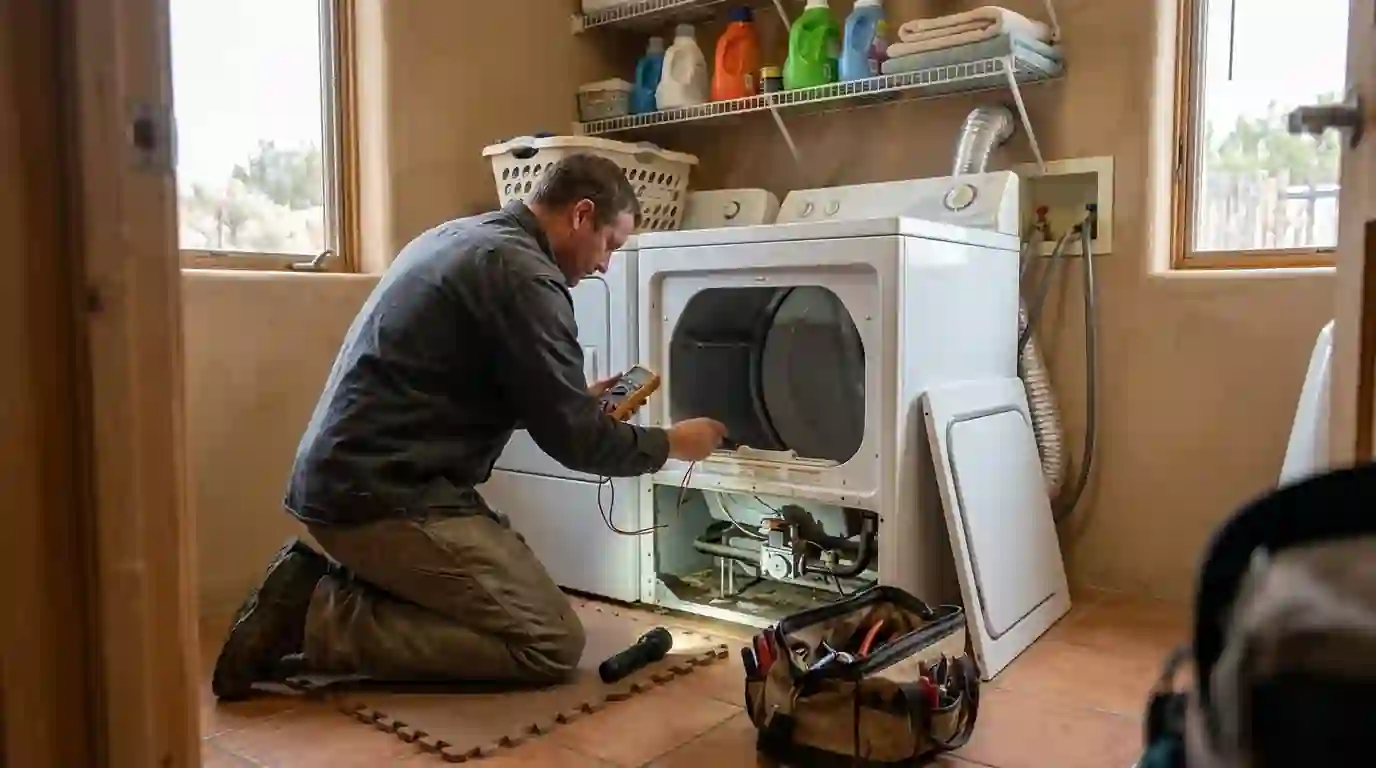
Gas dryer parts we replace most often
Most gas dryers we open need one of these six repairs.
Igniter
We measure resistance across the igniter and look for hairline cracks. A new igniter is handled only by its ceramic base, because oil from skin on the element shortens its life.
Gas valve coils
Coils come as a set of two or three. We replace the whole set rather than a single coil, so the dryer does not come back with the same intermittent no-heat complaint.
Flame sensor
A sensor that never opens keeps the igniter powered and the valve shut, so the drum stays cold. We test it at room temperature and again with the burner lit.
Thermal fuse and high-limit
A blown fuse is a symptom, not the root cause. We replace it, then measure the exhaust at the outside hood so the new fuse does not blow again next week.
Cycling thermostat
When the cycling thermostat opens too soon, the burner shuts down before clothes dry. When it sticks closed, the high-limit has to take over. We swap it and verify drum temperature.
Belt, rollers and idler pulley
Squeals, thumps and a drum that stops turning come from the drive side. We replace worn drum rollers, idler pulleys, belts and glides, often while the dryer is already apart.
Gas dryer symptoms and the part each one points to
How the burner behaves during its first minute narrows the list quickly.
Igniter glows, no flame follows
The igniter warms up and the sensor opens, but the gas valve coils never pull the valve open. Weak coils are the classic cause, especially on dryers past eight or ten years old.
Flame lights, then dies early
A burner that lights, runs briefly and cuts out, then relights after cooling, usually has a failing secondary coil. As the coil warms, it loses its grip and lets the valve close.
No igniter glow at all
If the igniter stays dark, we test the thermal fuse, the high-limit thermostat and the igniter for continuity. A cracked igniter or a blown fuse is the most common answer.
Clothes need two full cycles
Long drying with a working flame points to a clogged vent, a cycling thermostat that opens too early, or a burner orifice that does not match the gas supply in the house.
Yellow or sooty burner flame
A healthy dryer flame is mostly blue. A lazy yellow flame or soot on the burner tube suggests the wrong orifice, a missed propane conversion or an air shutter set poorly.
Gas odor that lingers
A brief whiff as the burner lights can be normal. A smell that hangs around is not. Shut the dryer's gas valve, get everyone outside, and call the gas utility or 911 before calling us.
What gas dryer fixes usually run near Farmington
Each line below covers the part and the labor to fit it. Treat these as planning numbers for this area, not a quote.
| Igniter replacement | $138-$247 |
|---|---|
| Gas valve coil set | $142-$263 |
| Flame sensor | $129-$218 |
| Thermal fuse and cycling thermostat | $117-$226 |
| Drum rollers, idler pulley and belt | $163-$326 |
The price moves with the model, how hard the cabinet is to open and whether the part is on the truck. Stacked units and dryers squeezed into tight closets take more labor.
Propane, altitude and dust: what local homes do to gas dryers
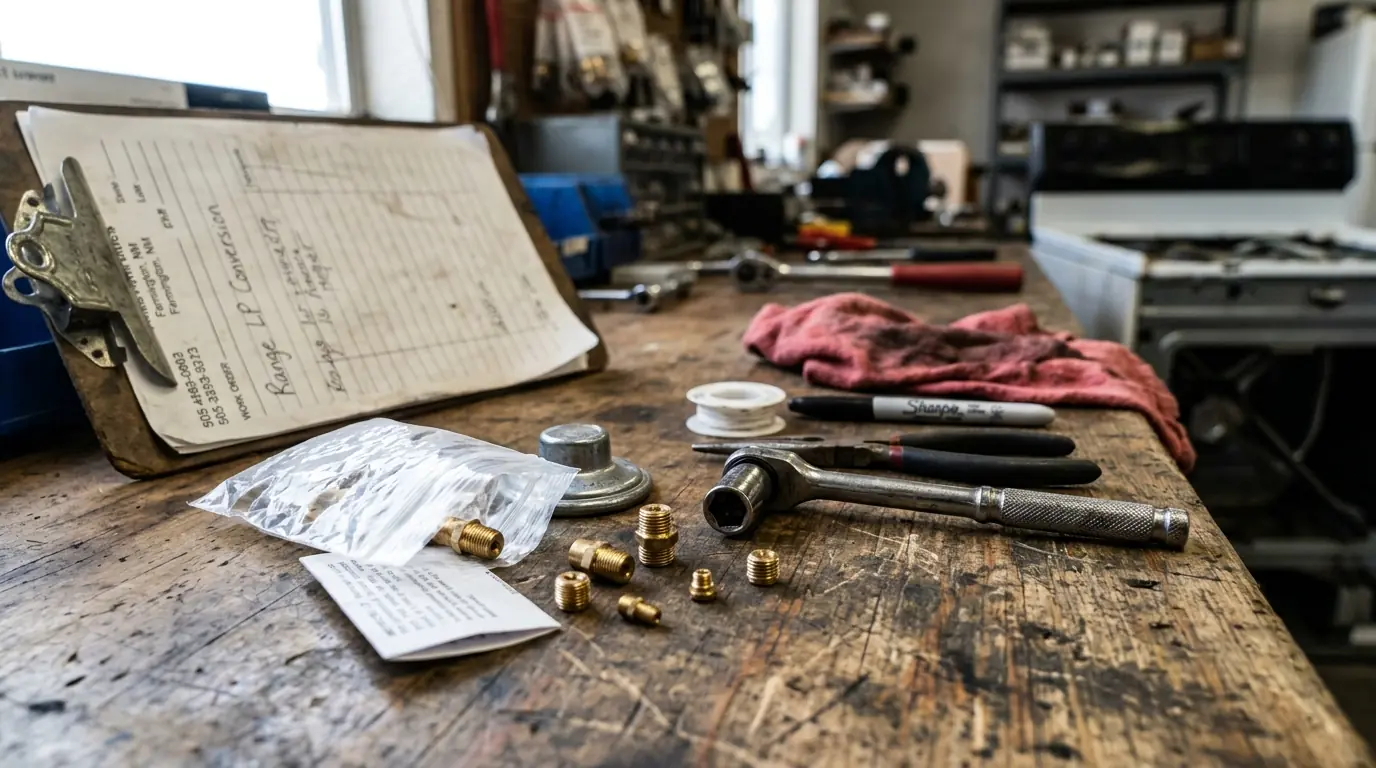
Plenty of San Juan County homes beyond the city gas lines dry clothes on propane. Gas dryers usually ship set for natural gas, and running one on LP without the conversion kit gives an oversized, yellow flame, soot inside the burner tube and a high-limit thermostat that trips again and again. When a dryer moves from a house in town to a rural place in Kirtland, Flora Vista or out on Crouch Mesa, its burner orifice has to change with it. We check the stamped orifice size against the fuel before we condemn any part.
Farmington sits near 5,400 feet, and Durango and Mancos sit higher still, so every burner here draws thinner air. Many dryer makers publish high-altitude instructions, sometimes calling for a smaller orifice above a set elevation. A dryer set up for sea level will often still run here, but it may burn rich, leave a sooty sight glass or trip the high-limit more often than it should. We follow the manufacturer's high-altitude guidance whenever we service the burner.
Windy spring days push fine sand into roof and wall vent caps, and lint packs in behind it. A gas burner exhausting into a choked vent overheats, so thermal fuses and cycling thermostats fail more often here than in wetter places. Many of Farmington's 1950s to 1970s ranch homes also have long dryer runs with several elbows, which slows the exhaust even when the duct is fairly clean.
What happens on a gas dryer service call
- First call
Tell us the symptom
We ask what the dryer does from start to finish, whether the house runs on propane or natural gas, and for the model number on the label inside the door.
- At the door
Check gas and vent
Our tech looks at the shutoff valve, the flexible connector and the vent path before touching the dryer, so we know the supply and airflow are sound.
- Minute 20
Watch the burner cycle
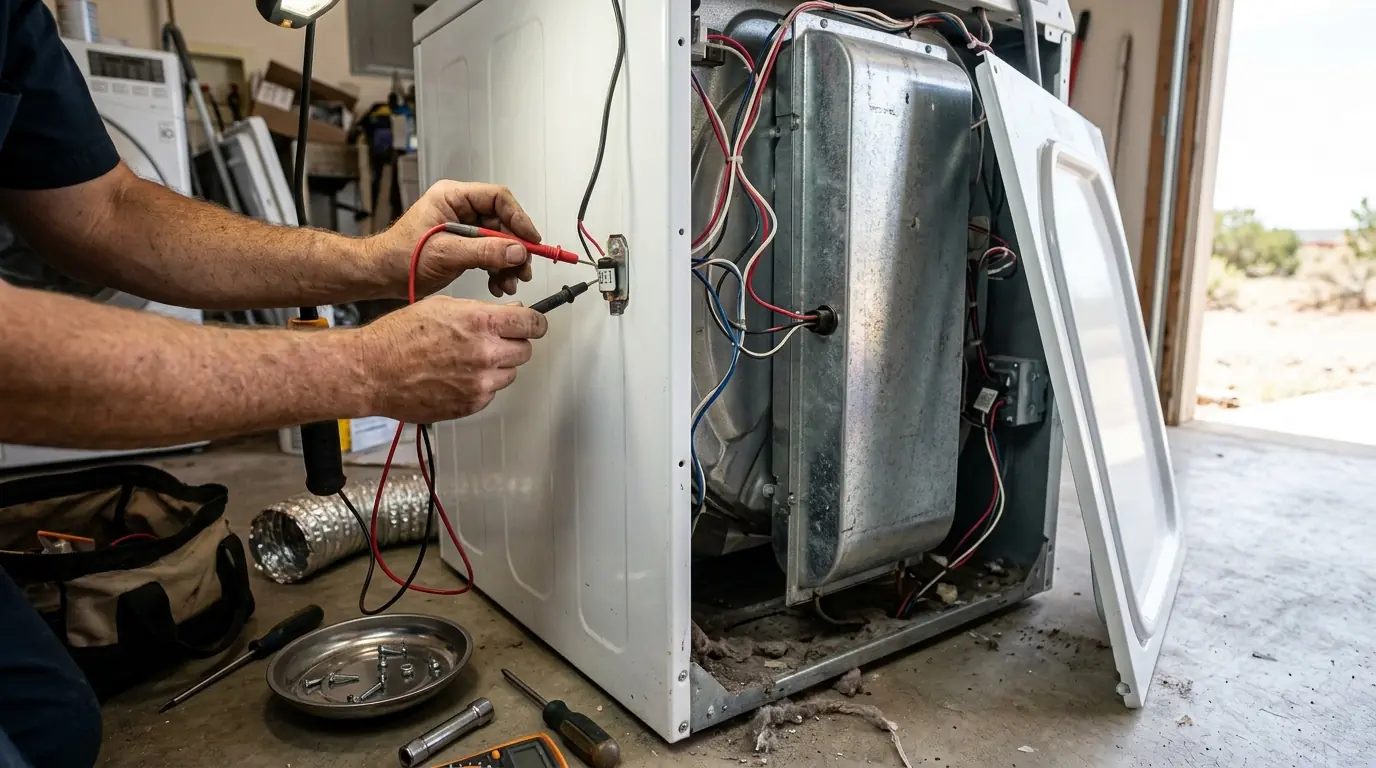
With the panel off, we watch the igniter, sensor and flame through a full ignition sequence and take meter readings on each component.
- Same visit
Replace and test
We install the failed part, run a full heated cycle, leak-test every gas fitting we touched and measure exhaust temperature at the hood.
- Afterward
Notes on the vent
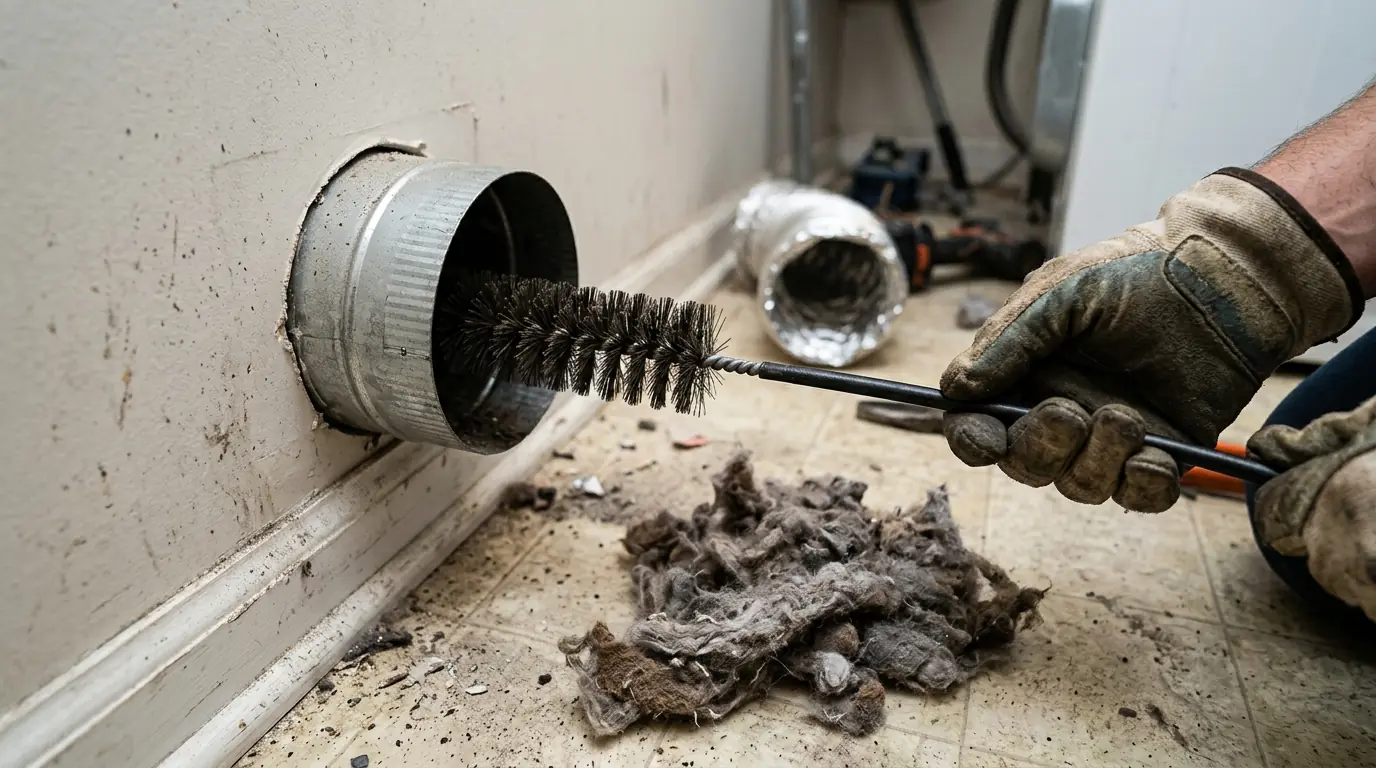
Before leaving, we tell you what we found in the vent and whether the run is long or dusty enough to need a regular cleaning.
Is an older gas dryer worth fixing?
Gas dryers are simple machines, and most of their failures cost a fraction of a new one. A twelve-year-old gas dryer with a solid drum and cabinet is usually worth an igniter, a coil set or a roller job. We lean toward replacement when the drum is rusted through, the rear drum bearing and the motor have both failed, or the control board is dead on a model whose parts are hard to find.
If you do replace a gas dryer, choose a model with a propane kit available if your home runs on a tank, and plan on a new flexible connector rather than reusing the old one. We can hook up and test the replacement as well.
Habits that keep a gas dryer lighting every time
- Empty the lint filter each time, and scrub it with dish soap every couple of months if you use dryer sheets, since their waxy film blocks airflow.
- Step outside while the dryer runs and look at the vent hood. If the flap barely lifts, get the vent cleaned before a fuse blows.
- Keep the floor behind the dryer clear so the gas connector does not kink or get crushed when the machine is pushed back.
- If you move into a home on propane, have the dryer converted before the first load, even if the burner seems to light fine.
- Don't pile laundry on top of a running dryer. It traps heat around the controls and can cook the timer or control board.
Related repairs people book with gas dryer repair
Where we handle gas dryer repair
Farmington neighborhoods first, then the rest of San Juan County and southwest Colorado. Pick your area for local notes, or see all 41 locations.
Gas Dryer Repair questions from Farmington homeowners
Why does my gas dryer igniter glow but never light the burner?
That pattern almost always means the gas valve coils are not opening the valve. The igniter and flame sensor are doing their jobs, but no gas reaches the burner. Weak coils are the usual cause. Less often, the shutoff behind the dryer is partly closed, the propane tank is low or the connector is kinked. We check the supply first, then test the coils.
Why does my gas dryer heat for a few minutes and then run cold?
When a burner lights, runs briefly, goes out and later relights, the secondary valve coil is usually losing its hold as it warms up. A cycling thermostat or a restricted vent can create a similar on and off pattern. We watch several ignition cycles with the panel open, because the timing of the shutdown tells us which part to replace.
Does my gas dryer need a high-altitude orifice in Farmington?
It depends on the manufacturer. Some gas dryers specify a smaller burner orifice above a certain elevation, while others run correctly at Farmington's roughly 5,400 feet without a change. The installation manual or the rating label inside the cabinet lists the rule for your model. We check that the orifice matches both the fuel and the elevation guidance when we service the burner.
Is it safe to keep running a gas dryer that takes two cycles to dry a load?
It isn't a good idea. Slow drying on a gas dryer usually means the exhaust is restricted, which makes the burner run hotter and longer, wears out the thermal fuse and high-limit thermostat, and can push combustion gases back into the laundry room. Check the outside hood flap while the dryer runs. If it hardly opens, stop using the dryer until the vent is cleared.
How long does a gas dryer igniter usually last?
Many igniters last for years, but they are brittle and weaken a little each time they heat and cool. A dryer that runs several loads a day wears one out sooner, and a clogged vent adds hours of burner time. When an igniter starts glowing dimmer or takes longer to reach full orange, failure is usually close.
Can you fix a gas dryer that runs on propane from a tank?
Yes. Propane dryers use the same igniter, flame sensor and valve coils as natural gas models, with a smaller LP orifice and a valve set for propane pressure. If your dryer came from a home on city gas, we confirm it was converted. A dryer that ran on propane without the kit often shows soot on the burner tube and a scorched heat shield.
Need gas dryer repair today?
Call any hour. A real person picks up, takes the model number and sets the visit.