Range hood repair in Farmington, NM
A range hood that rattles, won't start, or stops pulling smoke leaves grease settling on your cabinets. We replace blower motors, switches, light sockets and control boards on wall, island and under-cabinet hoods.
- Answered 24/7
- Gas, electric and propane
- Farmington and the Four Corners
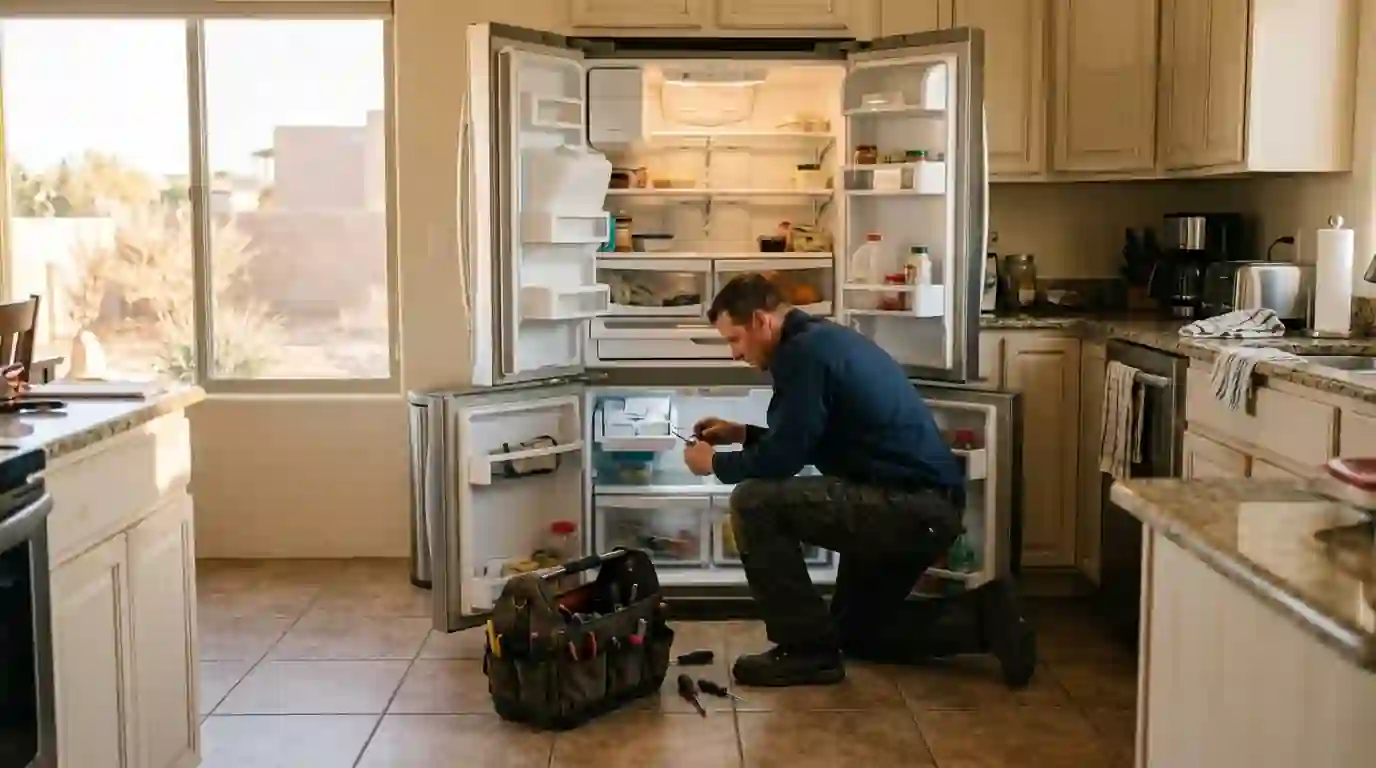
Hood problems we fix
- Fan hums but the blades never turn
- Smoke rolls past the hood while searing
- Lights flicker or the switch does nothing
Quick answer
Most range hood failures come down to a worn blower motor, a failed fan switch or control board, a seized damper or a filter caked with grease and dust. Typical repairs in the Farmington area run about $112-$384, depending on the hood style and part. Many fixes finish in one visit once we know the model, and someone picks up our line at any hour, 24/7.
Brands we repair: Whirlpool, GE, Samsung, LG, Maytag, Frigidaire, KitchenAid, Bosch, Kenmore, Electrolux, Amana, Speed Queen, Sub-Zero, Hotpoint
Why a range hood stops pulling smoke and steam
A range hood has a simple job, and only a few parts doing it. A blower motor spins a squirrel-cage wheel or a pair of fan blades, a switch or control board sets the speed, lights hang in sockets over the burners, and a backdraft damper in the duct flaps open when the fan runs. Mesh or baffle filters catch grease before it reaches the motor. When any one of those quits, the hood gets loud, weak or silent.
The motor takes the hardest life of any part. It sits right above the heat, breathes in grease every time you fry something, and runs for years without a second thought. Bearings dry out and start to squeal, the windings overheat, and a greasy wheel throws itself out of balance. We pull the filters and the motor cover, spin the wheel by hand, check the bearings and test the windings so we know whether the motor itself is done or something else is dragging it down.
Controls fail in a different way. Older hoods use rocker or push-button switches that wear out from greasy fingers, while newer chimney and island hoods use touch panels and a small control board. We trace the power from the junction box through the switch to the motor and lights, so a twenty-dollar switch doesn't get misdiagnosed as a two-hundred-dollar board.
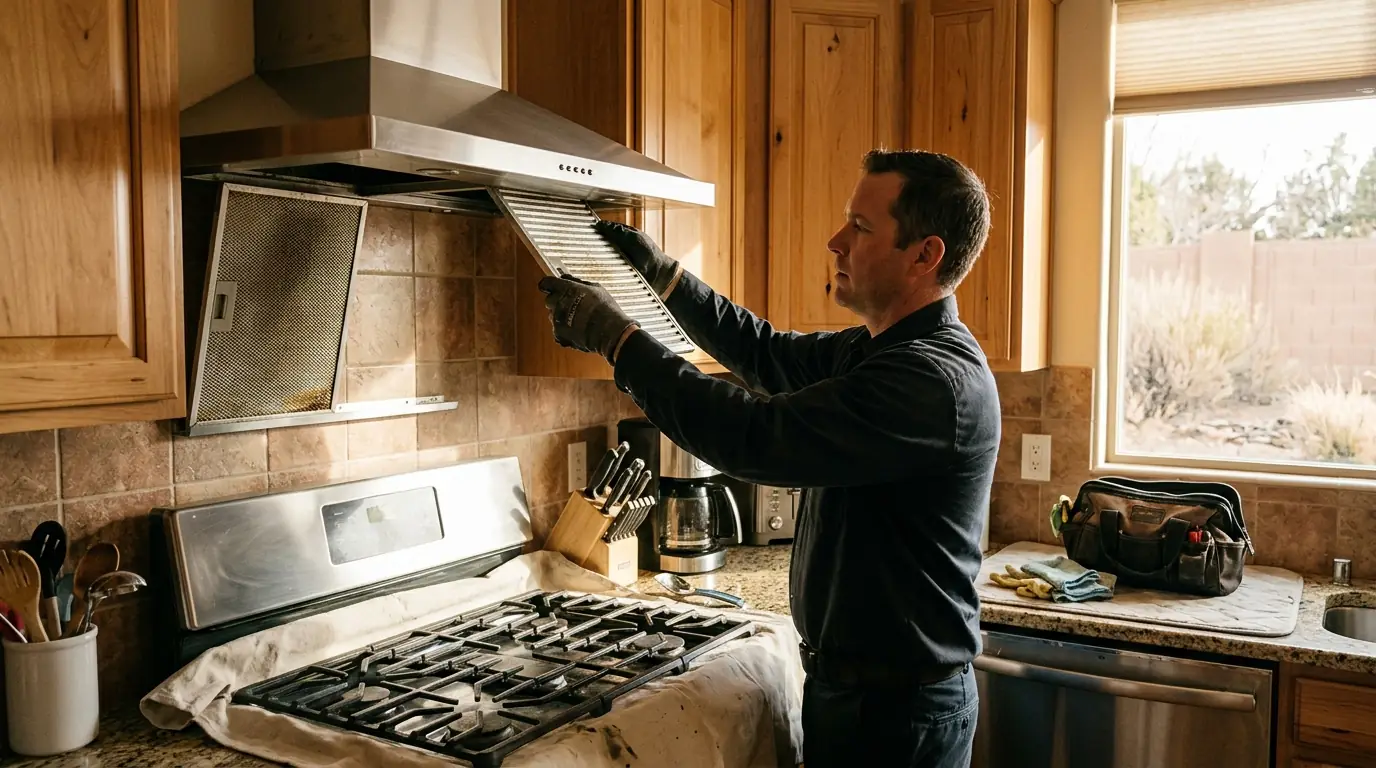
Range hood repairs we handle in the kitchen
Here is the work we do most on hoods, from simple switches to full blower swaps.
Blower motor replacement
We match the motor by model and rating, transfer or replace the fan wheel, and balance it before closing up. On many hoods the motor drops out the bottom without taking the hood off the wall.
Fan wheel and blade cleaning
A wheel packed with grease and dust spins slow and loud. We remove it, degrease it, inspect the hub for cracks, and reinstall it so the motor stops straining and the noise drops.
Fan and light switches
Worn rocker, slide and push-button switches cause dead speeds and lights. We test each contact, replace the switch assembly, and confirm every speed and the light work before we leave.
Control board and touch panel
On chimney and island hoods, a failed relay or touch panel stops the fan or lights. We test the board outputs and the panel separately, then order the correct part by model number.
Light sockets and wiring
Heat cracks sockets and dries out wire insulation above the burners. We replace damaged sockets, any brittle leads, and the light transformer on halogen or LED models when it has failed.
Backdraft damper and filters
A stuck or bent damper blocks airflow or lets wind and dust blow back in. We free or replace the damper and fit the right mesh, baffle or charcoal filters for your hood.
Signs your range hood needs a repair visit
These are the symptoms homeowners describe most when they call about a hood.
Fan hums but won't spin
A humming motor that cannot turn the wheel often has seized bearings, a failed start capacitor on larger blowers, or a wheel glued in place by old grease. Shut it off so the windings don't overheat.
Smoke escapes into the kitchen
When smoke rolls past the hood on high, the cause may be a stuck damper, a crushed duct, a clogged filter or a motor running slower than it should. Each has a different fix.
Squealing, rattling or grinding noise
Squeals point to dry motor bearings. Rattles often come from a loose wheel, a bent blade or a damper flap banging in the wind. Grinding usually means the wheel is rubbing the housing.
Lights dead, dim or flickering
Hood lights bake above the burners, so sockets crack and wiring gets brittle. If a new bulb doesn't fix it, the socket, light switch, transformer or board output is the next thing to check.
Speed buttons do nothing
One speed works and others don't, or the touch panel lights up but the fan never starts. That points to a worn switch, a relay on the control board or a loose connector.
Grease dripping from the filters
Grease dripping onto the cooktop means the filters are saturated and the duct may be coated too. That is a fire risk as well as a sign the fan is working against a blocked path.
Typical range hood repair prices around Farmington
Below are typical local numbers for the hood jobs we see most, with the part and labor rolled together. Hood style and part availability set the final figure.
| Fan or light switch replacement | $112-$198 |
|---|---|
| Light socket or transformer | $118-$214 |
| Backdraft damper repair or replacement | $124-$227 |
| Blower motor replacement | $187-$384 |
| Control board or touch panel | $176-$362 |
Treat these as typical local figures, not a quote. Island and chimney hoods, high-airflow blowers and parts that must be ordered move the price up, while a basic under-cabinet switch job sits at the bottom.
Wind, dust and older ductwork on Four Corners range hoods
Spring in Farmington means windy days that push fine dust and sand into every gap in the house, and a range hood duct that runs out through a wall or roof is one of those gaps. Dust blows back down past a damper that doesn't close tight, mixes with cooking grease on the filters and the fan wheel, and turns into a gritty paste that wears bearings and throws the wheel off balance. We clean the wheel, check that the damper seats fully, and replace a warped flap so the wind stays outside.
Many 1950s to 1970s ranch homes around town started with a basic recirculating hood or none at all. Later remodels added a ducted hood, sometimes through a long run with several elbows, undersized pipe or a cap that faces the prevailing wind. A strong motor can't overcome a duct that chokes it. When the fan tests fine but smoke still hangs in the kitchen, we look at the duct path and tell you what would actually help.
Manufactured homes across San Juan County often use a compact under-cabinet hood with a small blower and a single switch. Parts for those are usually easy to get by model number, so a repair often beats a replacement that may not match the cabinet cutout. Those smaller kitchens also run the hood harder, since there is less room for smoke to spread out.
How a range hood visit runs
- On the phone
Symptoms and model
Tell us what the hood does on each speed. The model label usually sits behind the filters, and a phone photo of it helps us bring the right switch or motor.
- First 10 minutes
Power off and open up
We shut off the breaker, drop the filters and remove the motor cover, then check the wheel, bearings and wiring before running any tests.
- Minute 25
Find the real fault
We test the motor windings, switch contacts, board outputs and damper movement, then walk you through the fault and the price of fixing it before we start.
- Same visit
Repair and airflow check
With the part in hand, we install it and run every speed. A simple smoke or tissue test at the filters shows whether the hood is really pulling.
- Before we leave
Clean and advise
We wipe down the hood, reinstall clean filters and tell you how often to clean or replace them for the way you cook.
Fix the range hood or put in a new one?
Most hoods are worth repairing, especially wall and island hoods where the stainless shell, chimney cover and ductwork are already sized to the kitchen. A motor, switch or light socket usually costs much less than a new hood plus the labor to remove the old one and patch the cabinet or ceiling.
Replacement makes sense on an inexpensive under-cabinet hood when the motor fails and the new motor costs nearly as much as a whole new unit, or when the control board is discontinued. If you're replacing, we can recommend a size and airflow that suits your cooktop and duct run.
Habits that keep a range hood quiet and strong
- Soak metal mesh or baffle filters in hot water with a degreasing dish soap once a month, more often if you fry or sear a lot.
- Run the hood for a few minutes after cooking so steam and grease clear the duct instead of settling on the wheel.
- Replace charcoal filters on recirculating hoods about every three to six months, since they stop absorbing odor long before they look dirty.
- After a windy, dusty spell, check the outside duct cap for a stuck flap or a bird nest blocking the opening.
- Use the lowest speed that clears the smoke. Running on high all the time wears the motor and switch faster.
Related repairs people book with range hood repair
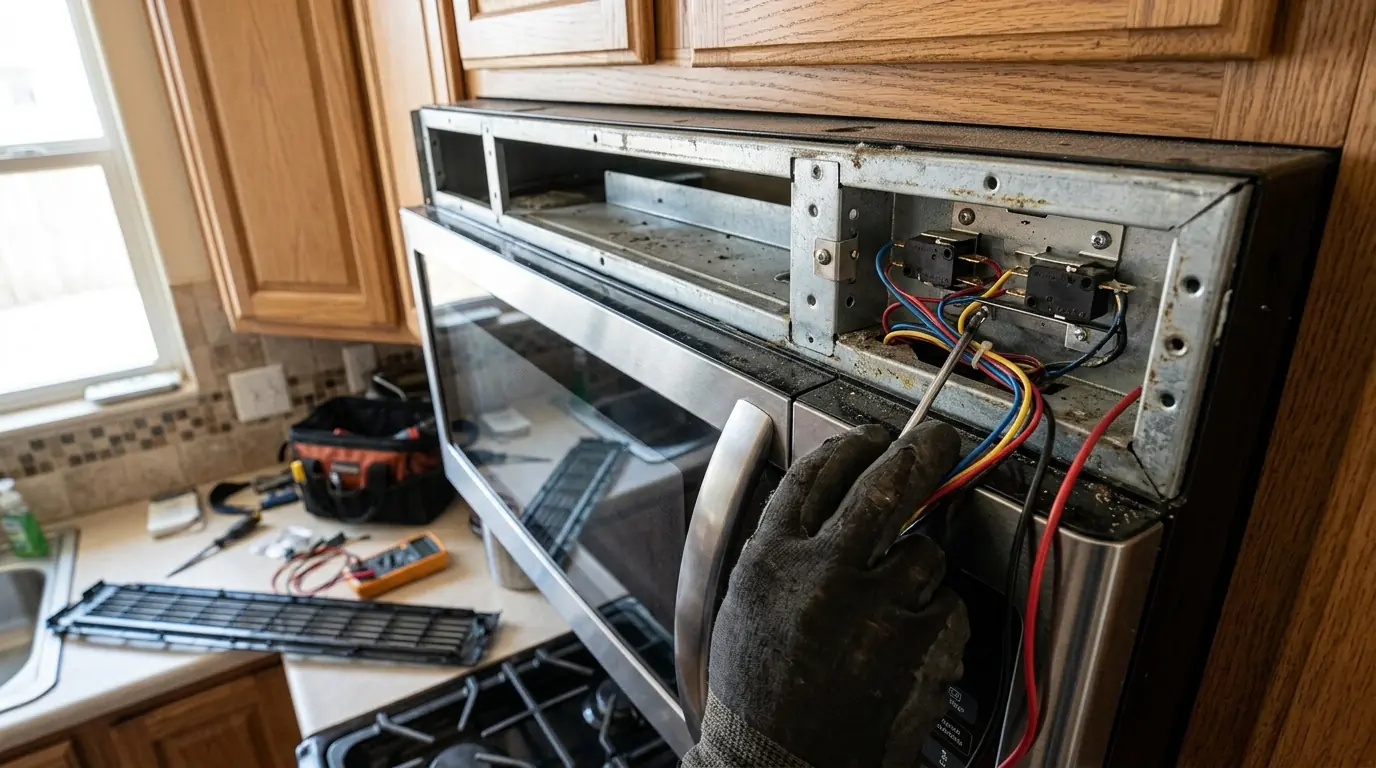
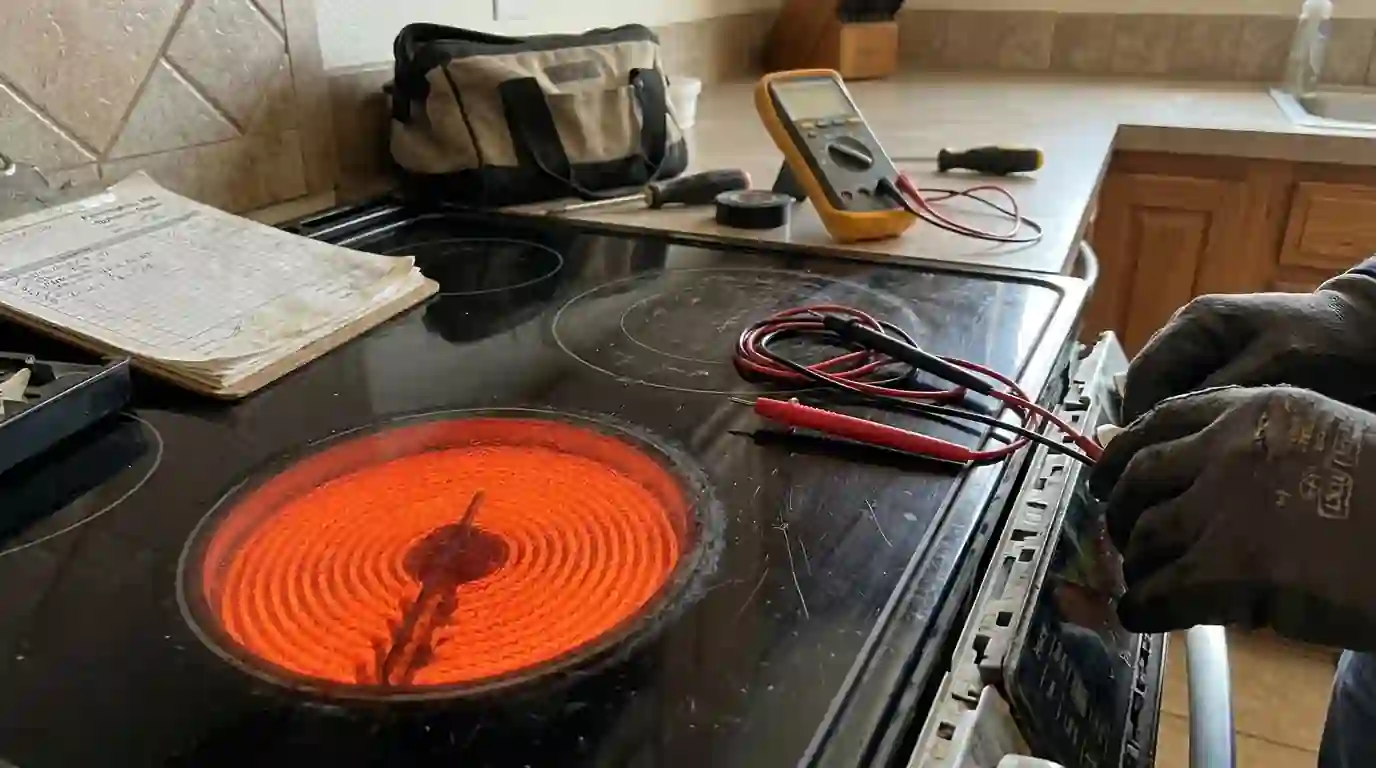
Where we handle range hood repair
Farmington neighborhoods first, then the rest of San Juan County and southwest Colorado. Pick your area for local notes, or see all 41 locations.
Range Hood Repair questions from Farmington homeowners
Why is my range hood fan so loud all of a sudden?
A sudden jump in range hood noise usually means dry motor bearings, a fan wheel thrown out of balance by grease buildup, or a loose wheel rubbing the housing. A damper flap rattling in the wind is another common cause. Cleaning the wheel sometimes fixes it, but squealing bearings mean the motor needs to be replaced.
My range hood light works but the fan does not. What is wrong?
When the light works and the fan doesn't, power is reaching the hood, so the fault is in the fan circuit. The usual causes are a failed fan switch, a dead relay on the control board, a seized motor or a burned-out motor winding. We test each one to find which part is bad.
How often should range hood filters be cleaned?
For most kitchens, clean metal range hood filters about once a month. If you fry, sear or cook with a lot of oil, every two weeks is better. In windy, dusty spring months, check them more often, since dust mixed with grease clogs the mesh quickly.
Can a range hood motor be replaced without removing the whole hood?
On most under-cabinet and many chimney hoods, yes. The motor and fan wheel drop out the bottom once the filters and cover panel come off. Some island and insert hoods need more disassembly, which adds time but rarely means taking the whole hood down.
Why does smoke still fill the kitchen with the range hood on high?
If the range hood motor sounds normal but smoke escapes, look at airflow, not the motor. A stuck damper, crushed or undersized duct, clogged filters or a hood too small for the cooktop all cause it. We check the damper and duct path and tell you which one is limiting the draw.
Do you repair recirculating range hoods with no outside duct?
Yes. Recirculating range hoods use the same motors, switches and lights as ducted ones, plus a charcoal filter that traps odor. We repair the fan and controls and fit the correct charcoal filter. If smoke handling is still poor, we can explain whether a ducted setup is practical in your kitchen.
Need range hood repair today?
Call any hour. A real person picks up, takes the model number and sets the visit.