Oven repair in Farmington, NM
An oven that won't heat, or bakes the cookies dark on one side and raw on the other, has a failed part. We test the igniter, bake element, sensor and controls, then fix gas, electric and wall ovens.
- Answered 24/7
- Gas, electric and propane
- Farmington and the Four Corners
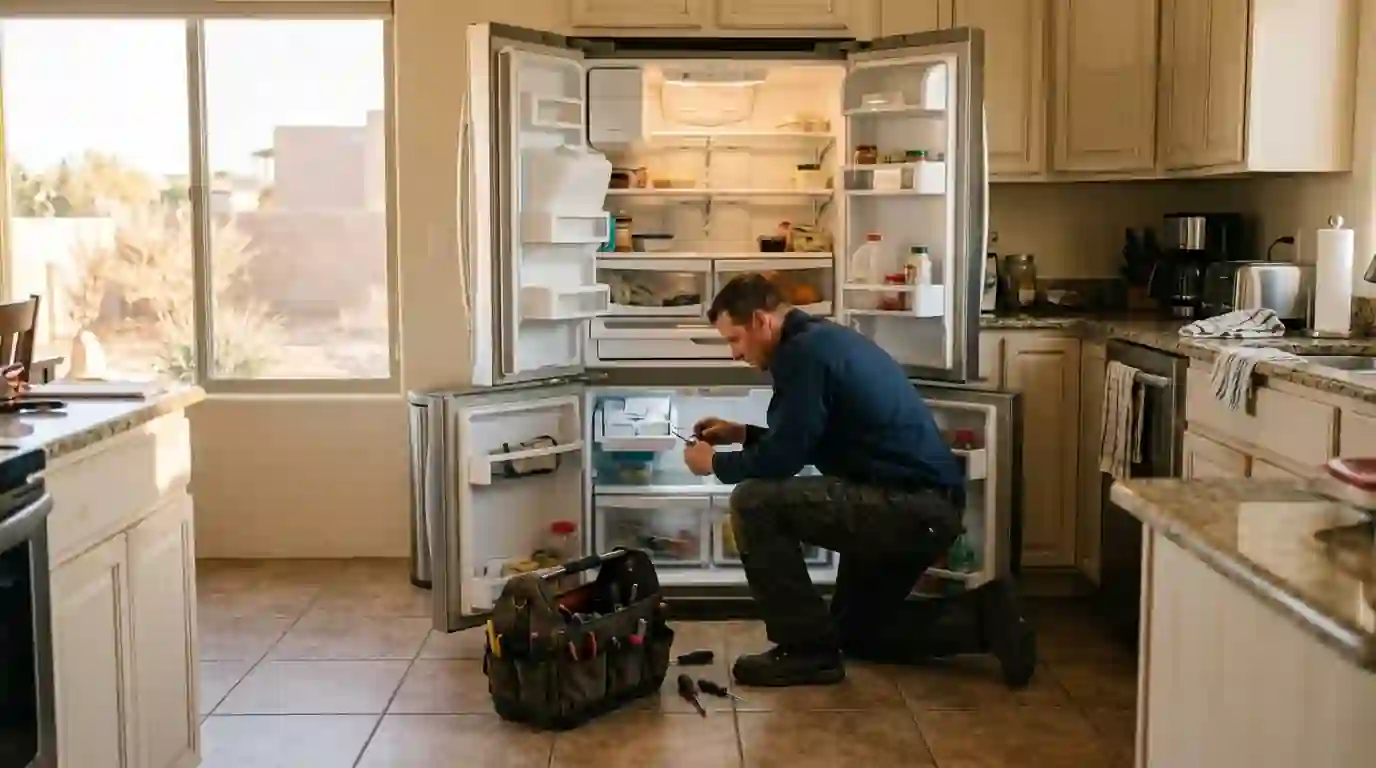
Oven calls we take most
- Gas oven clicks, never lights
- Bake element glowing in one spot
- Temperature off by 30 degrees or more
Quick answer
Gas ovens that won't heat usually have a weak hot surface igniter; electric ovens usually have a burned bake element or broil element. Faulty temperature sensors and control boards come next. Typical oven repairs around Farmington run about $148-$412. We test before we replace anything. Ring us at any hour, day or night; an oven visit can often happen the same day if a slot is open.
Brands we repair: Whirlpool, GE, Samsung, LG, Maytag, Frigidaire, KitchenAid, Bosch, Kenmore, Electrolux, Amana, Speed Queen, Sub-Zero, Hotpoint
What usually goes wrong inside an oven
Ovens are simpler than they look. A gas oven uses a hot surface igniter to heat up and open a safety valve, which lets gas flow to the burner. An electric oven sends power through a bake element at the bottom and a broil element at the top. In both cases a temperature sensor reports back to a control board or thermostat, which decides when to cycle the heat on and off.
Most oven failures come from the part that gets the hottest or switches the most. On gas ovens, the igniter weakens with age and stops drawing enough current to open the valve, so the oven glows but never lights. On electric ovens, the bake element blisters and burns through. Sensors drift, door hinges wear, and control boards fail after power surges or years of heat.
We repair freestanding range ovens, single and double wall ovens, and convection ovens with rear fans. When you call, tell us whether the oven is gas or electric, what it does when you press bake, and any code on the display. That gives our tech a good idea of which parts to bring along for the first visit.
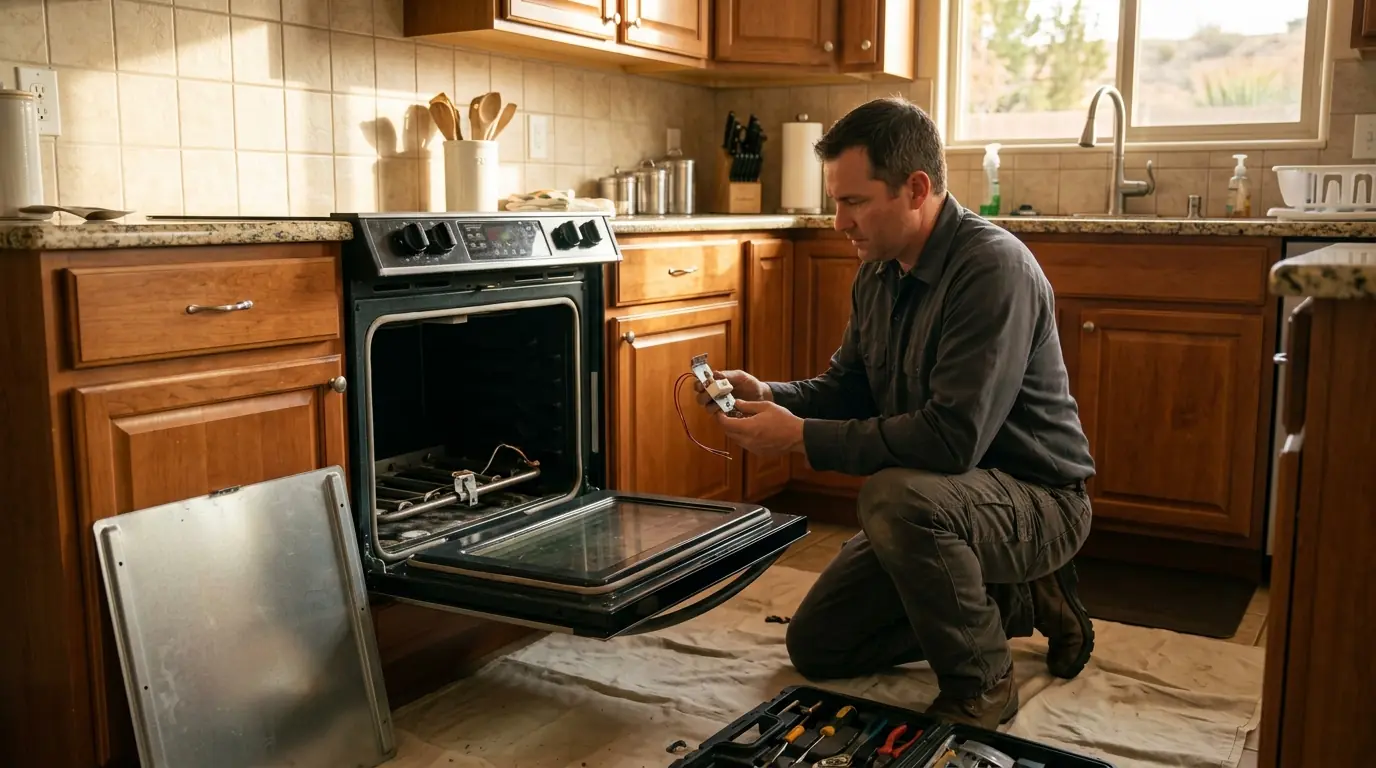
The oven parts that fail most, and how we fix them
Nearly every oven we open around Farmington needs one of the following.
Hot surface igniter
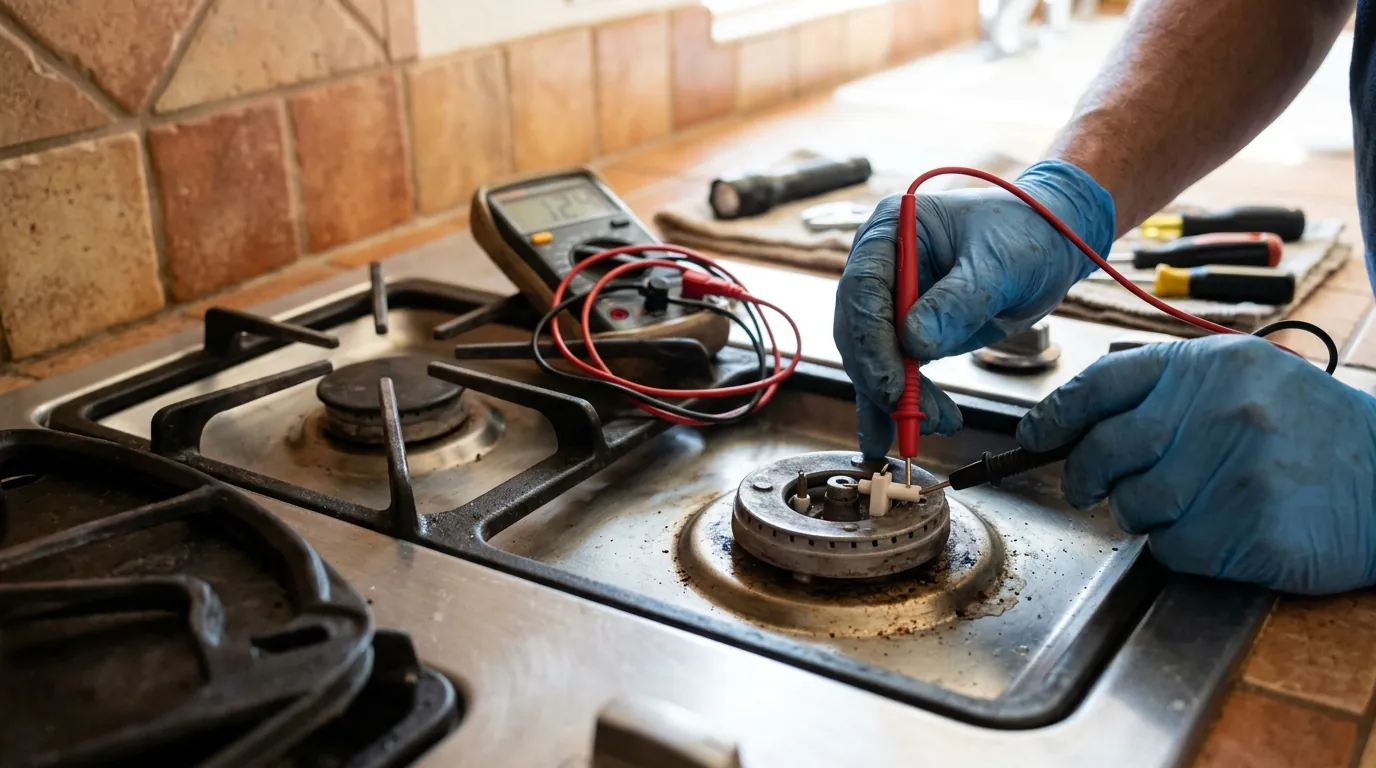
We measure the igniter's current draw, since an igniter can glow and still be too weak. A new igniter matched to the model restores quick, reliable lighting on most gas ovens.
Bake and broil elements
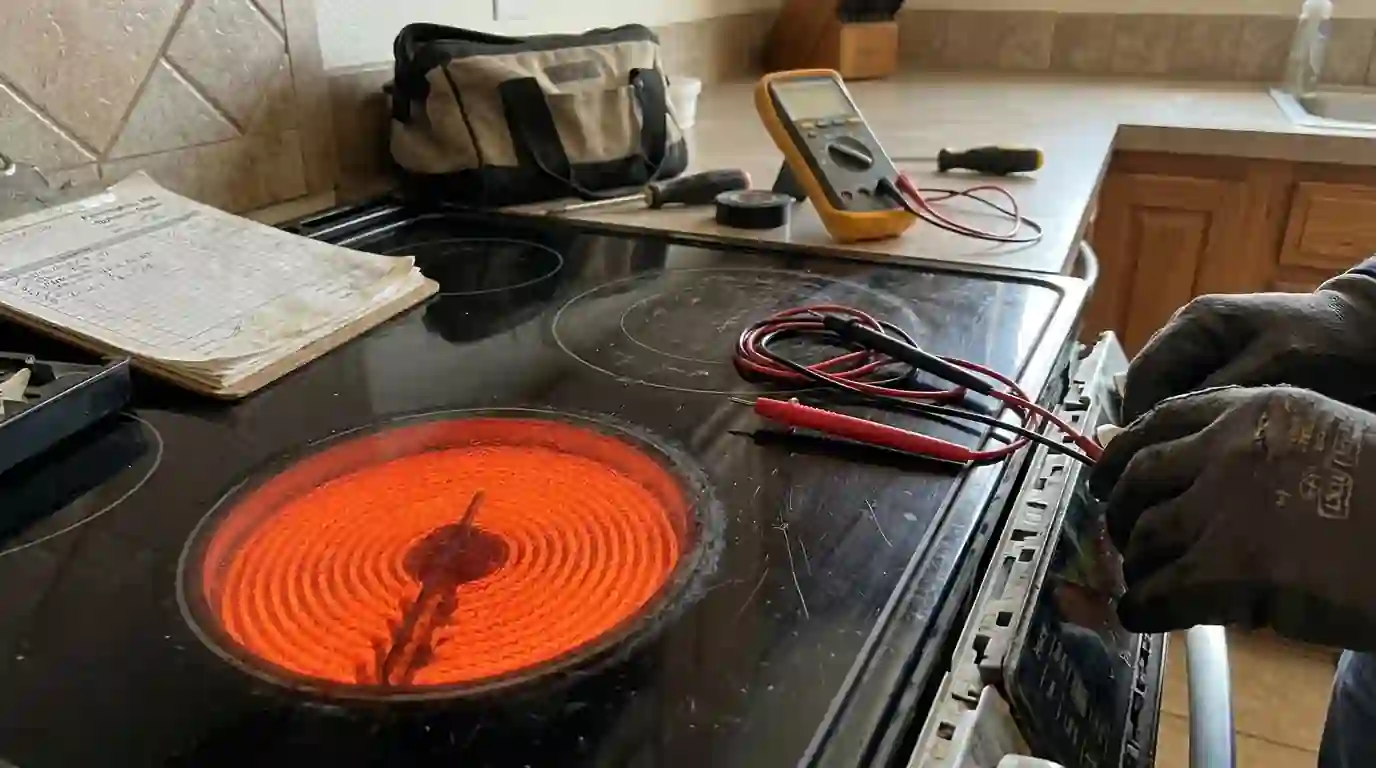
We test the element's resistance, check the terminals for burned connections, and replace a failed element. If the terminal block or wiring is scorched, we repair that too so the new element lasts.
Temperature sensor
The sensor probe inside the oven tells the control how hot it is. We read its resistance at room temperature and compare it to the spec, then replace a sensor that has drifted.
Gas valve and safety valve
If a good igniter still won't light the burner, the safety valve may have failed. We test the valve's coils and replace it, then check the flame and connections for leaks.
Control board and touchpad
When buttons stop responding or the oven heats with no command, the control board or the touchpad overlay may be bad. We test the inputs before replacing either part.
Door hinges, gasket and lock
Worn hinges let the door hang open and leak heat. We replace hinges and the door gasket, and repair self-clean lock motors and switches that won't release.
Oven problems worth a service call
These symptoms usually point to a specific part, which makes diagnosis faster.
Gas oven glows but won't light
An igniter that turns bright orange for a minute or more without any flame appearing has probably weakened past the point of opening the gas valve. This is the most common gas oven repair we do.
Electric oven heats only from above
If the broil element works but the bottom stays cold, the bake element has failed. Look for a blister, crack or bright spot on the element that glowed during the last use.
Food burns or stays raw
An oven that runs 25 or more degrees off its setting usually has a drifting temperature sensor or a control problem. An oven thermometer on the center rack confirms it.
Error code on the display
Codes often point to a sensor, a door lock or the control board. Write down the code before you turn the oven off, because it helps narrow the failed part.
Door stays latched after self-clean
After a self-clean cycle, the door lock motor or switch can fail and trap the door shut. Don't force it; a stuck lock usually needs a new motor or switch assembly.
Convection fan noisy or stopped
A grinding or squealing convection fan, or one that won't spin, means the motor bearings have worn. Food will still bake, but unevenly, until the fan motor is replaced.
How much oven repair runs on a typical job
Here is what common oven fixes typically total in this part of New Mexico, with parts and labor in one figure. Your exact price depends on the model and which part failed.
| Hot surface igniter | $148-$276 |
|---|---|
| Bake or broil element | $157-$289 |
| Temperature sensor | $143-$236 |
| Door lock motor or hinges | $184-$338 |
| Control board or touchpad | $274-$412 |
Double wall ovens and models with hidden bake elements take longer to open up, and some brands' control boards cost more than others. We give you the price before any repair begins.
Baking at 5,400 feet, and what that means for your oven
Kitchens in Farmington cook at roughly 5,400 feet, and the homes we visit in Aztec, Durango and Cortez are higher still. At this elevation water boils at a lower temperature, so cakes and breads rise faster and dry out sooner. Many people blame the oven when the real issue is a recipe that needs high-altitude changes. Before calling, test the oven with an inexpensive thermometer; if it holds its setting, the recipe needs adjusting, not the oven.
Gas ovens here follow the manufacturer's high-altitude instructions, which can mean a different orifice or air shutter setting. Black streaks on the oven roof, a flame that wavers orange or floats off the burner, and a long delay before it catches all suggest the setup is off. We check the flame and the setup along with the igniter, because a poor flame bakes unevenly even with good parts.
Gas safety matters on every oven call. Any whiff of gas means walking out the front door before doing anything else, then reaching the gas company or 911 by phone from the yard. When they say the home is clear, phone us about the oven itself. Monsoon power blips in summer can also damage electronic oven controls, so a surge-protected circuit is worth considering for newer wall ovens.
How we repair your oven
- First call
Gas or electric?
We ask for the fuel type, model number and any error code, plus what the oven does when you press bake, so our tech brings likely parts.
- At the oven
Safety and power check
We confirm the gas supply or the 240-volt circuit is right, look for a gas smell, and check the flame or element before anything else.
- Minute 20
Measure the parts
Our tech measures the igniter current, element resistance and sensor values, then shows you the bad part and gives the price for replacing it.
- Same visit
Install and calibrate
We replace the failed part, then run the oven to temperature with a thermometer to confirm it reaches and holds the setting.
- First bake
Try a familiar recipe
Bake something you know well. If the results are off, call us; most ovens can be offset a few degrees through the control settings.
When an oven repair makes sense
Igniters, elements, sensors and door parts are inexpensive compared to a new oven, so these repairs nearly always make sense. Control boards cost more, and on an older freestanding range with rusted burners or a cracked cooktop, a board failure can tip the balance toward replacement. Wall ovens are a different story: replacing one means matching the cabinet cutout, so repair is usually the better value even for bigger parts. We'll give you the numbers for both paths and let you decide.
Habits that help your oven last
- Keep an oven thermometer on the center rack. It costs little and tells you right away whether a baking problem is the oven or the recipe.
- Avoid the self-clean cycle right before a big holiday meal. High heat is when weak elements, fuses and door locks tend to fail.
- Don't cover the oven floor or racks with foil. It blocks airflow, traps heat against the bake element, and can damage the enamel.
- Wipe spills from the door gasket gently and never pull on it. A torn gasket leaks heat and makes the oven run longer to hold temperature.
- On gas ovens, watch the flame through the window. A steady blue flame is good; yellow, lazy or noisy flames mean it is time for a check.
Related repairs people book with oven repair
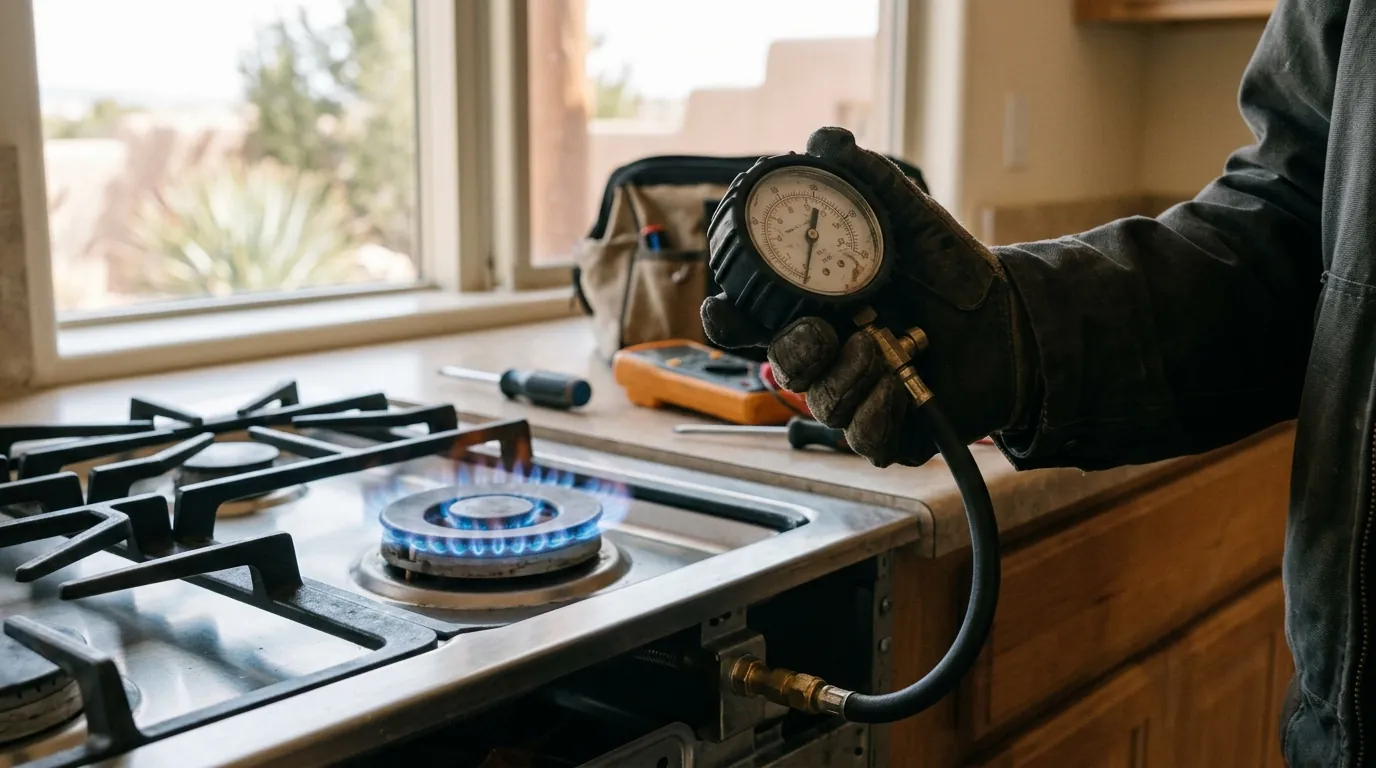
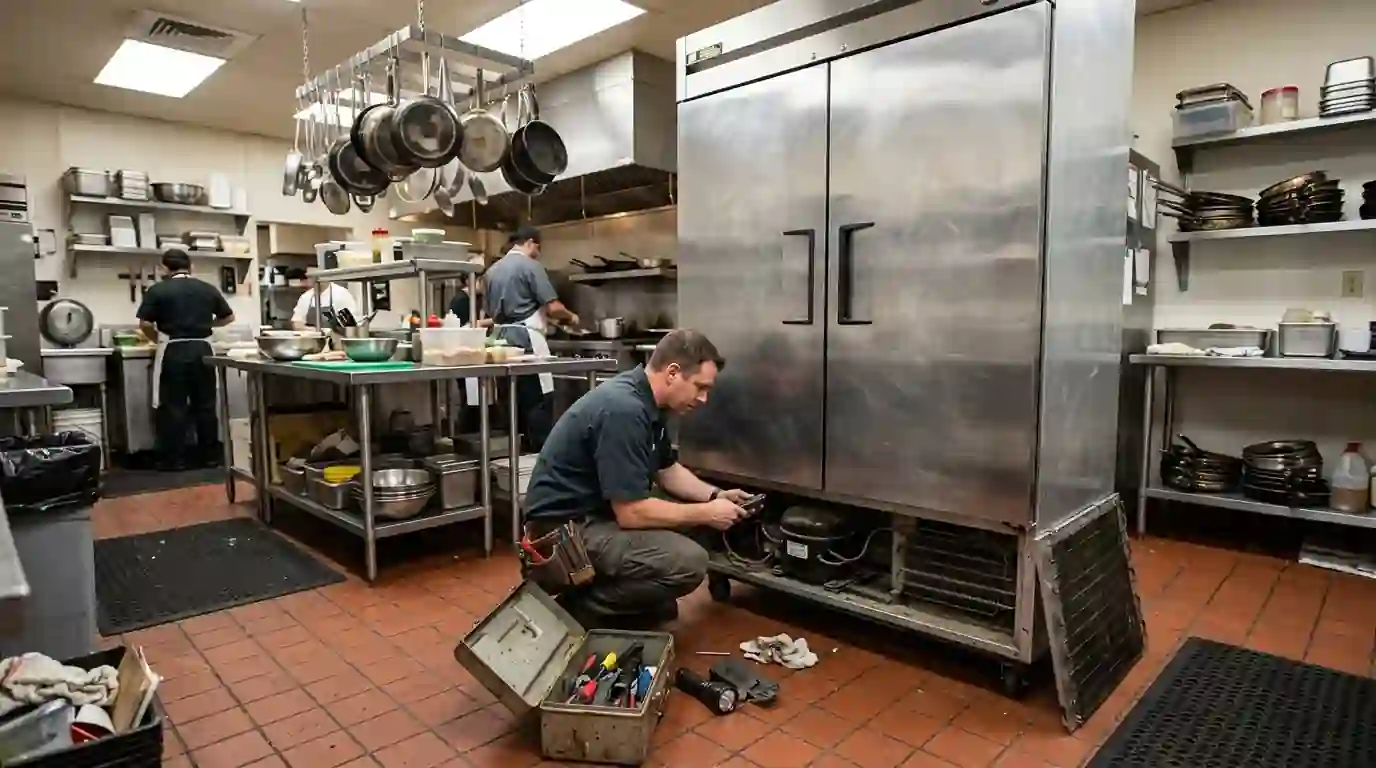
Where we handle oven repair
Farmington neighborhoods first, then the rest of San Juan County and southwest Colorado. Pick your area for local notes, or see all 41 locations.
Oven Repair questions from Farmington homeowners
Why does my gas oven igniter glow but the oven won't heat?
The igniter is probably weak. It has to draw enough current to open the gas safety valve, and an aging igniter can glow without reaching that point. We measure its current draw to confirm, and replacing it usually restores normal lighting.
Does high altitude affect how my oven bakes?
Altitude changes how batters and doughs behave more than how the oven works. At Farmington's elevation, cakes rise faster and dry out sooner, so recipes often need tweaks. Check the oven with a thermometer first; if it holds temperature, the recipe needs adjusting.
Can you repair a double wall oven?
Yes. We repair single and double wall ovens, including bake and broil elements, sensors, convection fans, door locks and control boards. Some repairs need the oven pulled partly out of the cabinet, and we protect the cabinet and floor while we do it.
Is it safe to use my oven if the door stays latched after self-cleaning?
Let it cool fully, then try turning the breaker off for a minute to reset the lock. If it still won't release, don't force the door, since that can break the latch. A failed lock motor or switch is a common repair.
How do I know if my oven temperature sensor is bad?
Signs include food that burns or stays raw at normal settings, an oven that overshoots its setting, or an error code. An oven thermometer that reads 25 or more degrees off is a strong clue, and we confirm with a resistance reading.
What should I do if my gas oven smells like gas?
Shut the oven knob only if you can do it in a second, then get out. From the driveway or a neighbor's porch, phone the gas company or 911, and don't touch light switches on the way out. After they declare the house safe, ring us to track down the fault at the oven.
Need oven repair today?
Call any hour. A real person picks up, takes the model number and sets the visit.