Swamp cooler startup and winterizing in Farmington, NM
A cooler that sat covered all winter rarely starts clean in May. We swap the pads, test the pump, set the float and belt, then drain and cover it again before the first hard freeze.
- Answered 24/7
- Gas, electric and propane
- Farmington and the Four Corners
Spring and fall calls
- Cooler blows warm, musty air after startup
- Water line split over the winter
- Pads crusted white with mineral scale
Quick answer
Most spring startups need new pads, a scraped pan, a pump test, a belt adjustment and a reset float. A typical startup in Farmington runs about $118-$236 with standard aspen pads, and a fall winterizing visit about $94-$187. Most visits wrap up in a single trip to the roof. Our phone line is staffed day and night, and a startup can often happen the day you call if a tech has an open slot.
Brands we repair: Whirlpool, GE, Samsung, LG, Maytag, Frigidaire, KitchenAid, Bosch, Kenmore, Electrolux, Amana, Speed Queen, Sub-Zero, Hotpoint
What a spring startup actually covers on your cooler
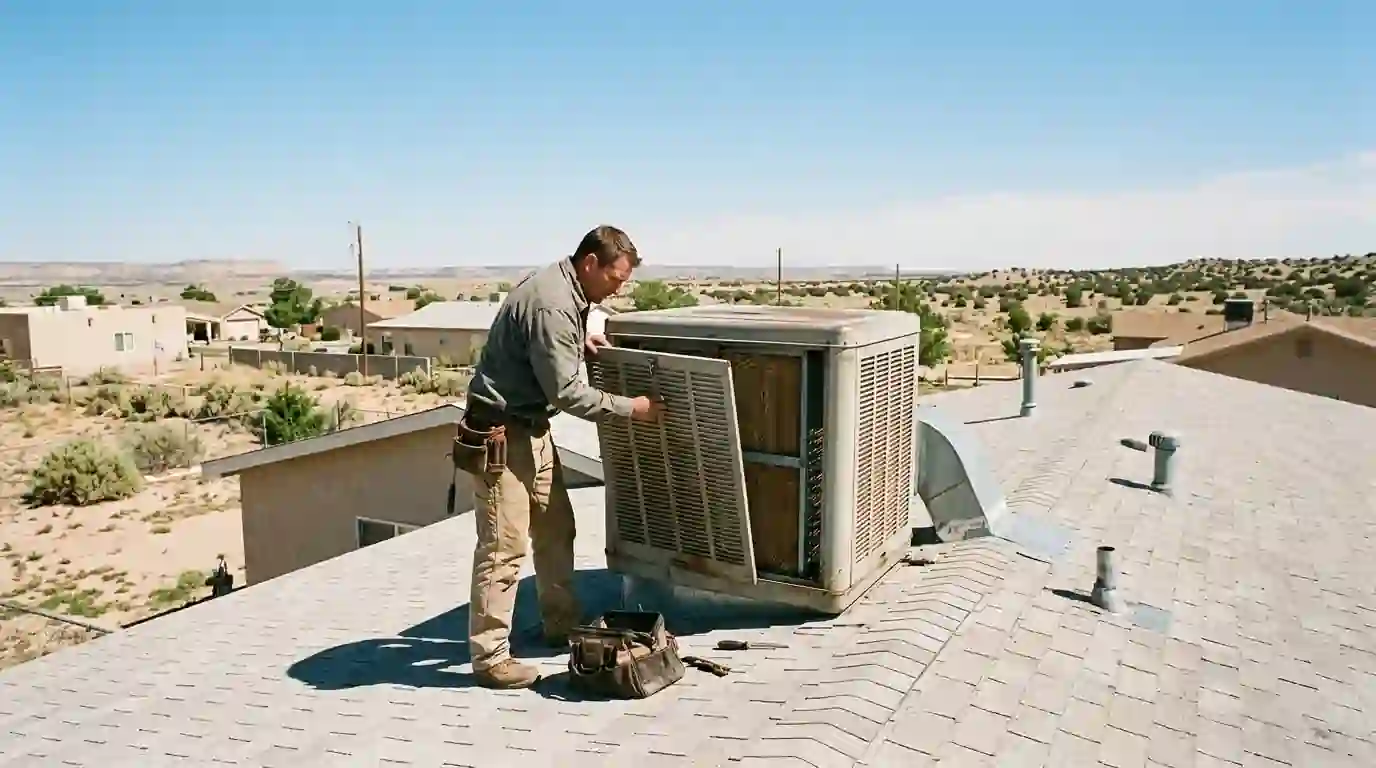
An evaporative cooler is simple, which is why small neglect adds up fast. Pads dry out and harden over winter, the pan collects sand and a white crust of minerals, and the pump sits idle for seven months. On the first warm day you flip the switch and get a weak breeze that smells like a wet basement. A startup visit fixes that before it turns into a repair call. Our tech climbs up, pulls the side panels, checks every moving part and runs the cooler on both speeds before leaving the roof.
Winterizing is the other half, and it matters just as much here. January nights drop into the teens, and a supply line that still holds water will split at a fitting or crack the float valve body. We shut the water off at the source, open the drain, disconnect and blow out the line, and leave the pan dry. Then the cooler gets a fitted cover so wind doesn't pack it with dust and leaves. Inside, we close the damper or cap the ceiling register to stop winter drafts.
We handle roof-mounted downdraft and sidedraft units, window coolers and the larger units on manufactured homes around San Juan County. If the startup turns up a bigger problem, like a seized motor, a cracked pan or a shorted wall switch, we explain it on the spot and give you the repair range before touching it. Many homeowners set up both visits at once, so the spring and fall dates are already on the calendar and nobody has to remember in October.
Cooler habits that save you a summer repair
- Run the cooler on fan-only for a few minutes before shutting it down at night, so the pads dry out and grow less algae and odor.
- Crack a couple of windows on the far side of the house while the cooler runs, since the air needs an exit or the rooms turn muggy.
- Check the bleed-off line in midsummer. If it stopped dripping, minerals are piling up in the pan faster than they are being flushed out.
- After a dusty spring storm, look at the pads from a ladder. A caked layer of dust on the outside cuts airflow noticeably.
- Never run the cooler with the water off for long. Dry pads give you only warm air, and a pump running dry burns out quickly.
Why Four Corners water and wind wear out coolers faster
Coolers are everywhere here because the air is dry enough for evaporation to do real work. That same dry air leaves behind whatever the water carried in. Farmington's water, and especially private well water across the county, is hard and mineral-heavy, so pads turn white and stiff by midsummer. Scale builds on the float valve, inside the spider tubes and around the pump intake. A bleed-off line helps flush some of those minerals, and we check that it drips steadily and isn't plugged.
Spring wind is the second problem. Dusty gusts in March and April blow sand straight into a cooler that lost its cover, and that grit settles in the pan where the pump pulls it in. Then the July and August monsoon storms bring lightning and power blips that can hurt the motor and the wall switch. Short humid spells during the monsoon also cut cooling power for a few days, which owners sometimes mistake for a failing unit.
Altitude and freezing temperatures finish the list. At around 5,400 feet in town, and higher in Aztec, Durango and Mancos, clear nights get cold early in the season. A line left full in October can freeze on the first still, cloudless night. That is why we push fall service before November rather than waiting for a cracked fitting to make the case for us.
Signs your cooler needs its seasonal service now
These are the clues we hear about most in the first warm weeks and again when fall nights turn cold.
Musty or fishy smell from vents
Old pads grow algae and trap minerals, and stale water in the pan turns sour. Fresh pads and a cleaned pan usually clear the odor after a day of steady running.
Weak airflow on high speed
A loose or glazed belt slips on the pulley, so the blower wheel spins slower than the motor. We check tension, look for cracking and replace the belt if it has worn shiny.
Dry streaks on the pads
If parts of the pad stay dry, the spider tubes or distribution trough are clogged with scale, or the pump is weak. Dry spots let hot air pass straight through uncooled.
Water spilling off the roof
A float valve stuck open keeps filling the pan until water runs out the overflow and down the siding. Scale on the float arm or a worn valve seat is the usual cause.
Pump hums but no water moves
Sand and mineral grit jam the impeller, or the pump motor is simply worn out after a few seasons. We test it in a bucket of water before deciding it needs replacing.
Cold drafts in winter rooms
If cold air pours down the duct in January, the cooler was never sealed and covered. Warm house air escaping up that same duct also makes the furnace run longer.
How a cooler visit runs from the call to the drain-down
- First call
Tell us the cooler type
Let us know if it is a roof downdraft, sidedraft or window unit, and the pad size if you have it. That way we bring the right pads and belt.
- On the roof
Open and inspect
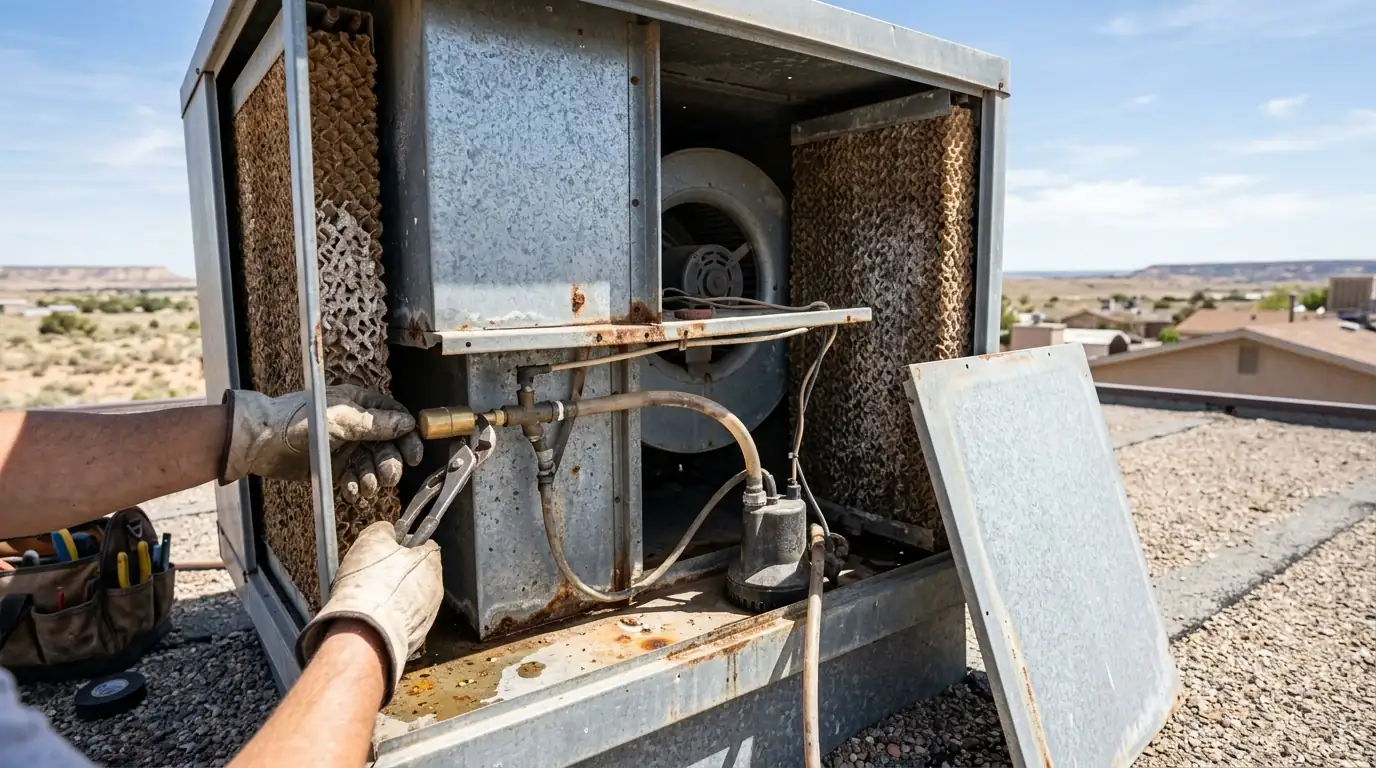
Our tech pulls the side panels, checks the pan for cracks and rust, and looks over the motor, pump, belt, float and every water fitting.
- Same visit
Pads, pump and belt
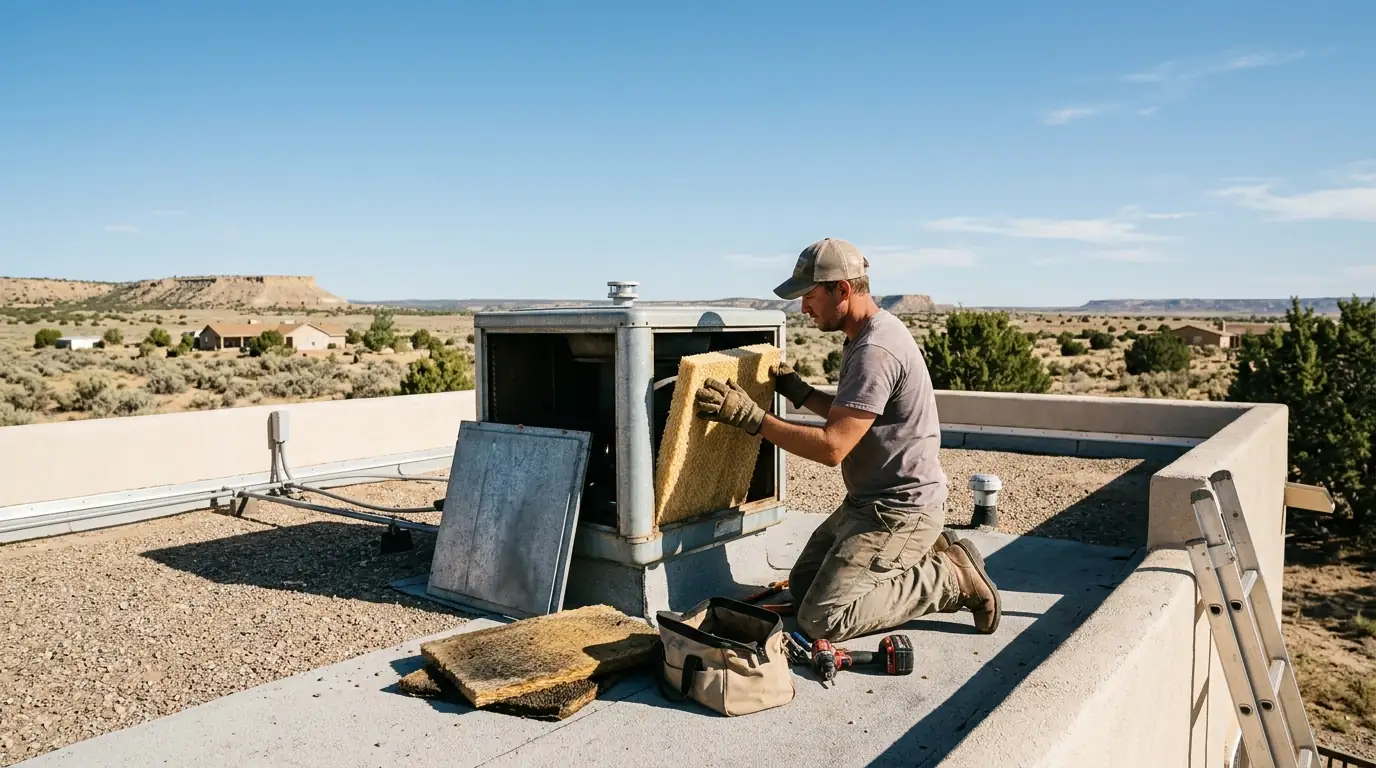
Old pads come out, the pan is scraped and rinsed, and new pads go in. We test the pump, adjust or replace the belt and set the float level.
- Before we climb down
Run both speeds
With water on, we run low and high, watch the pads wet evenly and check for drips at the fittings. You feel the air at the register before we pack up.
- October
Shut it down
On the fall visit we drain, disconnect, blow out the line, cover the cabinet and close the inside register so the house holds its heat.
What cooler startup and winterizing cost around Farmington
Residential coolers around town usually land inside the bands below. Your number depends on the cooler size, the pads it takes and what we find inside.
| Spring startup with standard aspen pads | $118-$236 |
|---|---|
| Spring startup with rigid media pads | $263-$487 |
| Fall winterizing with cover | $94-$187 |
| Pump replacement during service | $76-$164 |
| Belt and float valve replacement | $58-$129 |
Roof access, cabinet size, pad type and how much scale has to be scraped out of the pan all move the price. Treat these ranges as a guide, since the total for your cooler comes from our tech before any work starts.
Parts we replace and adjust during cooler service
Every startup or shutdown follows a checklist, and these are the items that change most often.
Evaporative pads
We pull the old aspen or rigid media pads, measure the frames and install fresh ones cut to fit. Rigid media lasts longer in hard water but costs more up front.
Recirculating pump
Our tech tests flow, cleans the intake screen and checks the cord. A pump that labors, trips or leaks gets swapped for a matching model on the same visit when one is on the truck.
Blower belt and pulleys
We check belt tension, pulley alignment and wear, tighten the motor mount and replace any belt that is cracked, glazed or stretched past its adjustment range.
Float valve and supply tubing
The float gets cleaned or replaced and set so the water level sits below the overflow. We inspect the supply tubing for sun damage, kinks and brittle spots.
Motor and bearings
We spin the blower by hand to feel for drag, oil the motor and shaft bearings where the design allows, and listen for grinding at both speeds.
Fall drain and cover
Water off, pan drained, line disconnected and blown out, pump unplugged, then a fitted cover strapped down against the wind. Inside, the ceiling register gets closed for the season.
When an aging cooler is worth replacing instead
Most coolers run for many seasons if the pan stays sound. Pads, pumps, belts and floats are cheap wear parts, and replacing them is normal upkeep, not a sign the cooler is failing. The cabinet is what decides it. Once the pan rusts through or the sheet metal is crumbling around the corners, patching rarely holds through another summer.
If the motor also needs replacing on a rusted cabinet, a new cooler usually makes more sense than pouring parts into an old one. We tell you plainly which way the numbers point, then you decide. Either way, the same seasonal startup and shutdown keep the next cooler running longer.
Related repairs people book with swamp cooler startup & winterizing
Where we handle swamp cooler startup & winterizing
Farmington neighborhoods first, then the rest of San Juan County and southwest Colorado. Pick your area for local notes, or see all 41 locations.
Swamp Cooler Startup & Winterizing questions from Farmington homeowners
How early in spring should I book my swamp cooler startup?
Many Farmington owners start cooling in May, so April and early May fill up fast. Booking before the first hot week means your pads are fresh and the pump is tested when you actually need it. Late March works if the forecast is already warm.
Do I need new swamp cooler pads every year?
In our hard water, aspen pads usually need replacing every season because they crust with minerals and lose airflow. Rigid media is pricier up front, yet it often survives several summers when the bleed-off works and the pan stays clean.
What happens if I skip winterizing my swamp cooler?
Any water left in the line or pan freezes once winter lows dip into the teens, cracking the float valve, splitting fittings or bursting the supply line. An uncovered cooler also lets cold air down the duct all winter and fills with blowing dust.
Can you service a swamp cooler on a manufactured home roof?
Yes. We work on coolers atop manufactured homes around San Juan County regularly. Those roofs are lighter, so our tech watches footing and weight, and we check the seal where the duct passes through the roof.
Should I switch to rigid media pads for my evaporative cooler?
Rigid media gives steadier cooling and handles hard water better, but the frames have to fit or be converted. We measure your cabinet and show you the price difference so you can decide during the startup.
Why does my swamp cooler smell bad right after startup?
Stale water, old algae in the pads and sludge in the pan are the usual sources. A clean pan, fresh pads and a working bleed-off normally end the smell. If it lingers, we check for a dead bird or rodent inside the cabinet.
Need swamp cooler startup & winterizing today?
Call any hour. A real person picks up, takes the model number and sets the visit.