When should a Farmington swamp cooler come back on?
Most coolers around town run from about May into September, but the overnight low matters more than the date on the calendar. January nights here drop into the teens, and spring can still throw a freezing night after a warm afternoon. A supply line refilled too early can split overnight. We usually suggest waiting to reconnect the water until nights stay comfortably above freezing.
You can uncover the unit and do the dry checks sooner. Pick a calm afternoon, though. Spring wind in the high desert carries sand straight into an open cabinet, and you don't want to be on a roof with loose panels when a gust comes through.
Shut off power and pull the winter cover safely
Turn the cooler off at the wall control, then at the disconnect box or breaker. A two-speed motor can start without warning if someone downstairs touches the switch while your hand is near the blower. Lift the cover off slowly. Mice, birds and wasps like a covered cooler as much as anyone. Indoors, take out any winter insert or plug in the ceiling register so cooled air can reach the rooms.
- Power off at the wall control and at the disconnect or breaker
- A helper at the foot of the ladder for roof-mounted units
- Gloves for sharp sheet-metal edges and old pad fibers
- A bucket, a shop vacuum and a stiff nylon brush
Is the water pan rusting through?
Winter dust and spring sand settle in the pan as a gritty paste. Scoop it out, vacuum the rest and scrub the white mineral crust off the walls. Then look hard at the seams and the corners under the pads. Pinholes, flaking paint and orange stains are early signs of rust-through. A pan that weeps onto a roof deck or into the ceiling below turns a small job into drywall and insulation work.
A coat of pan sealer on sound metal buys a season or two. If the metal is already soft or leaking, it's time for a patch or a new cabinet, and that's worth having looked at before you fill it.
Pads, pump and float: getting the water side right
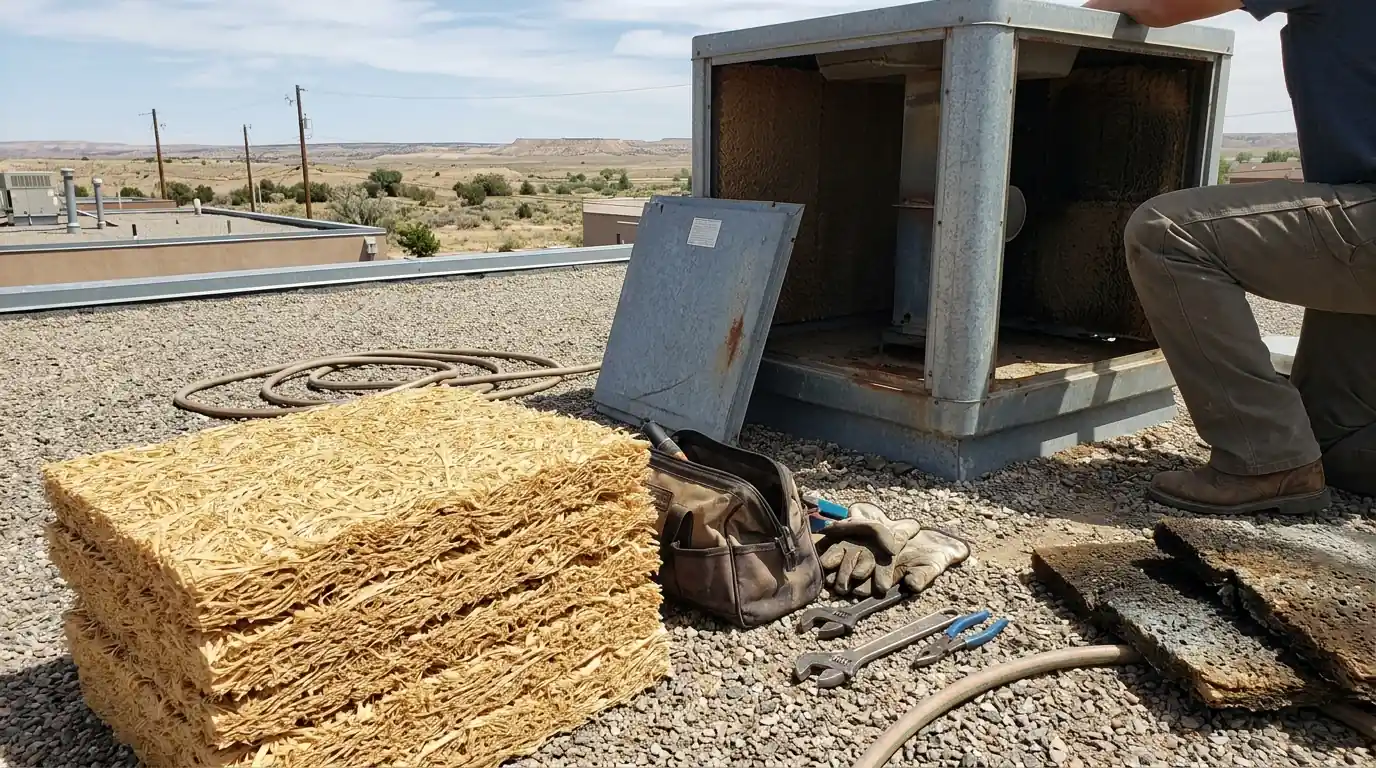
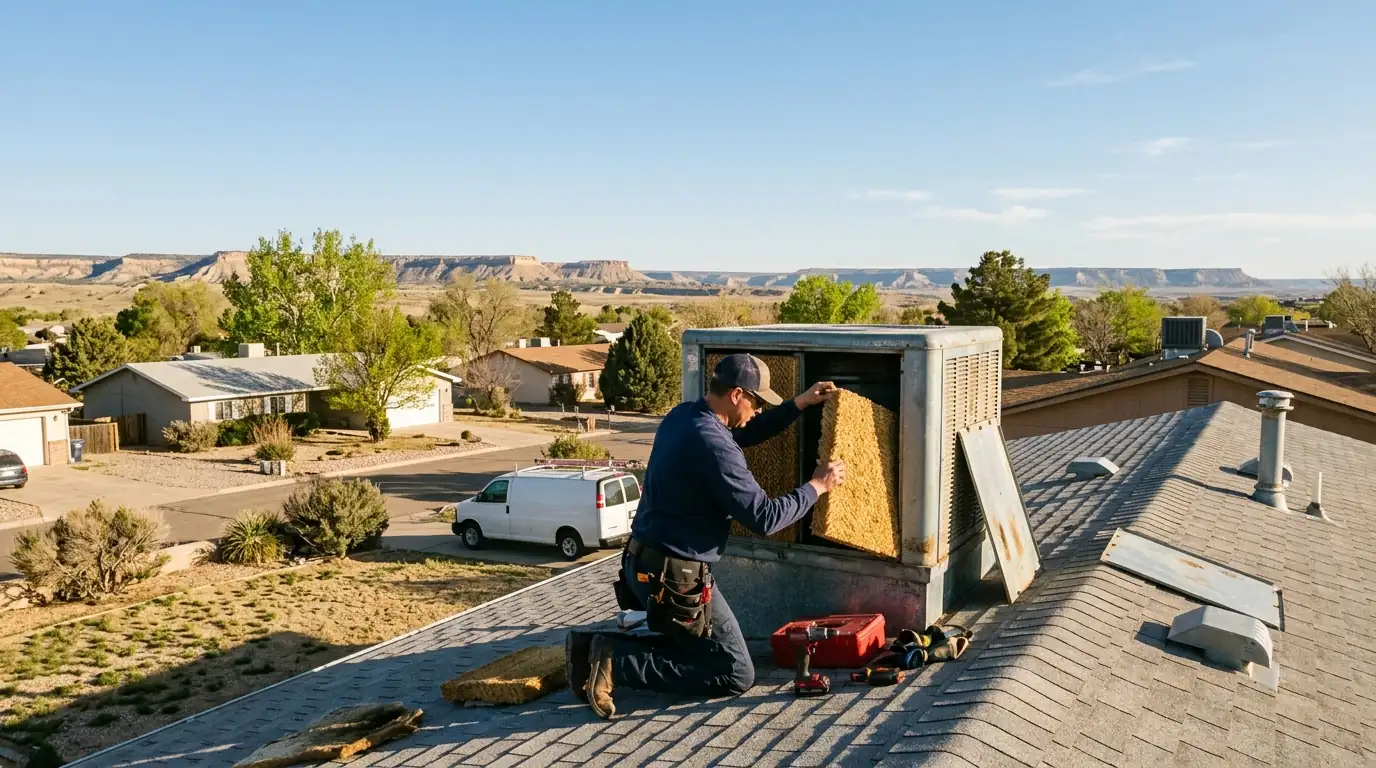
Hard water leaves a chalky crust on cooler pads, and a crusted pad blocks airflow and holds less water. If your pads are stiff, collapsed, dark or smell musty, replace them. Aspen pads in this area usually need a change every spring. Thicker rigid media lasts longer when it's rinsed and kept clean.
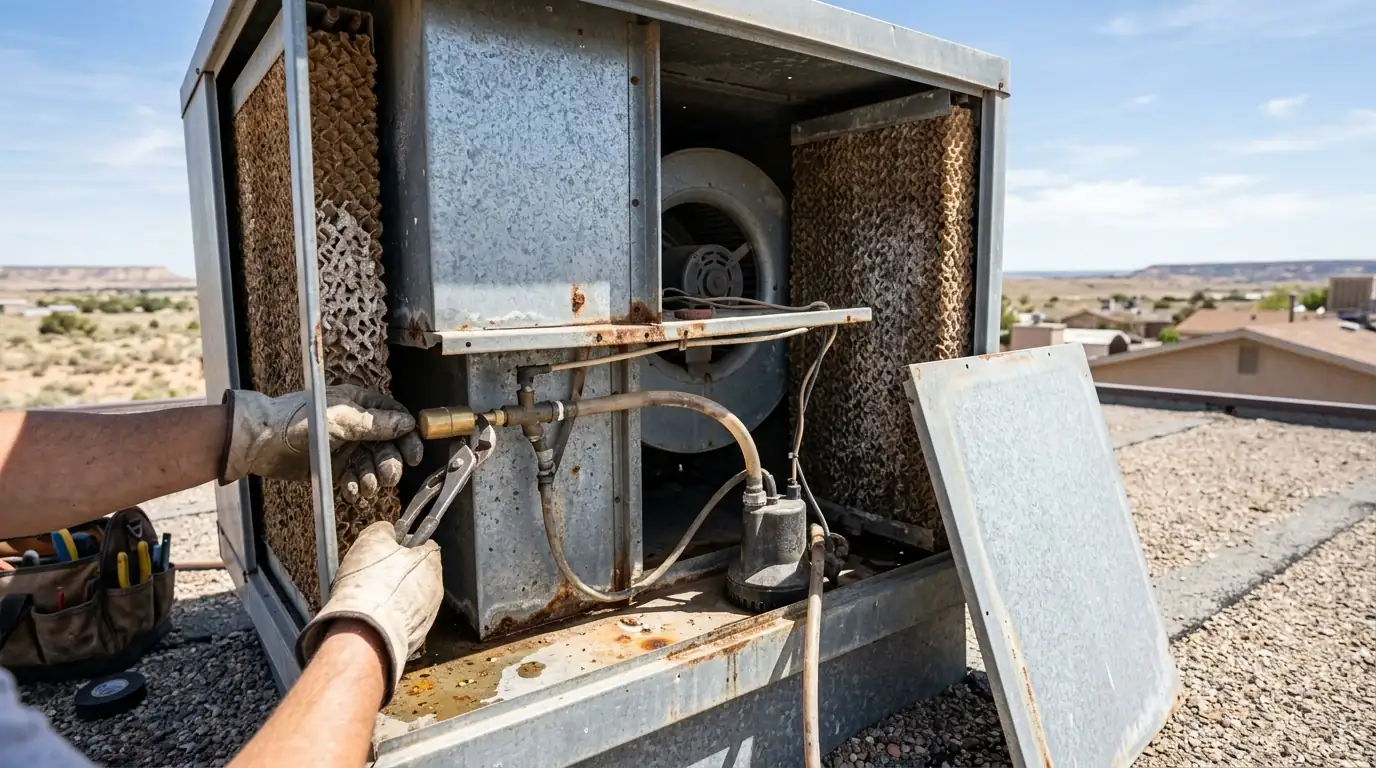
Reconnect the supply line and open the valve slowly while you watch the float. It should shut the water off about an inch below the overflow. Then run the pump by itself and make sure every distribution tube wets the top of each pad evenly. Dry streaks mean a clogged tube or a weak pump.
- Pump runs but pads stay dry: clear the intake screen and distribution tubes
- Water reaches the overflow: bend the float arm down or replace a worn float valve
- Drip at a fitting: snug or replace the compression nut and ferrule
- Line split over winter: cut out and replace the cracked section before filling
Check the belt, motor and blower before the first hot day
With the power still off, spin the blower wheel by hand. It should turn freely with no grinding, rubbing or wobble. Press the belt halfway between the pulleys. Roughly half an inch to an inch of give is normal. A glazed, cracked or frayed belt will squeal and slip, so replace it now rather than in July.
Some older motors and blower bearings have oil ports that take a few drops of non-detergent oil each spring. Restore power and run the cooler on low, then high. A motor that hums without turning, trips the breaker or smells hot usually points to a seized bearing, a failing motor or a bad switch. Our tech checks the windings, switch and bearings and replaces what's worn.
Give the air somewhere to go, then know when to call
An evaporative cooler pushes outside air in, so that air needs a way out. Open a window or two a few inches, ideally in the rooms you want cooled. If your cooler has a bleed-off line, let it run a slow trickle. It carries dissolved minerals away instead of letting them bake onto the pads.
Some problems are worth a phone call instead of a second trip up the ladder: a leaking pan, a motor that won't start, a frozen or cracked line, a breaker that trips every time, or water stains on the ceiling under the cooler. A spring service with new pads in this area typically runs about $138-$267, depending on cooler size and parts. That's a rough local range, not a quote.