Why the shutdown should beat the first hard freeze
Most coolers around Farmington run from about May into September. After that, the unit sits on the roof full of water while afternoons stay mild and nights start sliding toward freezing. The first cold snap rarely waits for a convenient weekend. One hard night can freeze the water in a thin supply line, the float valve body or the pump housing, and ice expands enough to crack all three.
The damage often hides until spring. A split line under the cover doesn't leak while the valve is closed, so nobody notices until the water goes back on and starts running into the roof deck or the attic. Draining everything in fall takes about an hour. Finding that leak in April can cost a ceiling.
Turn off and drain the water supply line first
Kill power at the wall switch and at the disconnect on the roof or the breaker, so nothing starts while you work. Then find the shutoff for the cooler line. In many Farmington homes it is a small valve under the kitchen sink, in the laundry room, beside the water heater or at an outside hose bib, often feeding a thin copper or plastic tube up the wall.
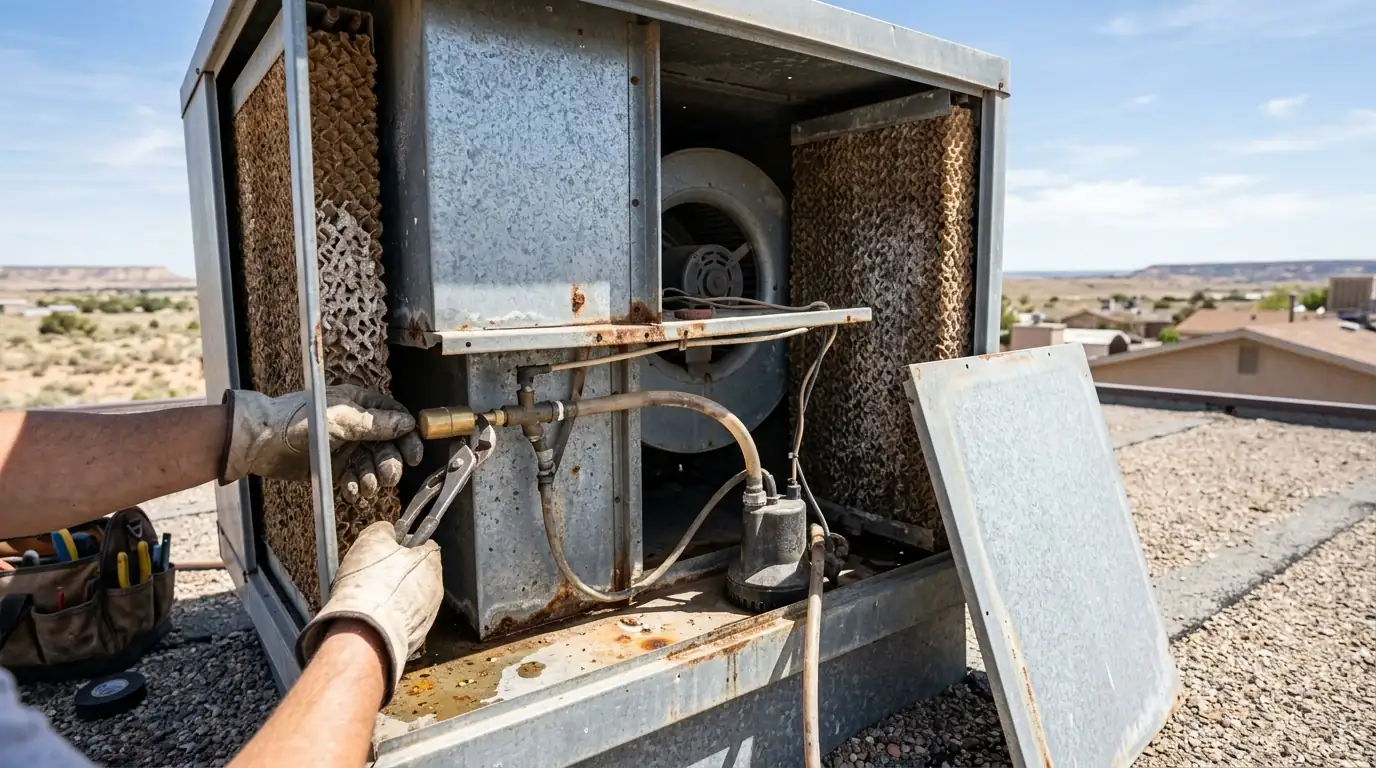
Close that valve, then go up and loosen the compression nut where the line meets the float valve. Let the tube drain completely. Any sag or low loop along the roof can trap water, so lift the line to run it out or blow it clear with low air pressure.
- Close the supply valve all the way, then open the cooler end so air can enter
- If it is a saddle valve clamped onto a pipe, watch it for a slow drip once closed
- Cap or tape the open end of the tube so wasps and dust stay out
- Tag the shutoff so whoever reopens it in spring knows what it feeds
Drain the pan and clear out a summer of scale
Pull the overflow standpipe or open the drain fitting and let the reservoir empty along the roof drain path, not onto a walkway that will ice up. A summer of hard water leaves a white crust and a layer of sludge, and monsoon storms wash in grit off the roof. Scoop it, sponge the corners and let the pan air dry with a side panel off for a few hours. If your cooler has a bleed-off tube running to a drain or a planter, disconnect it and let it empty too.
A dry pan is the goal. Standing water and wet sludge are what start rust spots during a long winter. While the pan is open, look for orange stains or pinholes near the seams. You don't have to fix them today, but you'll want them on the list before spring.
Pull the pads or let them dry out?
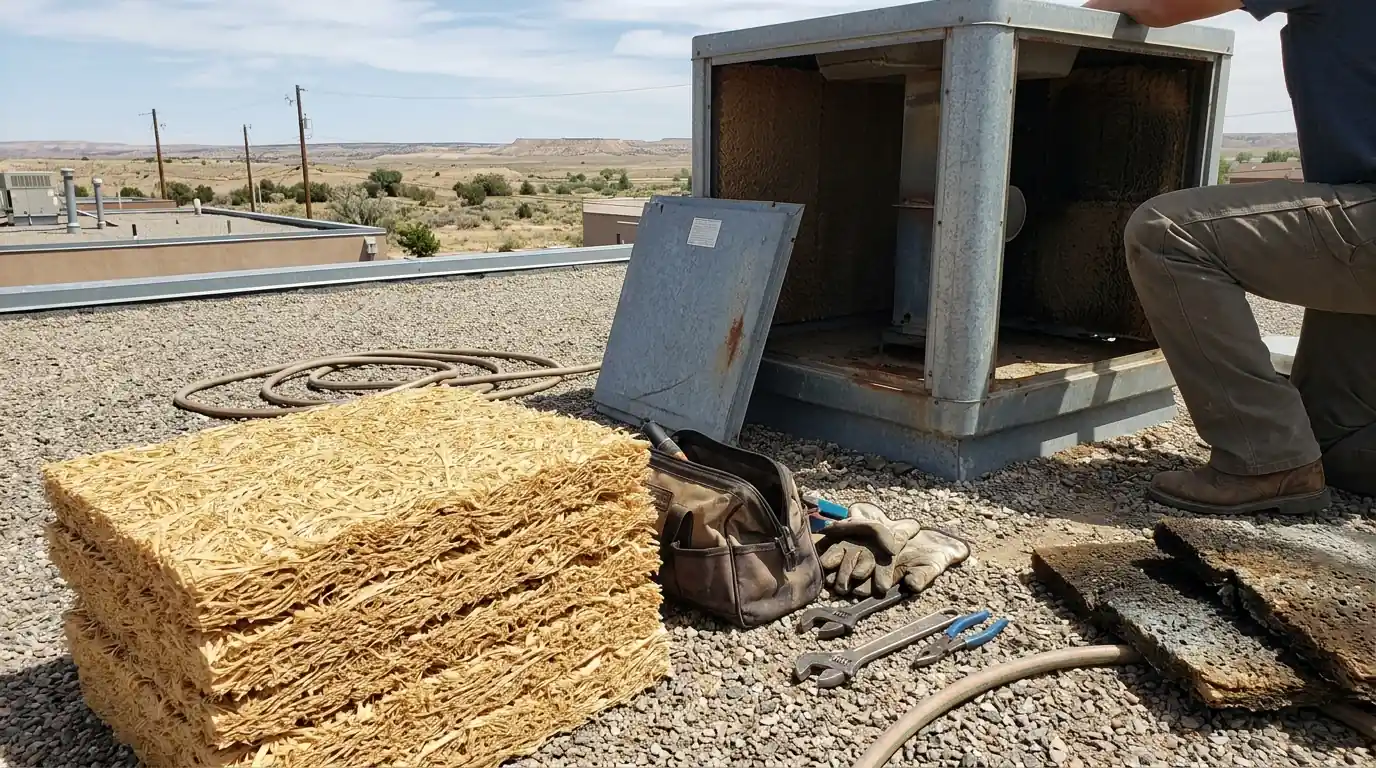
Aspen pads that ran all summer on our mineral-heavy water are spent by fall. They are stiff with scale and packed with dust, and a wet pad left in a covered cabinet stays damp for weeks and can grow mold. We recommend pulling them out, bagging them and starting spring with a fresh set. It also makes the cabinet less inviting to mice and birds hunting for nesting material.
Rigid media pads cost more and can last several seasons. Rinse them gently with a garden hose from the air side, set them somewhere dry and flat, and keep them out of the sun. Clean the spreader troughs and water tubes at the top of each panel while the pads are out, since scale that dries there over winter turns hard as rock.
Unhook the pump and look over the belt and motor
Unplug the pump from its outlet inside the cabinet, lift it out of the pan and rinse the intake screen. A pump that sits in a puddle through freeze and thaw cycles tends to crack or seize. Store it in the garage with the pads, which also lets you test it in a bucket next spring before climbing up again.
With the power still off, turn the blower wheel by hand and check the belt for cracks, glazing or fraying. Some owners loosen the belt for winter so it doesn't take a set around the pulleys. Write down the belt size and any noise you heard in August. Parts are easier to line up in January than on the first ninety-degree day.
Cover the cabinet and close off the duct for winter
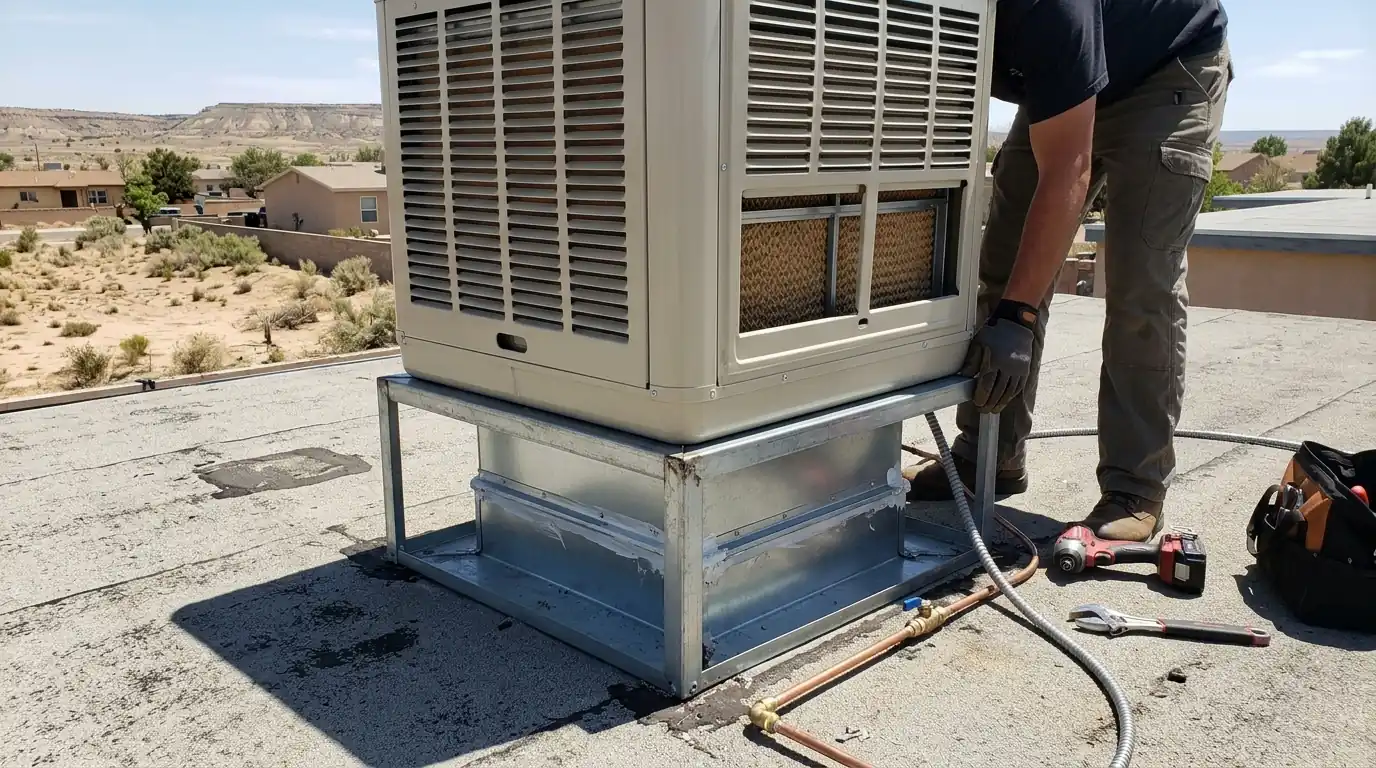
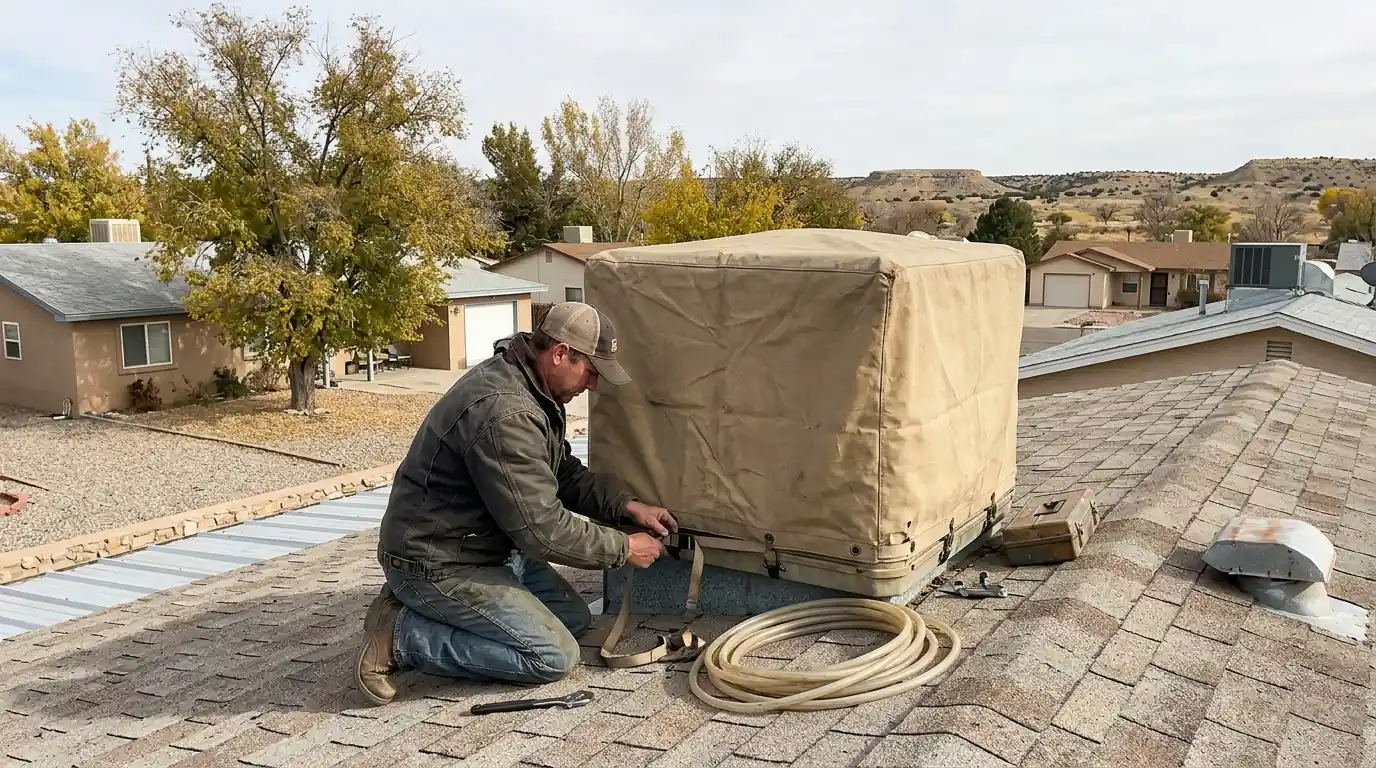
Outside, fit a cover made for your cooler's size and strap or tie it down well. Spring wind here peels loose covers off roofs, and a flapping cover rubs paint and lets snow drift into the cabinet. Breathable covers let trapped moisture escape. A plastic tarp wrapped tight tends to hold condensation against the metal.
Inside, the cooler duct is an open path from your living room to the roof. Close the damper in the duct if your system has one, and fit a magnetic or snap-in cover over the ceiling grille. Without that, warm furnace air rises out through the cooler all winter and cold air sinks back down into the house.
- Wall control set to off, and power off at the disconnect
- Supply valve closed and the line drained, capped and tagged
- Pan empty and dry, bleed-off tube disconnected
- Pads out or rinsed and dry, pump stored indoors
- Cover strapped down, duct damper closed, ceiling grille sealed
What to check before winter, and when to call us
Fall is the best time to see what the cooler needs, because the summer's problems are fresh in your mind. Rust-through in the pan, a float valve that kept overfilling, a motor that ran hot or a belt that squealed all deserve a look before the unit disappears under a cover. Window units get the same steps, plus a check of the seal around the frame so cold air stays out.
We do fall shutdowns across the area, and our techs write down worn parts so the spring visit goes faster. A fall winterizing visit with a cover typically lands around $94-$187 here, depending on cooler size and roof access. That's a local range, not a quote. When warm weather returns, the startup is its own short list of steps.