How long do household appliances usually last?
Age is the first number we look at, because it tells you how much life is left to protect. The ranges below are rough, drawn from what turns up on service calls, and plenty of units beat them or fall short. A dishwasher on hard well water may wear out faster than the same model on softened city water. A freezer living in a hot garage works harder than one tucked in a cool pantry.
If you don't know the age, check the serial number. Most brands code the build year and week or month into it, and our tech can read it on the spot.
- Refrigerators: roughly 10 to 15 years, with simple top-freezer models often lasting longest
- Chest and upright freezers: roughly 12 to 20 years
- Dishwashers: roughly 8 to 12 years
- Top-load and front-load washers: roughly 9 to 14 years
- Gas and electric dryers: roughly 11 to 15 years
- Ranges and wall ovens: roughly 13 to 18 years, often longer for basic gas models
- Microwaves: roughly 7 to 10 years
- Tank water heaters: roughly 8 to 12 years, and hard water can cut that short
- Evaporative coolers: the cabinet can go many seasons with care, while pads, pumps and belts are wear parts
The half-price rule and when to bend it
A simple test works for most kitchens and laundry rooms. If the repair costs less than half of what a comparable new appliance would run, and the unit sits inside the first half of its normal lifespan, repair usually wins. Once it's past the middle of that range and the bill is large, replacement starts to look better.
Count the full price of a new unit, not just the sticker. Delivery, haul-away, new supply hoses, a dryer cord or gas connector, a propane conversion kit for homes off city gas, and cabinet trim for a built-in all add up. A panel-ready or built-in refrigerator often justifies a big repair, because replacing it means finding a new unit that fits the same opening.
The rule bends for reliability, too. A washer that has needed three different repairs in two years is telling you something, even if each bill was small.
Sealed-system and compressor failures are the real fork in the road
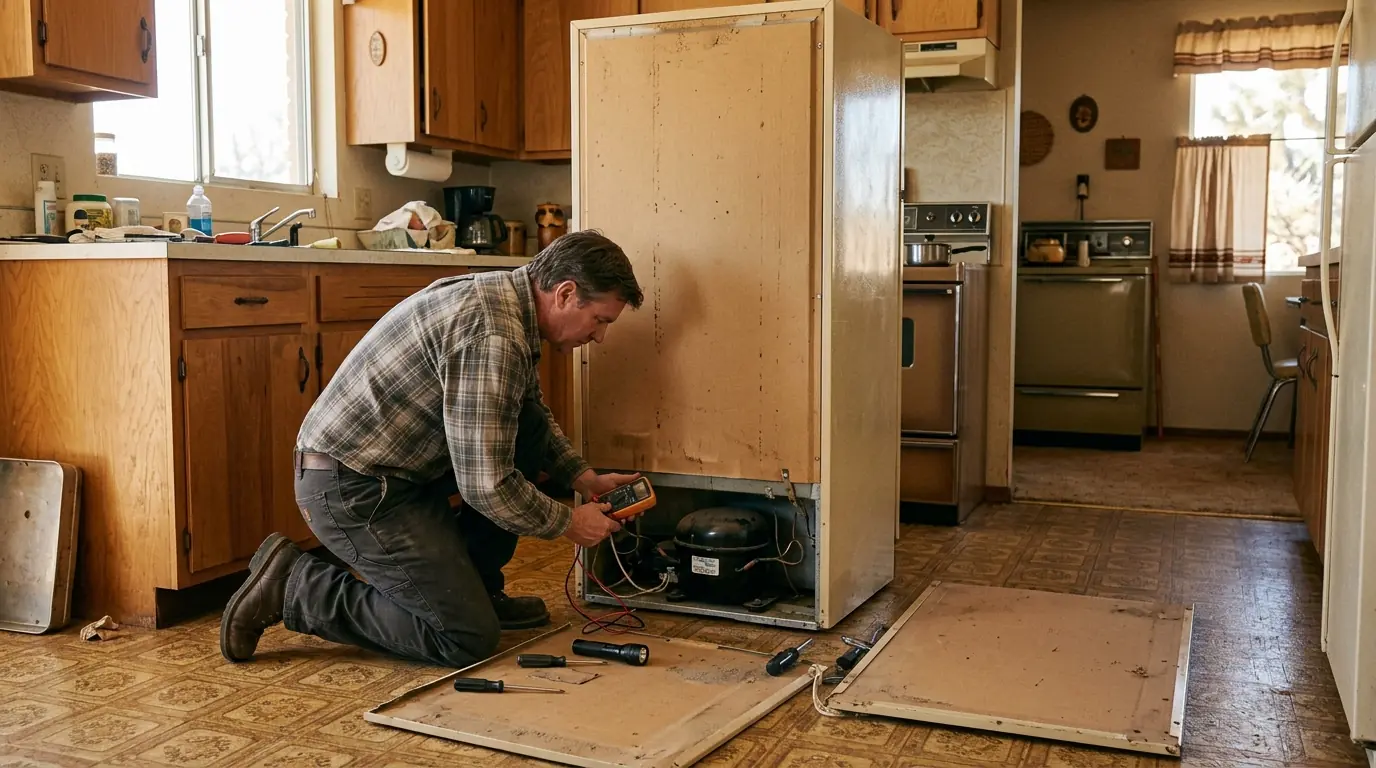
The sealed system is the closed refrigerant loop in a refrigerator or freezer: compressor, condenser, evaporator, filter drier and the tubing between them. When it fails, both sections usually warm up while the fans keep running and the light stays on. A compressor that clicks on, hums for a few seconds and clicks off again is another common clue.
Before anyone says the word compressor, our tech rules out the cheaper parts that mimic it. A failed start relay or overload, a dead condenser fan motor, a defrost fault that has iced over the evaporator, or a bad control board can all look like a sealed-system failure. We test the start components and measure the compressor windings with a meter before delivering bad news.
A true sealed-system repair means finding the leak or swapping the compressor, brazing in a new filter drier, pulling a vacuum and weighing in a fresh refrigerant charge. Around Farmington that work typically falls in the $587-$1,184 range, depending on the model and the part. It can be worth it on a newer French door or built-in unit. On a 13-year-old top-freezer, we'll usually suggest putting that money toward a new one.
Repairs that are almost always worth doing
Most service calls aren't sealed-system failures at all. They're worn parts that cost far less than a new appliance and give back years of use. These are the repairs we rarely talk anyone out of, unless the unit is very old or rusting apart.
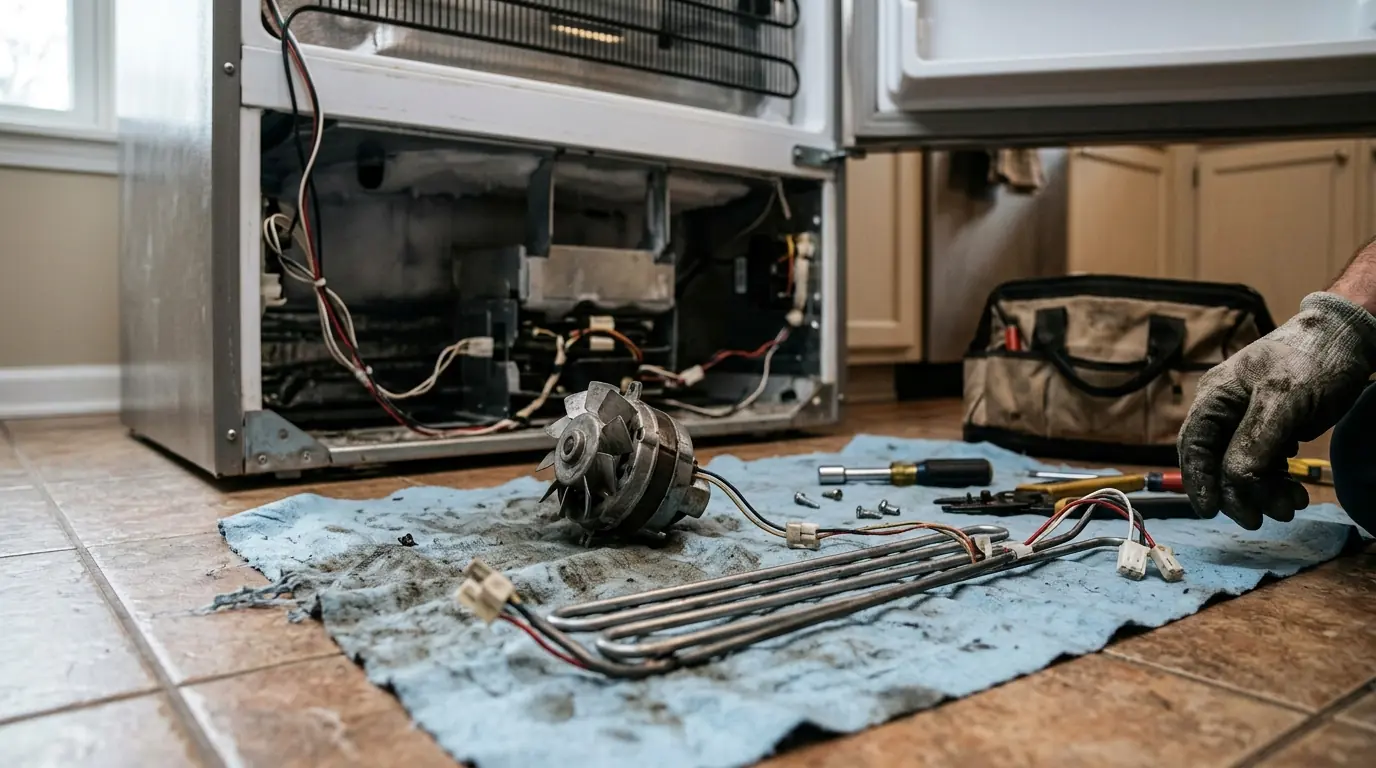
- Defrost heater, defrost thermostat or evaporator fan motor on a refrigerator that keeps frosting up
- Door gasket on a fridge or freezer that sweats along the edges or lets warm air in
- Bake element or hot surface igniter on an oven that won't come up to temperature
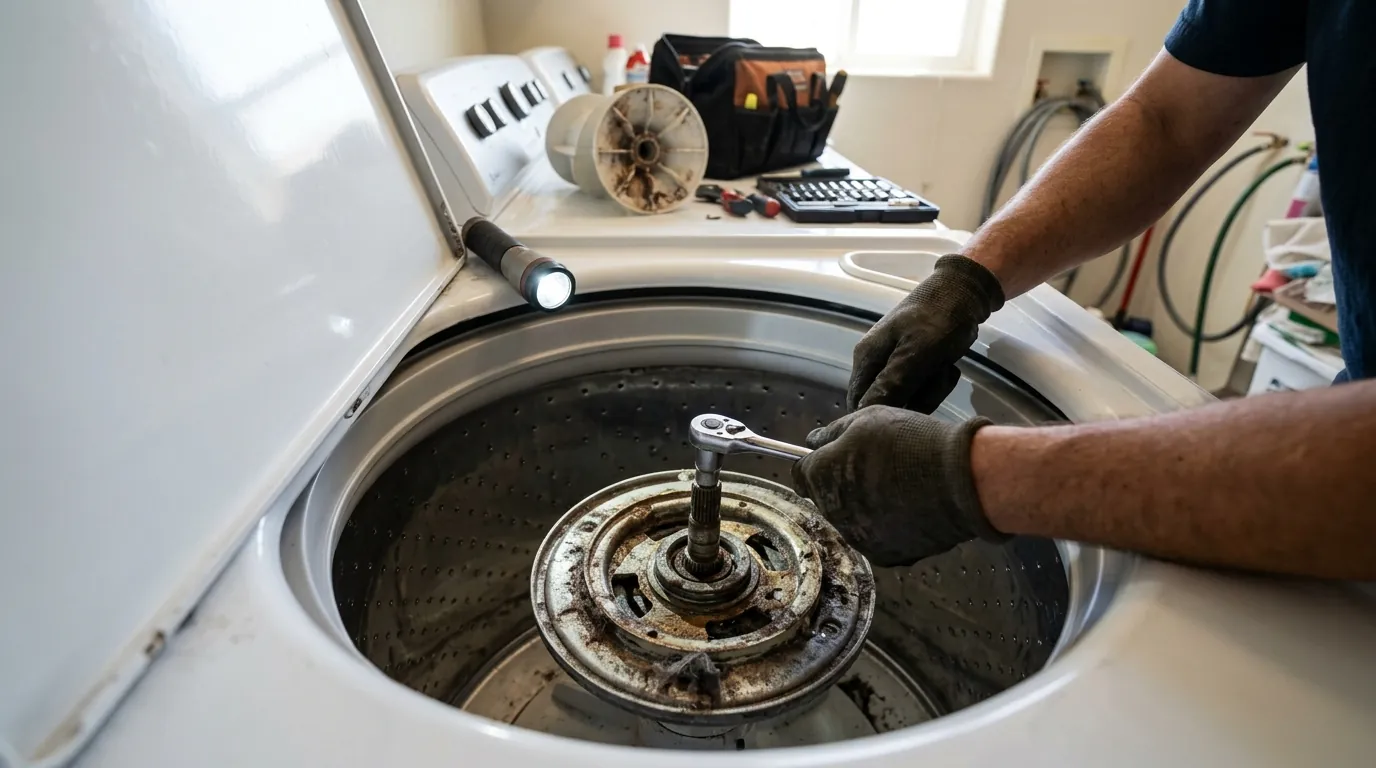
- Drain pump, inlet valve or lid switch on a washer that stalls mid-cycle
- Belt, drum rollers, idler pulley or thermal fuse on a dryer that squeals or tumbles cold
- Wash motor or circulation pump on a dishwasher that hums but leaves food on the plates
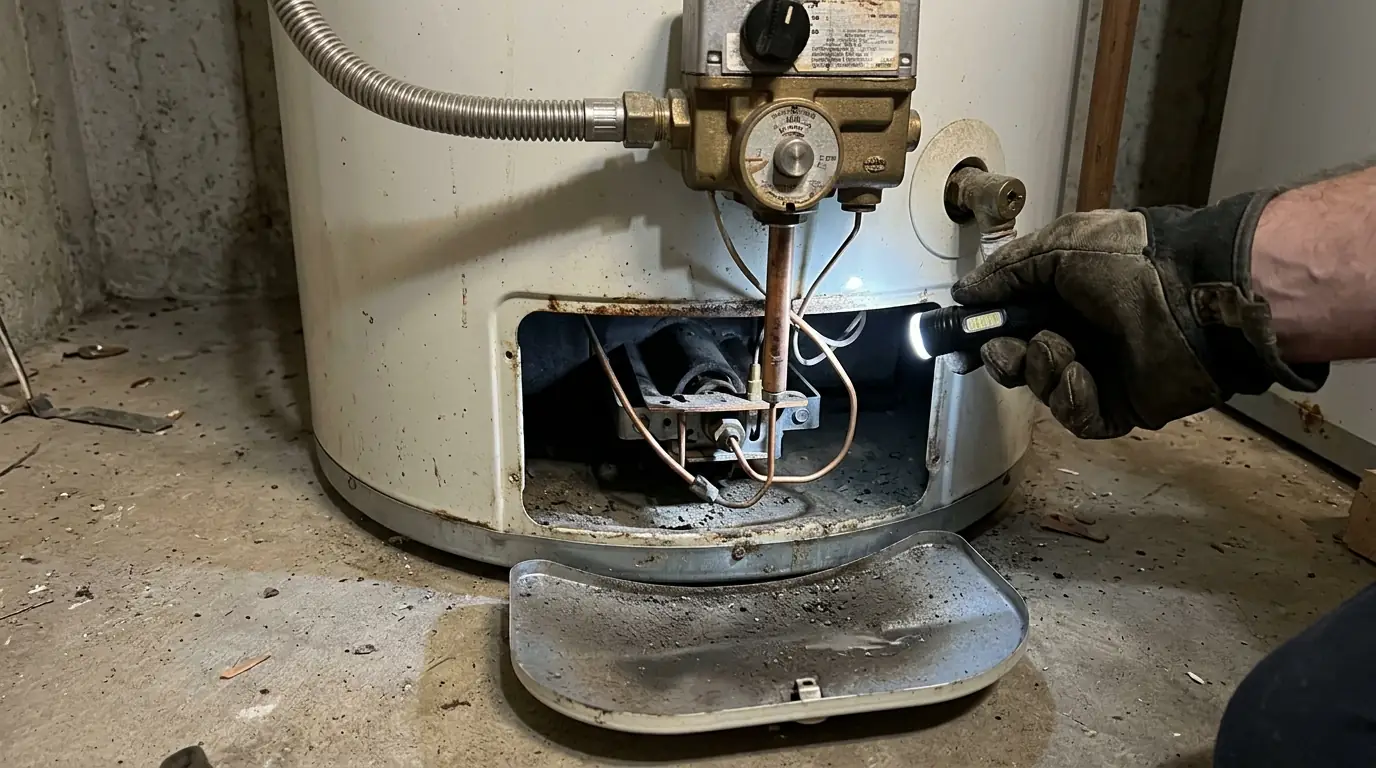
- Thermocouple or flame sensor on a gas appliance that lights and then shuts itself off
- Ice maker module or water valve on a refrigerator that quietly stopped making ice
Signs that replacement is the smarter spend
Some failures end the conversation no matter how good the rest of the appliance looks. When we find one of these, we say so plainly and skip the repair pitch.
- A water heater leaking from the body of the tank rather than a fitting or valve
- Rust that has eaten through a dishwasher tub, washer cabinet or swamp cooler pan
- A cracked outer tub or broken spider arm on an older front-loader, once parts approach the cost of a new machine
- A control board or part the manufacturer no longer makes, with no dependable substitute
- A compressor or refrigerant leak on an older, lower-priced refrigerator
- Different parts failing one after another within a year or two
How Four Corners conditions change the math
Local conditions shift these numbers. Hard, mineral-heavy water, common on private wells around San Juan County, scales up water heater tanks, dishwasher heaters and refrigerator water valves. A water heater fed well water for nine years without a flush is closer to the end than its age suggests. Fine dust from windy springs packs condenser coils, which makes compressors run hot and long.
Garages that swing from summer heat to January nights in the teens wear down second fridges and freezers early. Homes on propane need the right orifices and high-altitude setup on any new gas range or dryer, so that conversion belongs in the replacement price you compare. And if you ever smell gas near an appliance, get everyone outside first, then phone 911 or the gas utility once you're out. Call us after they've cleared the house.
Getting an honest answer before you spend anything
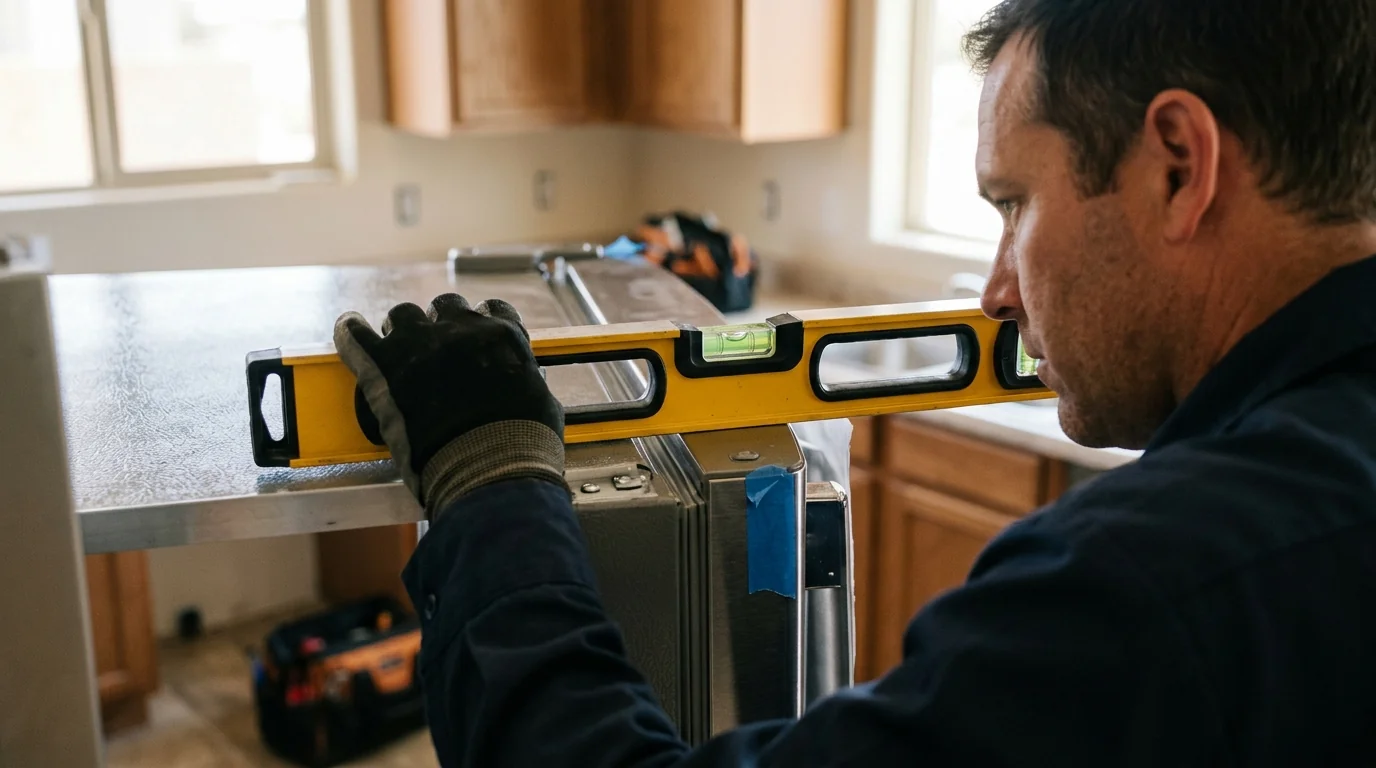
When you call, have the model and serial number handy and describe what the appliance is doing. Our tech diagnoses the problem first, then gives you the repair price before any work starts. If the numbers point toward replacement, we'll tell you, and the decision stays yours. If you do replace it, Next Century Gadgetry can set, connect and test the new unit as well.