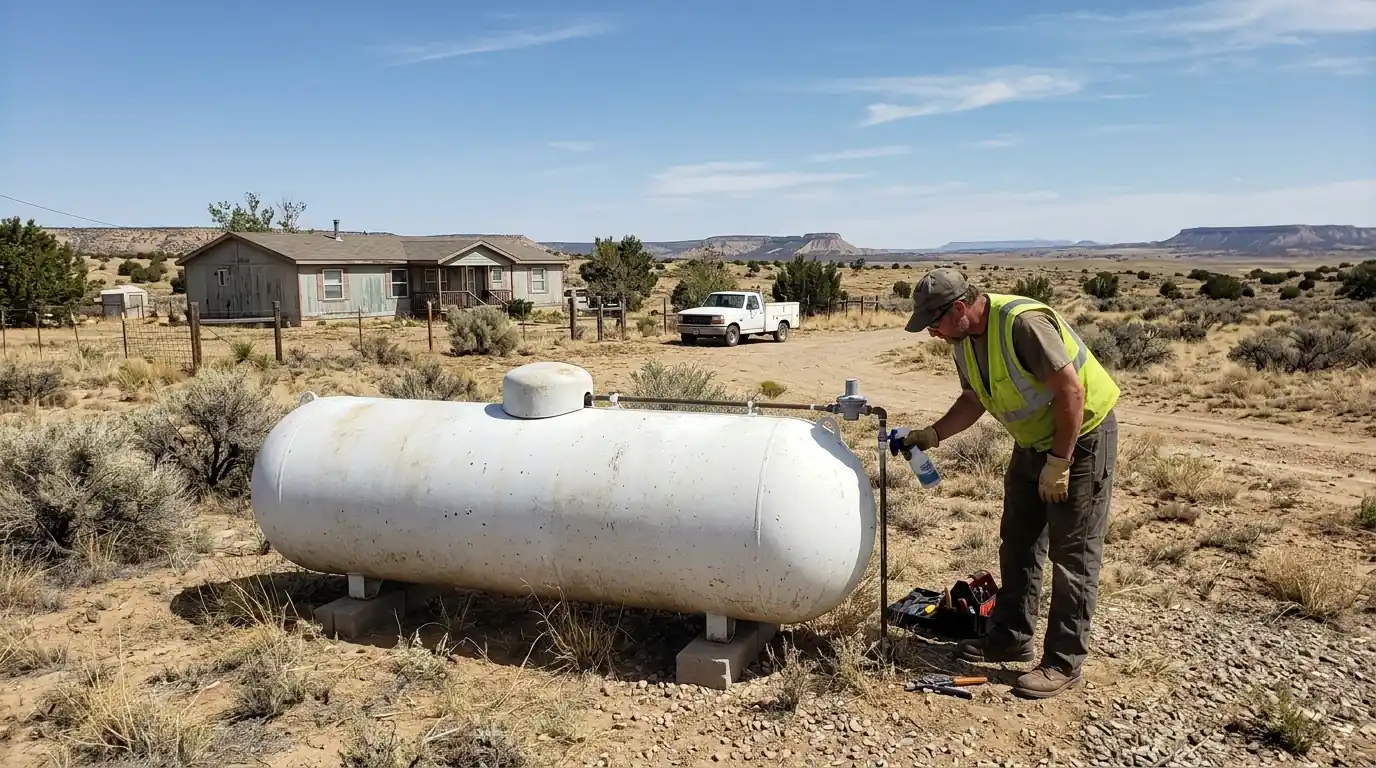
Why propane and natural gas need different setups
Propane carries a lot more heat in each cubic foot than natural gas, and it's delivered at higher pressure. To get the same flame, an LP burner needs much smaller orifices and a regulator set to a higher outlet pressure than natural gas uses. Put propane through natural gas orifices and the burner gets far more fuel than it can burn.
Run it the other way, a propane-set appliance on natural gas, and the flame is weak and lazy. Burners may not stay lit, the oven may never reach temperature, and a water heater can struggle. Either mismatch also makes it harder for the appliance's safety devices to work the way they were designed.
Never just swap the hose and light it
We hear it often on rural calls: a range came from a house in town, and someone hooked it to the propane line with a new connector. It lit, so it seemed fine. It isn't. The orifices and regulator are still set for natural gas, so the flame runs tall, yellow and sooty, and the oven can overheat its cabinet and nearby wiring.
A new flex connector doesn't change what's inside the appliance. Neither does turning the knobs down. If a gas appliance has moved between a town house and a propane house, assume it needs conversion until the data plate and the parts prove otherwise.
- Tall, yellow or roaring flames on the cooktop
- Soot on pans, the backsplash or the oven ceiling
- An oven running far hotter than the dial
- A sharp smell or stinging eyes while cooking
What's in an LP conversion kit?
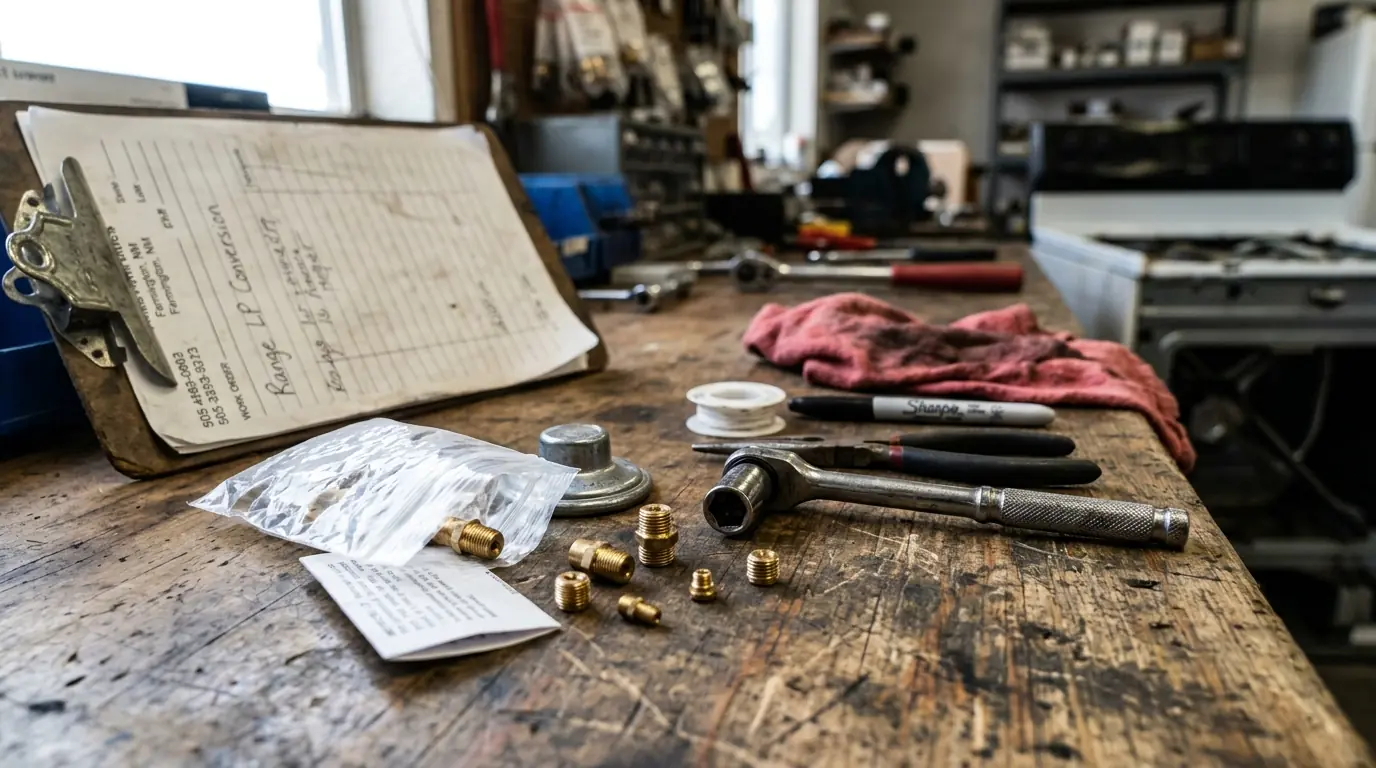
Every manufacturer handles it a little differently, and the right kit is matched to the exact model number. Some ranges ship with the LP orifices tucked inside the cabinet. Others need a kit ordered separately. Dryers and water heaters often need their own kits and, on some models, a different gas valve.
- Burner orifices sized for propane, one per burner plus the oven
- A change to the appliance regulator, often flipping or swapping a cap
- Adjustment of the low-flame setting on each cooktop valve
- A conversion label so the next tech knows what fuel it's set for
How we convert and test an appliance for propane
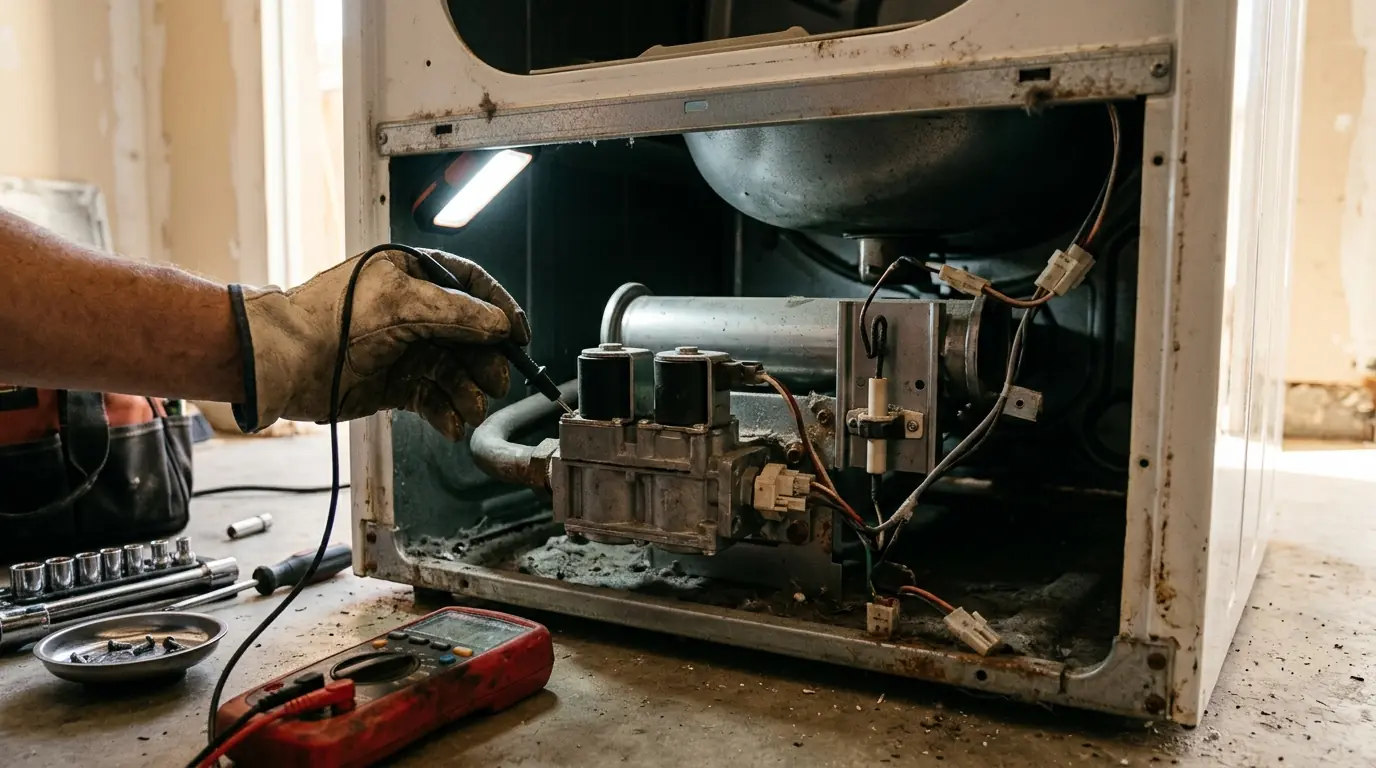
We start with the data plate and model number, then confirm the right kit. Our tech shuts the gas off at the appliance, swaps each orifice, converts the regulator and sets the low flame on each burner. On a dryer we convert the burner orifice and check the gas valve coils and flame sensor while we're in there.
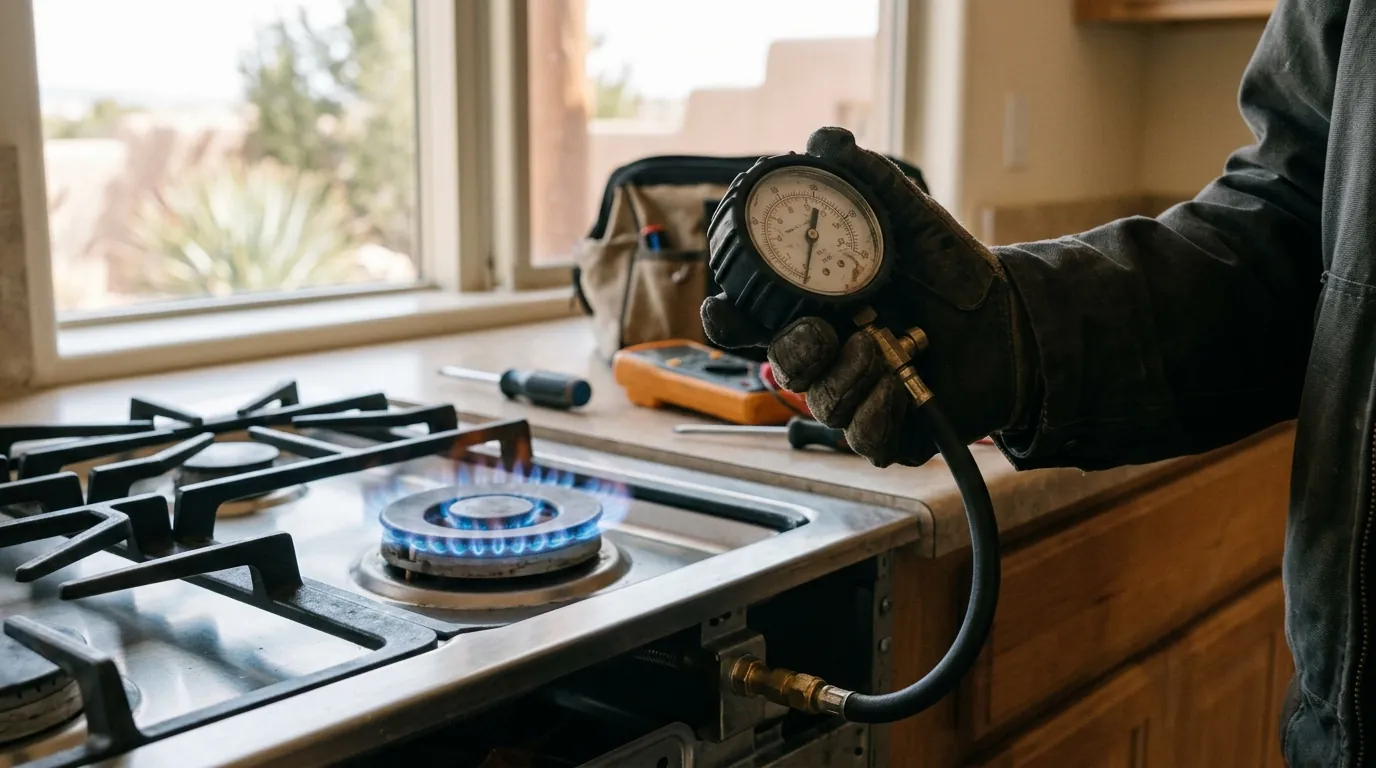
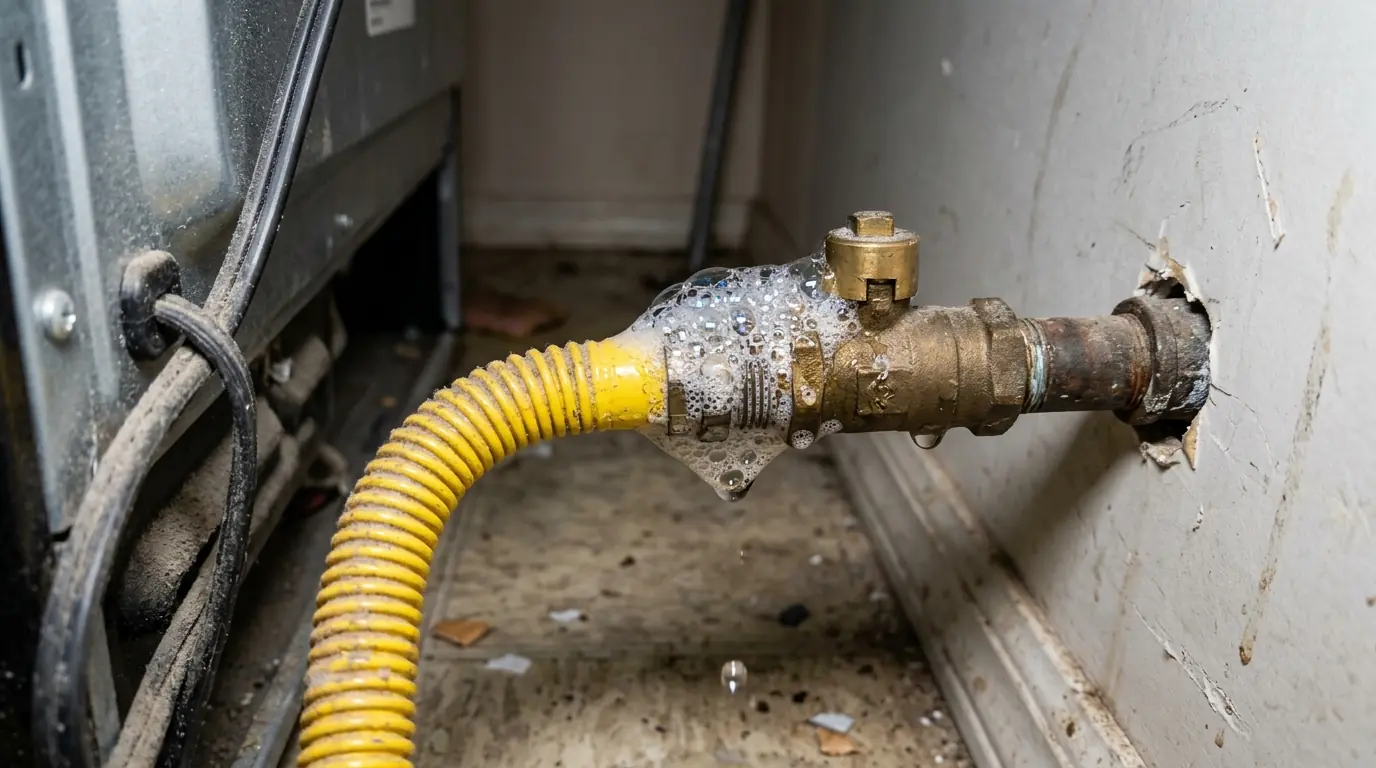
Then we turn the gas back on, leak-test every joint we touched and light each burner. We watch for a steady blue flame on high and low, check that the oven cycles normally and look for lifting or soot. Because rural Four Corners homes sit at high elevation, we also follow the manufacturer's altitude instructions. A typical single-appliance LP conversion in this area runs about $136-$274, depending on the kit and model. Consider it a typical figure for the area, not a quote.
Tank pressure, regulators and connectors outside the house
The propane tank has its own regulators that step tank pressure down before it reaches the house line. Your propane supplier owns and services that side. We handle the appliance end: the shutoff valve, the connector, the appliance regulator and the burners. If an appliance acts up and the tank side looks suspect, call your supplier to check the tank regulator too.
Use a connector rated for gas and long enough to reach without a kink. Don't reuse an old flex line that's been bent back and forth. In winter, a nearly empty tank can lose pressure on a cold night, which shows up as weak flames on every appliance at once.
If you smell propane
Propane is heavier than air, so a leak can pool low, in a basement, crawlspace or along the floor. If you smell it, don't operate switches or light anything. Leave the house, shut off the tank valve only if it's safe and easy to reach, and call your propane supplier or 911 from outside. When they've cleared the house, call us for the range, dryer or water heater. Our phones are answered 24/7.