What a monsoon storm does to your home's power
Through July and August, afternoon storms build over the mesas and roll across San Juan County with lightning, gusty wind and short bursts of heavy rain. They also bring power blips: lights that flicker, clocks that blink, and outages lasting a few seconds or a few hours. For appliances, those blips matter more than the rain does.
The damage rarely comes from a direct strike on the house. It comes from surges on the incoming lines when lightning hits nearby, and from the spike that can arrive when power is restored after an outage. Several flickers in a row can be as hard on electronics as one big hit, because each one stops and restarts everything that's plugged in.
Why control boards take the hit first
Older appliances ran on mechanical timers, switches and thermostats that shrug off most surges. Newer ones depend on electronic control boards: a main board that runs the cycle, a user interface board behind the touchpad, and on many refrigerators and washers, an inverter board that drives a variable-speed compressor or motor. These boards rely on low-voltage power supplies and small components that a surge can scorch in an instant.
When a board fails after a storm, the symptoms vary. The display might go blank, flash an error code, beep for no reason or ignore the touchpad. A refrigerator may keep its light on while the compressor never starts. A washer may fill but refuse to spin. Sometimes there's a faint burnt smell near the control panel or a visible scorch mark on the board itself.
Surge protection that actually helps
Surge protection works best in layers. A whole-home surge protective device at the electrical panel takes the edge off spikes coming in on the utility line, and it covers hard-wired appliances like ranges, wall ovens and dishwashers that can't use a plug-in strip. That device mounts inside the electrical panel, so it isn't a do-it-yourself job.
At the outlet, choose surge protectors rated for appliances, not a bargain power strip pulled from a desk. For refrigerators and freezers, look for one built for compressor loads; some add a short delay before power returns, so the compressor doesn't restart into an unstable line. Read the appliance manual too, since some manufacturers spell out what the unit should be plugged into.
- Microwave and countertop appliances: a point-of-use surge protector with a solid joule rating
- Refrigerator and freezer: a protector made for compressors, ideally with a restart delay
- Washer and dryer: a heavy-duty surge outlet, plus panel protection for an electric dryer on 240 volts
- Range, wall oven and dishwasher: protection at the panel, since most are hard-wired
- Swamp cooler: switch it off at the wall control whenever lightning is close
What to unplug when a storm is close
You don't need to unplug the whole house every afternoon. When thunder is close and you'll be home to plug things back in, a few minutes of unplugging protects the most vulnerable boards.
- Unplug the microwave and any countertop appliance with a digital display
- Unplug the washer and dryer if they aren't running, or hold off on starting a load
- Avoid starting a dishwasher cycle until the storm passes
- Turn the swamp cooler off at its control so the pump and blower motor rest
- Leave the refrigerator and freezer plugged in unless you'll be right there to reconnect them
After the power comes back on
The first minutes after an outage are when restarting everything at once can stress the circuits and the boards. A short routine helps.
If the house smells of gas when the power returns, don't relight a thing. Walk everyone out and make the call to 911 or the gas utility from the yard; we'll come for the appliance once it's declared safe.
- Wait a few minutes after power returns before running the washer, dryer or dishwasher
- Listen for the refrigerator compressor, since many models wait several minutes before restarting
- Check GFCI outlets in the garage, laundry room and kitchen, which often trip during a storm
- Reset clocks and look for error codes on ovens, microwaves and washers
- Keep the freezer shut; a full, closed freezer usually holds food safely for about two days
- Check a gas water heater with a standing pilot, which may need relighting by the steps on its label
Is it the control board or something cheaper?
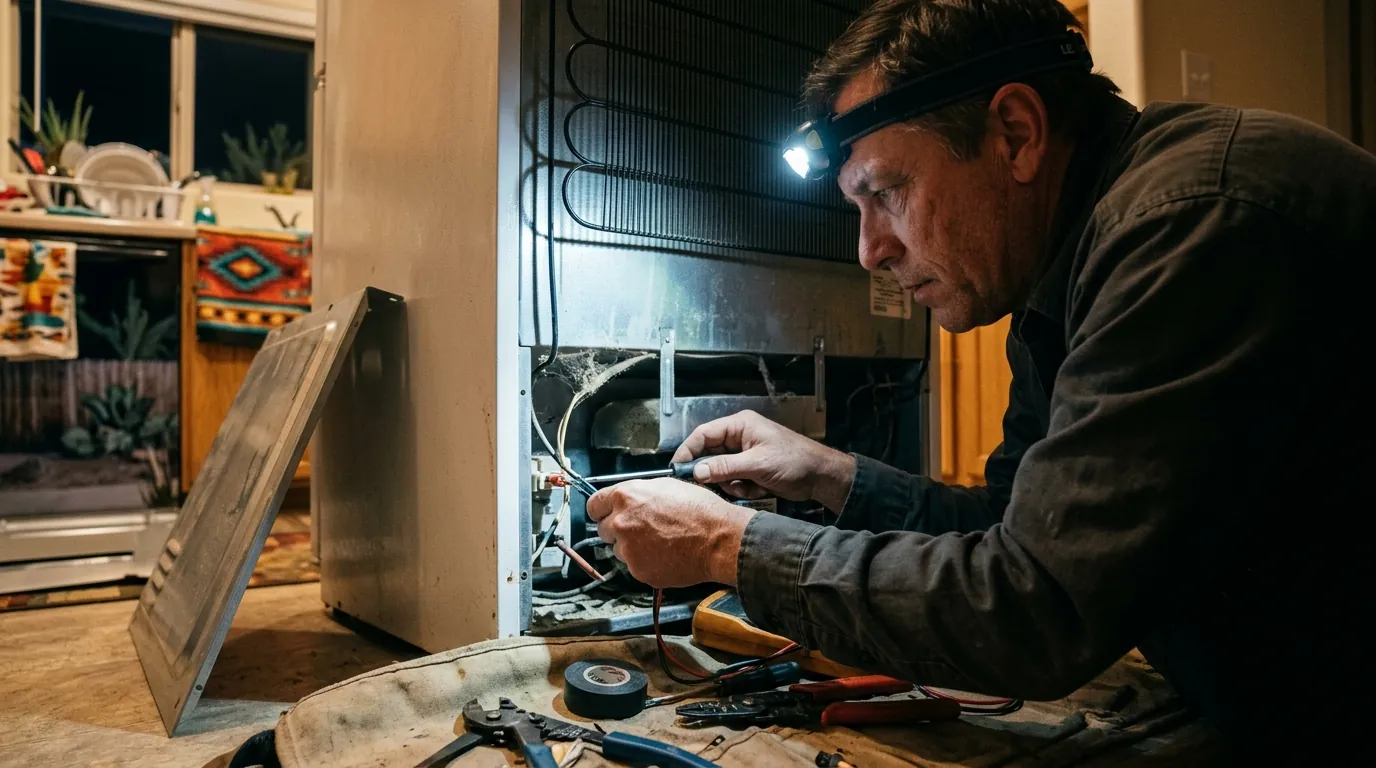
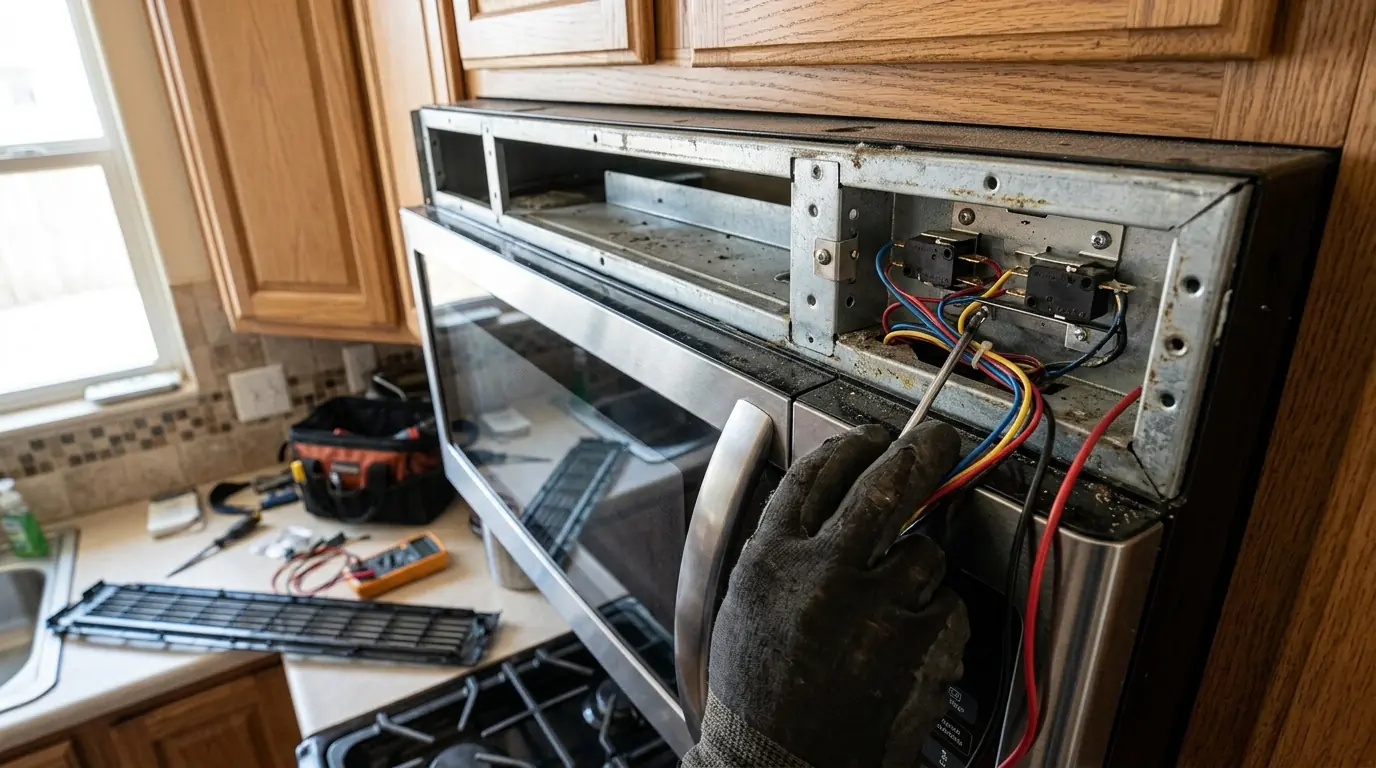
A dead display after a storm doesn't always mean a new board. Our tech checks the simple things first: voltage at the outlet, a tripped GFCI or breaker, the board's own fuse, the door switch or lid switch, and the thermal fuse on a dryer. Loose or scorched connectors on the wiring harness also show up after storms and can often be fixed without replacing anything big.
When the board really is the problem, replacement is usually straightforward. Control board jobs around Farmington typically run $218-$517, depending on the appliance and the part, and that's a typical range, not a quote. If the board is discontinued or the appliance is old, we'll talk through whether the repair still makes sense before ordering anything.
When a storm outage turns into an emergency
Most storm damage can wait for a normal visit, with same-day service when the schedule allows. A freezer full of food that won't restart, or a refrigerator that keeps warming after the lights came back, is different. Phones here are staffed 24/7, and for a dead freezer full of food we'll send a tech at any hour. Have the model number ready and tell us what happened when the power dropped.