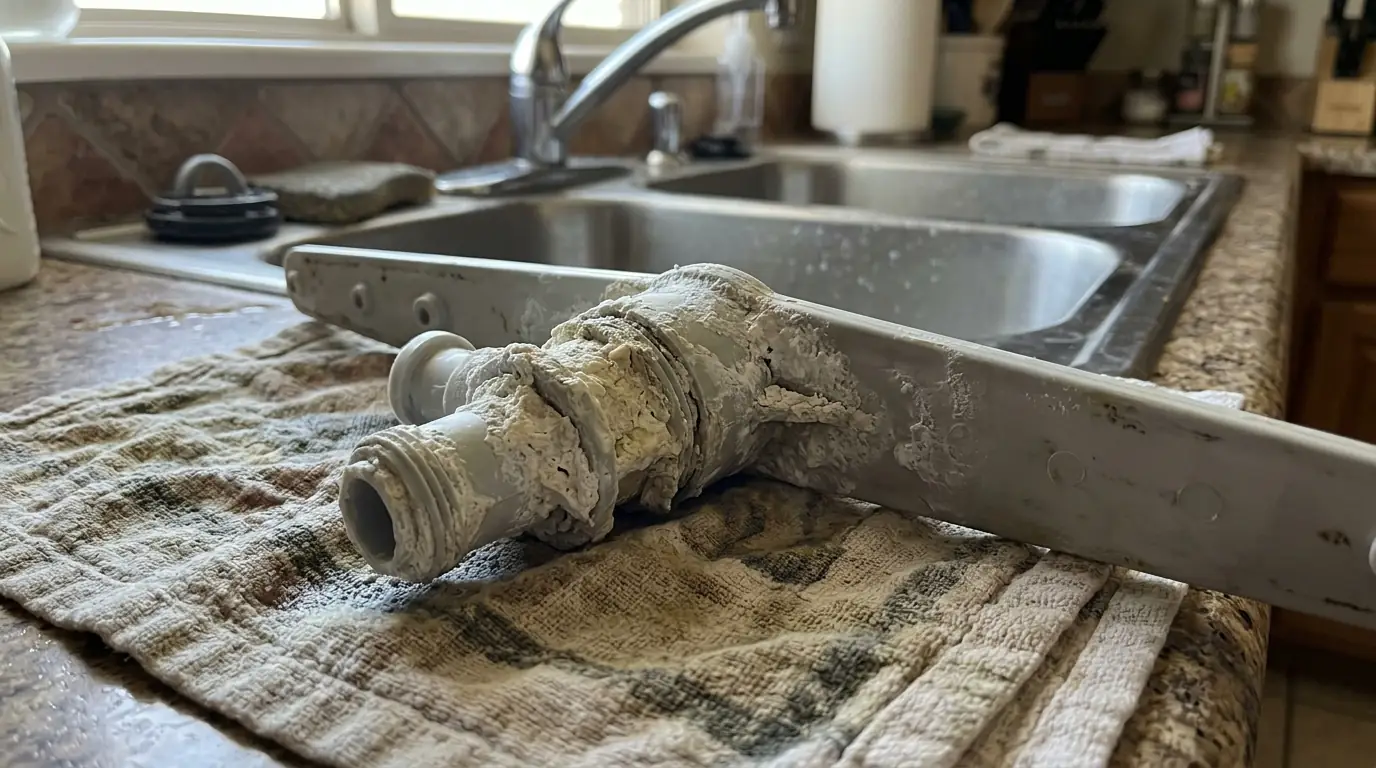
How do you know your water is hard?
You don't need a lab to spot it. Look at the showerhead, the faucet aerators and the inside of your kettle. A chalky white or tan ring that returns after cleaning is mineral scale. Glasses that come out of the dishwasher cloudy, soap that won't lather well and a gritty film on the tub are other clues.
Homes on private wells along the river valleys often see the heaviest buildup, but city water can leave its mark too. An inexpensive test strip from a hardware store gives you a rough number. That number helps when you're setting a dishwasher's rinse aid or sizing a softener.
Dishwashers: cloudy glasses and slow fills
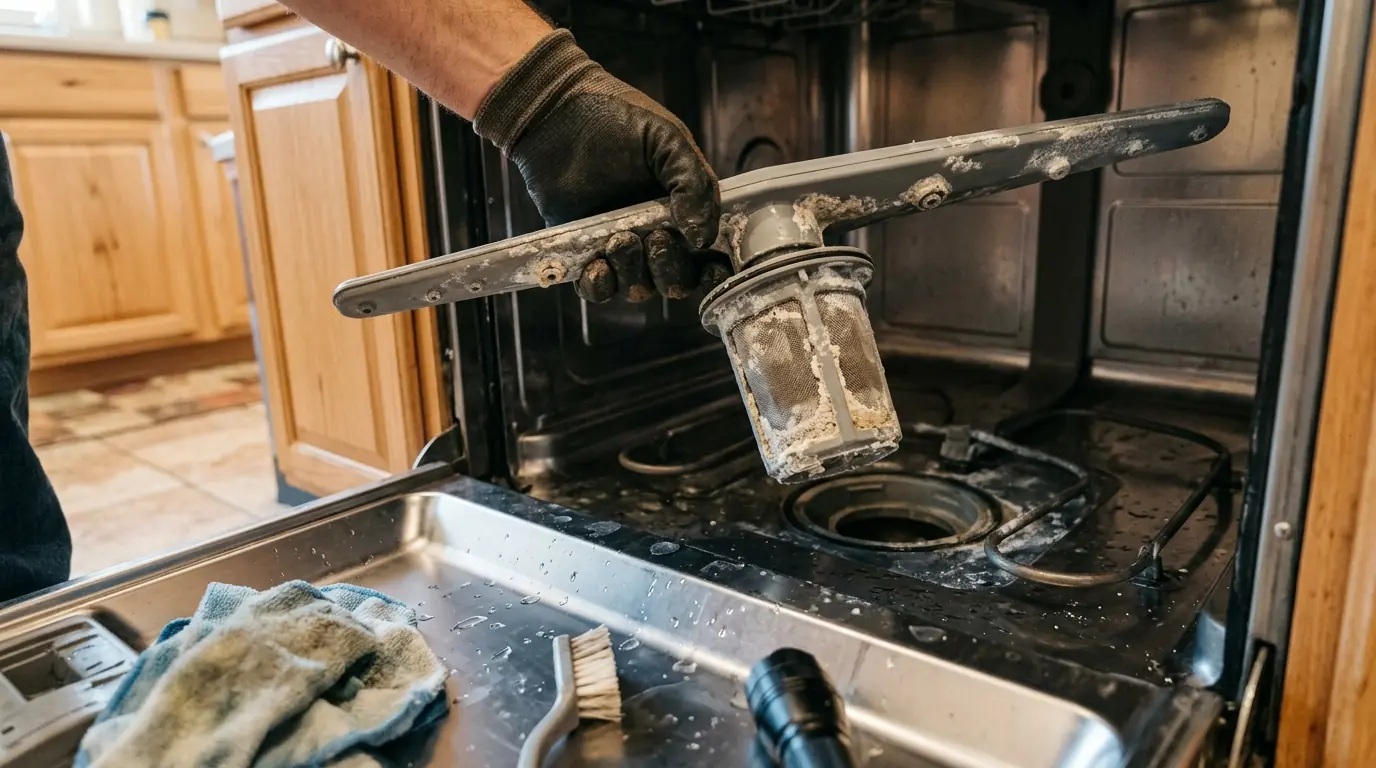
A dishwasher heats water and sprays it through small holes, which is exactly where scale likes to build. The spray arm holes narrow, the heating element grows a crust, and the inlet valve screen collects grit until the tub barely fills. You notice it as dishes that stay dirty on the top rack or a cycle that runs long.
Clean the spray arms by popping them off and clearing each hole with a toothpick. Run an empty cycle with a dishwasher cleaner once a month and keep the rinse aid filled. If the tub fills slowly or not at all, the inlet valve or its screen is a likely suspect, and we replace those often.
Ice makers, water valves and refrigerator filters
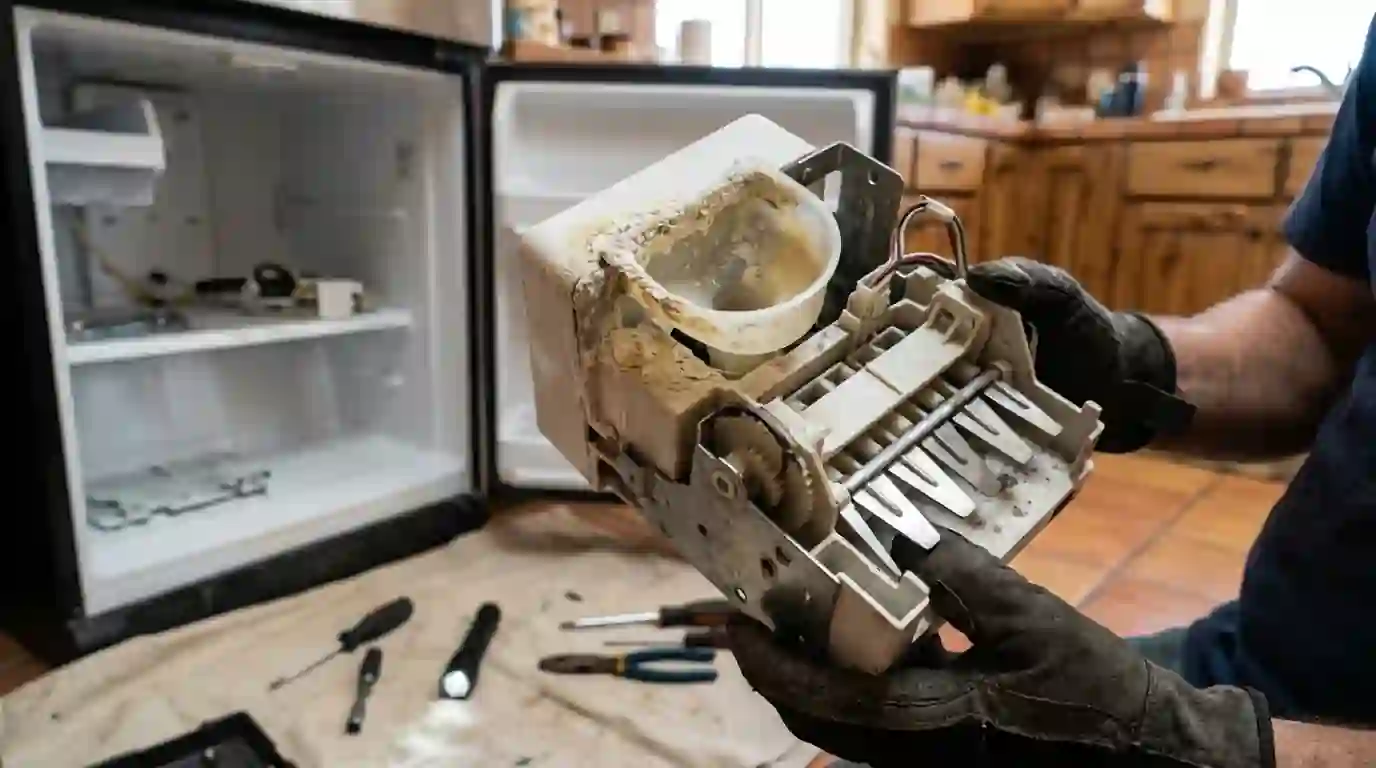
The refrigerator water valve has a tiny screen and a small opening. Scale narrows both, so the ice maker gets less water and makes small, hollow or clumped cubes. Eventually the valve sticks open or closed. A clogged filter causes the same slow trickle at the dispenser, which many people blame on the ice maker module first.
Change the refrigerator filter on the schedule in your owner's manual, or sooner on hard well water. If a new filter doesn't fix a slow dispenser, the water valve is the next thing we check. We also look at the fill tube, which can freeze shut when a scaled valve drips between fills.
- Small or hollow cubes: weak flow from a scaled valve or old filter
- No ice at all: valve stuck shut or fill tube frozen
- Dispenser trickles: filter clogged or bypass plug missing
- Ice tastes off: filter past its life or tray needs cleaning
Washers and water heaters take the hardest hit
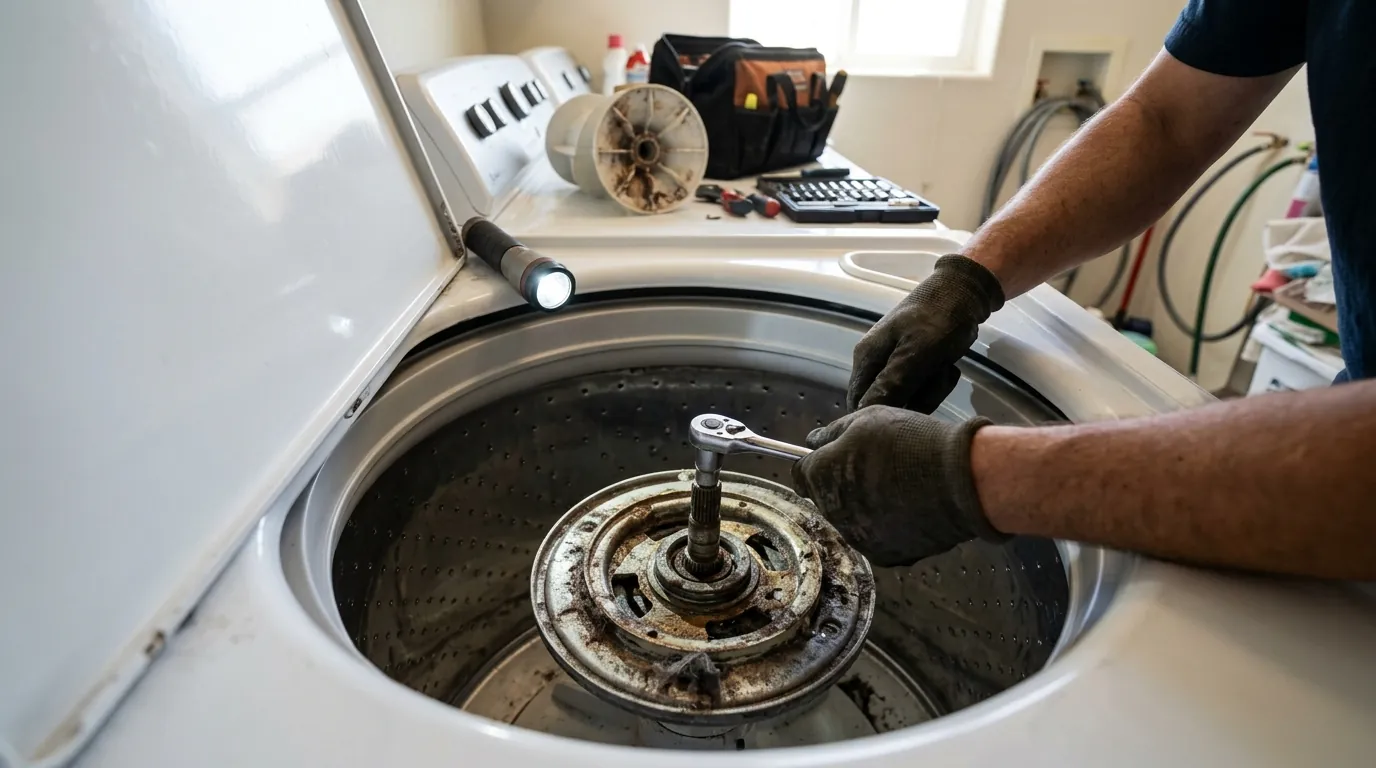
Every washer has small mesh screens where the hoses attach. In mineral-heavy water they clog with grit and flakes of scale, and the washer fills slowly, throws a fill error or never reaches the right level. Shut off the faucets, pull the hoses and rinse those screens once or twice a year. Don't remove them; they protect the inlet valve behind them.
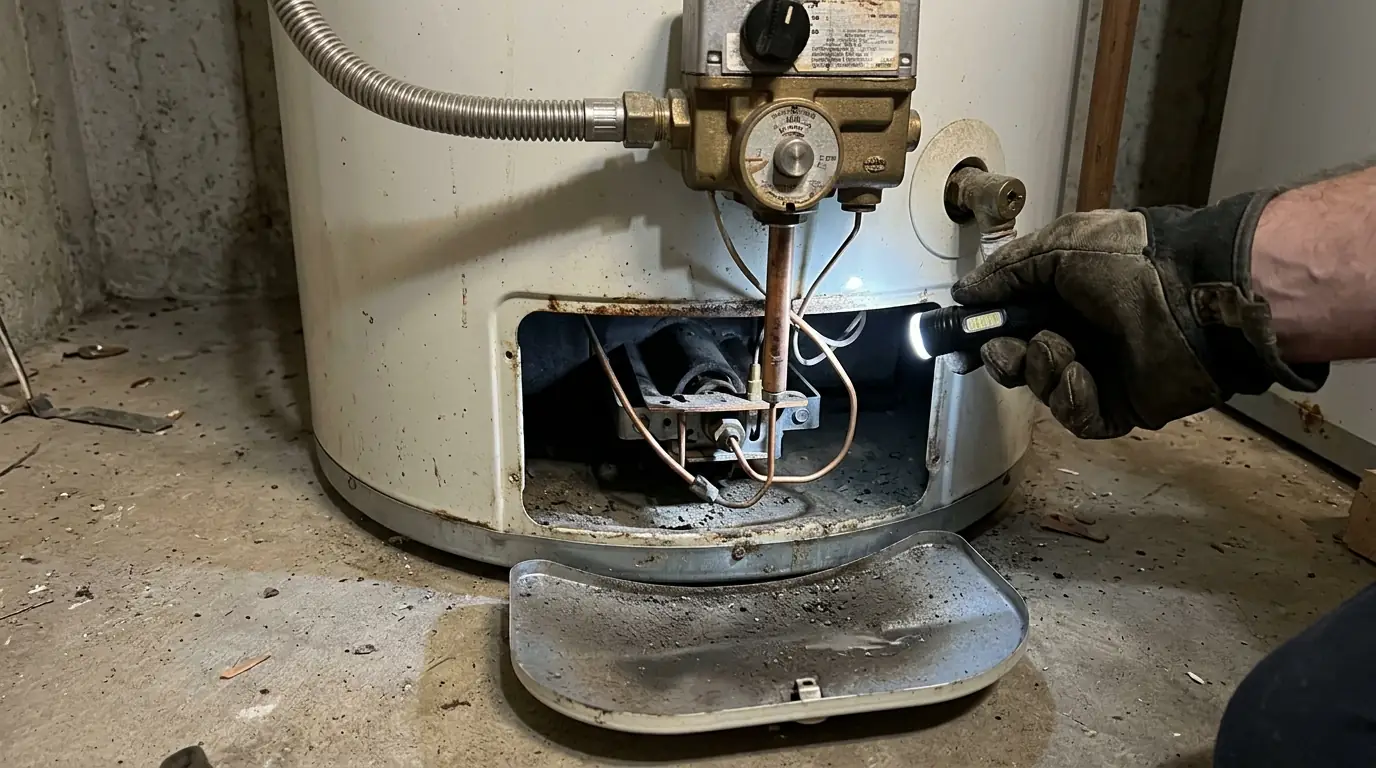
Water heaters collect the most scale because they heat a full tank all day. Sediment settles on the bottom, and you hear popping or rumbling as water boils under the crust. It wastes fuel, overheats the tank floor and can shorten the life of an electric heating element. Flushing the tank once a year helps a lot. On older tanks with a tight drain valve, we can do it carefully so the valve doesn't start leaking.
Why swamp cooler pads crust up so fast
An evaporative cooler evaporates water all day, and the minerals stay behind on the pads. Hard water can turn soft aspen pads into stiff, white boards in a single summer. Scaled pads pass less air, hold less water and cool poorly. The pump intake screen and the distribution tubes clog with the same crust.
A working bleed-off line is the best defense. It lets a steady trickle drain away so the water in the pan doesn't concentrate minerals. Scrub the pan each spring, replace the pads as needed and clean the pump screen during the season if output drops.
What actually helps with hard water at home
No single fix covers everything, but a few habits make a real difference. A whole-house softener reduces scale everywhere, though some homeowners keep the refrigerator line or a drinking tap on unsoftened water for taste. When an appliance already has a valve or element crusted beyond cleaning, replacing that part is usually cheaper than fighting it. Typical scale-related repairs in this area, like an inlet valve or a dishwasher heating element, often fall around $142-$289 depending on the model and part. Those figures are typical around here and aren't a quote.
- Change refrigerator and ice maker filters on schedule, sooner on well water
- Flush the water heater tank once a year
- Rinse washer inlet screens and dishwasher filters a couple of times a year
- Keep rinse aid filled and run a monthly dishwasher cleaning cycle
- Run the swamp cooler bleed-off and replace crusted pads every season