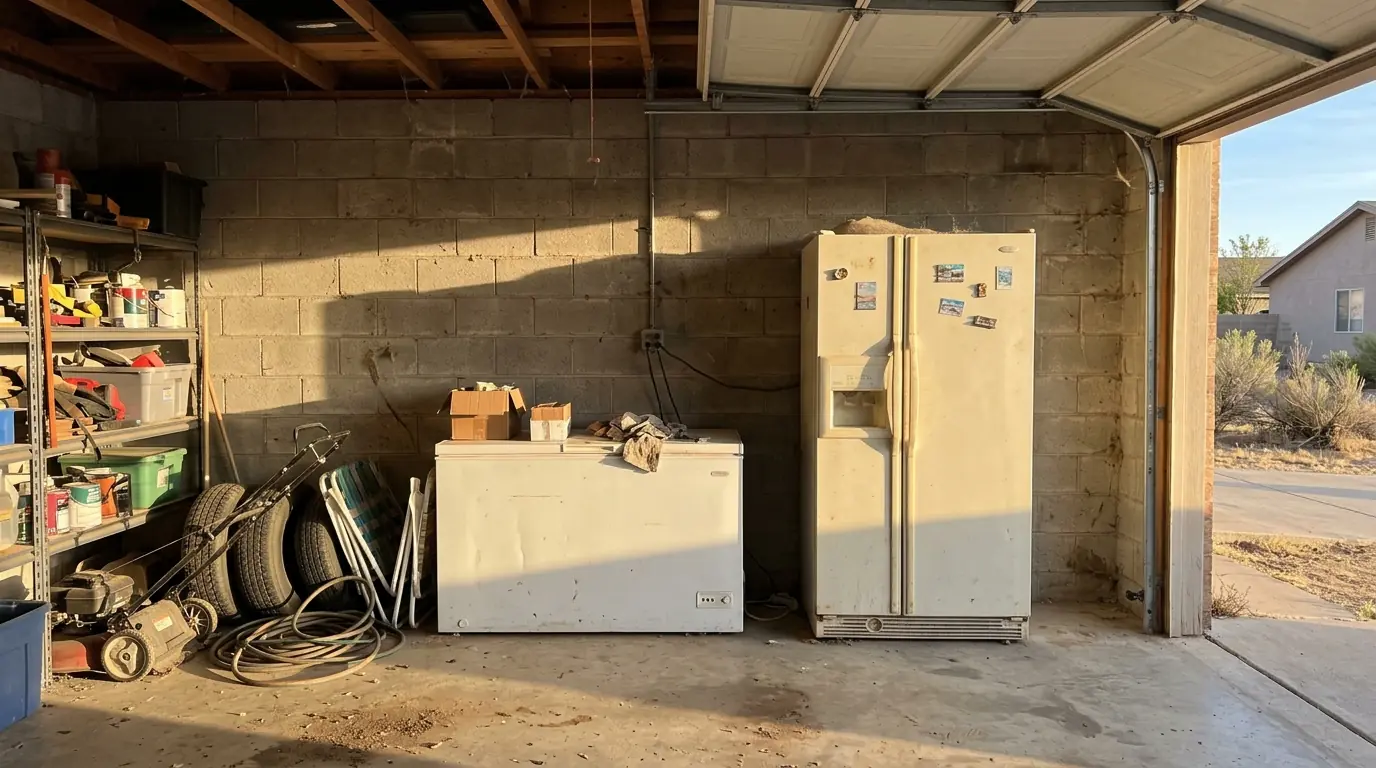
Why a garage is a rough place for a refrigerator
A kitchen refrigerator lives in a room that stays somewhere between the mid 60s and high 70s all year. A garage in northwest New Mexico doesn't. A closed garage with afternoon sun on the door can climb past the outdoor July high of about 90, and on a January night it can sink toward the outdoor lows in the teens.
Every refrigerator has an ambient temperature range in its manual, meaning the room temperatures it is built to work in. Many standard models are designed for something like 55 to 100 degrees, though the exact numbers vary by brand and model. Outside that window, the controls and compressor misbehave in predictable ways, which is why one garage fridge can fail for opposite reasons six months apart.
July: heat, dust and a compressor that never rests
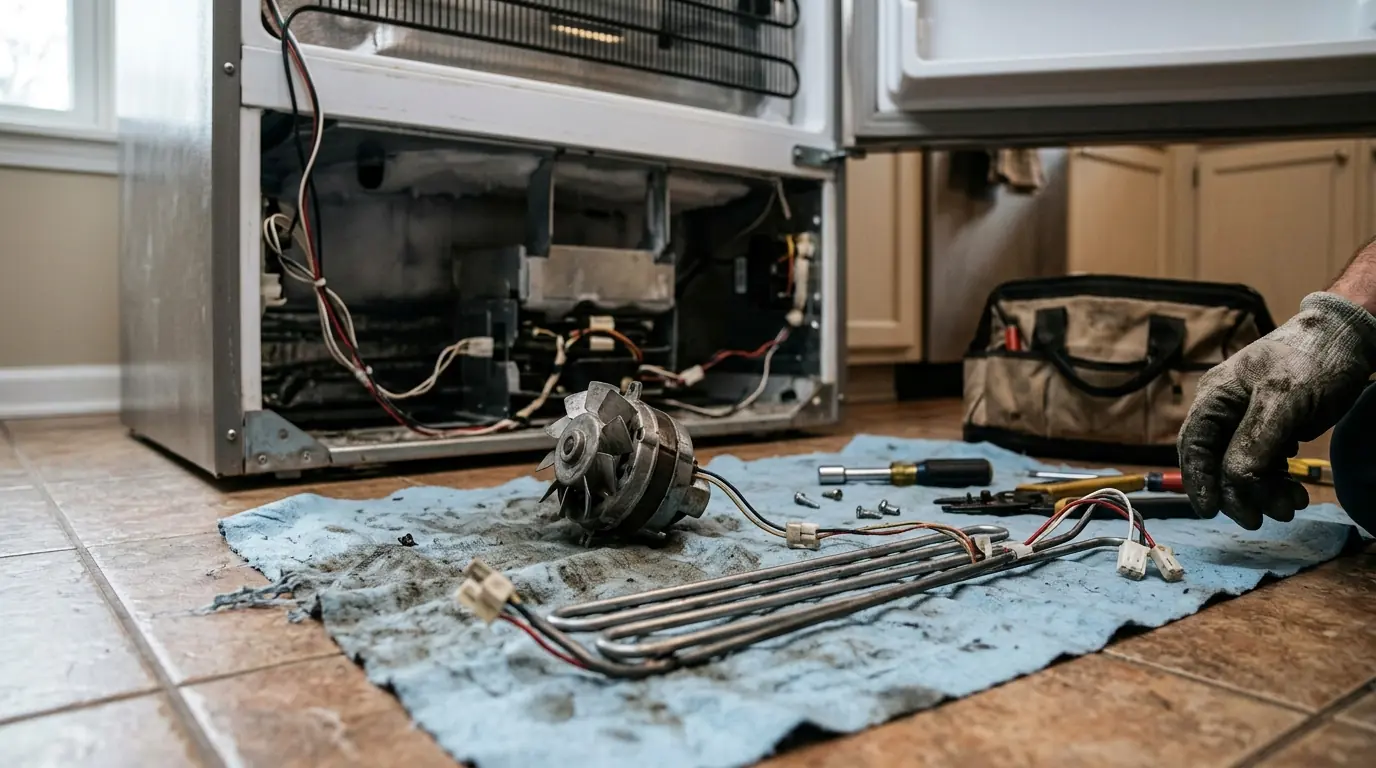
In summer the condenser has to dump heat into air that's already hot. The compressor runs longer, then nearly all the time, and the fresh food section creeps up into the 40s. Freezer food softens around the edges. A baking garage is also hard on the start relay and the condenser fan motor, two parts we replace on garage units again and again by late August.
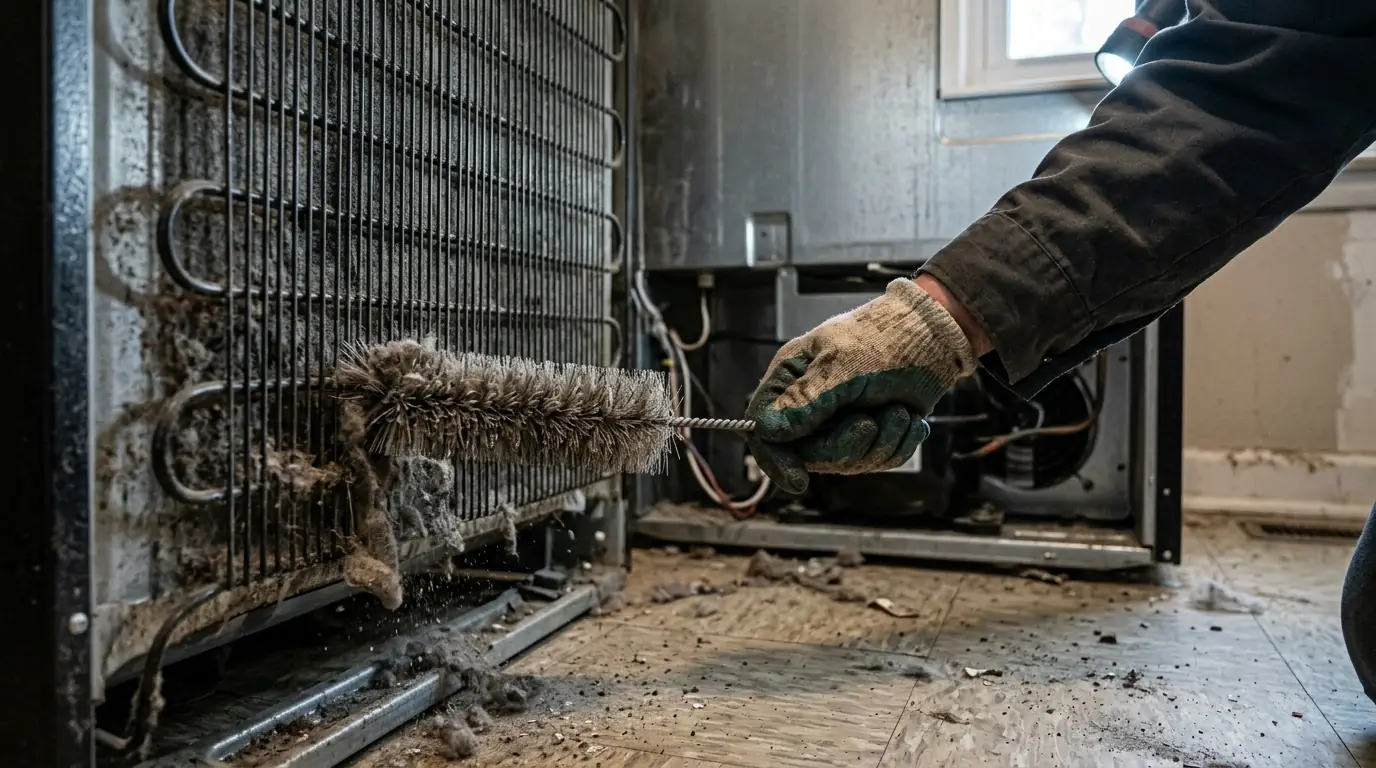
Dust makes it worse. Windy spring days push fine sand under the garage door, and it settles straight onto the condenser coils at the bottom or back of the cabinet. A coil furred over with grit can't shed heat, so the compressor overheats and trips its overload. A few minutes of summer prep heads most of this off.
- Vacuum or brush the condenser coils every spring, before the heat arrives
- Keep the unit off the west wall or any wall that bakes in afternoon sun
- Leave a few inches of open space at the back and sides so air can move
- Don't stack boxes or bags against the grille at the bottom front of the cabinet
- Set a cheap thermometer in each section and glance at it during hot weeks
January: why the freezer section quits when the garage gets cold
This one surprises people. Most standard top-freezer and many bottom-freezer refrigerators have one compressor and one thermostat or sensor, and that sensor sits in the fresh food section. When the garage drops into the 30s, the fresh food side stays cold on its own and stops asking for cooling. The compressor barely runs, so the freezer, which depends on that same compressor, slowly warms.
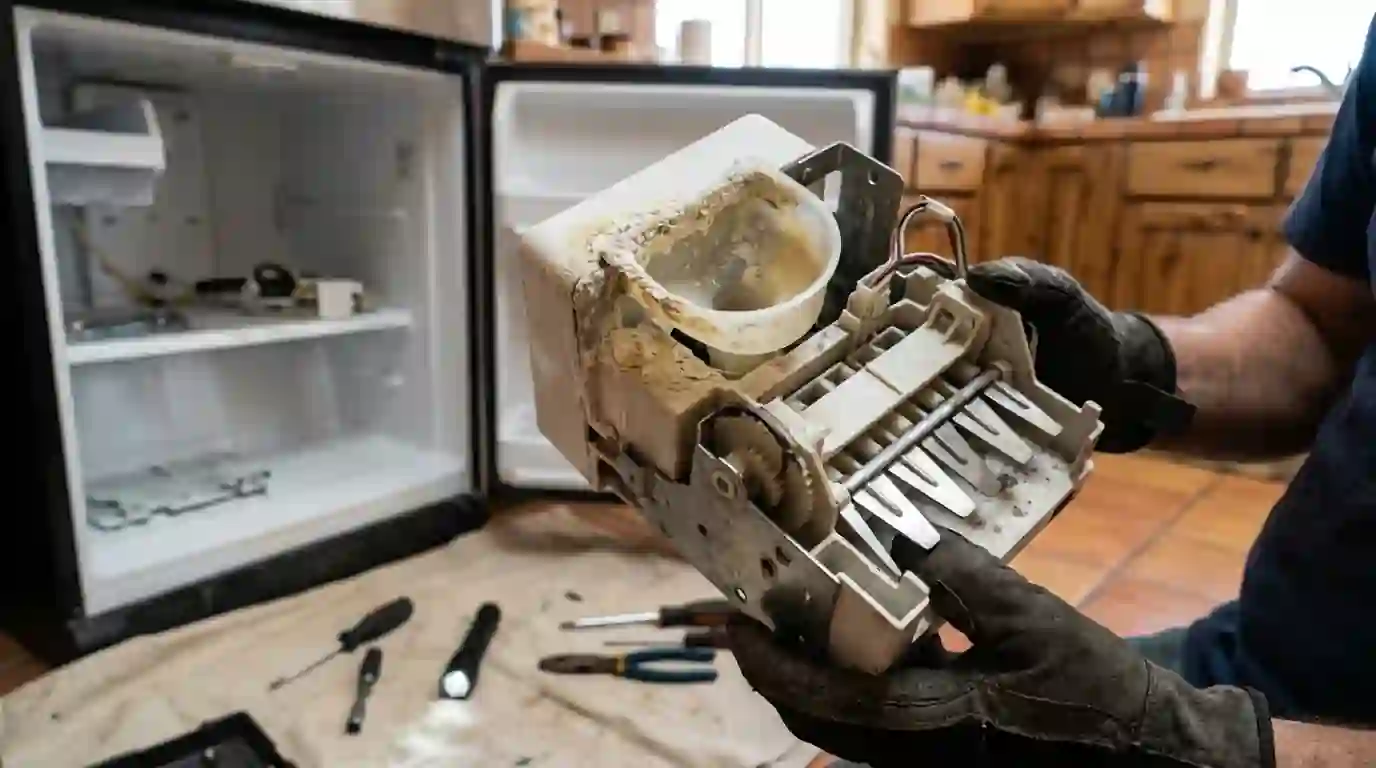
The result is soft ice cream and thawing meat in a freezer that sits in a garage colder than the freezer is supposed to be. Nothing is broken in the usual sense. Some manufacturers offered a small heater kit that warms the thermostat area so the compressor cycles normally, and some newer models solve it with separate sensors. Cold also thickens compressor oil and can freeze the ice maker supply line, which may crack the water valve.
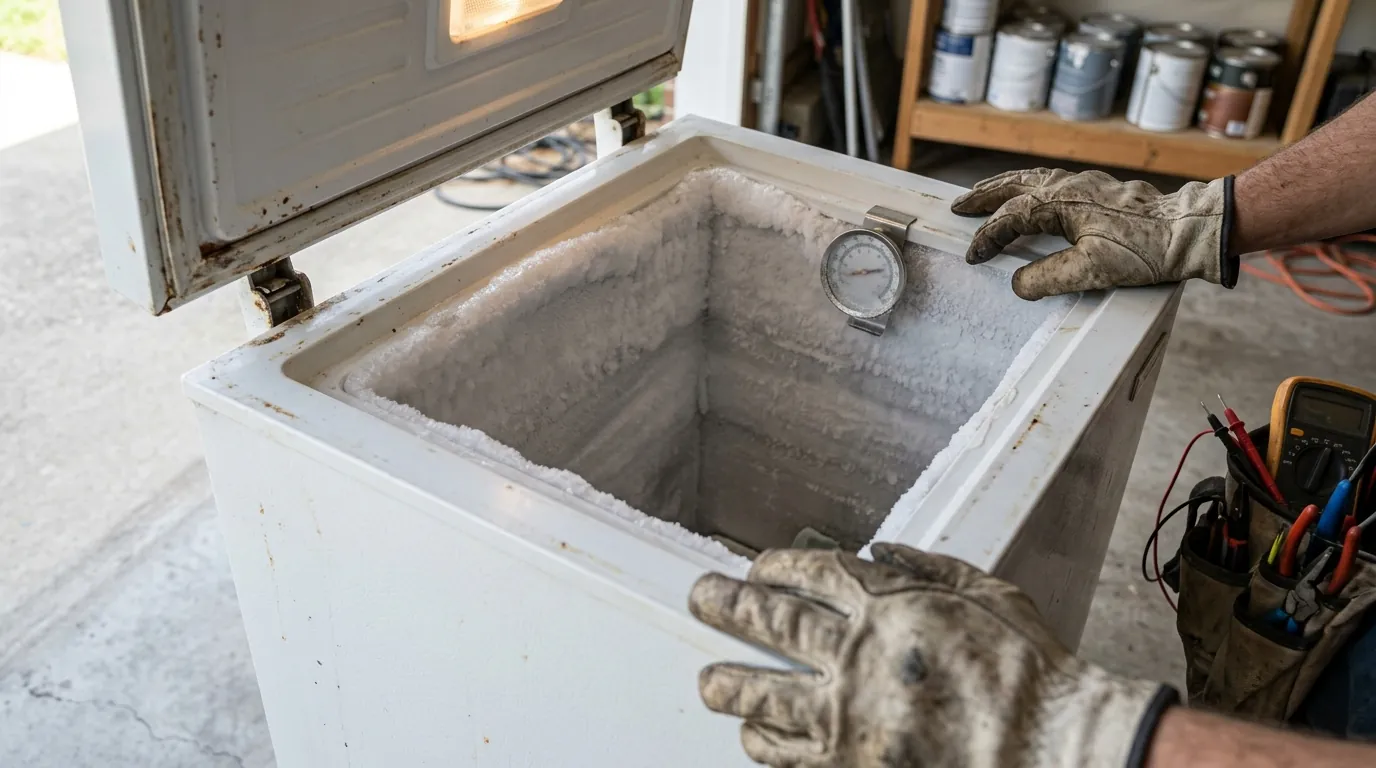
Standalone chest and upright freezers cope with cold better, since they control only one compartment. Check the manual anyway. Some are rated for garages down to about 0 degrees and others are not.
What a garage-ready label actually covers
Garage-ready is a marketing term, not a standard, so read the spec sheet behind it. The number that matters is the rated ambient range. A unit listing something close to 0 to 110 degrees is built for a Four Corners garage. One listing 55 to 100 is really a kitchen fridge, whatever the box says.
True garage models usually add a heater near the sensor, independent controls for each section, or a design that keeps the compressor cycling in the cold. For long-term storage, chest freezers remain the simplest choice. They hold cold longer when the lid stays shut, use manual defrost with fewer parts to fail, and ride out a monsoon outage better than most uprights.
Where to put a garage unit so it lasts
Placement matters as much as the model. Garage outlets are usually GFCI protected, which is the right rule for safety, but a tripped GFCI shuts a freezer off without any alarm. A freezer thermometer with an alert, or a quick look on the way to the car, catches it before the food is lost. Beyond that, these are the setups we'd want in our own garages.
- On level concrete, shimmed so the doors swing shut by themselves
- On its own outlet, never an extension cord or a strip shared with power tools
- Away from the water heater, the furnace and a car's hot engine
- Out of the path of sand and dust that blows in under the door
- Somewhere you pass daily, so a warm freezer gets noticed fast
- Clear of the garage door's swing and any workbench clutter
Signs your garage fridge or freezer needs a tech
Some garage trouble is just weather, and some is a failing part. The signs below usually mean a part, and that's when a call makes sense.
A chest freezer packed with a season's worth of meat that has gone warm is a different kind of call. We pick up around the clock, and when a full freezer has died, we send a tech at any hour instead of waiting for the next opening.
- It runs nonstop even on a mild spring day
- The compressor clicks on and off every few minutes without starting
- Frost builds on the back wall of the freezer behind the shelves
- Water pools under the unit or inside the crisper drawers
- The door gasket is torn, flattened or no longer seals against the cabinet
- The GFCI trips only when this appliance is plugged in, which can point to a defrost heater or compressor leaking current