Is the refrigerator getting power at all?
Start with the obvious, because it catches more people than you'd think. Open the door. If the light is out and the control panel is dark, the problem is power. Check that the plug is fully seated, then look at the breaker panel and at any GFCI outlet nearby, since garage and kitchen-island outlets are often on one. A breaker that trips again right away is a sign to stop and call.
If the light works but nothing cools, the power is fine and the trouble lies in the cooling side. One odd case: some models have a demo or showroom mode that keeps the lights and display working while the compressor never runs. If your display shows a demo or cooling-off message, the owner's manual explains how to clear it.
Check the thermostat setting and the doors
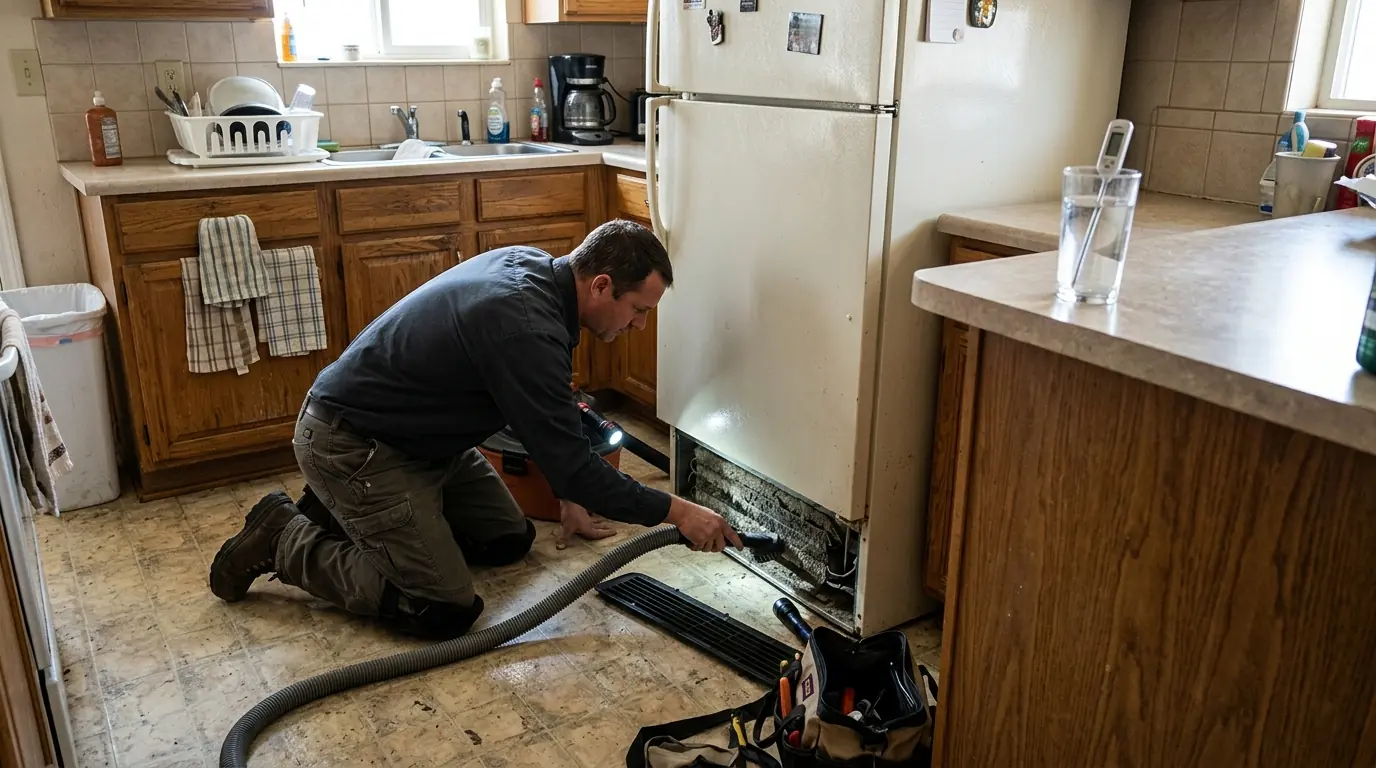
Temperature dials get bumped while groceries are loaded, and touch controls get pressed by elbows. A fresh food section should sit around 37 degrees and a freezer around 0. Put a cheap thermometer in a glass of water on the middle shelf and read it after a few hours, since that tells you the real temperature better than the display.
Next look at the doors. A door left a crack open overnight lets warm air pour in, and the freezer can frost up while the fridge warms. Overstuffed door bins, a crisper drawer pulled out of its track, or a cabinet that leans forward can keep a door from sealing. Slide a dollar bill into the gasket and close the door on it. If it pulls out with no drag, that spot isn't sealing.
- Wipe gaskets with warm soapy water, since dried spills stop them from sealing
- Look for torn, flattened or twisted gasket corners
- Raise the front leveling legs slightly so the doors swing closed on their own
Look for blocked vents inside the cabinet
In most top-freezer and bottom-freezer refrigerators, one evaporator behind the freezer wall does all the cooling, and a fan pushes part of that air through a vent into the fresh food section. A bag of frozen vegetables shoved against the freezer vent or a tall jug pressed against the air outlet in the fridge can cut that flow. Rearrange the shelves so the vents along the back wall and ceiling have a few inches of clear space.
Some models use a motorized or manual damper to meter that air. If the damper sticks closed or ices up, the fridge warms while the freezer stays cold. That one usually needs a tech, but clearing the vents first rules out the easy cause.
Clean dusty condenser coils and check the fan
The condenser coils shed the heat pulled out of your food. In Farmington, windy days blow fine dust under doors and into kitchens, and it settles right on those coils. On most newer models they sit under the fridge behind the toe grille. On older ones they cover the back. Unplug the fridge first, then use a coil brush and a vacuum to clear the dust and pet hair.
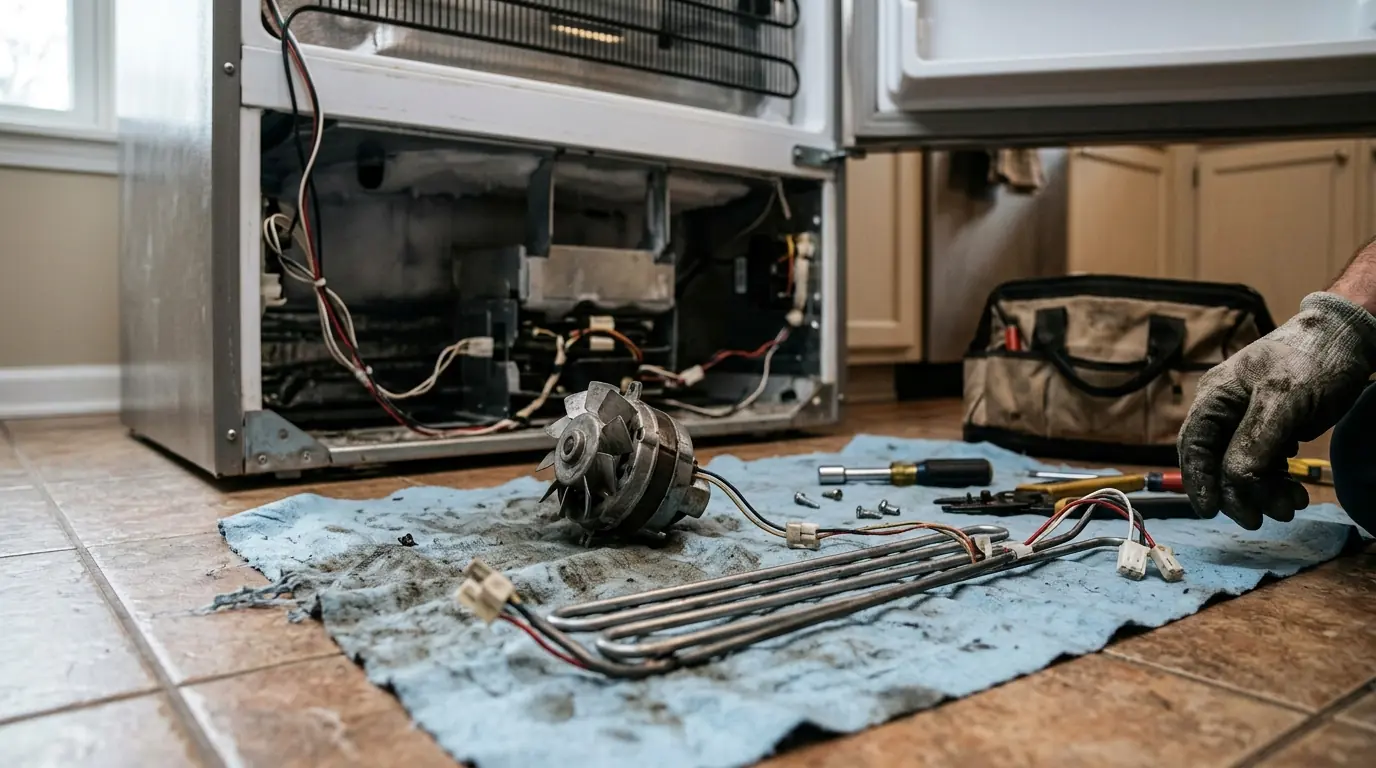
Many fridges with coils underneath also have a condenser fan near the compressor at the back. With the fridge plugged back in and the compressor running, you should hear the fan and feel warm air coming out at the bottom. If the compressor hums but the fan is still, a jammed blade or a dead fan motor is likely, and the compressor will soon overheat.
Frost on the back panel usually means defrost trouble
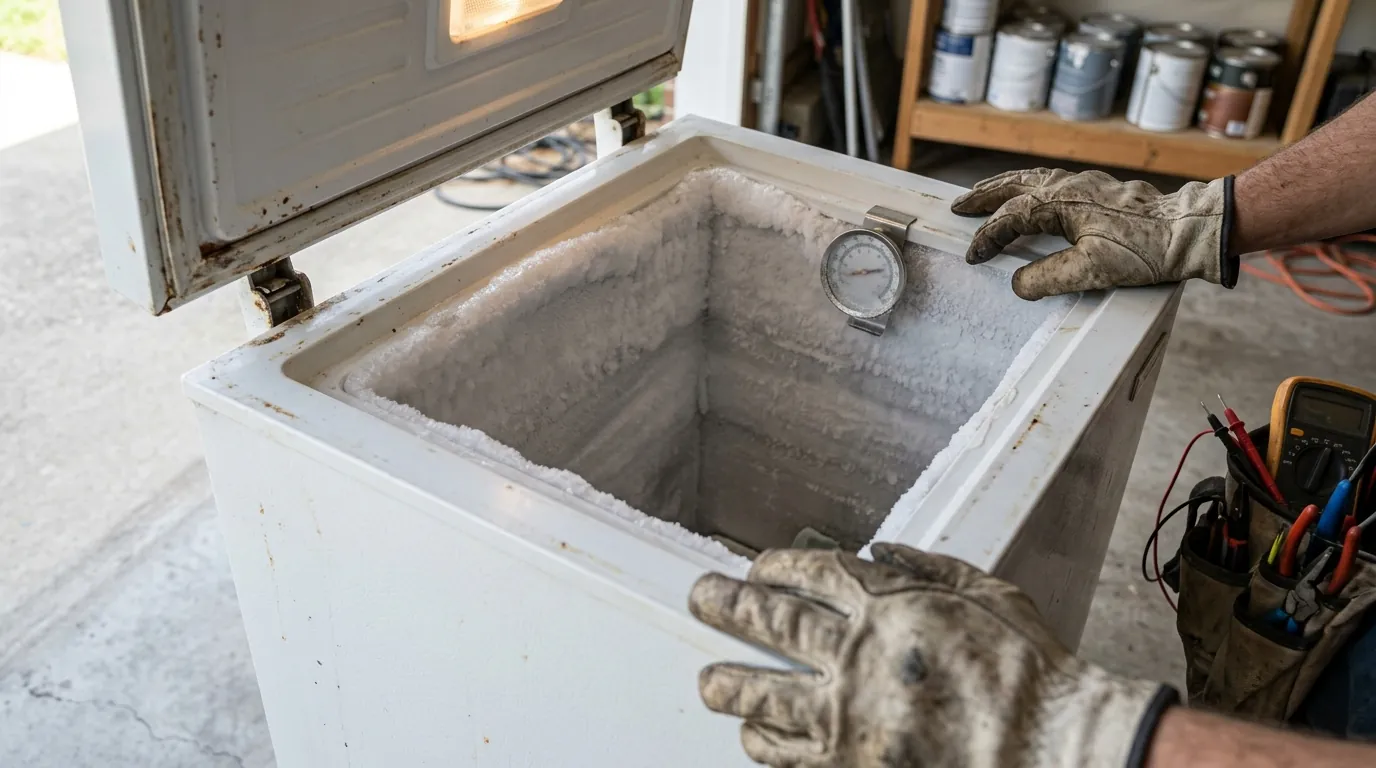
Open the freezer and look at the rear wall. A thin dusting of frost is normal. A thick white sheet, or frost growing through the vent slots, points to a defrost failure. Behind that panel sits the evaporator coil, and a frost-free fridge melts it clean several times a day with a defrost heater, a defrost thermostat or sensor, and a timer or control board. When one of those fails, ice chokes the coil and the evaporator fan can no longer move cold air.
A temporary fix confirms it. Empty the fridge into coolers, unplug it, prop the doors and let the ice melt onto towels for most of a day. If cooling comes back and then fades again over a week or two, the defrost system is the cause. A scraping or chirping sound from behind the panel can also mean the evaporator fan blade is hitting ice.
A clicking compressor and other signs to stop and call
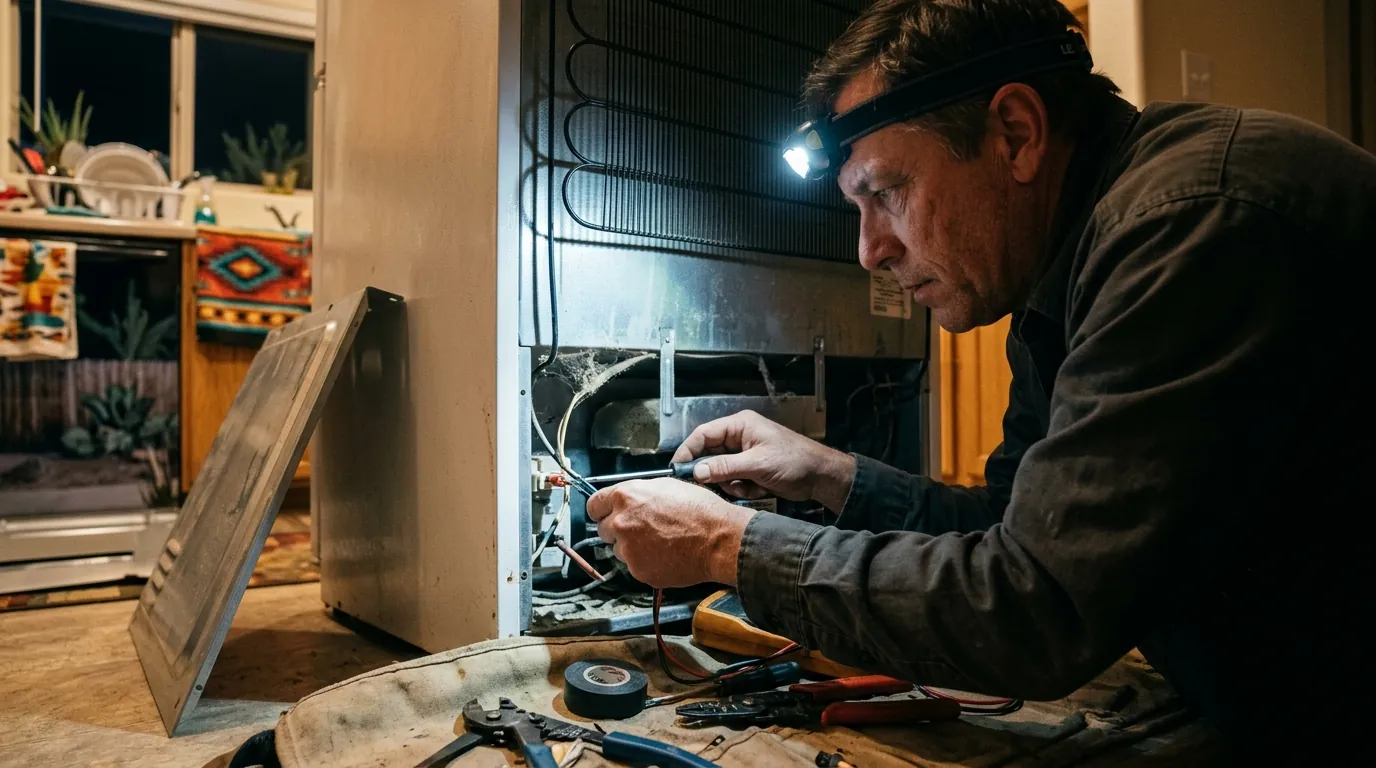
Listen near the compressor at the back bottom of the fridge. A click, a brief hum, then another click a few minutes later usually means the compressor keeps attempting to start and giving up. The start relay on the side of the compressor is a common culprit, though a compressor near the end of its life sounds much the same. Don't keep unplugging and replugging it, since each try heats the compressor further.
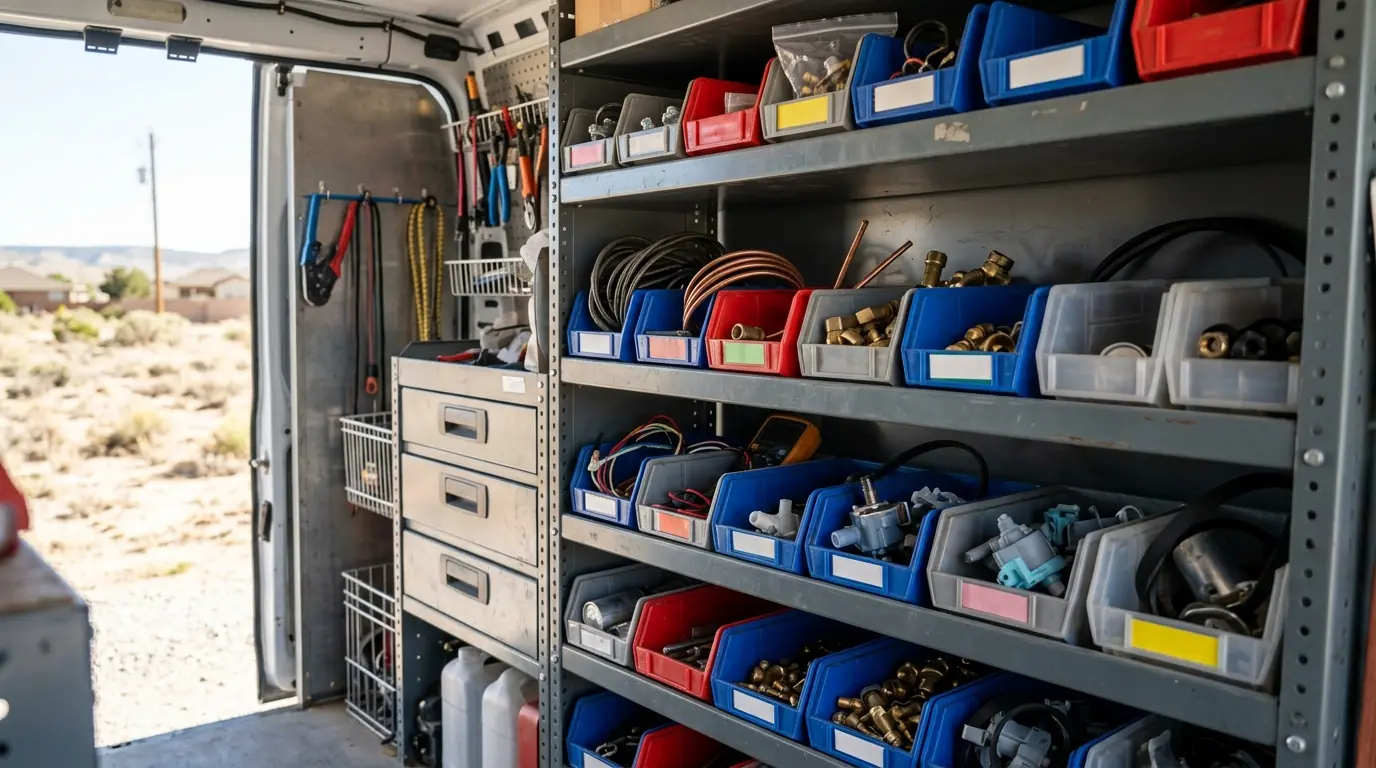
Some problems are past the homeowner checks. Our tech tests the relay, fans, defrost parts and sealed system before replacing anything, so stop and call us if you notice any of these.
- A burning smell, a scorched outlet or a breaker that trips again right away
- An oily residue on tubing or on the floor near the compressor
- Heavy frost coming back after a manual defrost
- A compressor that is hot to the touch but not running
- Water pooling under the fridge along with the warm-up
How long food stays safe while you wait
Keep the doors shut as much as you can. Food safety guidance generally says a closed refrigerator keeps food cold for about four hours, and a full freezer holds for about two days, a half-full one closer to one. Perishables that have sat above 40 degrees for more than two hours should go. When in doubt, a thermometer reading beats guessing.
Move milk, meat and medicine to a cooler with ice or to a neighbor's fridge if the repair can't happen soon. Our phones are answered 24/7. If a freezer packed with meat has quit, we'll send a tech at any hour, and a fridge that's only running warm gets a same-day slot when our schedule has room.