Why the model number matters so much on a repair
Manufacturers change parts inside the same-looking appliance from year to year, sometimes several times in one production run. Two white top-load washers that look identical can take different lid switches, drain pumps or control boards. The model number tells us which version you have, and the serial number usually tells us when it was built and which revision of a part it uses.
With both numbers in hand, our tech can pull up the parts diagram, check common failures for that model and line up the right part before the visit. That means fewer second trips, which matters even more for homes out near Shiprock or up toward Durango. The brand name on the front isn't enough, and neither is the store tag from the day you bought it.
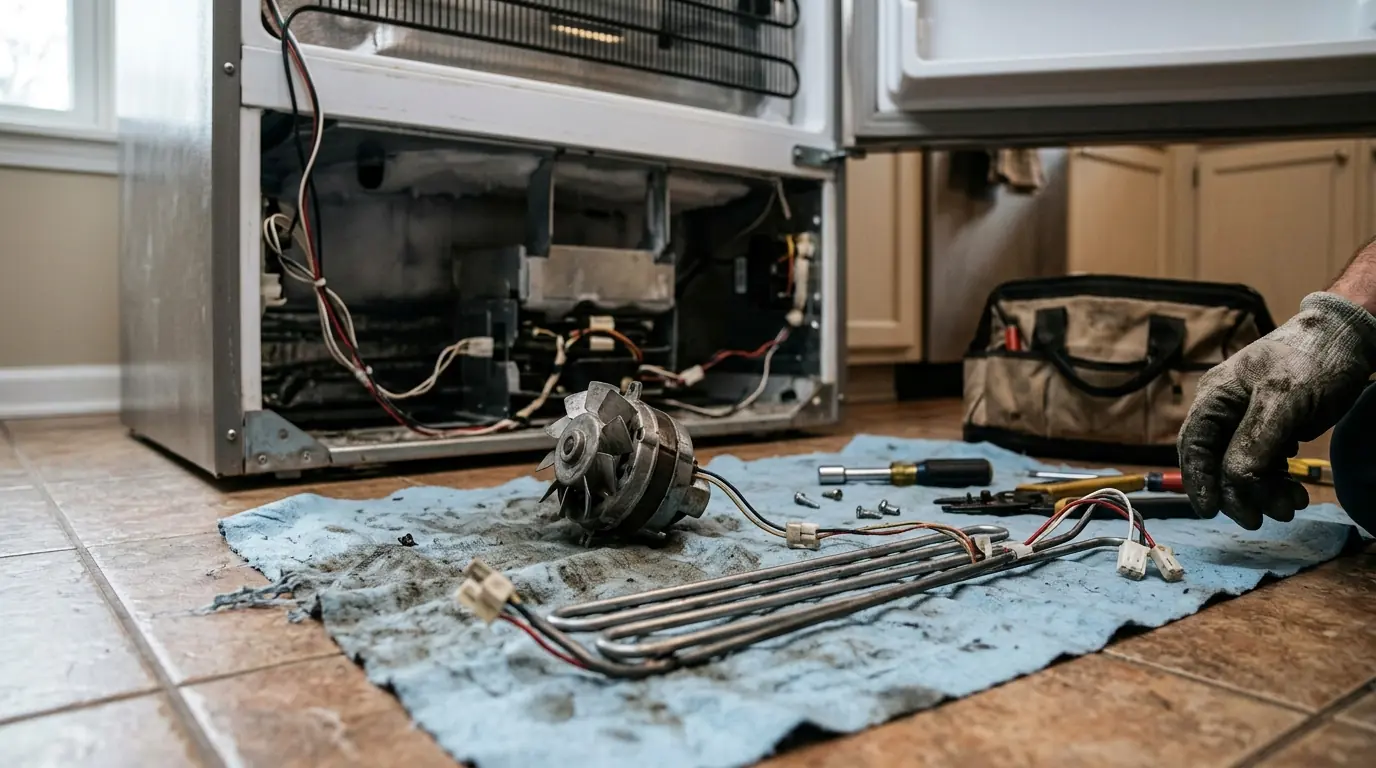
Refrigerators and freezers
Refrigerator tags usually sit inside the fresh food compartment, on a sticker that can fade or hide behind a gallon of milk. Check these spots first.
- Side wall of the fresh food section, near the top or just behind the top shelf
- Ceiling of the fresh food section, close to the light housing
- Behind or under the crisper drawers, on the floor or side of the liner
- Left wall of the fresh food side on most side-by-side models
- Behind the top grille on built-in refrigerators, which may tilt or lift off
- Chest freezers: on the outside back or side near the compressor, or under the lid rim
- Upright freezers: inside on a side wall, often near the top
Ranges, ovens, cooktops and microwaves
Cooking appliances hide their tags in places you only see with a door or drawer open. On gas models, look but don't loosen or shift anything near the gas connection.
Smell gas while you're hunting for the tag? Stop there, head outside and phone 911 or the gas utility from the driveway before you call us about the range.
- Freestanding ranges: open the oven door and check the frame around the opening and near the hinges
- Ranges with a storage or warming drawer: pull it out and check the frame or the floor beneath it
- Wall ovens: on the trim or frame around the opening, visible once the door is open
- Cooktops: on the underside, read from the cabinet below with a flashlight
- Over-the-range microwaves: inside the door frame or on the front panel behind the door
- Countertop microwaves: on the back or bottom of the cabinet
- Range hoods: behind the grease filters, on the inner wall of the hood
Dishwashers, washers and dryers
Dishwasher and laundry tags are often printed on a part of the frame you can't see once the door closes. Open everything up and use a flashlight.
- Dishwashers: on the edge of the inner door or along the side of the tub opening
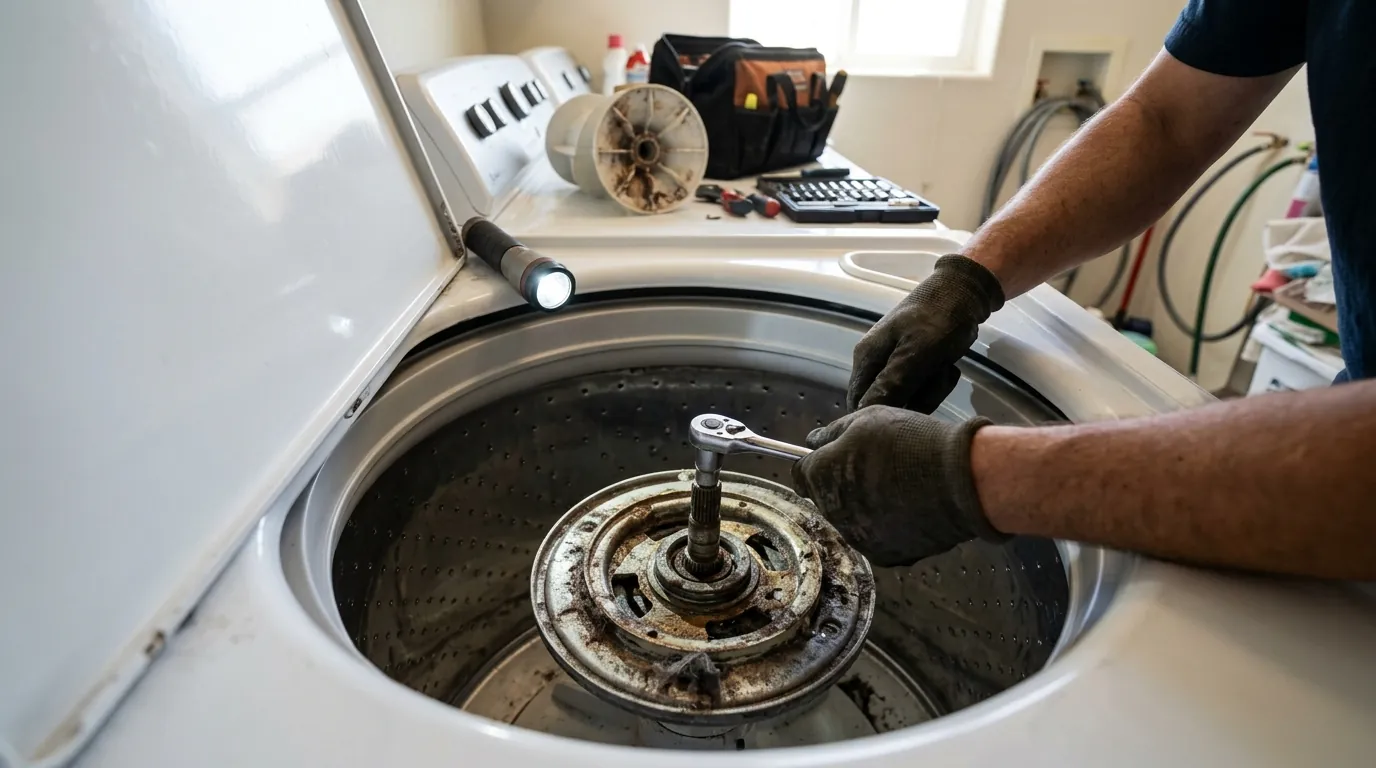
- Top-load washers: under the lid at the back, or on the back panel of the cabinet
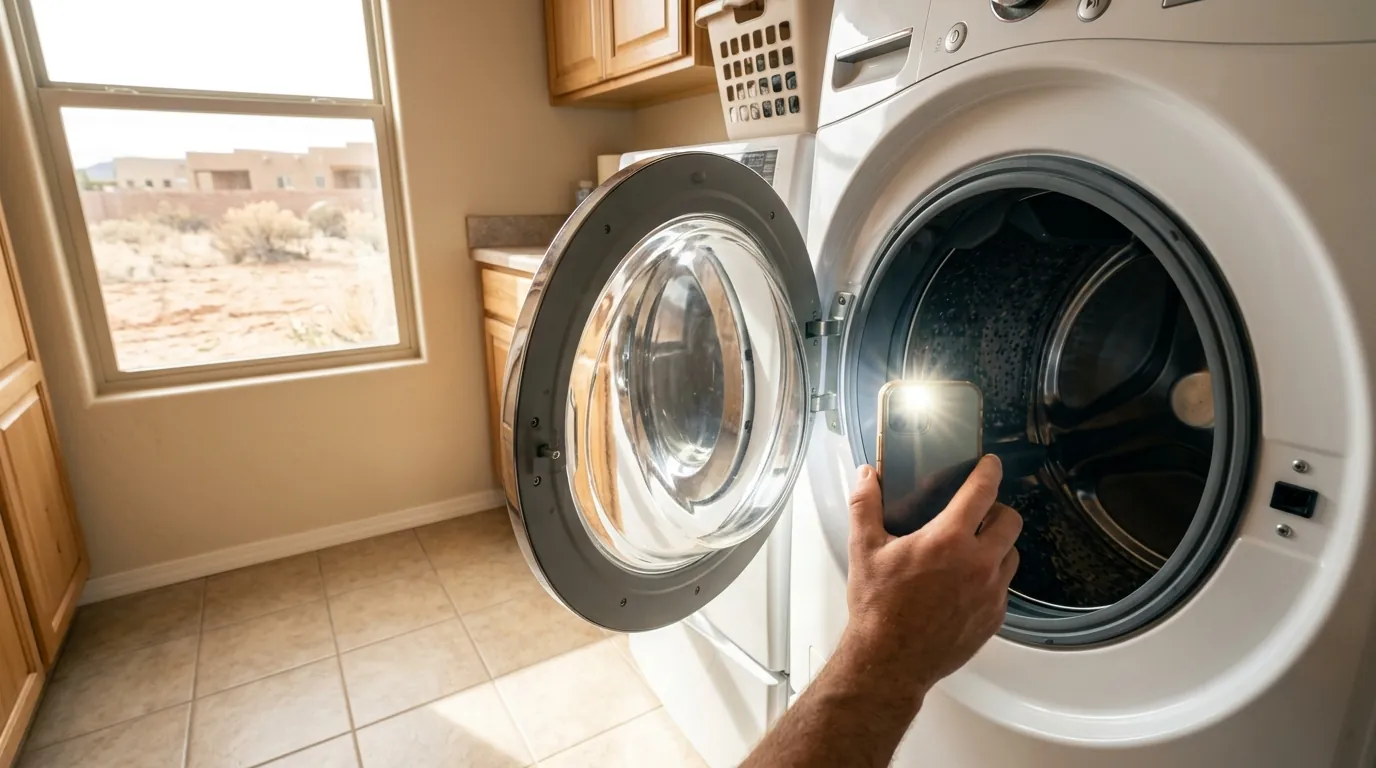
- Front-load washers: on the frame around the door opening, or behind the small access panel at the bottom front
- Dryers: inside the door opening on the frame, or on the back panel near the vent
- Stacked laundry pairs: inside the dryer door opening, with the washer sometimes carrying a separate plate
Water heaters and swamp coolers
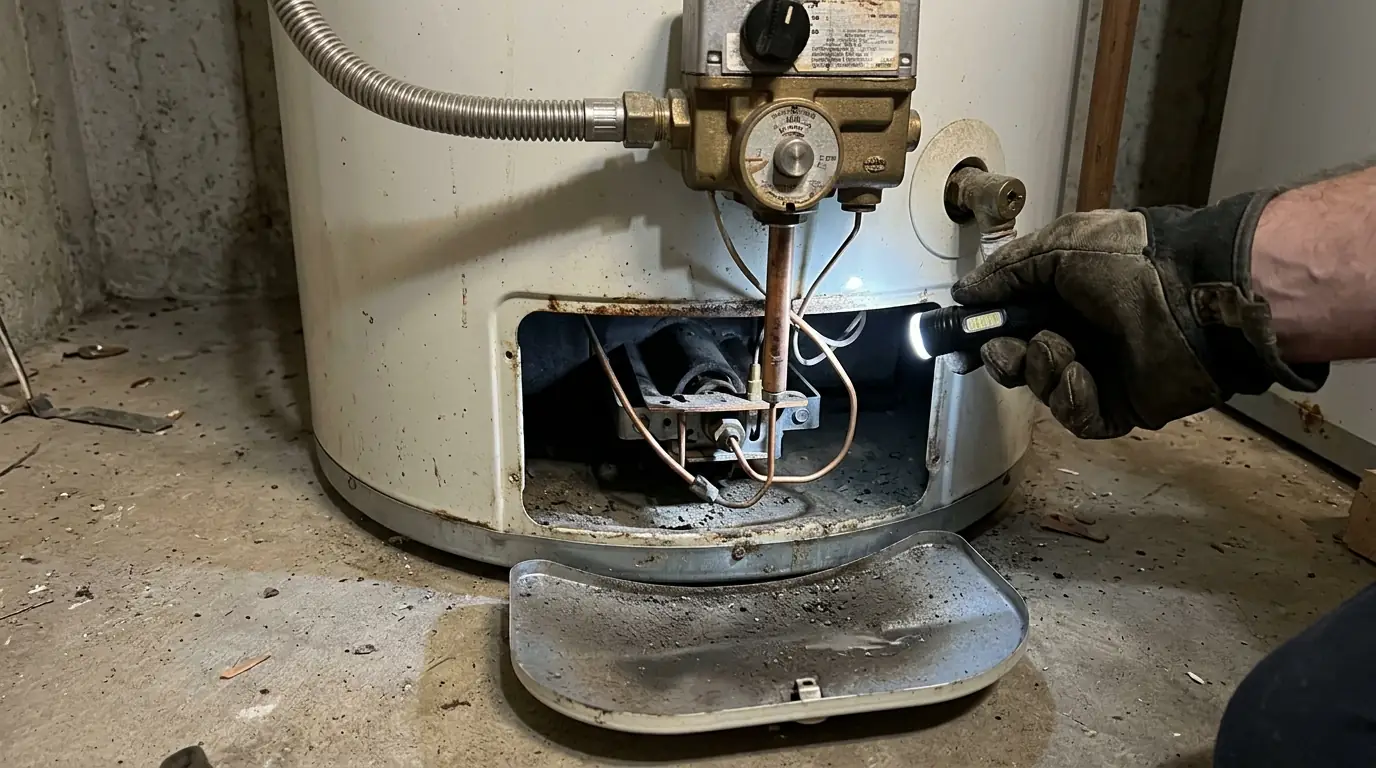
A water heater's rating plate is the large label on the side of the tank, usually near the gas control on a gas unit or by the upper access cover on an electric one. It lists the model, serial number, fuel type and capacity. On most water heaters, the serial number includes the year and month of manufacture, which says a lot about how much life is left, especially on hard well water.
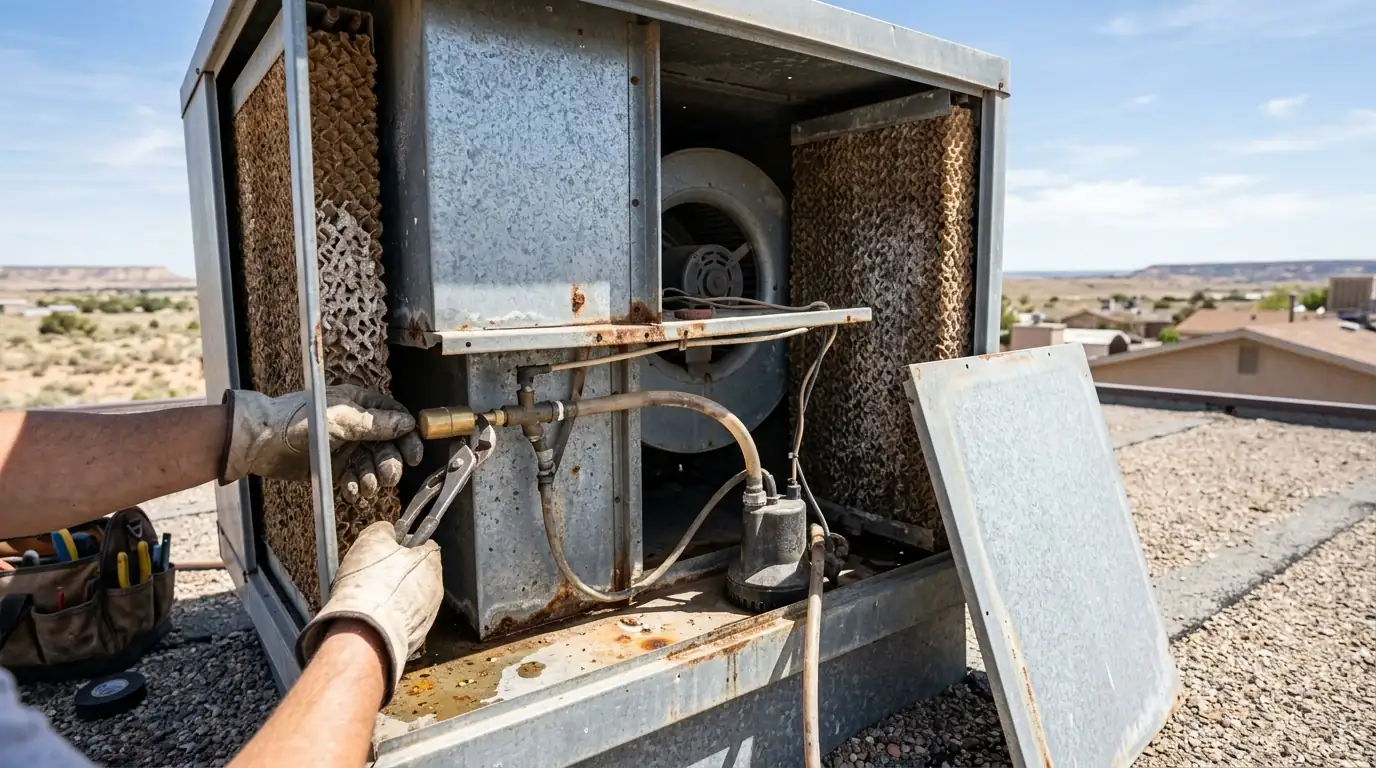
Evaporative coolers carry a data plate on the cabinet, often on a side panel or just inside the access panel near the pump and motor. On a roof in the high-desert sun, that sticker can fade to nothing in a few seasons. The blower motor has its own label with horsepower and speed ratings, which helps us match a replacement when the cooler's plate is unreadable. Switch the cooler off first, and only climb up when the roof is dry and the wind has died down.
How to take a model tag photo we can actually read
A good photo saves you from reading a long string of letters and numbers aloud, and it settles the zeros and letter O's that always get mixed up. A few tricks help.
- Turn on your phone's flashlight and hold the phone square to the tag, not at an angle
- Fill the frame with the tag, then take a second shot of the whole appliance
- Wipe dust or grease off gently with a dry cloth so the print doesn't smear
- If the print has faded, light it from the side; raised or etched lettering often shows up
- Photograph any error code on the display while it's still showing
- Keep the photos in one album so they're ready for the next repair, too
What if you can't find it or the tag is gone?
Call anyway. Tell us the brand, the type of appliance, roughly how old it is and what it's doing, and our tech will track down the tag on arrival. On units where the sticker has worn off or been painted over, the part numbers printed on the control board, the compressor or the motor often lead us back to the right model. It takes a little longer, but it's rarely a dead end.