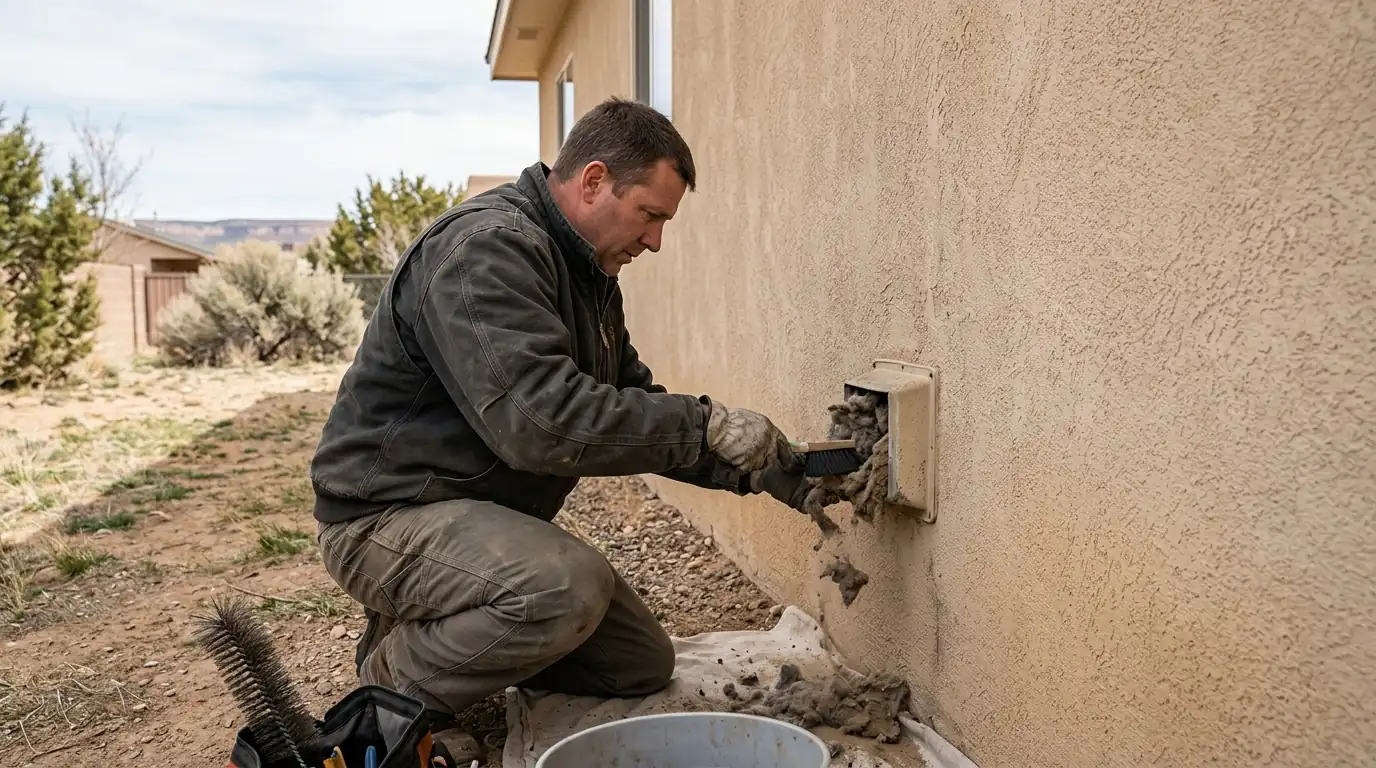
Why do dryer vents clog faster in the high desert?
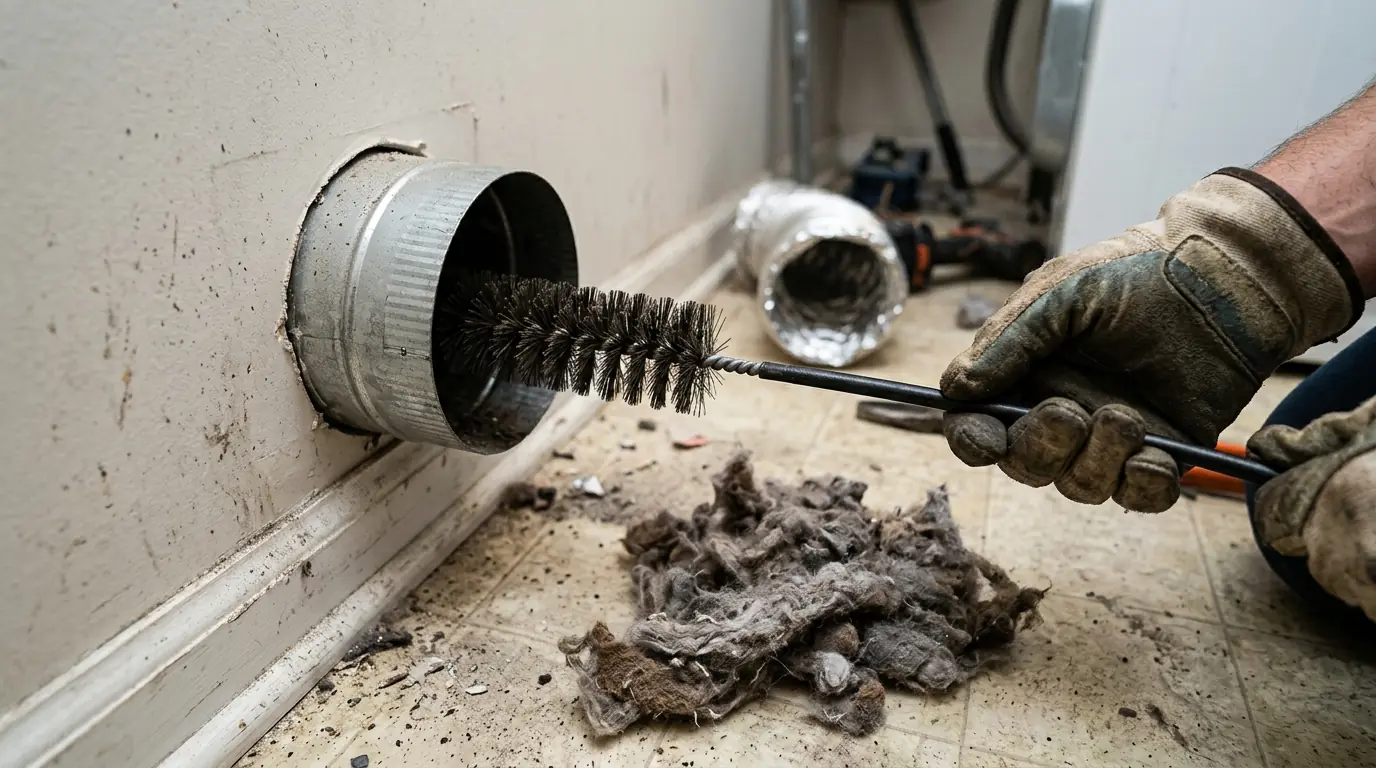
Every dryer pushes warm, damp, lint-heavy air through the vent. Some lint always gets past the screen and sticks to the duct walls. In a calm, humid place, that's the whole story. Here, spring wind adds a second source. Gusts drive fine dust into the outside cap, where it mixes with lint and the slight moisture from the exhaust and forms a felt-like plug.
Vent flaps also suffer. Grit wedges into the hinge, so the flap sticks half open and lets more dust in, or sticks shut and traps the exhaust. Birds like a warm, partly open vent cap too, and a nest in spring can block it completely.
Warning signs your vent is choking the dryer
A blocked vent rarely announces itself. It shows up as a dryer that slowly gets worse, and many people replace a heating element or a thermal fuse without fixing the real cause. If you notice two or more of these, check the vent before anything else.
- Towels need a second cycle, or the outside of the dryer feels very hot
- The laundry room gets warm and humid while the dryer runs
- Little or no air pushes out of the outside vent cap
- Lint collects around the door seal or behind the dryer
- A burning or scorched smell, or the dryer shuts off mid-cycle
- The thermal fuse has blown more than once
Long runs, crushed ducts and roof exits
The shorter and straighter a dryer vent is, the better it works. Each elbow adds resistance, and so does every foot of duct. Dryer manufacturers list a maximum vent length in the installation manual, and it shrinks with each turn. In a lot of 1950s to 1970s ranch homes around Farmington, dryers got moved during remodels and the vent ended up longer and twistier than it should be.
Behind the dryer, white vinyl or thin foil accordion duct crushes easily and traps lint in every ridge. Rigid or semi-rigid metal duct is the better choice, joined with foil tape rather than screws that catch lint. Roof exits are the hardest case. Lint has to climb, and the roof cap takes the full force of spring wind and dust.
How often should you clean a dryer vent in a windy spring?
For most homes a full vent cleaning once a year is the baseline. The timing matters here: doing it in late spring, after the worst wind and dust, clears out the season's buildup before the dryer runs all summer. Clean the lint screen every load and wash it with soapy water now and then, since dryer sheet residue can glaze the mesh.
Some homes need more. Large families, long vent runs, roof exits, pets and homes on dusty rural roads often need cleaning every six months. Between cleanings, pull the dryer out and check the duct behind it for crushing, and look at the outside cap after a big windstorm.
- Every load: clean the lint screen
- Every few months: check the outside flap opens and closes freely
- After a dust storm: clear sand and debris from the vent cap
- Every year, or sooner on long runs: clean the full duct, end to end
Choosing a vent cap that handles wind and dust
A good exterior cap opens easily under dryer airflow and closes against wind. Louvered caps with several light flaps can jam with grit, while a single-flap hood or a cap with a gravity damper often stays cleaner. Avoid screens over the outlet. They catch lint and clog quickly, which is the opposite of what you want. Mount the cap where it isn't facing straight into the prevailing wind if you have a choice.
When a vent problem has already hurt the dryer
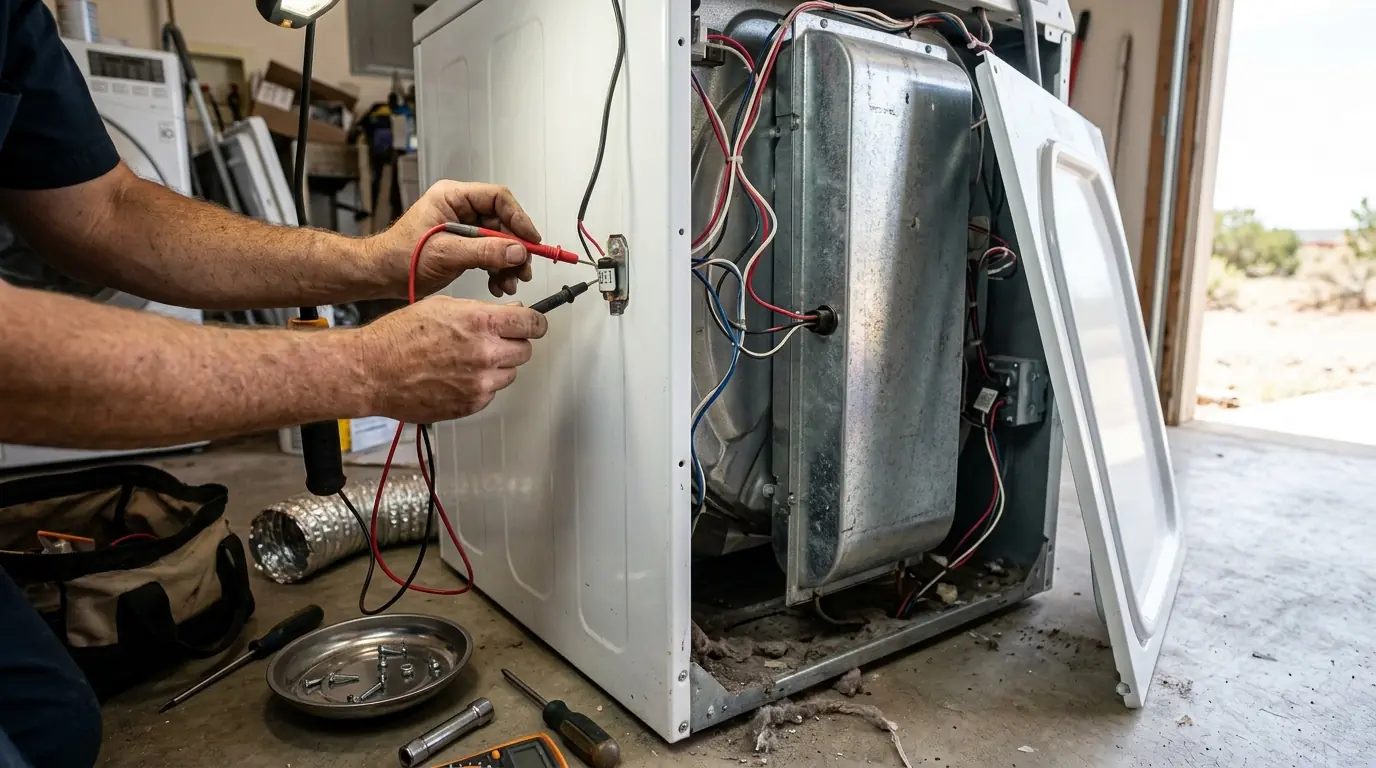
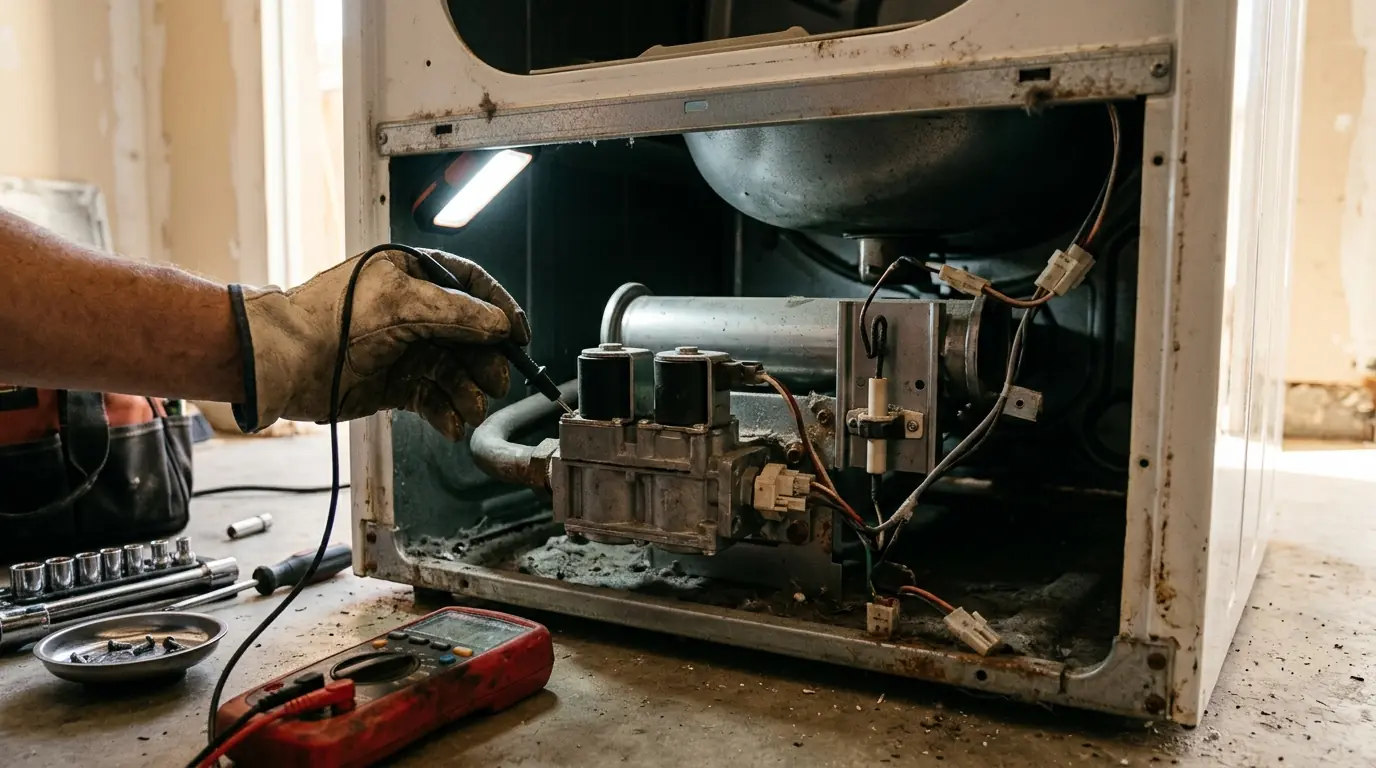
A restricted vent makes the dryer run hot. On electric dryers, that cooks heating elements and blows thermal fuses and high-limit thermostats. On gas dryers, the flame sensor, igniter and gas valve coils take the punishment. We clean the vent, then test the safety parts, so the dryer isn't left one hot load away from failing again.
A full vent cleaning in this area typically runs about $118-$227, depending on vent length, roof access and how packed it is. Treat that as a ballpark for this area rather than a quote. If the dryer quit, smells scorched or keeps blowing fuses, ring us any time of day or night.