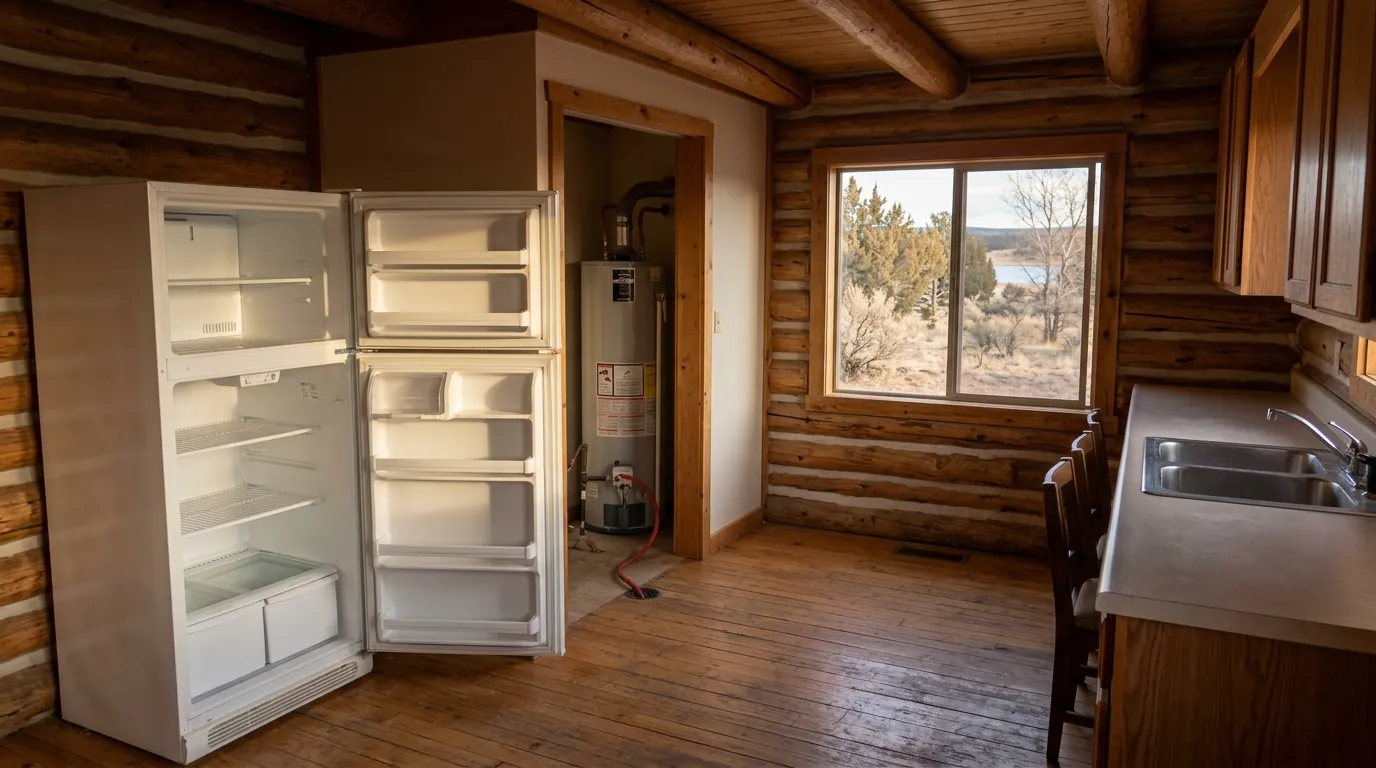
Start with one decision: will the cabin stay heated?
Cabins by Navajo Lake State Park, along the San Juan below Navajo Dam and around Arboles on the Colorado end of the lake tend to sit idle for weeks or months, then run hard on a busy weekend. Higher places like Mancos, at about 7,000 feet, or the Animas Valley north of Durango see longer and deeper cold. The closing plan depends mostly on one question.
If you leave the furnace or a wall heater running on low, you can keep some systems live and simply shut off water to the appliances. If the cabin will go cold, everything that holds water has to be drained, because one bitter night can crack a cheap valve and flood a floor that costs far more. Many owners do both: low heat plus drained appliances, in case the heat fails.
Empty the fridge and freezer, then prop the doors
A refrigerator that runs all winter in an empty cabin is a gamble. If power drops while you're away, a freezer of meat can thaw, refreeze and spoil without anyone knowing, and what you find in March is worse than an empty box. Most owners are better off emptying both sections and shutting the unit down.
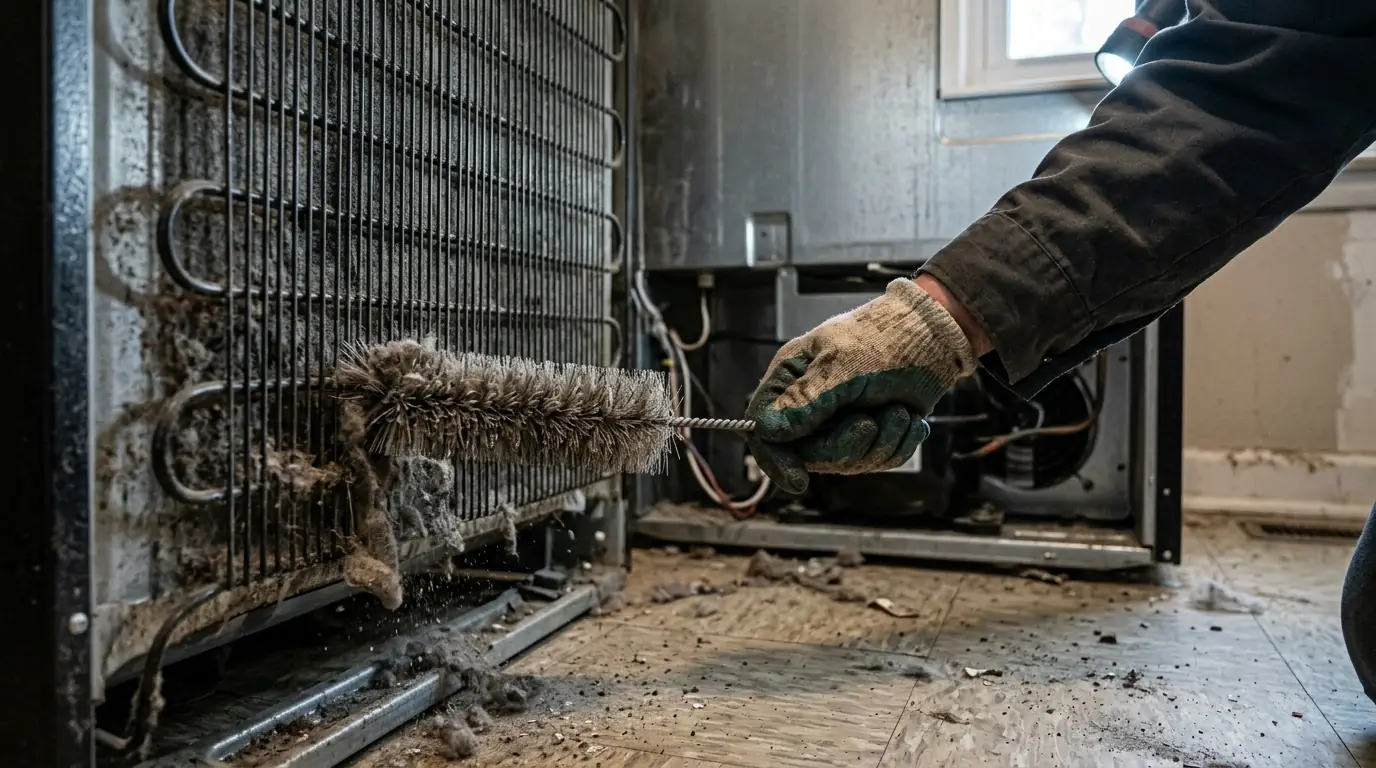
Unplug it or switch off its breaker, pull out the shelves and drawers, and let the freezer frost melt onto towels. Wash the inside with warm water and a little baking soda, then dry every surface, including the door gasket folds where moisture likes to hide. Prop both doors open a few inches with a rolled towel or a wedge so air moves and no mold or sour smell can form.
- Empty the drain pan under the fridge if your model has one you can reach
- Leave an open box of baking soda inside to absorb odors
- Tape a note on the door so nobody shuts it and plugs it back in
- For a propane absorption fridge, close its gas valve as well as the tank
Shut off the ice maker and the appliance water lines
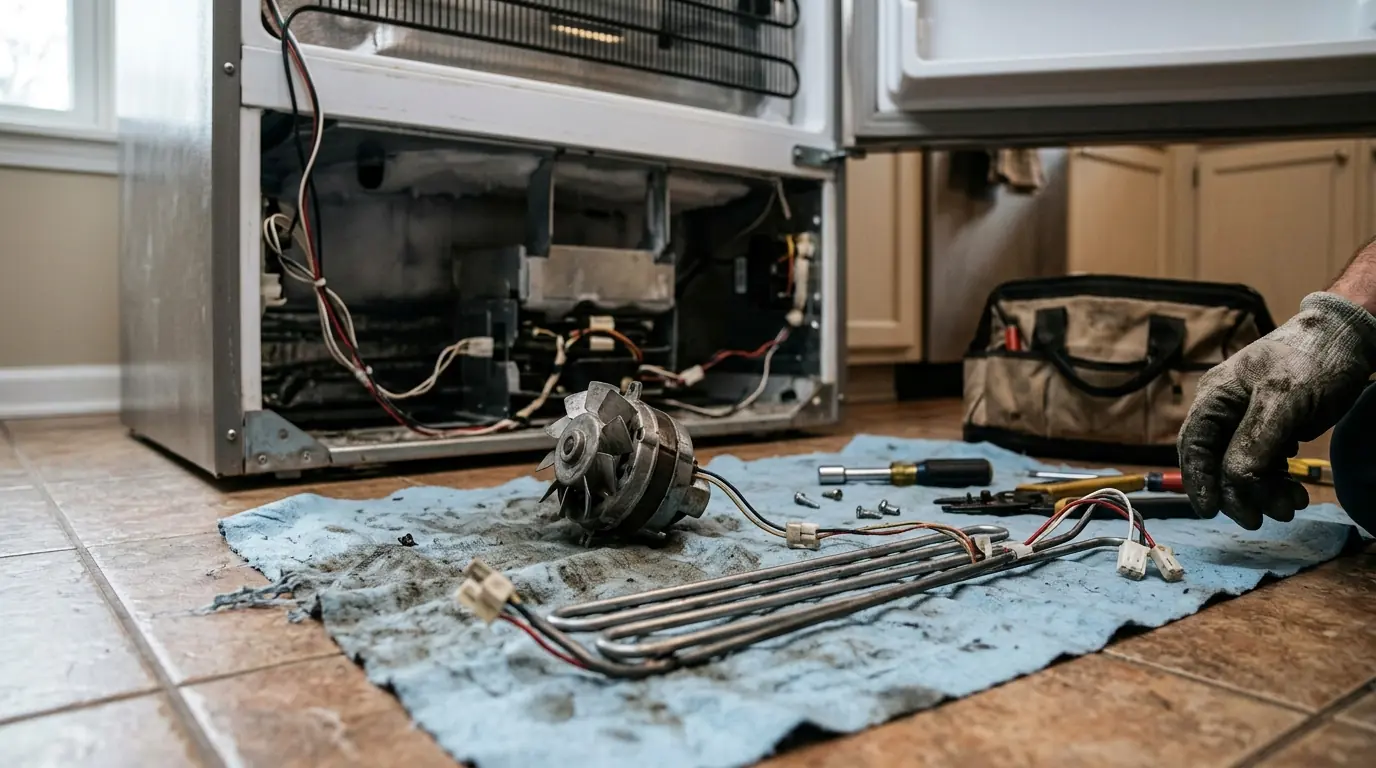
The ice maker is the most overlooked part of a cabin closing. Turn it off with its switch or by raising the bail arm, close the supply valve behind the fridge, and dump the ice bin. The water inlet valve and the filter housing still hold water, and both crack when frozen. If the cabin will be unheated, disconnect the line at the valve and drain it into a pan.
Washers and dishwashers hold water in places you can't see. Close both washer valves, take off the fill hoses and drain them. On a front-loader, empty the drain pump filter into a shallow tray. A dishwasher keeps water in its sump, so shut its supply, disconnect the inlet and sponge out what's left. Several manufacturers describe a winter storage step using pink RV antifreeze. Follow your manual on that, and never use the automotive kind.
Water heater: drain it or set it to vacation
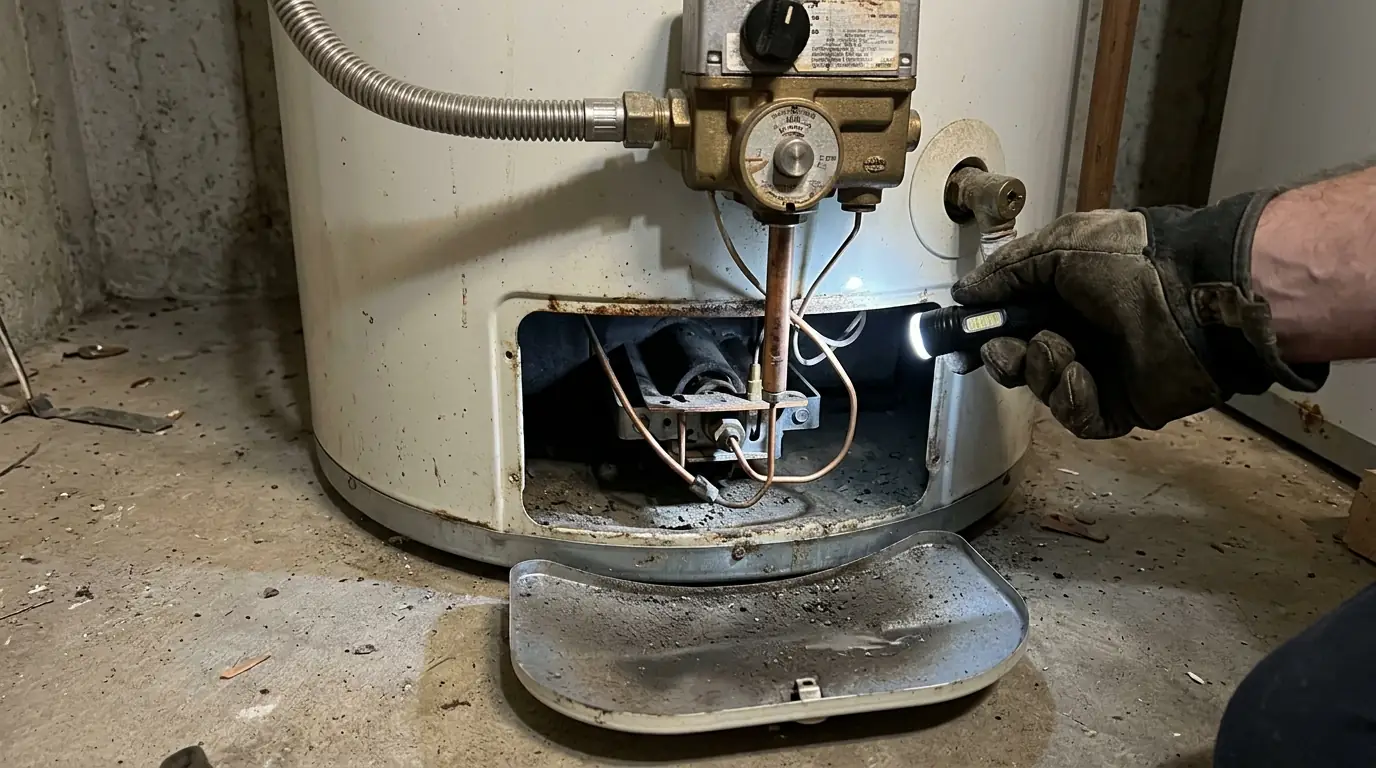
For a heated cabin, a gas water heater with a vacation setting on the control valve can be left on VAC, which keeps the pilot alive without heating the tank. An electric heater can be switched off at the breaker with the tank still full, as long as the building stays above freezing.
For a cold cabin, drain the tank. Turn the gas valve to off or switch off the breaker first, then close the cold supply, open a hot faucet and run a garden hose from the drain valve to a spot where hot water won't hurt anything. Hard water often leaves sediment that clogs the valve partway through, which is a fair reason to call us. The one rule we stress: never restore gas or power to an empty tank. A dry electric element burns out almost at once.
Close the propane and keep pests out of gas appliances
Most cabins in this part of the Four Corners run on propane. Close the shutoff valve behind the range, dryer and water heater, and close the main valve at the tank if nothing in the cabin needs gas over winter. If you ever smell gas when you open the door, back out, leave the house, and call your gas supplier or 911 from outside. Call us for the appliance only after that's been cleared.
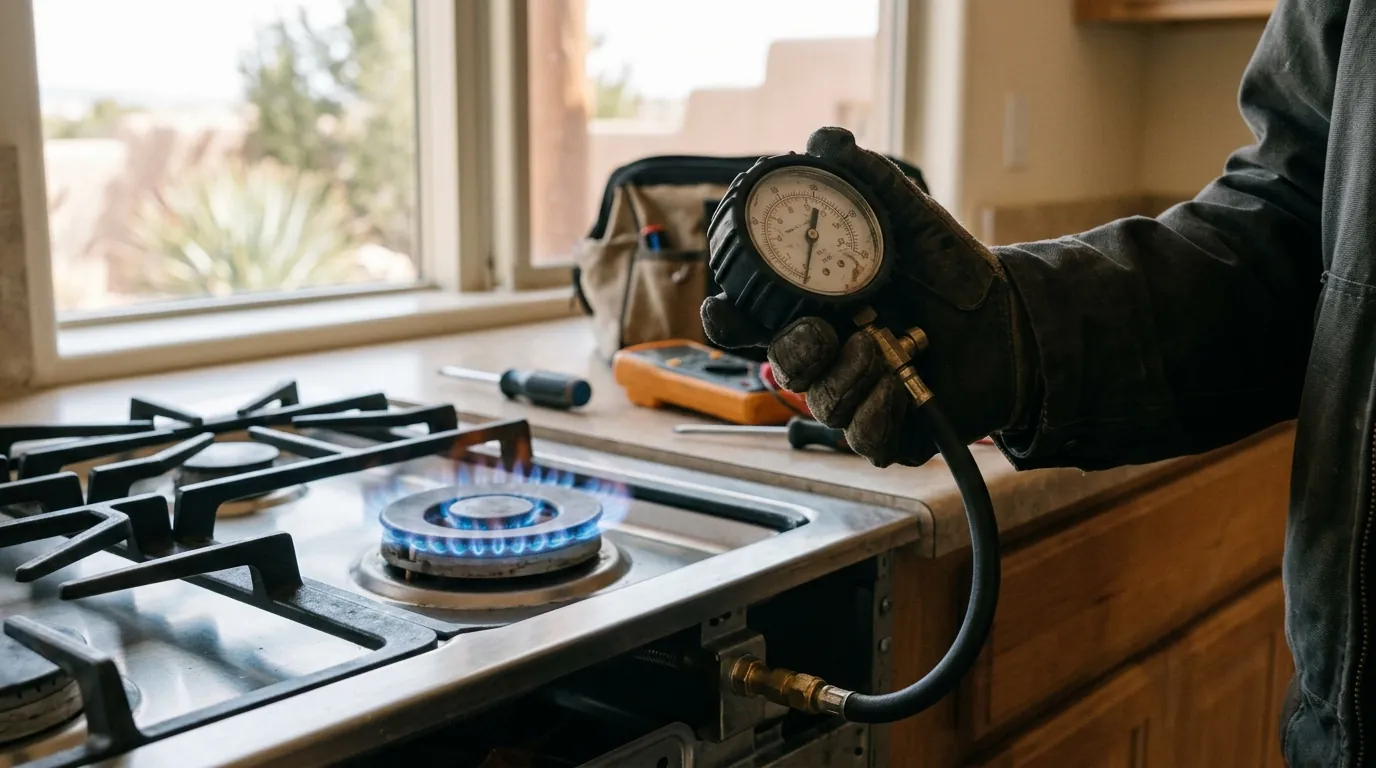
Mice, spiders and wasps move in fast. Mice nest in range storage drawers, behind the fridge kick plate and inside dryer cabinets, and they chew wiring harnesses. Spiders and mud daubers like burner tubes and the small orifices on gas appliances, which is why a cabin range often lights with a lazy yellow flame in spring.
- Clean crumbs out of the oven, broiler and range drawer
- Check that the dryer vent hood flap closes fully outside
- Seal gaps where gas and water lines pass through the floor
- Leave nothing edible in cabinets, including pet food and birdseed
Power, surges and what to leave plugged in
Switch off breakers for appliances you've drained or emptied, especially the water heater, the dishwasher and the washer. That way, a power blip or a curious guest can't start something that is empty. Leave on only what has to run, such as heat tape, a well pump in a heated pump house or the furnace thermostat. Ranges and microwaves with electronic controls are safer unplugged or switched off at the breaker.
Surge protection is worth having in rural cabins at the end of long power lines. Outages and restarts can stress control boards, and a whole-home surge protector or good plug-in units for the fridge and laundry give those boards a fighting chance while nobody is there to notice a problem.
Opening the cabin back up in spring
Walk through before you turn anything on. Look under the sink and behind the fridge and washer for water stains, droppings or chewed wires. Then bring systems back in order: water first, then the water heater, then the appliances.
If the water heater weeps from the tank, the ice maker valve drips, a burner flame stays yellow or the fridge runs without cooling, give us a call. We schedule cabin visits around Navajo Dam and Arboles with the model number in hand, so the right part is more likely to be on the truck for that first trip.
- Open the main water slowly and check every appliance fitting for drips
- Fill the water heater until a hot faucet runs steady, then restore gas or power
- Relight the pilot by the label instructions and look for a crisp blue flame
- Plug in the fridge, close the doors and give it most of a day before loading food
- Throw away the first two or three batches from the ice maker
- Run the washer and dishwasher empty on a short cycle and watch underneath